
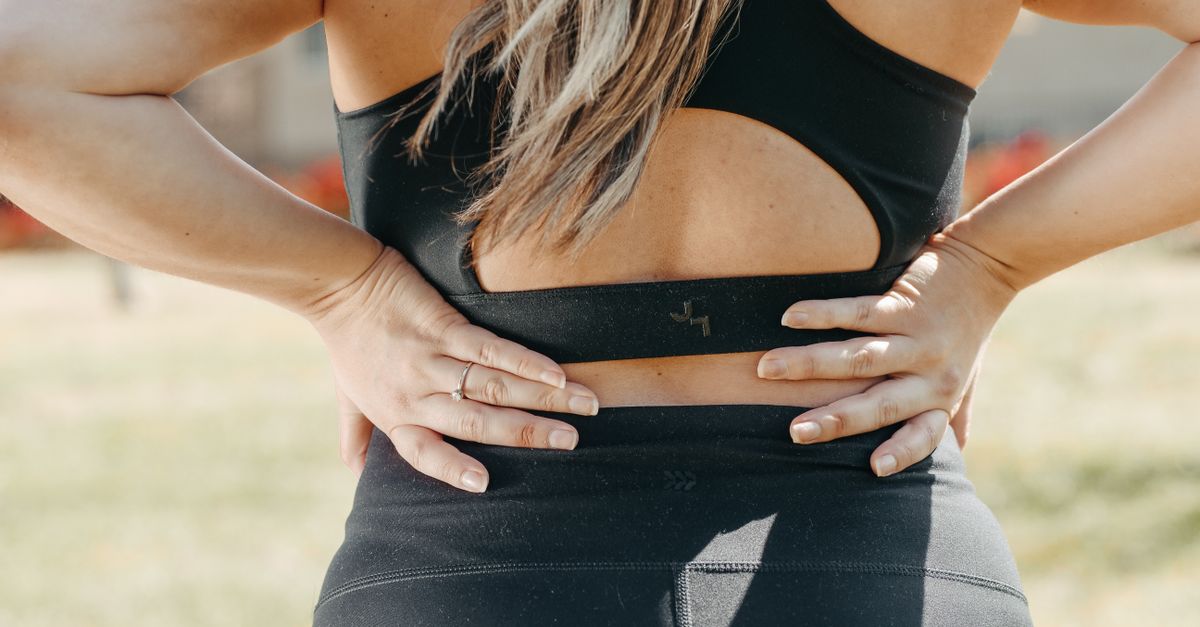
Erector spinae pain is an ache, tightness, or spasm in the long muscles that run vertically along both sides of the spine, most often felt in the lower back. It usually comes from muscle strain caused by lifting, repeated bending, or holding one posture for long periods while sitting or standing. Muscle-related pain tends to stay in the back and feel tender to the touch. Pain that travels down the leg or comes with numbness or weakness points more toward a disc or nerve problem.
You bend to pick up a laundry basket, or you finally stand after three hours at your desk, and a band of tightness grabs the muscles just beside your spine. That deep, ropey ache is often erector spinae pain, and it can make simple movements like tying your shoes or getting out of a car feel slow and careful. The erector spinae muscles hold you upright all day, so when they are strained or fatigued, you notice it almost everywhere.
This guide is for anyone dealing with a sore, tight lower back who wants to understand what is actually happening under the skin. It is especially useful if you lift for work, sit for long stretches, or stand on hard floors. Below, you'll learn the anatomy of these muscles, what causes them to hurt, how to tell muscle strain apart from disc or nerve problems, which warning signs need prompt care, and how gentle movement, heat, and massage fit into recovery.
What Are the Erector Spinae Muscles?
The erector spinae is a group of deep back muscles that runs from the pelvis and sacrum up along both sides of the spine to the ribs, neck, and base of the skull. You can feel them as two thick, rounded columns on either side of your spine when you stand and lean slightly forward. They sit underneath the thoracolumbar fascia, a broad sheet of connective tissue that wraps the lower back.
The group is made up of three columns, arranged from the outside in:
- Iliocostalis: the outermost column, attaching to the ribs and the top of the pelvis
- Longissimus: the middle and longest column, extending all the way up to the skull
- Spinalis: the innermost and smallest column, running closest to the spine itself
Together, these muscles straighten the spine, help you bend to the side, and keep your torso from collapsing forward. They also work as brakes. When you lean forward to lift something, the erector spinae lengthens under load to control the motion, and that lengthening contraction is one reason they are prone to strain.
What Causes Erector Spinae Pain?
These muscles work during nearly every upright activity, so the causes of pain range from one sudden movement to slow, cumulative fatigue. The lower portion, in the lumbar region, takes the most load and is where pain shows up most often.
Lifting and Repeated Bending
Lifting with a rounded back puts the erector spinae under heavy load while it is already stretched. A single awkward lift can overstretch fibers and trigger a strain or protective spasm. Repeated bending, such as gardening, loading boxes, or caring for small children, can produce the same result more gradually as the muscles tire.
Twisting while lifting adds more stress, because one side of the group has to work harder than the other. This is why one-sided pain often follows a lift that combined bending and rotation.
Prolonged Sitting and Standing
Sitting for hours, especially slouched, keeps the lower back muscles in a lengthened, low-activity position with little movement to keep blood moving through them. When you finally stand, the tissue feels stiff and slow to respond. Standing in one place for a long time causes the opposite problem: the muscles hold a steady contraction to keep you upright, which leads to fatigue and aching by the end of a shift.
Other Contributing Factors
Several other factors can make the erector spinae more vulnerable to overload:
- Weak abdominal and hip muscles, which shift extra work onto the back
- Sudden increases in activity after a sedentary stretch
- Poor sleep posture or an unsupportive mattress
- Carrying a heavy bag on one shoulder day after day
Erector spinae pain can also overlap with tightness in nearby muscles. The quadratus lumborum sits deeper and slightly to the side, and the two are easy to confuse. If your pain sits closer to your side, between the lowest rib and the top of the hip, read our guide to quadratus lumborum pain and how it differs.
Muscle Strain or Disc and Nerve Problems?
Not every lower back ache is a muscle problem. The spine also contains discs, joints, and nerve roots that can produce pain in the same general area. Knowing the typical patterns helps you decide whether self-care makes sense or whether you need an evaluation.
Signs Pointing to Muscle Strain
A muscle strain usually produces a dull ache or tight band on one or both sides of the spine rather than directly on it. The area may feel tender when you press on it, and you might notice a knot or spasm. Pain tends to worsen with bending, twisting, or getting up from a chair, then eases with rest and gentle movement. Muscle pain generally stays in the back and buttock region and does not travel below the knee.
Signs Pointing to a Disc or Nerve
Disc and nerve problems often behave differently. Mayo Clinic describes sciatica as pain that radiates along the path of the sciatic nerve, which branches from the lower back through the hips and buttocks and down each leg. That traveling quality is the key distinction.
Patterns that suggest something beyond a simple muscle strain include:
- Sharp, shooting, or electric pain that runs down the leg, especially below the knee
- Tingling or pins-and-needles in the leg or foot
- Pain that worsens with coughing, sneezing, or straining
- Pain centered directly on the spine rather than beside it
These signs do not automatically mean something serious, but they are worth discussing with a healthcare provider rather than managing on your own.
Red Flags That Need Prompt Medical Care
Some symptoms alongside back pain can signal nerve compression, infection, or other conditions that need urgent attention. Seek medical care promptly if your back pain comes with any of the following:
- Numbness in the groin, inner thighs, or buttocks
- New weakness in one or both legs, or difficulty walking
- New trouble controlling your bladder or bowels
- Fever or chills with back pain
- Pain following a fall, car accident, or other trauma
- Unexplained weight loss or pain that is severe at night and does not ease with rest
Bladder or bowel changes combined with numbness in the saddle area are a medical emergency. Do not wait to see if they improve.
Gentle Movement and Heat for Relief
For an uncomplicated muscle strain, staying gently active usually beats lying in bed. Long periods of rest let the muscles stiffen further and slow your return to normal movement. The goal is easy, pain-tolerable motion that keeps the tissue working without forcing it.
Movements Worth Trying
Move slowly and stop any exercise that produces sharp or radiating pain. These gentle options target the lower back without heavy load:
- Short walks: five to ten minutes at an easy pace, a few times a day
- Pelvic tilts: lying on your back with knees bent, gently flatten and release your lower back
- Single knee-to-chest: hold one knee toward your chest for 20 to 30 seconds per side
- Cat-cow: on hands and knees, slowly round and then gently arch your back
- Child's pose: sit your hips back toward your heels with arms stretched forward
Using Heat Safely
Heat relaxes tight muscle and makes movement feel easier, so it pairs well with stretching. Apply a heating pad or warm compress for 15 to 20 minutes, with a cloth layer between the heat source and your skin. Avoid sleeping on a heating pad. Cold may feel better in the first day or two after a sudden strain, and heat tends to help more once the sharp phase settles.
Where Oscillation Fits With Erector Spinae Pain
Massage gives tight back muscles mechanical input that encourages them to loosen and brings blood into the area. Because the erector spinae lies beneath the thoracolumbar fascia and a layer of surface tissue, the depth of that input matters.
Oscillation Versus Surface Vibration
Body massagers are often sold as vibration massagers. MedMassager uses oscillating technology to deliver deeper, more controlled vibration than conventional massagers. The Body Massager oscillates in a circular motion, combining vibration with circular rotation through a large, soft, cushioned contouring pad that forms to your back.
For back pain tied to desk work or long drives, the mechanism is straightforward. Oscillation penetrates deep muscle layers, increasing local blood flow in muscles affected by prolonged sitting. The Body Massager is an FDA-registered Class I medical device with adjustable intensity settings, and you can browse the therapeutic body massagers for back muscle tension to compare models.
Where to Place the Pad
Placement is the most important detail for erector spinae work. Keep the pad on the thick muscle columns beside your spine, never pressed directly onto the bony ridge of the spine itself.
- Position the pad one to two finger-widths to the side of the spine
- Work one side at a time, then switch
- Move slowly up and down the muscle rather than holding one spot for long
- Skip any area that is bruised, swollen, or recently injured
The slip-resistant handles let you reach the lower back on your own. You can also rest the cushioned-pad Body Massager between your lower back and the back of a chair, which lets the pad sit against the muscles while you stay seated.
A Simple Daily Routine for Back Muscles
Consistency matters more than intensity. This routine combines heat, gentle movement, and massage in a short daily window:
- Warm up with heat: apply a heating pad to the lower back for 15 minutes.
- Move gently: do pelvic tilts and single knee-to-chest stretches for about five minutes.
- Add massage: start with about 10 minutes at the lowest setting, once or twice a day, keeping the pad on the muscles beside the spine.
- Adjust gradually: increase the intensity only if the lower setting feels comfortable and your back does not feel more sore the next day.
- Break up long sitting: stand and walk for a minute or two at least every 30 to 60 minutes.
Because the oscillating pad delivers movement into deeper muscle layers and supports local blood flow in tissue stiffened by prolonged sitting, a session at the end of a workday can help tight muscles loosen before evening activities. For more ways to work on stiffness, including hands-on approaches, see these lower back massage techniques for mechanical stiffness.
Special Considerations for Different Situations
Your daily demands shape how the erector spinae gets overloaded, so prevention looks a little different depending on how you spend your time. If you work at a desk, set your chair so your hips sit slightly above your knees and use a small lumbar support to reduce slouching. If you stand all shift, shift your weight periodically and rest one foot on a low step now and then to change the load on your lower back.
Lifting for work calls for a few habits that protect the lower back:
- Keep loads close to your body
- Bend at the hips and knees rather than the waist
- Turn with your feet instead of twisting your torso
Older adults, and anyone with osteoporosis, a spinal condition, or recent back surgery, should ask their own care team before starting massage or new exercises. The same applies if you have a medical condition, a pacemaker, or are pregnant. The Body Massager's circular oscillating action creates continuous, repetitive movement in the muscles beside the spine, which supports circulation during use, and your provider can tell you whether that kind of input is appropriate for your situation. You can review the full MedMassager product lineup and bring the details to that conversation.
Frequently Asked Questions
How long does an erector spinae strain take to heal?
A mild erector spinae strain often improves noticeably within a few days and settles over a couple of weeks. More significant strains can take several weeks to fully resolve. Staying gently active usually supports a faster return to normal movement than prolonged rest. If pain is not improving after two to three weeks, see a healthcare provider.
Why do my lower back muscles hurt after sitting?
Sitting for long periods keeps the lower back muscles in a lengthened, low-activity position with little movement to keep blood flowing through them. Slouching adds strain because the muscles and ligaments hold your torso in an unsupported curve. When you stand, the stiff tissue protests until it warms up again. Regular short breaks to stand and walk help reduce this stiffness.
Should I use heat or ice for a strained back muscle?
Cold can help in the first day or two after a sudden strain when the area feels sharp or inflamed. After that, heat tends to work better because it relaxes tight muscle and makes stretching easier. Limit either one to about 15 to 20 minutes at a time, with a cloth layer against your skin.
Can you massage directly on the spine?
Massage pressure should stay on the muscles beside the spine, not on the bony ridge of the vertebrae. The spinous processes sit close to the skin and do not have muscle padding to absorb pressure. Working one to two finger-widths to either side reaches the erector spinae without pressing on bone.
Does a body massager help tight erector spinae muscles?
A body massager can be a helpful addition to stretching and heat for tight back muscles. The Body Massager's circular oscillating action delivers movement into deeper muscle layers, which supports local blood flow in tissue that has stiffened from prolonged sitting. Keep the pad on the muscles beside the spine and start at a low setting.
What stretches help a sore erector spinae?
Gentle stretches that round the lower back work well, including single knee-to-chest, child's pose, and the rounding phase of cat-cow. Pelvic tilts add easy movement without strain. Hold each stretch for 20 to 30 seconds and stop if you feel sharp or radiating pain.
When should I see a doctor for lower back muscle pain?
See a doctor if your pain is severe, keeps getting worse, or has not improved after two to three weeks of self-care. Pain that travels below the knee or follows an injury also deserves an evaluation. Numbness in the groin area, new leg weakness, bladder or bowel changes, or fever alongside back pain need prompt medical attention.
The Bottom Line
Erector spinae pain usually comes from strain or fatigue in the long muscles beside the spine, triggered by lifting, bending, or holding one posture too long. Muscle pain stays in the back and feels tender to the touch, while pain that travels down the leg or comes with numbness, weakness, bladder or bowel changes, or fever needs medical attention.
For uncomplicated strain, gentle movement, heat, and regular breaks from sitting form the foundation of recovery. Massage on the muscles beside the spine, used alongside whatever your doctor has recommended, adds deep mechanical input to tight tissue. The Body Massager's circular oscillating action creates continuous movement in those muscle columns, which supports blood flow during use. To compare options, explore the MedMassager Body Massager collection.
This content is for informational purposes only and is not intended as medical advice, diagnosis, or treatment. Always consult a qualified healthcare professional before starting any new treatment or therapy. MedMassager products are FDA-registered Class I medical devices.


