
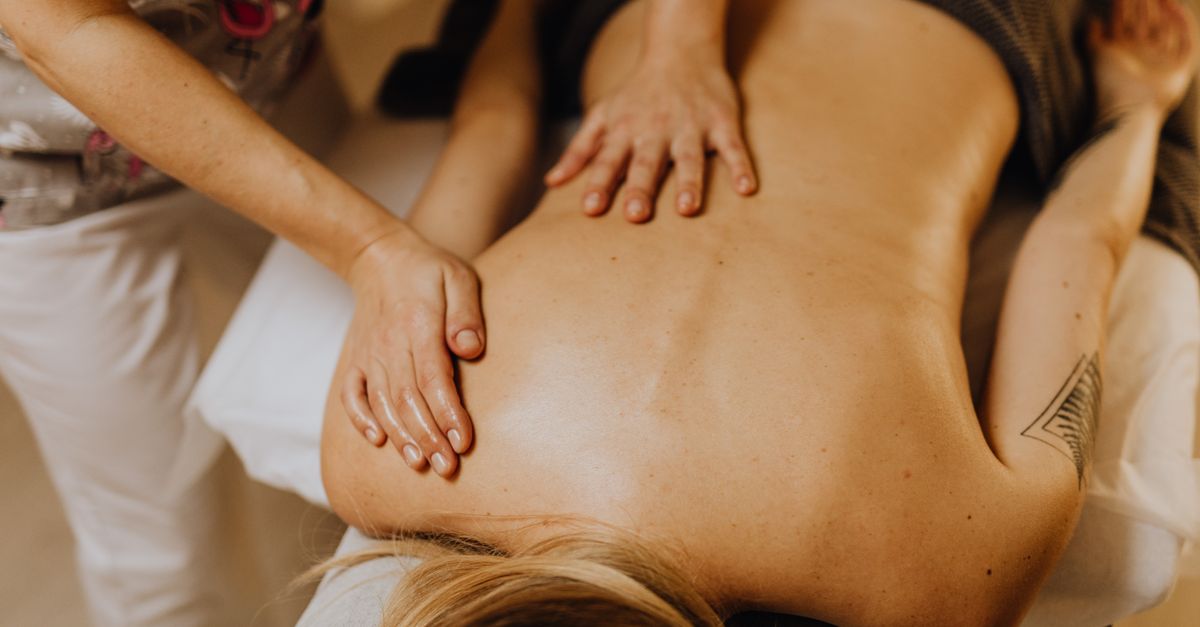
Effective lower back massage techniques for mechanical low-back stiffness target the paraspinal muscles that run alongside the lumbar spine, not the spine itself. Common approaches include partner massage using thumbs or palms along the erector spinae, self-massage with a tennis ball or foam roller placed under the lumbar paraspinals, and oscillating therapeutic massagers that penetrate deep muscle layers without requiring a partner. These techniques work by increasing local blood flow in muscles that have tightened from prolonged sitting, poor posture, or repetitive movement. For best results, combine massage with gentle movement and stretching rather than relying on massage alone.
If you've ever stood up from your desk after a long afternoon and felt that familiar, grinding tightness across your lower back, you already know what mechanical low-back stiffness feels like. It's not a sharp nerve pain shooting down the leg — it's a deep, dull ache in the muscles on either side of your spine that makes rotating or bending feel like work. Lower back massage techniques designed for this kind of muscular tightness are different from what you'd use for sciatica or disc issues, and getting that distinction right matters. This guide covers partner techniques, self-massage tools, and when a therapeutic massager delivers more consistent depth than hands or foam rollers alone — so you can build a practical routine around what you already have at home.
What Causes Mechanical Low-Back Stiffness?
Mechanical low-back pain is the most common category of back pain in adults, and its origin is almost always muscular rather than structural. Understanding the anatomy makes it easier to target your massage work precisely.
The Paraspinal Muscles
The erector spinae group — a column of muscles running vertically on both sides of the lumbar spine — does the heavy lifting of keeping you upright. The iliocostalis, longissimus, and spinalis are the three layers within this group, and all three are prone to chronic shortening when you sit for extended periods. The quadratus lumborum, a deeper muscle connecting the pelvis to the lowest rib, is another major contributor to one-sided lower back tightness that people often misattribute to the spine itself.
When these muscles hold a contracted position for hours — as they do during prolonged sitting or standing in a fixed posture — local blood flow decreases and metabolic waste products accumulate in the tissue. The result is that familiar stiffness-plus-ache combination.
How Mechanical Pain Differs from Nerve-Related Pain
Mechanical low-back pain stays local. You feel it in the lumbar region, possibly into the glutes, but it does not travel down the leg past the knee, does not cause tingling or numbness, and does not worsen with sneezing or coughing the way disc-related pain often does. If your pain radiates below the knee or includes any neurological symptoms, the techniques in this article are not appropriate — that pattern warrants a clinical evaluation before any massage work begins.
The muscle-led nature of mechanical pain is also what makes massage so relevant here. Increasing blood flow through tight paraspinal tissue directly addresses the physiological mechanism driving the discomfort.
Common Contributing Factors
- Prolonged sitting with the pelvis in posterior tilt (slouched chair posture)
- Repetitive flexion-extension movements without adequate recovery time
- Sleeping positions that leave the lumbar spine unsupported overnight
- Weak anterior core allowing the erector spinae to compensate for trunk stability
- Dehydration and poor circulation reducing the tissue's ability to flush metabolic byproducts
Partner Lower Back Massage Techniques
A good partner massage for mechanical low-back stiffness doesn't require training — it requires knowing where to work and where to avoid. The rule is simple: work on the muscle columns, never directly on the spine.
Positioning
Have the person lie face-down with a thin pillow under the abdomen to reduce lumbar lordosis. This slight flattening of the lower back makes the paraspinal muscles more accessible and reduces compression on the lumbar facet joints during pressure work. The person receiving the massage should breathe slowly and signal immediately if any technique causes sharp, radiating, or nerve-like sensation.
Effleurage: Opening the Tissue
Start with effleurage — long, gliding strokes using the flat of both palms moving from the sacrum upward toward the mid-back. Apply moderate, even pressure and stay lateral to the spinous processes (the bony bumps you can feel down the center of the spine). Repeat this stroke 6–8 times. The goal at this stage is to warm the tissue and increase surface circulation before any deeper work.
Thumb Circles on the Erector Spinae
Once the tissue is warm, use both thumbs to work small, overlapping circles along the erector spinae column. Position your thumbs roughly one inch lateral to the spine on each side. Move slowly from the sacrum upward to the lower ribs, spending extra time on any area that feels ropey or that the recipient identifies as a focal point of tightness.
Apply enough pressure to feel resistance in the muscle, but not so much that the recipient tenses up — tension in response to pain defeats the purpose. A common rhythm is 3-second circles with moderate pressure, pausing for 5–10 seconds on dense areas before moving on.
Forearm Rolling for Broader Coverage
For people with significant lumbar bulk or diffuse tightness rather than isolated trigger points, rolling the forearm along the paraspinal column covers more surface area with less hand fatigue. Press your forearm laterally against the erector spinae and slowly roll from sacrum to mid-back, with body weight providing the pressure rather than muscular effort. This technique is especially effective for the quadratus lumborum when the forearm is angled slightly outward toward the iliac crest.
Self-Massage Techniques Without a Partner
Most people managing chronic lower back stiffness need techniques they can use independently, not just when a partner is available. Tennis balls and foam rollers are both effective — they work differently and suit different goals.
Tennis Ball Technique for Isolated Trigger Points
Place two tennis balls inside a sock, tied at the end so they sit side-by-side. Lie on your back and position the balls so one sits on each erector spinae column with the sock knot roughly aligned with your spine. Let your body weight create the pressure — you don't need to push down.
- Start with the balls positioned at the sacral base and breathe slowly for 30–60 seconds
- Bend your knees slightly and use your feet to inch yourself so the balls move up toward the lumbar vertebrae one level at a time
- Pause at any spot that feels particularly dense or tender for 30–60 seconds until you feel the tissue release
- Stop when the balls reach the thoracolumbar junction (roughly where the lumbar curve meets the mid-back)
- Repeat 2–3 times, spending the most time in the mid-lumbar region (L3–L4 level) where tension typically concentrates
The tennis ball method excels at addressing specific tender points in the paraspinals that broader tools miss. The pressure is sustained, localized, and adjustable by shifting your body position.
Foam Roller Technique for Broader Lumbar Release
A standard foam roller provides a different kind of input — broader pressure across the full lumbar region simultaneously rather than isolated trigger-point work. Sit in front of the roller, place it behind you at sacral level, and lower yourself back so it supports your lumbar spine. Support your head with your hands.
Roll slowly from the sacrum to the mid-back and back again, pausing on any area that feels dense. Avoid rolling directly on the spinous processes by keeping your weight slightly shifted to one side at a time if needed. Sessions of 2–3 minutes are sufficient — longer isn't necessarily better with foam rolling, as the tissue needs time to respond rather than simply being ground down.
Seated Self-Massage Against a Wall
For people who cannot comfortably get down to the floor, a lacrosse ball (firmer than a tennis ball) pressed between the lower back and a wall achieves the same localized trigger-point effect in a standing or seated position. Stand with the ball between your lower back and a flat wall, shift your weight to create pressure on the target area, and hold for 30–60 seconds before moving to the next spot.
How an Oscillating Body Massager Reaches Deeper Tissue
Self-massage tools are effective for the surface layers of the paraspinals, but they share a mechanical limitation: the pressure is static. You press, the tissue compresses, and circulation improves in response to that sustained load. What they cannot replicate is rhythmic, repeated movement through the muscle tissue — the kind that keeps pushing blood in and out of the area continuously rather than in a single static event.
The Oscillation Mechanism
Oscillating therapeutic massagers move in a rapid back-and-forth arc rather than simply pressing and holding. This rhythmic movement creates repeated muscle fiber activation in the paraspinal tissue, which generates continuous local blood flow increases in muscles affected by prolonged sitting. The vibration produced by this mechanism reaches deeper muscle layers than static compression — a meaningful advantage for the lumbar paraspinals, which are large, dense columns capable of holding significant tension well below the surface.
The MedMassager Body Massager collection is built around this oscillating mechanism, with clinic-grade power levels designed to penetrate deeper muscle layers without requiring a practitioner's body weight or causing hand fatigue. Many people managing chronic mechanical back stiffness find it bridges the gap between a foam roller session and a professional massage appointment.
Using the Body Massager on the Lumbar Paraspinals
When using an oscillating therapeutic body massager for lower back work, technique still matters. Place the massager head lateral to the spinous processes — the same one-inch-off-center rule that applies to partner massage — and allow the oscillation to do the work rather than pressing hard. Depth comes from the mechanism, not from force.
- Start on the lowest speed setting and allow the tissue to acclimate for 60 seconds before increasing intensity
- Move the massager slowly along the erector spinae column in an upward direction, roughly one inch every 5–10 seconds
- Spend additional time at areas of concentrated tightness, but keep the massager moving — prolonged static pressure with a powered device is less effective than slow, continuous movement
- Never apply the massager directly over the spinous processes or over any area of bruising, acute inflammation, or recent injury
Why Oscillation Reaches Where Foam Rollers Don't
A foam roller compresses the entire superficial paraspinal region at once. The MedMassager Body Massager targets a specific zone and drives oscillating energy through it repeatedly, which research on therapeutic massage suggests is more effective at penetrating into deeper muscle layers. The quadratus lumborum in particular — a frequent contributor to chronic lower back stiffness that sits beneath the erector spinae — responds better to repeated mechanical movement than to static compression alone.
Building a Daily Lower Back Massage Routine
Consistency matters more than intensity when you're managing chronic mechanical stiffness. A short daily routine outperforms a long weekly session for most people, because the underlying issue is repeated muscular shortening that accumulates every day.
Morning Routine: Preparing the Tissue
Paraspinal muscles are typically at their stiffest first thing in the morning, after hours of relative stillness. A 5-minute routine before your day begins sets a better baseline for the hours ahead.
- Begin with 2 minutes of gentle spinal movement — cat-cow stretches or supine knee-to-chest holds — before any massage work
- Follow with 2–3 minutes of tennis ball or foam roller work focused on the mid-lumbar zone
- Finish with 30 seconds of slow effleurage if a partner is present, or light hand pressure along the paraspinals if working alone
Evening Routine: Flushing the Day's Accumulation
End-of-day sessions are about releasing tension that has built up over hours of sitting or standing. This is the best window for using a professional-grade body massager because the muscles are warm and more receptive to deeper oscillating work.
- 5–7 minutes with the oscillating massager on the paraspinals, starting low and increasing to a comfortable working intensity
- Follow immediately with a 2-minute hip flexor stretch (kneeling lunge position held 60 seconds per side) — tight hip flexors anteriorly tilt the pelvis and load the lumbar extensors, so releasing them completes the circuit
- Finish with a 2-minute supine spinal twist to restore rotational range of motion
Frequency and Adjustment
Daily light sessions are appropriate for most adults managing chronic mechanical stiffness. If a session leaves you feeling sore the following day, reduce intensity and duration rather than frequency. Soreness following massage in an area of chronic tension is common in the first week but should resolve as the tissue adapts. If soreness persists or worsens, reduce session frequency and consult a physical therapist or sports medicine physician.
When to See a Professional
The techniques in this guide are designed for muscular mechanical low-back pain — the kind driven by tightness in the paraspinals and surrounding musculature. They are not appropriate for all presentations of lower back pain, and there are clear signals that warrant clinical evaluation rather than home massage.
- Pain that radiates below the knee, or that includes tingling, numbness, or weakness in the leg
- Back pain accompanied by bladder or bowel changes
- Pain that is significantly worse at night and not relieved by any position
- Back pain following a fall, collision, or acute injury event
- Pain that has worsened progressively over several weeks without any period of improvement
For people with osteoporosis, a history of spinal surgery, or any diagnosed structural spinal condition, all massage techniques should be cleared with a treating physician or physical therapist before starting.
Frequently Asked Questions
How often should I massage my lower back for chronic stiffness?
For most adults managing chronic mechanical lower back stiffness, a short daily session of 5–10 minutes is more effective than a longer weekly session. Daily work addresses the muscular shortening that accumulates each day from sitting or standing, rather than trying to undo a full week of tension in one sitting. If your muscles feel sore the day after a session, reduce the intensity rather than the frequency.
What is the difference between lower back massage for muscle pain versus sciatica?
Lower back massage for muscle pain targets the paraspinal muscles on either side of the lumbar spine, with the goal of increasing local blood flow through tight tissue. Sciatica involves compression or irritation of the sciatic nerve, which typically produces pain, tingling, or numbness that travels below the knee. Deep paraspinal massage techniques are not appropriate for active sciatica — direct pressure near an irritated nerve root can worsen symptoms, so that presentation requires clinical guidance before any massage work begins.
Can I use a foam roller on my lower back every day?
Yes, daily foam rolling on the lumbar paraspinals is generally safe for adults with mechanical muscle stiffness. Keep sessions to 2–3 minutes and avoid rolling directly over the spinous processes. If you experience increased pain, unusual soreness lasting more than a day, or any radiating symptoms after a session, stop and consult a physical therapist before continuing.
Where exactly should I apply pressure during a lower back massage?
Pressure should be applied to the muscle columns that run roughly one inch on either side of the lumbar spine — the erector spinae group. Never apply direct pressure to the spinous processes (the bony ridge down the center of the back) or to any area with acute inflammation or swelling. Working from the sacral base upward toward the thoracolumbar junction covers the full lumbar paraspinal region systematically.
Is heat or massage better for lower back muscle stiffness?
Both heat and massage address muscle stiffness through different mechanisms, and they work well together. Heat increases tissue extensibility and relaxes surface muscle tension, making it a useful preparation step before massage rather than a standalone substitute. Oscillating massage drives blood actively through the tissue and can reach deeper layers that surface heat may not fully affect. Applying heat for 10–15 minutes before a massage session generally improves the depth and quality of the work.
What stretches should I combine with lower back massage?
The most complementary stretches target the hip flexors and lumbar rotators, since both muscle groups directly affect paraspinal tension. A kneeling hip flexor stretch held 60 seconds per side addresses anterior pelvic tilt, which loads the lumbar extensors. A supine spinal twist — lying on your back with one knee crossed across the body toward the floor — targets the rotational range of motion that prolonged sitting restricts. Performing these stretches immediately after massage, while the tissue is warm and circulation is elevated, tends to produce the most durable improvement in flexibility.
Does a body massager work better than a foam roller for lower back pain?
Foam rollers and oscillating body massagers address lower back muscle stiffness through different mechanical inputs. A foam roller applies broad, static compression across the paraspinal region and is effective at improving surface tissue mobility. An oscillating body massager delivers repeated rhythmic vibration through a targeted zone, which penetrates deeper muscle layers — including the quadratus lumborum — more effectively than static pressure alone. Both tools have a place in a routine: the foam roller works well for general warm-up, while an oscillating massager is better suited for sustained deep tissue work.
The Bottom Line
Mechanical lower back stiffness is a muscular problem, and the most effective lower back massage techniques address that directly — working on the paraspinal columns, not the spine itself. Whether you use a partner's hands, a pair of tennis balls, or a foam roller, the principle is consistent: get blood moving through tissue that has shortened and tightened from too much stillness.
For people who need more consistent depth than floor tools provide, an oscillating therapeutic massager closes the gap. The MedMassager Body Massager is built for exactly this kind of sustained lumbar paraspinal work — clinic-grade oscillation that reaches deeper tissue without body weight or hand fatigue, at home and on your schedule.
Pair any of these techniques with daily movement and targeted stretching, and you have a sustainable routine for managing chronic mechanical low-back stiffness rather than chasing relief one session at a time.
This content is for informational purposes only and is not intended as medical advice, diagnosis, or treatment. Always consult a qualified healthcare professional before starting any new treatment or therapy. MedMassager products are FDA-registered Class I medical devices.


