
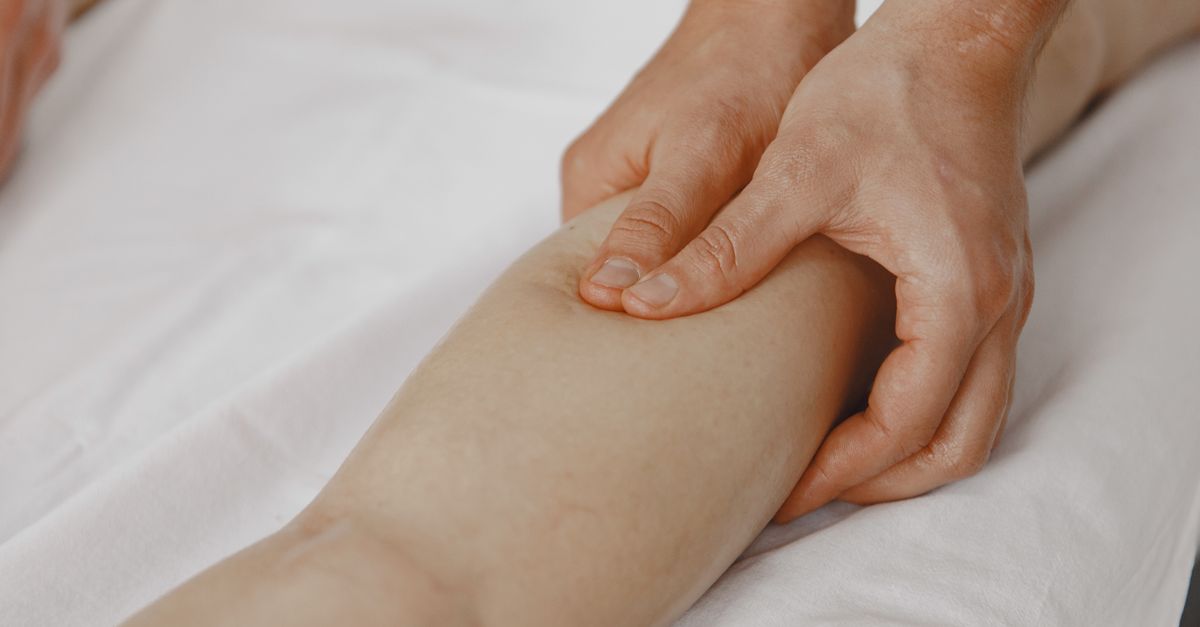
You should not massage a pulled muscle during the first 48 to 72 hours after the injury. Pressure on freshly damaged muscle fibers can increase bleeding and swelling and disrupt early tissue repair. Once swelling has gone down and pain at rest has faded, gentle massage around the injured area, and later on the muscle itself, can help keep blood moving and ease stiffness. Get medical care first if you heard a pop, cannot use the muscle, or see a dent or large bruise.
You reach for something on a high shelf, lunge for a ball, or lift a box the wrong way, and a sharp pull grabs the back of your thigh or your lower back. The instinct is to rub it out right away, so the question of whether you should massage a pulled muscle comes up within minutes. The honest answer depends on timing.
Massage at the wrong moment can make a fresh strain worse. The same massage a few days later can help you move more comfortably.
This guide is for anyone dealing with a strained calf, hamstring, back, or shoulder who wants to handle it safely at home without guessing. It also covers when home care is not enough. You will learn what happens inside a pulled muscle, why the first 48 to 72 hours call for rest, which warning signs point to a more serious tear, and how to bring gentle massage back into your routine.
What Happens When You Pull a Muscle
A "pulled muscle" is the everyday name for a muscle strain. Knowing what is physically damaged makes the timing rules much easier to follow.
Muscle Strain Basics
Mayo Clinic describes a muscle strain as an injury to a muscle or to the tendon that attaches muscle to bone. Strains happen when fibers are stretched beyond their limit or forced to contract too hard, too fast. The hamstrings, calves, quadriceps, groin, and lower back are frequent sites because they handle sudden loads during lifting, sprinting, and twisting.
A strain is different from a sprain. A sprain affects a ligament, the tissue connecting bone to bone at a joint. A strain affects muscle or tendon.
The Three Grades of Muscle Strain
Clinicians grade strains by how much of the muscle is damaged:
- Grade 1 (mild): a small number of fibers are overstretched or torn. You feel tightness and soreness, but strength and movement are mostly intact.
- Grade 2 (moderate): a larger portion of fibers tear. Expect noticeable pain, swelling, some bruising, and a loss of strength.
- Grade 3 (severe): the muscle or tendon tears completely or nearly completely. This often causes severe pain, major loss of function, and sometimes a visible dent in the muscle.
Why the First Few Days Matter
In the first days after a strain, the body runs an inflammatory response. Small blood vessels in the torn tissue leak, which creates the swelling and bruising you see. Immune cells move in to clear damaged fibers and set the stage for repair.
This phase is fragile. New tissue has not formed yet, and the injured vessels are still sealing. Anything that adds force to the area can extend the damage.
Should You Massage a Pulled Muscle Right Away?
No. During the first 48 to 72 hours, the injured muscle needs protection, not pressure. Massage pushes on tissue, and that is the opposite of what a fresh tear needs.
Why Early Massage Works Against You
Pressing on newly torn fibers can cause several problems:
- It can reopen small blood vessels that are still sealing, which adds bleeding and swelling.
- It can stretch or shear fibers that have only begun to knit together.
- It can increase inflammation and pain over the following day.
- Deep pressure can hide how bad the injury really is, which may lead you to use the muscle too soon.
Heat, hot tubs, and alcohol all widen blood vessels, so they are best avoided during this early window too. The same timing logic applies to joint injuries, which we cover in our guide on when to massage a sprained ankle during recovery.
What to Do Instead in the First 72 Hours
Early care focuses on calming the area and protecting it from extra strain. Rest the muscle and avoid any activity that recreates the pain. A cold pack wrapped in a thin towel for 15 to 20 minutes at a time can help with pain. A light compression wrap and keeping the limb raised can limit swelling.
Complete stillness is not the goal. Gentle, pain-free movement, such as walking short distances on a mild calf strain, keeps the area from stiffening. If a movement causes sharp pain, stop.
Signs of a More Serious Muscle Tear
Most mild strains improve with rest and time. Some injuries need a professional evaluation before any massage happens, because the problem may be a large tear, a tendon rupture, or something other than a strain.
Contact a doctor or urgent care if you notice any of the following:
- A popping or snapping sound or sensation at the moment of injury
- Inability to bear weight, walk, or use the affected muscle
- A visible dent, gap, or bulge in the muscle
- Large or rapidly spreading bruising
- Severe swelling that keeps increasing after the first day
- Numbness, tingling, or weakness extending beyond the injured area
- Pain that is not improving after several days of rest
Calf pain needs one extra check. Swelling, warmth, redness, and tenderness in the calf that came on without a clear injury can signal a deep vein thrombosis, a blood clot in a deep vein. Never massage a calf that might have a clot, because pressure could dislodge it. Seek medical care promptly instead.
When to Massage a Pulled Muscle Safely
After the first 48 to 72 hours, the inflammatory phase begins to settle and the body starts laying down new tissue. This is when gentle massage can start to play a supporting role, provided the warning signs above are absent.
Signs You Are Ready for Gentle Massage
Look for these markers before you begin:
- Swelling has stopped increasing and is starting to go down.
- Bruising is fading or changing color rather than spreading.
- The muscle no longer hurts while you are at rest.
- You can move through most of your normal range with only mild discomfort.
If a moderate or severe strain was diagnosed, ask your own doctor or physical therapist when massage fits into your plan.
Start Around the Area, Not On It
Begin with the tissue surrounding the strain rather than the injury itself. For a hamstring strain, that means the upper thigh near the hip and the lower thigh above the knee. For a calf strain, it means the area above and below the sore spot. This keeps blood moving through the region without putting direct force on healing fibers.
Over the following days, as tenderness fades, you can gradually work closer to the injured spot. Use light pressure and stop if pain sharpens.
How a Therapeutic Massager Fits In
Handheld massagers are often sold as vibration massagers. MedMassager uses oscillating technology to deliver deeper, more controlled vibration than conventional massagers. The MedMassager Body Massager, an FDA-registered Class I medical device, oscillates in a circular motion through a large, soft, cushioned pad that contours to the body. Its adjustable intensity lets you start at the gentlest setting.
For a strained hamstring or thigh, deep oscillation increases local blood flow in large muscle groups, supporting recovery during rest. For a strained calf, the repeated rhythmic movement helps move blood through the calf muscle tissue. For a pulled lower back muscle, oscillation reaches the deeper muscle layers of the back and supports local blood flow there.
If the strain is in your calf, a therapeutic foot massager lets you work the calf without your hands pressing on the injury. You use it seated upright with your feet flat on the platform. The circular oscillating action creates continuous, repetitive movement in the foot and calf, which supports circulation during use. That calf activation pushes blood upward, supporting blood flow around the strained area.
A Gentle Massage Routine After Day Three
Once you have passed the early window and the readiness signs are present, a short, structured routine keeps things safe. This sequence uses a handheld Body Massager with a cushioned contouring pad. For hamstring and thigh strains, the circular oscillating action increases local blood flow in large muscle groups, supporting recovery during rest.
- Sit or lie in a supported position so the injured muscle is relaxed, not stretched or loaded.
- Set the massager to its lowest intensity.
- Place the pad on the healthy tissue next to the strain, not directly on the sore spot.
- Start with about 5 to 10 minutes total, once or twice a day.
- Move the pad slowly in a few positions around the injury, staying 30 to 60 seconds in each spot.
- Stop right away if pain sharpens, swelling returns, or the area throbs afterward.
- Over the next week, if the area tolerates it, move gradually closer to the injury and raise the intensity one step at a time.
Pair massage with gentle, pain-free range-of-motion work. Light movement helps the new tissue line up along the muscle's normal direction of pull. To compare options for different body areas, you can browse the full MedMassager catalog of therapeutic massagers.
Who Should Check With a Doctor First
Some health situations change the safety picture for massage on an injured muscle. Blood thinners are the clearest example, because they can make the bruising and internal bleeding from a strain worse. A history of blood clots or vascular disease matters too, since pressure on a calf or thigh carries extra risk in those cases.
Talk with your care team before using massage or a massager on a strain if any of the following also apply:
- You have diabetes or peripheral neuropathy, which can reduce sensation and make it harder to feel when pressure is too much.
- You are recovering from recent surgery near the injured area.
- The strain happened alongside a fall, or you suspect a fracture.
Older adults heal more slowly, and a strain can sometimes overlap with other joint or tendon problems. A quick evaluation helps rule those out before you add massage.
Frequently Asked Questions
How long should you wait to massage a pulled muscle?
Wait at least 48 to 72 hours after the injury before you start any massage. By then the early inflammatory phase has begun to settle and the damaged blood vessels have had time to seal. Start around the injured area rather than on it, and wait longer if swelling is still increasing or the muscle hurts at rest.
Can massaging a pulled muscle make it worse?
Yes, massaging too early or too hard can make a strain worse. Pressure on freshly torn fibers can increase bleeding, swelling, and inflammation, and it can disrupt early repair. Gentle massage after the first few days carries much less risk, especially when you start on the surrounding tissue.
Is heat or ice better for a pulled muscle?
Cold is the better choice for the first two to three days because it helps with pain and does not widen blood vessels. Heat increases blood flow, which can add swelling to a fresh injury. After the early window, gentle heat can help loosen stiffness before light movement or massage.
How do I know if a pulled muscle is torn?
Signs of a more serious tear include a pop at the moment of injury, an inability to use or bear weight on the muscle, a visible dent or gap, and large spreading bruising. Severe swelling or pain that does not improve after several days are also warning signs. A doctor can confirm the grade of the injury with a physical exam and, if needed, imaging.
Does a vibration massager help a pulled muscle?
A vibration massager can support comfort and blood flow once the first 48 to 72 hours have passed, but it should not be used on a fresh strain. The MedMassager Body Massager uses oscillating technology, which delivers deeper, more controlled vibration through a circular oscillating action. That oscillation increases local blood flow in large muscle groups such as the hamstrings, supporting recovery during rest. Start at the lowest setting on the tissue around the injury.
How long does a pulled muscle take to heal?
Healing time depends on the grade of the strain. Mild strains often improve within a few weeks with rest and gradual return to activity. Moderate strains take longer, and severe tears may need several months or medical treatment, so follow the timeline your doctor or physical therapist gives you.
Should you stretch a pulled muscle?
Avoid stretching a pulled muscle in the first few days, because pulling on torn fibers can extend the damage. Once pain at rest has faded, gentle, pain-free range-of-motion movement helps restore flexibility. Progress slowly and stop any stretch that causes sharp pain.
The Bottom Line
Should you massage a pulled muscle? Not in the first 48 to 72 hours, when rest, cold, compression, and elevation do more good than pressure. After that window, and once swelling and pain at rest have eased, gentle massage around the injury can help keep blood moving and ease stiffness.
Watch for signs of a serious tear or a possible blood clot, and get those checked before any home care. When you are ready, start low, start around the injury, and progress slowly. The clinic-grade oscillating Body Massagers from MedMassager let you control intensity as the muscle heals, alongside whatever your doctor has recommended. The circular oscillating action of the cushioned pad keeps blood moving through the healing muscle while you rest.
This content is for informational purposes only and is not intended as medical advice, diagnosis, or treatment. Always consult a qualified healthcare professional before starting any new treatment or therapy. MedMassager products are FDA-registered Class I medical devices.


