
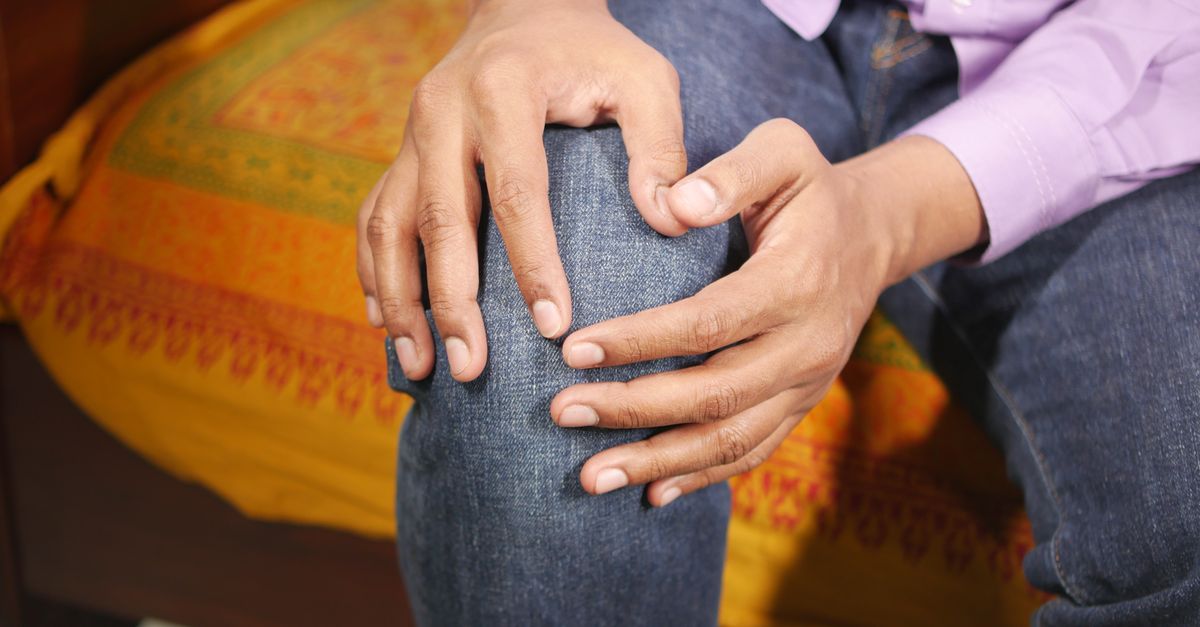
Knees most often hurt at night because of osteoarthritis, bursitis, tendon irritation, or gout. Lying still for hours lets stiff joints and inflamed tissue become more noticeable. Sleep position also adds pressure when the knees press together or stay locked straight for long periods. A pillow between or under the knees, a gentle evening routine, and massage to the thigh and hamstring muscles can make nights more comfortable, but a hot, swollen knee, fever, or pain after an injury needs prompt medical evaluation.
You finally settle into bed, and within an hour the ache starts. If you have lain awake wondering why do my knees hurt at night, you already know the feeling: a dull throb along the inside of the knee, or a deep stiffness that makes rolling over feel like a project. The answer usually comes down to a few specific causes that behave differently once your legs stop moving.
Daytime activity masks a lot of joint discomfort. At night, with no distractions and no movement, that same discomfort moves to the front of your attention.
This guide is for adults whose sleep is being interrupted by sore knees, whether from arthritis, long days on your feet, or an ache that has no obvious explanation yet. It covers the most likely causes, why they flare after dark, the sleep positions and evening habits that help, and the warning signs that mean it is time to see a doctor.
Common Causes of Knee Pain at Night
Several conditions can explain knee pain at night, and each has its own signature. Paying attention to where the pain sits, what it feels like, and how it started will help you and your doctor narrow down the cause.
Osteoarthritis and Rheumatoid Arthritis
Mayo Clinic describes osteoarthritis as the gradual wearing down of the protective cartilage that cushions the ends of bones. In the knee, this produces a deep, aching pain, stiffness after rest, and sometimes a grinding sensation when you bend the joint. Because stiffness builds during inactivity, osteoarthritis pain often feels worst at bedtime and first thing in the morning.
Rheumatoid arthritis works differently. It is an autoimmune condition in which the immune system attacks the joint lining, and it tends to affect both knees at once. Prolonged morning stiffness and swelling in other joints, such as the hands, are clues that point toward this form of arthritis.
Bursitis
Mayo Clinic describes bursitis as inflammation of the bursae, the small fluid-filled sacs that cushion bones, tendons, and muscles near joints. The knee has several of them. Pes anserine bursitis causes pain on the inner knee just below the joint line, while prepatellar bursitis causes swelling over the front of the kneecap.
Bursitis pain at night often shows up when you lie on your side and one knee rests on top of the other. That direct pressure on an inflamed bursa is enough to wake you.
Tendon Irritation
Overused or irritated tendons produce a sharper, more localized ache that tends to flare after an active day. The structures most often involved around the knee include:
- The patellar tendon, just below the kneecap
- The quadriceps tendon, just above the kneecap
- The iliotibial (IT) band, along the outer knee
- The hamstring tendons, at the back and inner side of the knee
Tendon pain is usually tied to a specific activity, such as climbing stairs, kneeling, or a sudden jump in walking distance.
Gout
Mayo Clinic describes gout as a form of arthritis marked by sudden, severe attacks of pain, swelling, redness, and tenderness in a joint. It is caused by uric acid crystals building up in the joint. The big toe is the classic site, but the knee can be affected too. Gout flares frequently begin overnight, and the knee may become so tender that even the weight of a bedsheet hurts.
Why Knee Pain Feels Worse After Dark
None of these conditions keeps a schedule, yet knee pain has a way of surfacing after dark. The reasons are mostly mechanical, not mysterious. Lying still for hours lets stiffness build in arthritic joints and the muscles around them, and any inflammation stirred up by daytime activity has a chance to catch up with you once you stop moving. Without daytime distractions, your brain also pays closer attention to pain signals.
Sleep position adds its own load:
- Side sleeping presses one knee against the other, loading irritated bursae and tendons.
- Keeping the knees fully straight or tightly bent for long stretches strains the joint capsule.
- Cooler bedroom temperatures can make stiff joints feel tighter.
If your knees ache more in winter, temperature is likely part of the picture. Our guide to knee pain in cold weather and practical remedies covers that angle in more detail.
Where Massage Fits for Sore Knees at Night
Massage will not change the cartilage in an arthritic knee or dissolve gout crystals. What it can do is address the large muscles that support the knee and tend to tighten after a long day or a long night of stillness.
Target the Thighs and Hamstrings, Not the Kneecap
Your quadriceps and hamstrings control how the knee moves and how much load it absorbs. When these muscles stay tight, they can add tension around the joint itself. Working on them in the evening keeps pressure off the sore joint while still supporting the area.
The MedMassager Body Massager is designed for this kind of use. You apply its large, soft, cushioned pad directly to the front of the thigh and the hamstrings, and the pad contours to the muscle. Its circular oscillating action creates continuous, repetitive movement in the quadriceps and hamstrings, which supports local blood flow in these large muscle groups during use.
That movement matters most when the muscle tissue around the joint has stiffened from a long day or hours of stillness. If tendon irritation is part of the picture, the same deep oscillation moves the surrounding muscle, helping increase blood flow in areas that feel stiff or overused.
Oscillation Versus Ordinary Vibration
Many massagers are sold as vibration massagers, which usually means a motor shaking the unit. MedMassager uses oscillating technology to deliver deeper, more controlled vibration than conventional massagers. The Body Massager oscillates in a circular motion, combining vibration and circular rotation, and it is an FDA-registered Class I medical device with adjustable intensity. You can compare options in our guide to the best massager for knee pain.
Keep a few boundaries in mind with any massager:
- Do not place the pad directly on the kneecap.
- Do not use it on a knee that is hot, red, or visibly swollen.
- Skip massage near the knee during an active gout flare.
- Avoid areas with an open wound or a recent injury that has not been evaluated.
Sleep Positions When Your Knees Hurt at Night
Small changes in how you lie down can take pressure off irritated structures. The goal is to keep the knee slightly bent, supported, and free from direct contact with the other leg.
If you sleep on your side, place a firm pillow between your knees and ankles. This keeps your hips, knees, and ankles aligned and stops one knee from pressing on the other, which matters most when inner knee bursitis is part of the picture. Back sleepers get a similar benefit from a pillow or rolled towel under the knees so they rest in a slight bend instead of locking straight.
Stomach sleeping is the hardest position on sore knees. It pushes the knees into extension and twists the lower body. If you can't avoid it, a thin pillow under the shins eases the strain.
A few other details shape how your knees feel by morning:
- A mattress that sags lets your hips sink, which changes the angle at your knees.
- Keep your knee pillow within reach so it is easy to reposition if you turn over.
- Experiment with one change at a time for a few nights so you can tell what actually helps.
An Evening Routine for Night Knee Pain
A short, consistent wind-down can reduce how often sore knees wake you. Try this sequence about an hour before bed:
- Take a short walk. Five to ten minutes of easy walking loosens the joint without adding strain.
- Stretch gently. Hold a seated hamstring stretch and a standing or side-lying quadriceps stretch for about 30 seconds each, two to three times per side. Stop short of pain.
- Apply heat or cold based on the situation. Warmth suits chronic stiffness. A cold pack for 15 to 20 minutes, wrapped in a cloth, suits a knee that feels warm or puffy after activity.
- Massage the thighs and hamstrings. Seated on the couch or lying down, rest the pad of a cushioned-pad body massager on the front of one thigh, then the back. Start with about 10 minutes total at the lowest setting, once in the evening, and increase intensity only if it feels comfortable.
- Set up your sleep position. Place your knee pillow before you get drowsy so you don't skip it.
For knees affected by arthritis, the massage step is about the muscles, not the joint. The pad's circular oscillating action creates repeated movement in the thigh and hamstring muscles, which supports blood flow through the tissue around the joint. That is why the pad belongs on the thigh and hamstring rather than the kneecap. Use this alongside whatever your doctor has recommended, not in place of it.
Daytime habits feed into nights as well. Spreading activity across the day rather than packing it into the evening, staying hydrated, and wearing supportive shoes all reduce how much irritation your knees carry to bed.
When Knee Pain at Night Needs a Doctor
Night knee pain is usually uncomfortable rather than dangerous, but some signs call for prompt medical care. Contact a doctor or seek urgent care if you notice any of the following:
- A knee that is hot, red, and swollen
- Fever or chills along with knee pain, which can signal a joint infection
- Pain that began after a fall, twist, or other injury
- Inability to bear weight or straighten the leg
- A knee that locks, catches, or gives way
- Calf swelling, warmth, or tenderness, which can indicate a blood clot (keep any massager off that leg until a doctor rules a clot out)
- Pain that wakes you every night and keeps getting worse
Even without red flags, see a doctor if knee pain at night lasts more than a few weeks or disrupts your sleep regularly. A physician or physical therapist can examine the joint, order imaging if needed, and identify whether arthritis, bursitis, tendon irritation, or gout is behind it.
Frequently Asked Questions
Why do my knees hurt at night but not during the day?
During the day, movement keeps the joint and surrounding muscles loose, and activity distracts you from mild pain. At night, hours of stillness let stiffness build, and sleep positions can press on irritated tissue. With fewer distractions, you also notice pain signals more clearly.
Is knee pain at night a sign of arthritis?
Night pain can be a sign of osteoarthritis or rheumatoid arthritis, especially when it comes with stiffness after rest. It can also come from bursitis, tendon irritation, or gout. A doctor can confirm the cause through an exam and, if needed, imaging or blood tests.
Should I sleep with a pillow between my knees?
If you sleep on your side, a pillow between your knees keeps your hips and knees aligned and prevents one knee from pressing on the other. This is especially helpful for inner knee bursitis. Back sleepers get a similar benefit from a pillow placed under the knees.
Is heat or ice better for knee pain at night?
Heat works well for chronic stiffness, such as osteoarthritis that tightens up in the evening. Ice suits a knee that feels warm or swollen after activity, applied for 15 to 20 minutes with a cloth barrier. Never apply heat to a knee that is hot, red, and swollen.
Can a massager help with knee pain at night?
A massager does not treat knee pain, but used in the evening before bed, it can relax the thigh and hamstring muscles that support the knee. The MedMassager Body Massager oscillates in a circular motion, and that repeated movement helps move blood through the muscle tissue supporting the joint. Keep the pad off the kneecap and off any knee that is hot or swollen.
When should I worry about knee pain that wakes me up?
Seek prompt care if the knee is hot and swollen, if you have a fever, or if the pain started after an injury. Pain that wakes you every night, worsens over time, or lasts more than a few weeks also warrants an exam. Early evaluation makes it easier to find the cause and manage it.
The Bottom Line
If you keep asking why do my knees hurt at night, the most likely causes are arthritis, bursitis, tendon irritation, or gout, made more noticeable by stillness and sleep position. A pillow between or under the knees, a short evening routine of walking and stretching, and massage aimed at the thighs and hamstrings can all make nights easier.
Watch for red flags like a hot, swollen knee, fever, or pain after an injury, and see a doctor when they appear. To add evening muscle work to your routine, explore our therapeutic body massagers for the legs or browse the complete MedMassager catalog. The Body Massager's circular oscillating action moves the thigh and hamstring muscles, which supports blood flow through the tissue around the joint during use.
This content is for informational purposes only and is not intended as medical advice, diagnosis, or treatment. Always consult a qualified healthcare professional before starting any new treatment or therapy. MedMassager products are FDA-registered Class I medical devices.


