
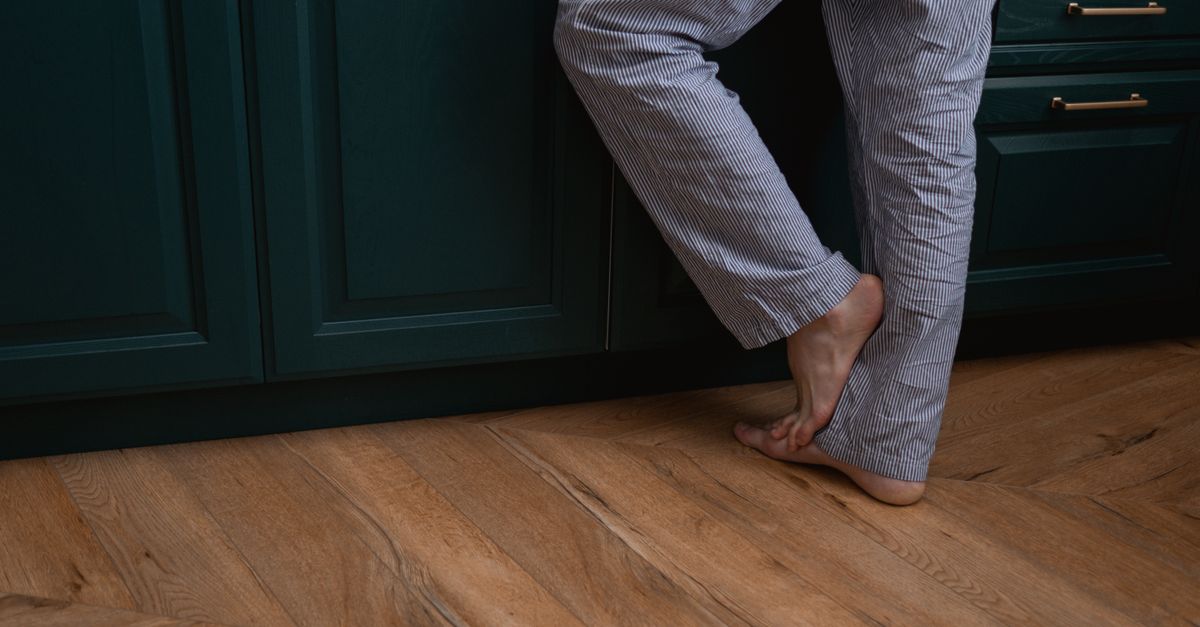
Heel pain from walking barefoot usually comes from repeated impact on hard floors with no cushioning between the heel bone and the ground. The three most likely causes are heel fat pad bruising, plantar fasciitis, and irritation around a heel spur. Wearing supportive house shoes, reducing barefoot time on tile or hardwood, and stretching the calves can all ease symptoms. Pain that lasts more than a few weeks, follows an injury, or comes with numbness or swelling should be evaluated by a podiatrist.
You kick off your shoes the moment you get home, then spend the evening crossing tile, hardwood, or laminate floors in bare feet. By the next morning, the first step out of bed sends a sharp ache through your heel, and heel pain from walking barefoot like this is more than ordinary tiredness. Hard floors at home put steady, unpadded impact on a part of the foot built to absorb shock. When that system gets overloaded, it lets you know.
This guide is for anyone whose heels ache after time barefoot indoors, especially if you work from home, have recently switched to hard flooring, or are on your feet doing chores for hours. You will learn how to tell fat pad bruising from plantar fasciitis and heel spurs, why your floors matter, what to look for in house shoes, a simple daily routine, and the signs that mean it is time to see a podiatrist.
Why Bare Feet on Hard Floors Hurt
Your heel takes the first hit with nearly every step you take. Shoes add a layer of cushioning and support that bare feet do not have, so walking barefoot shifts the full load onto your own anatomy.
The Heel Fat Pad Is Your Built-In Cushion
Beneath the heel bone (the calcaneus) sits a thick, specialized pad of fatty tissue held in place by fibrous walls. This fat pad works like a shock absorber, spreading the force of each heel strike so the bone is not pounded directly. It thins and loses some of its springiness with age, which is one reason heel pain on hard floors can appear later in life even if you walked barefoot without trouble for decades.
Hard Floors Remove the Give
Grass, sand, and carpet compress slightly underfoot. Tile, concrete, stone, and hardwood do not. On an unyielding surface, all of the impact travels back into the heel, the fat pad, and the plantar fascia along the bottom of the foot.
Several everyday habits increase that load:
- Walking barefoot for long stretches on tile, stone, or concrete floors
- Standing still for long periods while cooking, cleaning, or folding laundry
- Heel-striking hard when walking quickly around the house
- Recent weight gain, which raises the force on each step
- Tight calf muscles, which pull on the heel and the plantar fascia
- Moving to a new home with harder flooring than you are used to
Which Heel Condition Matches Your Symptoms?
Barefoot heel pain is a symptom, not a diagnosis. Where the pain sits, what it feels like, and when it is worst offer useful clues about what is going on.
Heel Fat Pad Bruising
Fat pad bruising produces a deep, dull ache in the center of the heel, often described as feeling like you stepped on a stone. It is typically worse when walking barefoot on hard surfaces and improves when you wear cushioned shoes. Pressing on the middle of the heel pad often reproduces the pain.
Fat pad problems are easy to mistake for plantar fasciitis. For a closer look, read our guide to heel fat pad syndrome causes, symptoms, and care.
Plantar Fasciitis
Mayo Clinic describes plantar fasciitis as inflammation of the thick band of tissue that runs across the bottom of the foot and connects the heel bone to the toes. The classic sign is a stabbing pain near the front or inside of the heel with the first steps in the morning or after sitting for a while. The pain often eases once you get moving, then returns after long periods on your feet.
Plantar fasciitis from walking barefoot tends to build gradually. Without arch support, the fascia stretches and strains with every step on a hard floor.
Heel Spurs
A heel spur is a calcium deposit that forms on the underside of the heel bone, frequently alongside long-term plantar fascia strain. The spur itself is often painless and may only show up on an X-ray. When pain is present, it usually comes from inflamed soft tissue around the spur, and it can feel similar to plantar fasciitis.
Quick comparison of the three:
- Fat pad bruising: center of the heel, deep bruise-like ache, worst when barefoot
- Plantar fasciitis: front or inner heel, sharp pain with first steps after rest
- Heel spur: underside of the heel, pain from surrounding tissue, confirmed by imaging
Where Massage and Oscillation Fit for Sore Heels
Rest and cushioning address the cause of barefoot heel pain. Massage plays a supporting role by keeping blood moving through the foot and lower leg during the hours you spend sitting.
Why Blood Flow Matters for Heel Pain
When you sit for long periods, the muscles of the feet and calves stay still, and circulation in the lower legs slows. Movement is what keeps blood flowing through tissue under strain. For plantar fasciitis, oscillating motion keeps blood flowing through the foot instead of settling during rest. For heel spurs, gentle, repeated movement keeps blood from settling in the heel for extended periods.
Massage is not a fix for a thinned or bruised fat pad. That tissue mainly needs less impact and better cushioning. Massage fits into the time you spend off your feet as part of a broader plan. For more detail on techniques, see our article on massage for heel pain.
Oscillation vs. Standard Vibration
Foot massagers are often sold as vibration massagers. MedMassager uses oscillating technology to deliver deeper, more controlled vibration than conventional massagers. The Foot Massager oscillates in a circular motion across an open, flat platform, with adjustable intensity settings so you can start gently and increase as you get comfortable.
Key points about how the MedMassager Foot Massager is designed to be used:
- Used seated, sitting upright with both feet resting flat on the platform
- Circular oscillating action engages the feet, ankles, and calves
- Multiple intensity settings, starting from a low level
- An FDA-registered Class I medical device
You can browse our collection of therapeutic foot massagers.
Supportive House Shoes and Home Changes
The simplest way to reduce heel pain on hard floors is to stop walking on them barefoot. A good pair of indoor shoes restores the cushioning and arch support your heels are missing. Thin, flat slippers with no structure do little to change the load on your heel.
When choosing house shoes for heel pain, look for these features:
- A firm, cushioned heel with real depth under the heel bone
- Built-in arch support or room for a supportive insert
- A slight heel-to-toe drop rather than a completely flat sole
- A closed or strapped back that keeps the heel centered on the cushion
- A non-slip outsole for tile and hardwood
Your home setup matters too. Anti-fatigue mats in front of the kitchen sink and stove reduce strain during long stretches of standing. Area rugs on high-traffic paths soften the surfaces you cross most often. Keep supportive shoes beside the bed so your first steps of the day are not on a bare floor, since those steps are when plantar fasciitis pain tends to peak.
A Daily Routine for Barefoot Heel Pain
Consistency matters more than intensity. The routine below combines stretching, impact reduction, and seated movement into steps that fit around a normal day.
- Stretch before standing. Before getting out of bed, loop a towel around the ball of your foot and gently pull your toes toward you for 20 to 30 seconds. Repeat three times on each foot.
- Put on supportive shoes for your first steps. Slip into cushioned house shoes before your feet touch the floor.
- Stretch your calves. Stand facing a wall with one leg back and the heel down, then lean forward until you feel the stretch in the calf. Hold for 30 seconds and repeat on both sides, two or three times a day.
- Take a seated massage session. Sit upright in a supportive chair with both feet flat on the Foot Massager platform. Start with about 10 minutes at the lowest setting, once or twice a day. The circular oscillating action engages the calf muscles, and calf activation pushes blood upward, supporting blood flow around strained areas of the lower leg.
- Ice after long days. Apply a wrapped ice pack to the heel for 10 to 15 minutes after extended time on your feet.
- Limit barefoot time. Keep shoes on for chores and long stretches of standing, saving bare feet for carpeted areas.
If a massage session increases your heel pain, lower the intensity or shorten the session. A sore, bruised fat pad may need a few days of rest from pressure before massage feels comfortable. You can browse Foot Massagers built for seated use to see which suits your routine.
Heel Pain From Walking Barefoot: When to Worry
Mild heel pain often improves within a few weeks once you reduce barefoot walking and add support. Some symptoms point to a problem that needs professional evaluation. A podiatrist can examine the foot, order imaging if needed, and recommend options such as custom orthotics, heel cups, or physical therapy.
Red Flags That Need Attention
Make an appointment with a podiatrist or your doctor if you notice any of the following:
- Pain that has not improved after two to three weeks of home care
- Heel pain that started after a fall, jump, or sudden impact
- Swelling, redness, warmth, or bruising on the heel
- Numbness, tingling, or burning in the foot
- Pain severe enough that you cannot put weight on the heel
- Pain that wakes you at night or is present even at rest
Special Considerations for Diabetes and Neuropathy
If you have diabetes or peripheral neuropathy, walking barefoot carries added risk. Reduced sensation can hide cuts, blisters, or pressure injuries until they become serious. Check your feet daily, wear shoes indoors, and report any new heel pain or skin changes to your care team promptly. Before starting any foot massage routine, ask your own doctor or podiatrist whether it is appropriate for your situation.
Frequently Asked Questions
Why do my heels hurt after walking barefoot on hardwood floors?
Hardwood floors do not compress underfoot, so the full force of each step travels into your heel bone, fat pad, and plantar fascia. Without the cushioning and arch support of shoes, those tissues absorb more strain than usual. Over time this can bruise the fat pad or irritate the plantar fascia.
How do I know if it is plantar fasciitis or a bruised heel?
Plantar fasciitis usually causes sharp pain near the front or inner heel that is worst with the first steps after rest. A bruised fat pad causes a deep, dull ache in the center of the heel that worsens with barefoot walking on hard surfaces. A podiatrist can confirm the cause with a physical exam and, if needed, imaging.
Is it bad to walk barefoot around the house?
Walking barefoot on soft surfaces for short periods is generally fine for healthy feet. Long stretches on tile, stone, or hardwood can overload the heel, especially if you already have heel pain, tight calves, or a thinning fat pad. If your heels ache after time barefoot, supportive house shoes are a sensible change.
How long does heel pain from walking barefoot take to go away?
Mild heel pain often improves within a few weeks once you reduce barefoot walking, wear supportive shoes, and stretch regularly. Plantar fasciitis can take longer, sometimes several months, to fully settle. Pain that does not improve after two to three weeks of home care should be evaluated by a podiatrist.
Can a foot massager help with heel pain?
A foot massager can support blood flow through the feet and calves while you sit, which fits alongside stretching, rest, and supportive footwear. The MedMassager Foot Massager oscillates in a circular motion, and that oscillating motion keeps blood flowing through the foot instead of settling during rest. It is used seated with your feet flat on the platform and does not replace care from your doctor or podiatrist.
What kind of slippers are best for heel pain?
Look for house shoes with a deep, cushioned heel, built-in arch support, and a slight heel-to-toe drop. A closed or strapped back helps keep your heel centered on the cushion. Thin, flat slippers without structure offer little relief on hard floors.
The Bottom Line on Barefoot Heel Pain
Heel pain from walking barefoot usually traces back to hard floors, missing cushioning, and repeated strain on the fat pad and plantar fascia. Supportive house shoes, softer surfaces at home, daily calf and foot stretches, and regular seated movement address the problem from several angles at once. The circular oscillating action of the Foot Massager creates continuous, repetitive movement in the foot and calf, which supports circulation during use.
If pain lingers beyond a few weeks or comes with swelling, numbness, or an injury, see a podiatrist. To add seated circulation support to your routine, explore the MedMassager Foot Massager collection.
This content is for informational purposes only and is not intended as medical advice, diagnosis, or treatment. Always consult a qualified healthcare professional before starting any new treatment or therapy. MedMassager products are FDA-registered Class I medical devices.


