
Vastus lateralis pain is an ache, tightness, or tenderness along the outer front of the thigh that comes from the largest of the four quadriceps muscles. It usually develops from repetitive knee-straightening work such as climbing stairs, cycling, squatting, and rising from low chairs, and it can send pain toward the outside of the knee. It differs from IT band pain, which comes from a fibrous band of connective tissue and tends to feel sharper over the bony outer knee. Stretching, massage, gradual changes to activity, and rest can help ease a tight vastus lateralis, while sudden knee swelling, locking, or instability needs a clinician's evaluation.
You notice it on the way down a flight of stairs: a deep, nagging ache along the outside of your thigh, just above the knee. If that sounds familiar, you may be dealing with vastus lateralis pain, one of the more overlooked sources of outer thigh discomfort. It shows up after a week of extra stair climbing at work, a new bike commute, a weekend spent squatting in the garden, or a return to activity after months of sitting.
The outer quad does a lot of work without much attention. It helps straighten your knee every time you stand up, and it helps steady your kneecap as you move. When it gets overloaded, the discomfort can feel like it's coming from the knee, the IT band, or the hip, which makes it easy to misread.
Knowing how the muscle works, what strains it, and how its pain differs from IT band pain makes the discomfort much easier to manage. It also makes it clearer which knee symptoms need a professional look.
Where the Vastus Lateralis Sits and Why
Understanding where the muscle runs and what it does makes the symptoms much easier to interpret. The vastus lateralis covers a large stretch of the outer thigh, and its attachments explain why trouble here so often shows up near the knee.
The Largest Quadriceps Muscle
Cleveland Clinic describes the quadriceps as a group of four muscles at the front of the thigh that work together to straighten the knee. Those four are the rectus femoris, vastus medialis, vastus intermedius, and vastus lateralis. Of the four, the vastus lateralis is the largest.
It starts high on the outer femur, near the bony bump of the hip known as the greater trochanter, and runs down the outside of the thighbone. Near the knee, it joins the other quadriceps muscles to form the quadriceps tendon, which wraps around the kneecap and continues as the patellar tendon to the shinbone. Part of the vastus lateralis also blends into the connective tissue on the outer side of the kneecap. The IT band runs over the top of it, which is one reason the two get confused.
What the Muscle Does
The vastus lateralis has two main jobs. It straightens the knee, and it helps control the position of the kneecap as the knee bends and extends. It works as a counterbalance to the vastus medialis on the inner thigh, and smooth knee movement depends on both sides pulling evenly.
How Overuse Builds Up
The muscle works hardest when the knee straightens against body weight or resistance, and it also works when it controls the knee on the way down. Repetition, more than a single event, is what tends to overload it. Typical triggers include:
- Climbing stairs, and especially descending them, where the quad lengthens under load
- Cycling, particularly with a saddle set too low or with long hill climbs
- Squatting, kneeling-to-standing work, and repeated lifting from the floor
- Rising from low chairs or sofas many times a day
- Sudden increases in walking, hiking, or stair volume after a period of inactivity
- Long stretches of sitting, which leave the muscle shortened and stiff before it's asked to work
A direct blow to the outer thigh can also bruise the muscle, and a forceful movement can strain it. Those cases usually come with a clear moment of onset rather than a gradual build.
Symptoms of Vastus Lateralis Pain
Outer quad discomfort has a fairly recognizable character once you know what to look for. The symptoms tend to center on the muscle itself, though they can spread toward the knee and hip.
What It Feels Like
The discomfort is usually a dull, deep ache rather than a sharp or burning pain. Signs that point toward the vastus lateralis include:
- Tenderness when you press along the outer front of the thigh
- Aching that gets worse with stairs, squats, or getting up from a chair
- Stiffness in the thigh after sitting, which eases somewhat once you start moving
- A tight, pulling feeling when you bend the knee fully
- Soreness above the knee on the outside, especially after a busy day
The Link to Outer Knee Pain
Because the vastus lateralis connects into the outer side of the kneecap, a tight or overworked muscle can affect how the kneecap tracks. If the outer quad pulls harder than the inner quad, the kneecap may be drawn slightly outward as the knee moves. That imbalance can contribute to pain around the front and outer edge of the kneecap.
The American Academy of Orthopaedic Surgeons describes patellofemoral pain syndrome as pain at the front of the knee, around the kneecap. Vastus lateralis tightness is one of several possible contributors, alongside hip weakness, foot mechanics, and training load. A clinician can sort out which factors apply to your knee.
Trigger Points and Referred Pain
Tight, tender knots can form within the vastus lateralis. When pressed, these spots may send discomfort along the outer thigh or down toward the side of the knee. This referred pattern is part of why outer thigh pain can feel like a knee problem even when the joint itself is healthy.
Vastus Lateralis Pain vs. IT Band Pain
The IT band (iliotibial band) is a thick strip of connective tissue that runs from the hip down the outside of the thigh to just below the knee. It sits directly over the vastus lateralis, so pain in this region can come from either structure, or both.
Key Differences at a Glance
| Feature | Vastus Lateralis | IT Band |
|---|---|---|
| Tissue type | Muscle | Fibrous connective tissue |
| Pain quality | Dull, deep ache in the thigh | Sharper or burning pain at the outer knee |
| Main location | Outer front of the thigh, above the knee | Bony outer knee, sometimes the outer hip |
| Main triggers | Stairs, squats, cycling, rising from chairs | Repeated knee bending during running or long walks |
| Tender to press | Along the muscle belly | Over the bony bump on the outer knee |
A Simple Self-Check
A few quick observations can help you describe your symptoms to a clinician:
- Press along the outer front of the thigh. Broad muscle tenderness leans toward the vastus lateralis.
- Press on the bony bump just above the outer knee joint line. Sharp, pinpoint tenderness there leans toward the IT band.
- Note whether the pain is worse straightening the knee under load, or during repeated bending on long walks or runs.
This is not a diagnosis. The two conditions often overlap, and a physical therapist or physician can confirm what's going on.
Why the Distinction Matters for Massage
Muscle tissue responds to massage differently than a dense fibrous band. The vastus lateralis is a large, fleshy muscle with plenty of blood supply, which makes it well suited to broad, sustained pressure. If your symptoms lean more toward the band itself, our guide to massagers for IT band tightness covers that area in more detail.
Where Massage Fits for the Outer Thigh
Massage won't fix the load or mechanics that caused the problem, but it can support the muscle while you address those factors. The goal is to increase local blood flow and help tight tissue relax so stretching and movement feel easier.
Blood Flow and Muscle Tissue
Overworked muscle tends to feel stiff, particularly after long periods of sitting. Steady mechanical movement on the tissue encourages circulation through the area. For the thigh, the principle is simple: deep oscillation increases local blood flow in large muscle groups, supporting recovery during rest.
The same idea applies to the area just above the knee. Repeated rhythmic movement helps move blood through the muscle tissue supporting the joint. Keep massage on the muscle and away from the kneecap itself.
Oscillation vs. Typical Vibration Massagers
Handheld massagers are often sold on vibration alone. MedMassager uses oscillating technology to deliver deeper, more controlled vibration than conventional massagers. The Body Massager moves in a controlled circular oscillation, so the movement reaches beyond the surface of a large muscle like the vastus lateralis rather than simply buzzing against it.
The Body Massager is an FDA-registered Class I medical device with adjustable intensity settings. You can see the options in the MedMassager Body Massager collection.
Why a Cushioned Pad Fits the Thigh
The outer thigh is a long, curved surface. A small, hard massage head covers it one narrow strip at a time, while a broad pad spreads pressure across more of the muscle. The Body Massager has a large, soft, cushioned contouring pad that forms to the body, plus slip-resistant handles that make it easier to hold steady on the leg. Features that suit thigh use include:
- A large contact surface that spreads pressure across more of the outer quad
- Adjustable intensity, so you can start gently on a sore muscle
- The option to use it seated or lying down, without needing a partner
Because the quadriceps work as a group, the front of the thigh often needs attention too. Our article on massage for the rectus femoris covers the center of the quad.
Stretches and a Daily Routine
A short, consistent routine tends to do more than an occasional long session. Pair gentle stretching with massage and small adjustments to how you load the muscle.
Three Stretches for the Outer Quad
Hold each stretch for about 30 seconds, repeat two or three times per side, and stay in a range that feels like a stretch rather than pain.
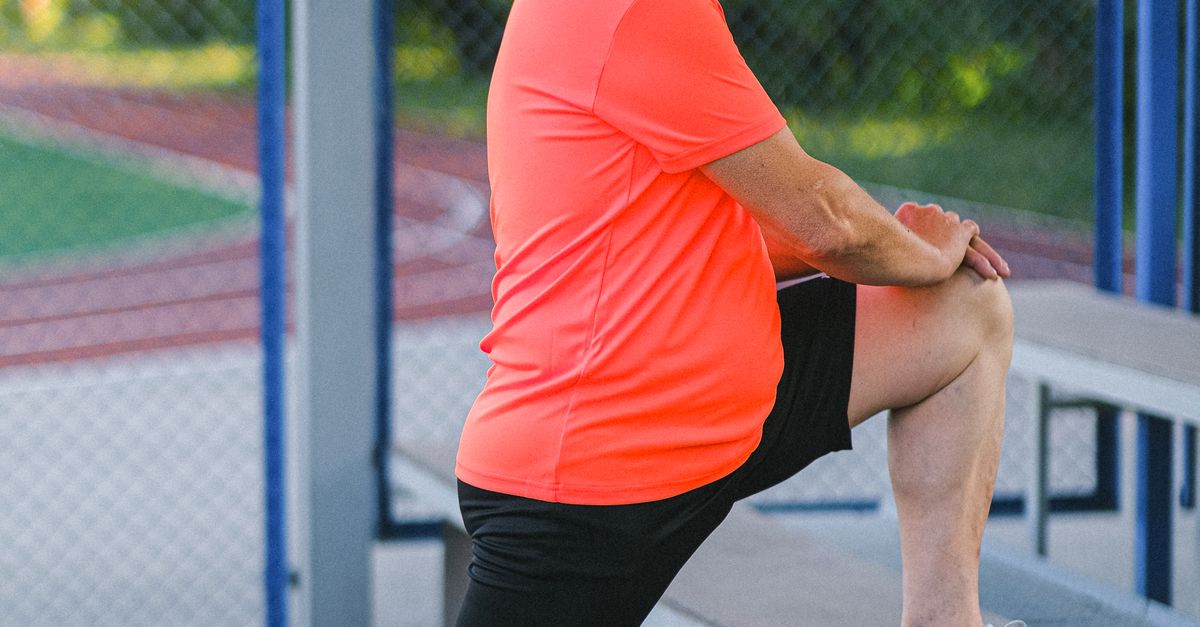
- Standing quad stretch: Hold a counter or wall for balance. Bend one knee and bring your heel toward your buttock, holding the ankle. Keep your knees together and press your hip slightly forward. Angling the heel a little toward the opposite buttock shifts the stretch toward the outer quad.
- Side-lying quad stretch: Lie on your side with the bottom knee bent for stability. Bend the top knee and draw the heel back with your hand. This version is easier on balance and on the lower back.
- Kneeling hip flexor and quad stretch: Kneel on a cushion with one foot forward in a lunge position. Tuck your pelvis under and shift gently forward until you feel a stretch along the front of the thigh on the kneeling leg. Reach the same-side arm overhead to extend the stretch upward.
A Body Massager Routine for the Thigh
Massage before stretching can make the muscle feel looser and more willing to lengthen. A reasonable starting point:
- Sit with your leg extended on a sofa or bed, or lie on your back with the knee straight and relaxed.
- Place the cushioned pad on the outer front of the thigh, about halfway between the hip and the knee.
- Start at the lowest setting. Hold the pad in place for one to two minutes, letting the circular oscillating action work into the muscle.
- Move the pad a few inches toward the hip, then a few inches toward the knee, stopping above the kneecap.
- Repeat on the other leg if both are tight.
Start with about 10 minutes total at the lowest setting, once or twice a day. Increase intensity only if the muscle feels comfortable. Because deep oscillation increases local blood flow in large muscle groups, using the pad after a long day of stairs or a bike ride can help the thigh settle during rest. The cushioned-pad body massagers collection shows the available options.
Balancing the Load
Stretching and massage work best alongside changes that reduce strain on the outer quad. If you cycle, check your saddle height. A knee that stays deeply bent at the bottom of each pedal stroke keeps the quad working in a shortened, loaded position. On stairs, keep a steady pace and use the handrail on the way down, which is when the muscle lengthens under your body weight.
After a period of inactivity, build stair and walking volume gradually rather than all at once. Add inner quad and hip strengthening, such as straight-leg raises and side-lying leg lifts, to balance the pull on the kneecap. And break up long sitting with short walks so the thigh isn't stiff when you stand.
When Knee Swelling Needs a Clinician
Outer thigh tightness from overuse usually improves with rest and gradual changes. Certain signs point to something beyond a tight muscle and should be checked by a physician or physical therapist promptly:
- Knee swelling that appears suddenly, especially after a twist, fall, or impact
- Swelling that lasts more than a few days or keeps coming back
- A knee that locks, catches, or gives way
- Inability to bear weight or fully straighten the knee
- Warmth, redness, or fever along with knee or thigh pain
- Swelling, warmth, or tenderness in the calf, which can signal a blood clot
- Numbness, tingling, or weakness down the leg
- A visible dent or bulge in the thigh after a sudden strain
Hold off on any self-massage over an area with a fresh injury, a deep bruise, or suspected clot. If you take blood thinners, have had recent surgery, or have a diagnosed circulatory condition, ask your own care team before starting a massage routine. When in doubt about whether pain is coming from the muscle or the joint, an exam settles it quickly.
Frequently Asked Questions
What causes vastus lateralis pain?
Vastus lateralis pain usually comes from repetitive knee-straightening work, such as climbing and descending stairs, cycling, squatting, and rising from low chairs. Sudden increases in activity after a period of inactivity can also overload the muscle. Less often, a direct blow or a forceful movement can bruise or strain it.
Can a tight vastus lateralis cause knee pain?
Yes, a tight vastus lateralis can contribute to pain on the outer side of the knee. The muscle connects into the outer edge of the kneecap, so excessive tightness can affect how the kneecap tracks during movement. Trigger points in the muscle can also refer discomfort toward the side of the knee.
How do I know if it's my IT band or my vastus lateralis?
Vastus lateralis pain tends to be a dull ache with broad tenderness along the outer front of the thigh. IT band pain is usually sharper and centered over the bony bump on the outer knee. The two often overlap, so a physical therapist or physician is the best person to confirm the source.
How long does an overworked vastus lateralis take to heal?
Mild overuse soreness often eases within a few days to two weeks with reduced load, stretching, and gentle activity. A true muscle strain can take several weeks, depending on its severity. Pain that isn't improving after two weeks, or that comes with knee swelling, should be evaluated by a clinician.
Does a body massager help with outer thigh pain?
A body massager can support an overworked outer thigh by increasing local blood flow in the muscle. The MedMassager Body Massager's circular oscillating action moves the thigh muscle repeatedly against its cushioned pad, which supports circulation through the tissue during use. It works best alongside stretching, load adjustments, and any care your doctor has recommended.
Should I stretch or rest a sore outer quad?
Both have a place. Gentle stretching and light movement help prevent stiffness, while reducing the activity that triggered the pain gives the muscle time to settle. Stretch only within a comfortable range, and stop if stretching makes the pain sharper.
The Bottom Line
Vastus lateralis pain usually traces back to repetitive load from stairs, cycling, squatting, and long sitting followed by sudden activity. Knowing how it differs from IT band pain, and how it can affect the outer knee, helps you choose the right stretches, massage, and activity changes.
A consistent routine of gentle stretching, short massage sessions, and gradual load management gives the outer quad the best chance to settle, while any sudden or persistent knee swelling deserves a clinician's attention. The Body Massager's circular oscillating action creates continuous, repetitive movement in the thigh muscle, which supports circulation during use. When you're ready to add massage to that routine, explore our therapeutic body massagers for thigh and leg tightness, or browse the full MedMassager catalog to compare the Body Massager with other options.
This content is for informational purposes only and is not intended as medical advice, diagnosis, or treatment. Always consult a qualified healthcare professional before starting any new treatment or therapy. MedMassager products are FDA-registered Class I medical devices.


