
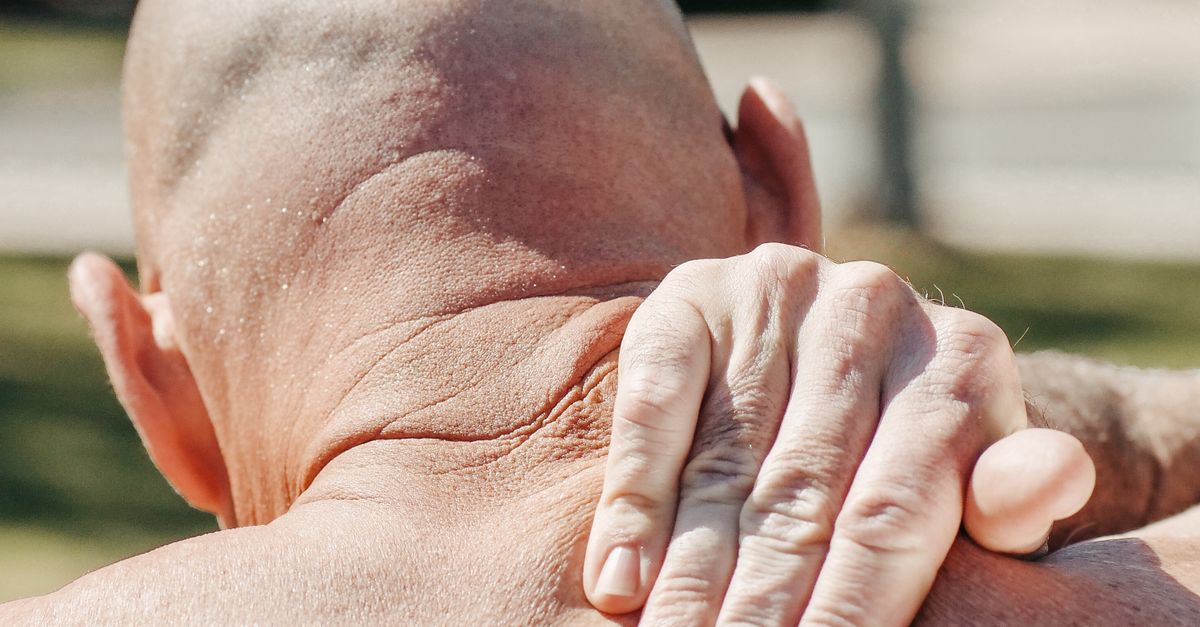
Top of shoulder pain usually comes from one of four sources: tension in the upper trapezius muscle, irritation of the acromioclavicular (AC) joint, problems with the supraspinatus tendon of the rotator cuff, or pain referred from the neck. Muscle tension tends to feel like a dull ache near the neck, while AC joint and tendon problems tend to hurt at a specific point and worsen with arm movement. Muscle-related cases often improve with posture changes, activity adjustments, heat or ice, and gentle massage. Left shoulder pain with chest pressure or shortness of breath is a medical emergency that requires calling 911.
You reach up to grab something off a high shelf, or turn your head to check a blind spot, and a sharp or aching pull flares across the top of your shoulder. Top of shoulder pain is frustrating because the small strip of anatomy between your neck and the point of your shoulder holds several structures that can all hurt in nearly the same place. A tight muscle, an irritated joint, a strained tendon, and a pinched nerve in the neck can each send pain to that spot.
This guide is for you if you're trying to figure out why the top of your shoulder hurts: a constant ache near the neck after desk work, a pinch when lifting your arm overhead, or pain that wakes you when you lie on one side. Knowing the likely source helps you choose the right self-care and recognize when the pain needs a doctor instead. You'll find the four main causes and how to tell them apart, red-flag symptoms, posture and self-care steps, and how massage fits into a daily routine.
What Causes Pain on Top of the Shoulder?
The top of the shoulder is a crowded area. The upper trapezius muscle drapes over it, the AC joint sits at its outer edge, the supraspinatus tendon runs underneath, and nerves from the neck supply sensation to the skin above it. Where exactly it hurts, and what makes it worse, are your best clues.
Upper Trapezius Tension
The upper trapezius runs from the base of the skull and the back of the neck out to the collarbone and the top of the shoulder blade. Its job is to lift and stabilize the shoulder blade, so it works hard whenever you shrug, carry weight, or hold your arms out in front of you for long stretches.
Upper trapezius pain usually feels like a dull, spreading ache or tightness between the neck and shoulder, sometimes with tender knots you can press with your fingers. It can also contribute to tension headaches that wrap around the back of the head. Typical triggers include:
- Long hours at a desk or laptop with the head pushed forward
- Holding a phone between your ear and shoulder
- Carrying a heavy bag or purse on the same side every day
- Stress that shows up as unconscious shoulder shrugging
- A pillow that tilts the neck sharply while you sleep
If tight muscles seem to be the main issue, our guide to relieving trapezius pain covers targeted stretches and techniques in more detail.
AC Joint Irritation
The acromioclavicular (AC) joint is where the collarbone meets the acromion, the bony shelf at the highest point of the shoulder blade. You can usually feel it as a small bump at the outer end of your collarbone.
AC joint pain tends to be sharp and pinpoint, located right on that bump rather than spread across the muscle. It often gets worse when you reach across your body, lift overhead, push heavy objects, or lie on the affected side. Causes range from a fall directly onto the shoulder, which can sprain or separate the joint, to gradual wear and arthritis from years of heavy lifting or repetitive overhead work.
Supraspinatus Tendon Problems
The supraspinatus is one of four rotator cuff muscles. Mayo Clinic describes the rotator cuff as a group of muscles and tendons that surround the shoulder joint, keeping the head of the upper arm bone firmly within the shoulder socket. The supraspinatus sits in a groove along the top of the shoulder blade and passes beneath the acromion before attaching to the top of the upper arm bone.
Because the tendon travels through a narrow space, it can become irritated or worn over time, a condition called supraspinatus tendinopathy. It can also get pinched during overhead movement (shoulder impingement) or develop partial or full tears. Pain from this tendon often sits on the top and outer shoulder, may spread down the outside of the upper arm, and flares partway through raising your arm out to the side. Night aching and weakness when holding the arm out are other clues.
For a closer look at this muscle, see our article on massage techniques for the supraspinatus.
Pain Referred From the Neck
Sometimes the shoulder itself is healthy and the problem starts in the cervical spine. A pinched nerve root in the neck (cervical radiculopathy), irritated facet joints, or a bulging disc can send pain to the top of the shoulder because those nerves supply sensation to that area.
Clues that the neck is the source include pain that changes when you turn or tilt your head, tingling or numbness that travels down the arm, and shoulder movement that feels normal and painless. When these signs appear, a doctor or physical therapist should examine the neck, not just the shoulder.
When Top of Shoulder Pain Needs Urgent Care
Not every pain at the top of the shoulder starts in the shoulder. The heart, gallbladder, and diaphragm can all refer pain to this area, so certain symptom combinations need immediate attention instead of self-care.
Call 911 Immediately
Left shoulder pain can be a warning sign of a heart attack, particularly when it appears alongside other symptoms. Call 911 right away if shoulder pain comes with any of the following:
- Chest pressure, squeezing, tightness, or pain
- Shortness of breath
- Pain spreading into the arm, jaw, neck, or back
- A cold sweat, nausea, or lightheadedness
Do not drive yourself to the hospital, and do not wait to see whether the symptoms pass on their own.
See a Doctor Promptly
Pain at the tip of the right shoulder combined with abdominal pain, especially in the upper right abdomen, needs medical evaluation. Gallbladder problems and irritation beneath the diaphragm can refer pain to the shoulder, because the nerve that supplies the diaphragm shares roots in the neck with nerves that supply the shoulder. If the abdominal pain is severe or sudden, seek urgent care.
Book a prompt medical visit for any of these as well:
- You can't raise your arm after a fall or injury
- A new bump or visible deformity appeared after a fall
- Fever, redness, or warmth with swelling around the joint
- Numbness, tingling, or weakness running down the arm
- Pain that wakes you every night or hasn't improved after about two weeks of self-care
Self-Care and Posture for Shoulder Relief
Once red flags are ruled out, the goal of self-care is to reduce the load on irritated tissue while keeping the shoulder moving. Complete immobility tends to make shoulders stiffer, so aim for adjustment rather than total rest.
Fix How You Sit and Work
Forward head posture is one of the biggest drivers of upper trapezius strain. When your head drifts in front of your shoulders, the muscles at the back of the neck and top of the shoulder have to work constantly to hold it up.
Raise your screen so the top sits near eye level, and keep your keyboard close enough that your elbows rest near your sides. Use a chair with back support, and let your forearms rest on the desk or armrests so your shoulders aren't holding your arms up. Swap the ear-to-shoulder phone hold for a headset, and switch your bag to the opposite shoulder or use a backpack with both straps.
Heat, Ice, and Activity Changes
For a fresh injury, like a fall onto the shoulder, ice wrapped in a thin towel for 15 to 20 minutes at a time can help with pain and swelling during the first day or two. For muscle tightness and posture-related aching, heat usually feels better because it relaxes tense tissue.
Temporarily cut back on whatever provokes the pain: heavy overhead lifting, reaching across your body, or sleeping on the sore side. Sleeping on your back or on the opposite side with a pillow supporting the painful arm can ease night pain.
Gentle Movement
Slow, pain-free movement keeps the shoulder and neck from stiffening. Try 5 to 10 slow repetitions of each, once or twice a day, and stop any movement that causes sharp pain:
- Chin tucks: gently draw your chin straight back, as if making a double chin, then release
- Shoulder rolls: lift your shoulders toward your ears, roll them back and down, then relax
- Shoulder blade squeezes: pinch your shoulder blades together and down, hold for a few seconds
- Upper trapezius stretch: tilt your ear toward one shoulder and hold for 20 to 30 seconds per side
- Pendulum swings: lean forward with support and let the sore arm hang and swing in small circles
Where Massage Fits for Top of Shoulder Pain
Massage works best on the muscle side of the problem: upper trapezius tension and the tight tissue that builds up around an irritated joint or tendon. It does not repair a torn tendon or a separated joint, and pressure should never go directly onto a bony, painful AC joint.
Neck Massager for the Neck and Upper Shoulders
The Neck Massager with built-in heat rests across the back of the neck and the upper shoulders, where the upper trapezius is thickest. For trapezius tightness, its dual-direction rotating nodes work directly on the trapezius muscle, helping loosen tissue that tightens from poor posture or extended screen time.
The heat and dual-direction movement also target neck stiffness. Rotating massage nodes combined with built-in heat warm and loosen tight muscles, supporting blood flow through the neck. That makes it a good match when your pain sits close to the neck or tracks with desk hours and stress.
Body Massager Pad on the Shoulders
Many handheld massagers are sold as vibration massagers. MedMassager uses oscillating technology to deliver deeper, more controlled vibration than conventional massagers. The Body Massager oscillates in a circular motion, combining vibration and circular rotation through a large, soft, cushioned contouring pad that forms to the curve of the shoulder.
You can hold the pad by its slip-resistant handles on top of the shoulder muscle, or rest it between your upper back and the back of a chair. For neck and shoulder strain, the circular oscillating movement stimulates muscle tissue, helping circulate blood through areas that commonly tighten. You can compare options in the MedMassager Body Massager collection.
Both the Neck Massager and Body Massager are FDA-registered Class I medical devices, designed for use alongside whatever your doctor or physical therapist has recommended.
Matching the Tool to Your Pain
- An ache near the neck tied to desk work or stress fits the Neck Massager and its heat.
- Tightness spread across the top of the shoulder and upper back fits the Body Massager pad.
- Pinpoint pain on the AC joint calls for working only the surrounding muscle and getting the joint evaluated.
- A suspected tendon tear, recent injury, or recent surgery means asking your care team before using any massager.
A Daily Routine for Shoulder Tension
This routine pairs posture, warmth, massage, and movement. Treat it as a starting point and adjust based on how your shoulder responds the next day.
- Check your setup. Before you start, raise your screen, bring your keyboard closer, and drop your shoulders away from your ears.
- Warm the neck and upper shoulders. Place the dual-direction Neck Massager across the back of your neck. Start with about 10 minutes, once or twice a day. The rotating massage motion supports blood flow through neck muscles affected by overuse, with built-in heat aiding muscle relaxation.
- Work the top of the shoulder. Sit or lie down and apply the Body Massager pad to the meaty part of the upper trapezius. Start with about 5 minutes per side at the lowest setting. The circular oscillating action moves the muscle tissue under the pad, supporting blood flow through the area during use. Keep the pad on muscle and away from the bony point of the AC joint.
- Move while the tissue is warm. Follow with chin tucks, shoulder rolls, and the upper trapezius stretch from the self-care section.
- Track your response. If your shoulder feels sharper or more irritated the next day, shorten the session or lower the intensity. If it feels looser, you can add a few minutes gradually.
If you have a diagnosed rotator cuff tear, AC joint separation, recent shoulder surgery, or a cervical spine condition, ask your own care team whether massage fits your plan and where to avoid placing pressure.
Frequently Asked Questions
Why does the top of my shoulder hurt when I lift my arm?
Pain when lifting your arm often points to the supraspinatus tendon, which can get pinched beneath the acromion partway through raising the arm out to the side. AC joint irritation can also hurt during overhead lifting, usually right at the bump on the outer end of the collarbone. If lifting is painful along with weakness, or if it follows a fall, have a doctor examine the shoulder.
Can a pinched nerve in the neck cause pain on top of the shoulder?
Yes. A pinched nerve root in the cervical spine can refer pain to the top of the shoulder because those nerves supply sensation to that area. Pain that changes with neck movement, or that comes with tingling, numbness, or weakness in the arm, suggests the neck is the source.
Is left shoulder pain a sign of a heart attack?
It can be, especially when it occurs with chest pressure, shortness of breath, nausea, a cold sweat, or pain spreading to the arm or jaw. In that situation, call 911 immediately rather than waiting or driving yourself. Left shoulder pain that changes with arm movement and has no other symptoms is more likely to be musculoskeletal, but any doubt warrants medical attention.
What does pain at the tip of the right shoulder mean?
Right shoulder tip pain can come from the shoulder itself, but it can also be referred from the gallbladder or from irritation beneath the diaphragm. When it appears together with abdominal pain, particularly in the upper right abdomen, see a doctor promptly. Severe or sudden abdominal pain alongside it calls for urgent care.
Should I use heat or ice for shoulder pain?
Ice is generally better for a fresh injury, like a fall onto the shoulder, during the first day or two. Heat tends to work better for muscle tightness and posture-related aching because it relaxes tense tissue. Limit either one to about 15 to 20 minutes at a time and keep a cloth between the skin and the source.
How long does pain on top of the shoulder take to heal?
Muscle tension in the upper trapezius often eases within days to a couple of weeks once posture and workload improve. Tendon irritation and AC joint problems can take several weeks or longer, depending on severity. If the pain hasn't improved after about two weeks of self-care, see a doctor or physical therapist.
Can a massager help with pain on top of the shoulder?
A massager works on the muscle side of the problem, such as a tight upper trapezius. A neck massager with rotating nodes and heat loosens tight muscle at the back of the neck and upper shoulders, while an oscillating body massager pad moves muscle tissue to increase local blood flow. Massage does not repair torn tendons or injured joints, so avoid pressing on a painful bony joint and ask your care team if you have a diagnosed injury.
The Bottom Line
Top of shoulder pain usually traces back to upper trapezius tension, AC joint irritation, supraspinatus tendon problems, or a nerve issue in the neck. Where it hurts and what movements make it worse point you toward the source. Posture fixes, heat or ice, and gentle movement handle a large share of muscle-related aching.
Left shoulder pain with chest pressure or shortness of breath means calling 911, and right shoulder tip pain with abdominal pain means seeing a doctor. For muscle tension once red flags are ruled out, the MedMassager Neck Massager warms and loosens the back of the neck and upper shoulders with rotating nodes and heat, and our therapeutic body massagers for the shoulders bring a cushioned pad directly to the top of the shoulder, where its circular oscillating action moves muscle tissue and supports blood flow during use.
This content is for informational purposes only and is not intended as medical advice, diagnosis, or treatment. Always consult a qualified healthcare professional before starting any new treatment or therapy. MedMassager products are FDA-registered Class I medical devices.


