
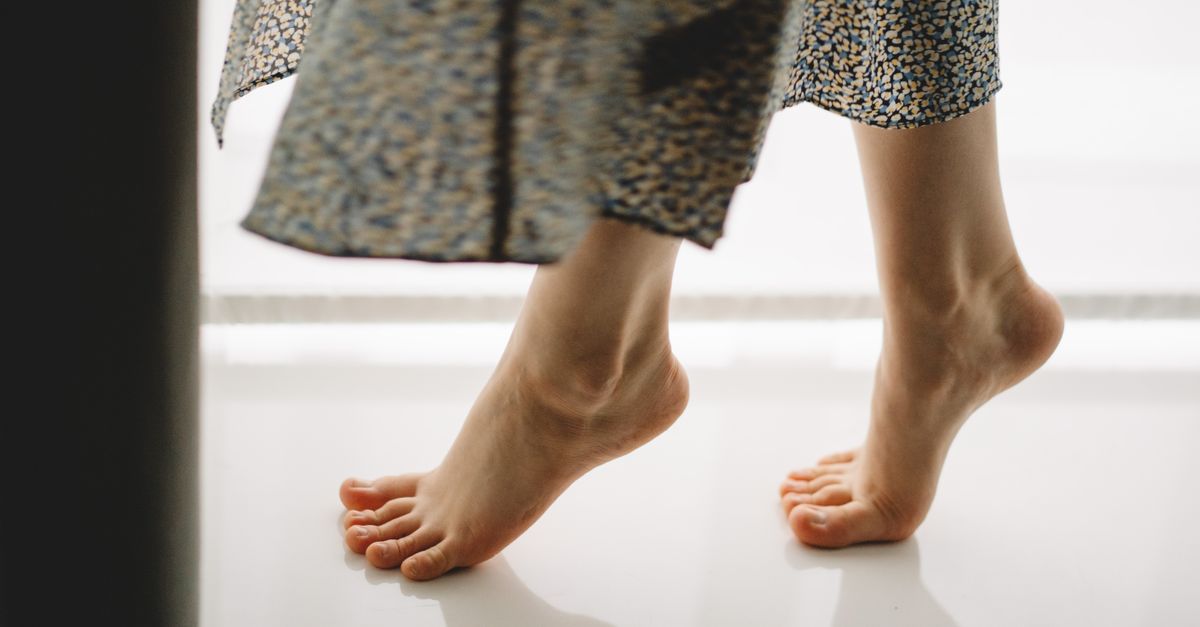
Swollen feet after standing all day happen because gravity pulls fluid down into the lower legs and feet while a lack of movement stops the calf muscles from pumping that fluid back toward the heart. This buildup is a form of dependent edema, and it typically shows up as puffiness, tight-feeling shoes, and skin that looks stretched or shiny by the end of a shift. The swelling usually eases overnight with elevation and rest but returns each time a person stands still for long stretches without movement or breaks. Footwear changes, scheduled breaks, and seated foot massage with elevation are the most common ways people manage it.
If your shoes feel a size too small by the time your shift ends, you already know what swollen feet after standing all day looks like. Nurses, retail workers, teachers, factory line workers, and anyone whose job keeps them upright for eight or more hours a day deal with this on a near-daily basis. It's not the same problem as the aching, burning foot pain that comes from impact and fatigue: this is fluid buildup, and it responds to different strategies than pain does. This guide covers why the swelling happens, what footwear and break habits actually help, and how a simple evening routine with elevation and massage can bring your feet back down to size before the next shift.
Why Standing All Day Causes Feet to Swell
Swelling in the feet after standing is a mechanical problem more than anything else. The body relies on movement to keep fluid circulating properly, and standing still removes that movement from the equation.
Gravity and the Venous System
Blood travels from your heart down to your feet easily because gravity does the work. Getting it back up is harder, and the veins in your legs rely on one-way valves to keep blood moving upward instead of sliding back down. When you stand motionless, blood and interstitial fluid have more time to settle in the lowest points of the body, which for most people means the ankles and feet. Mayo Clinic describes this fluid buildup in the tissues as edema, and standing-related edema is one of the most common everyday forms of it.
The Calf Muscle Pump and Lymphatic Drainage
Walking activates what's often called the calf muscle pump: each contraction squeezes the veins running through your lower leg and pushes blood upward. Standing without walking removes this pumping action almost entirely. The lymphatic system, which clears excess fluid from tissue, also depends partly on muscle movement to keep flowing. Without it, fluid has nowhere productive to go, so it collects around the ankles and top of the foot instead.
When Swelling Points to Something Beyond Standing
Occasional end-of-shift swelling that resolves overnight is common and usually not a medical concern on its own. Certain patterns deserve a conversation with a doctor, since they can point to blood clots, infection, or heart or kidney involvement:
- Swelling that doesn't go down by morning
- Swelling in only one foot or leg
- Redness, warmth, or pain in the swollen area
- Swelling that appears alongside shortness of breath
Swelling and pain are related but separate problems. If your main complaint is aching, burning, or sore arches rather than visible puffiness, our guide to foot pain from standing all day covers that side of the issue in more depth.
How Oscillating Foot Massage Supports Circulation
Many people looking for relief search for a vibrating foot massager, since vibration is the term most associated with foot spas and shiatsu-style devices sold in general retail. MedMassager uses oscillating technology to deliver deeper, more controlled vibration than conventional massagers, moving the entire foot through a circular oscillating motion rather than buzzing only the surface of the skin.
The mechanism behind this matters more than the sensation. Repeated foot motion activates the calf muscles, pushing blood upward instead of letting it pool in the feet, which is essentially a seated substitute for the walking movement your job doesn't allow. It's the same principle behind the standard advice to favor movement over stillness for dependent swelling. A session with a therapeutic foot massager won't replace walking breaks entirely, but it gives your feet that pumping action while you're sitting down after a shift, which is exactly when standing-related swelling is at its worst.
- Circular oscillating motion engages the muscles of the foot and ankle without requiring you to stand or bear weight
- Adjustable intensity lets you start gentle if your feet are already tender or swollen
- Seated use pairs naturally with elevation, since both are done from a chair or couch
Footwear and Break Strategies for Standing Jobs
What you wear and how you schedule your day matter as much as anything you do after work. Small changes during the shift itself reduce how much fluid builds up in the first place.
Choosing Supportive Footwear
Shoes with a firm, structured sole and a bit of arch support help distribute weight more evenly and reduce the pooling effect of standing on a flat, unsupported surface for hours. Compression socks, particularly graduated compression styles, apply gentle pressure that helps push fluid back up the leg throughout the day rather than letting it settle. Avoid shoes that fit snugly in the morning, since feet naturally expand by a size or more over the course of a long standing shift.
Timing Breaks and Micro-Movements
Short, frequent breaks do more for circulation than one long break at the midpoint of a shift. Even without leaving your station, small movements interrupt the stillness that causes fluid to pool.
- Shift your weight from foot to foot every few minutes instead of standing squarely on both
- Rise onto your toes and lower back down in sets of ten when you get a moment
- Take a five-minute walking break at least once every two hours if your schedule allows it
- Sit and elevate your feet above hip height during any seated break
Evening Routine to Reduce Foot Swelling
What you do in the hours after a shift determines how much swelling carries over into the next day. A short, consistent seated routine tends to work better than an occasional long one.
- Remove shoes and socks as soon as you're able to sit down, and elevate your feet above heart level for 15 to 20 minutes.
- Follow elevation with 10 to 15 minutes of seated massage on a low or medium intensity setting, keeping feet flat on the platform throughout.
- Increase intensity gradually over the following days if your feet tolerate it well, rather than starting at the highest setting.
- Repeat nightly on standing-shift days, since consistency matters more than any single session.
If you're specifically weighing a foot massager built around standing-shift routines, our separate breakdown of foot massagers for people who stand all day compares features and use cases in more detail than this article covers.
Special Considerations for Standing-Related Swelling
Not everyone dealing with standing-related swelling is starting from the same baseline. A few groups need extra attention when managing it.
During pregnancy, hormonal changes and increased blood volume make swelling more pronounced. It should always be discussed with an OB provider, especially if it appears suddenly or alongside high blood pressure. Older adults face a different challenge: reduced mobility and certain medications can worsen dependent swelling, which makes elevation and gentle seated movement more useful than high-intensity activity.
People managing diabetes need to be especially careful, because reduced sensation can mask early skin irritation from tight shoes or from the swelling itself. Daily foot checks matter here. Seated massage is one option some people in this group add alongside footwear checks, with a provider's guidance. The circular oscillating action creates continuous, repetitive movement in the foot and calf, which supports circulation during use without requiring you to stand or bear weight.
Whichever group you fall into, a few habits apply across the board:
- Start any seated massage at the lowest intensity and increase only if your feet tolerate it
- Check the skin on your feet daily for redness, irritation, or pressure marks from shoes
- Tell your provider about swelling that is new, sudden, one-sided, or not improving overnight
MedMassager Foot Massagers are FDA-registered Class I medical devices designed for seated use, built for people managing circulation-related discomfort from long hours on their feet.
Frequently Asked Questions
Why do my feet swell so much after standing all day?
Standing still keeps blood and fluid from moving efficiently back up the legs, since the calf muscle pump that normally assists circulation only activates during walking. Gravity pulls fluid downward into the feet and ankles, and without regular movement, that fluid has nowhere else to go. This is why swelling tends to build steadily through a long shift and peak by the end of the day.
Is swelling from standing all day dangerous?
Occasional swelling that resolves by the next morning is common and generally not a medical concern. Swelling that persists overnight, affects only one leg, or comes with pain, redness, or warmth should be evaluated by a doctor, since these can signal a blood clot or other circulatory issue. Anyone with existing heart, kidney, or vascular conditions should also mention standing-related swelling to their provider.
How can I reduce foot swelling while still at work?
Shifting your weight between feet, rising onto your toes periodically, and taking short walking breaks every couple of hours all help keep blood moving during a shift. Supportive footwear and graduated compression socks reduce how much fluid pools throughout the day. Elevating your feet during any seated break also helps, even for just a few minutes.
Does elevating your feet actually help with swelling?
Yes, elevating your feet above heart level uses gravity to help move pooled fluid back toward your torso instead of letting it sit in your ankles and feet. Fifteen to twenty minutes of elevation after a standing shift is generally enough to notice a difference. Combining elevation with gentle seated movement or massage tends to work better than elevation alone.
Can a foot massager help with swelling from standing all day?
A seated foot massager that uses oscillating motion can help by mimicking the muscle-pumping action that walking normally provides, which supports circulation when you've been standing still for hours. This won't eliminate swelling caused by an underlying medical condition, but for everyday standing-related fluid buildup, many people use it as part of an evening routine alongside elevation. It's meant to support circulation, not treat or cure any underlying condition.
What shoes are best for preventing swollen feet at work?
Shoes with a firm, structured sole and built-in arch support distribute pressure more evenly across the foot than flat, unsupportive shoes. Because feet often swell a half size or more by the end of a long shift, choosing shoes with a little extra room rather than a snug morning fit tends to help. Graduated compression socks are also commonly used alongside supportive footwear for standing jobs.
How long does it take for standing-related foot swelling to go down?
For most people, swelling from a day of standing improves significantly overnight with rest and elevation, often returning close to normal by morning. Adding seated massage and consistent elevation in the evening can speed that process along. If swelling is still noticeably present by the start of the next shift on a regular basis, it's worth mentioning to a doctor.
The Bottom Line on Swollen Feet From Standing
Swollen feet after standing all day come down to gravity and stillness working against your circulation, not a single cause you can fix overnight. Supportive footwear, scheduled breaks, and a consistent evening routine of elevation and seated massage address the mechanism directly rather than just masking the discomfort. Persistent, one-sided, or painful swelling is a different matter and warrants a doctor's evaluation rather than home management alone.
The circular oscillating action creates continuous, repetitive movement in the foot and calf, which supports circulation during use. For a seated routine built around circulation support after long shifts, browse MedMassager's collection of foot massagers designed for people who spend their days on their feet.
This content is for informational purposes only and is not intended as medical advice, diagnosis, or treatment. Always consult a qualified healthcare professional before starting any new treatment or therapy. MedMassager products are FDA-registered Class I medical devices.


