
Swollen ankles after sitting all day occur because gravity pulls blood and fluid downward into the lower legs while the calf muscles, which normally act as a pump to push blood back toward the heart, stay inactive. Without regular muscle contraction, fluid moves out of small blood vessels and builds up in the soft tissue around the ankles and feet. This type of swelling is usually mild, develops gradually over hours, and improves with movement, elevation, or calf muscle activation. Swelling that appears suddenly, affects only one leg, or comes with pain, redness, or shortness of breath is not typical positional swelling and needs prompt medical evaluation.
If you've pulled off your shoes at the end of a workday and noticed your socks left deep ridges around your ankles, you already know what swollen ankles after sitting all day feels like. It's one of the most common complaints among people who work at a desk, sit through long flights, or spend hours in a car. The swelling isn't usually dangerous, but it's uncomfortable, and it tends to come back the next day unless something in your routine changes. The fix starts with understanding why sitting causes ankle swelling, what separates ordinary "desk ankles" from a warning sign, and what movement and seated massage can realistically do about it.
Why Ankles Swell After Sitting All Day
Ankle swelling from sitting comes down to basic physics and muscle mechanics working against you at the same time. When you understand both pieces, the pattern of when and why it happens starts to make sense.
Gravity and Venous Pressure
Veins in your legs carry blood back up to the heart against gravity. When you're upright or seated with your feet on the floor for hours, blood pressure inside the lower leg veins rises simply because of the vertical distance blood has to travel. Mayo Clinic describes this kind of swelling, known as dependent edema, as fluid that collects in the lowest parts of the body due to gravity and prolonged position. The longer you stay in one position, the more time fluid has to seep out of small capillaries and settle into the surrounding tissue around the ankles.
The Idle Calf Muscle Pump
Under normal conditions, your calf muscles act as a secondary pump for circulation. Each step you take contracts the calf, squeezing the veins that run through it and pushing blood upward toward the heart.
Sitting removes this mechanism almost entirely. The muscle stays still, the pump stops working, and blood pools lower in the leg instead of being pushed along. This is why swelling tends to build gradually through a sedentary day rather than appearing all at once.
Desk Work Versus Travel
Not all sitting is equal. A few common scenarios tend to produce this kind of swelling:
- Sitting at a desk for six or more hours with the knees bent at 90 degrees, which can restrict blood flow behind the knee
- Long flights or car rides where legs stay still in a cramped position for multiple hours
- Crossing your legs for extended periods, which adds extra pressure on the veins
- Warm environments combined with sitting, since heat causes blood vessels to dilate and can add to fluid buildup
Air travel deserves a specific mention because cabin pressure changes and prolonged immobility combine to make swelling worse than typical desk sitting. This is separate from swelling caused by hot weather alone, which involves a different mechanism tied to vessel dilation rather than positional pooling.
How Movement and Massage Support Circulation
Reactivating the Calf Pump
The most direct way to counter positional ankle swelling is to reactivate the calf muscle pump. Any of these will do it by contracting the muscle and physically pushing blood upward:
- Standing up and walking, even for a minute or two
- Ankle circles while seated
- Calf raises at your desk or in a hallway
When getting up isn't practical, mechanical movement can help fill that gap.
What Oscillating Massage Does
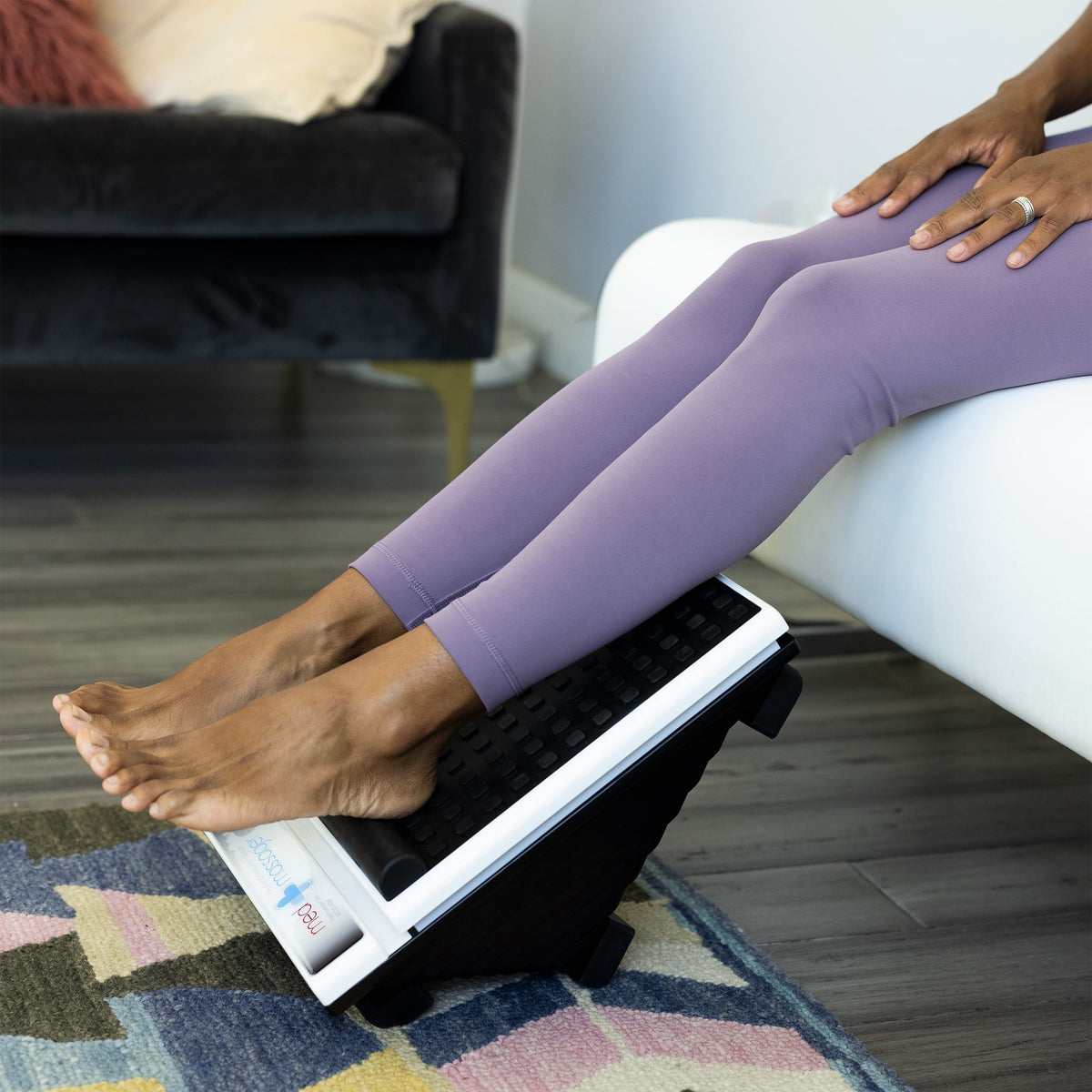
Many people search for a vibration foot massager for this exact reason, since the category is associated with circulation support. MedMassager uses oscillating technology to deliver deeper, more controlled vibration than conventional massagers, and the circular oscillating motion is designed to mimic the muscle activation that walking would normally provide. Rather than a shallow buzzing sensation, the oscillation moves the foot and lower leg muscle tissue in a way that engages the calf. Repeated foot motion activates the calf muscles, pushing blood upward instead of letting it pool in the feet during long stretches of sitting.
This is a management tool, not a substitute for standing up and moving your legs when you're able to. For a broader daily approach that covers exercises, posture, and hydration alongside seated tools, see this daily circulation routine built for desk workers. If the swelling has already set in by the end of the day, seated massage techniques for swollen legs and feet can offer more specific guidance on technique and positioning.
When Swollen Ankles After Sitting Signal Something More
Ordinary positional swelling from sitting has a predictable pattern: it builds slowly, affects both ankles somewhat evenly, and improves noticeably after you elevate your legs or move around for a while. Swelling that breaks from this pattern deserves attention.
Signs That Warrant Medical Evaluation
- Swelling in only one leg or ankle, especially if it appeared suddenly
- Pain, warmth, or redness in the swollen area, which can indicate a blood clot
- Swelling accompanied by shortness of breath or chest pain
- Skin that looks stretched, shiny, or discolored
- Swelling that does not improve at all overnight or after elevation
- Swelling paired with a fever
The National Institutes of Health notes that unilateral leg swelling combined with pain or warmth can be a sign of deep vein thrombosis, a blood clot that requires urgent medical care. This is different from the bilateral, gradually building swelling typical of long sitting. If you have known heart, kidney, or liver conditions, new or worsening ankle swelling should also be discussed with a healthcare provider, since fluid retention from these conditions can look similar to simple positional swelling at first glance.
Movement Breaks and Seated Massage Routine
Managing swollen ankles from sitting works best as a combination of scheduled movement and seated circulation support during the hours you can't get up. Neither alone solves the problem as effectively as both together.
A Practical Routine
- Set a timer to stand and walk for two to three minutes every 45 to 60 minutes of sitting
- While seated, do 10 to 15 ankle circles in each direction to engage the lower leg
- Elevate your feet slightly above heart level for 10 to 15 minutes when you get a longer break, such as lunch
- Use a seated foot massager for 15 to 20 minutes in the afternoon, when swelling tends to be most noticeable
- Avoid crossing your legs at the knee for extended periods, since it adds pressure behind the joint
When using a foot massager, sit with your feet flat on the platform and let the device do the work rather than pressing down hard with your feet. Start on a lower intensity setting and increase gradually as your comfort allows. This is a seated activity only; the platform is not designed to be stood on. Browsing a collection of seated foot massagers designed for circulation support can help you compare adjustable intensity options suited to daily desk use.
Special Considerations for Travelers and Desk Workers
A few groups deal with this pattern more often than others, and each has slightly different practical constraints.
Frequent Flyers
On flights longer than a few hours, a handful of habits give the calf pump a chance to work and can reduce end-of-flight swelling:
- Wear compression socks for the duration of the flight
- Do ankle pumps every hour while seated
- Walk the aisle when the seatbelt sign is off
Remote and Office Workers
People working from a home office often sit longer than they realize because there's no commute or coworker interruptions to force a break. Standing desks help, but only if you actually alternate positions rather than standing still for equally long stretches. A therapeutic foot massager used while seated at your desk makes it easier to build a circulation break into the workday. The circular oscillating action creates continuous, repetitive movement in the foot and calf, which supports circulation during use.
Pregnancy and Older Adults
Pregnant individuals commonly experience ankle swelling due to increased blood volume and pressure from the growing uterus on pelvic veins, and this should still be reported to a physician if it's sudden or severe. Older adults may have reduced vein elasticity, which can make positional swelling more pronounced and slower to resolve after standing up.
Frequently Asked Questions
Why do my ankles swell every day after work but not on weekends?
This pattern usually points to prolonged sitting at a desk as the cause, since weekends typically involve more walking and position changes throughout the day. The calf muscle pump stays active when you move around, which prevents blood and fluid from settling in the ankles the way it does during long stretches at a desk.
Is it normal for both ankles to swell the same amount after sitting?
Yes, roughly even swelling in both ankles is typical of positional swelling caused by sitting and gravity. Swelling that is noticeably worse in one leg than the other is less typical and is worth mentioning to a healthcare provider, particularly if it comes with pain or warmth.
How long should swollen ankles from sitting take to go down?
For most people, positional ankle swelling improves within a few hours after elevating the legs or resuming normal walking. If swelling from a single day of sitting is still present the next morning after a full night's sleep, that's a sign to look more closely at other possible causes, including medication side effects or underlying vein issues.
Can drinking more water help reduce ankle swelling from sitting?
Staying adequately hydrated supports overall circulation and can help the body manage fluid balance more effectively. However, hydration alone doesn't address the mechanical cause of positional swelling, which is the lack of calf muscle activity, so it works best alongside movement breaks rather than as a stand-alone fix.
Does a foot massager actually help with ankle swelling from sitting?
A foot massager that oscillates can support circulation by mimicking the calf muscle activation that walking normally provides, which helps move blood and fluid upward out of the lower leg. It works best as part of a routine that also includes standing breaks and periodic elevation, rather than as a substitute for movement altogether.
Should I be worried if only one ankle swells after sitting?
Swelling limited to one ankle, especially if it appears suddenly or comes with pain, warmth, or redness, is not typical of ordinary positional swelling and should be evaluated by a healthcare provider promptly. This pattern can indicate a blood clot or another localized issue that needs medical attention rather than at-home management.
What sitting position causes the least ankle swelling?
Keeping both feet flat on the floor without crossing your legs, and avoiding a sharp bend at the knee for long periods, reduces the pressure that contributes to swelling. Elevating your feet slightly when possible, such as on a low footrest, can also reduce the amount of fluid that settles in the ankles during long sitting periods.
Bottom Line
Swollen ankles after sitting all day are usually the result of gravity and an inactive calf muscle pump, not a sign of a serious problem on their own. Movement breaks, ankle exercises, elevation, and seated circulation support can all help manage the pattern day to day. Swelling that's sudden, one-sided, or paired with pain, warmth, or shortness of breath is different from ordinary positional swelling and warrants a call to your doctor.
If you're looking for a seated tool to add to your circulation routine, take a look at the therapeutic foot massager collection for options with adjustable intensity built for daily desk use.
This content is for informational purposes only and is not intended as medical advice, diagnosis, or treatment. Always consult a qualified healthcare professional before starting any new treatment or therapy. MedMassager products are FDA-registered Class I medical devices.


