
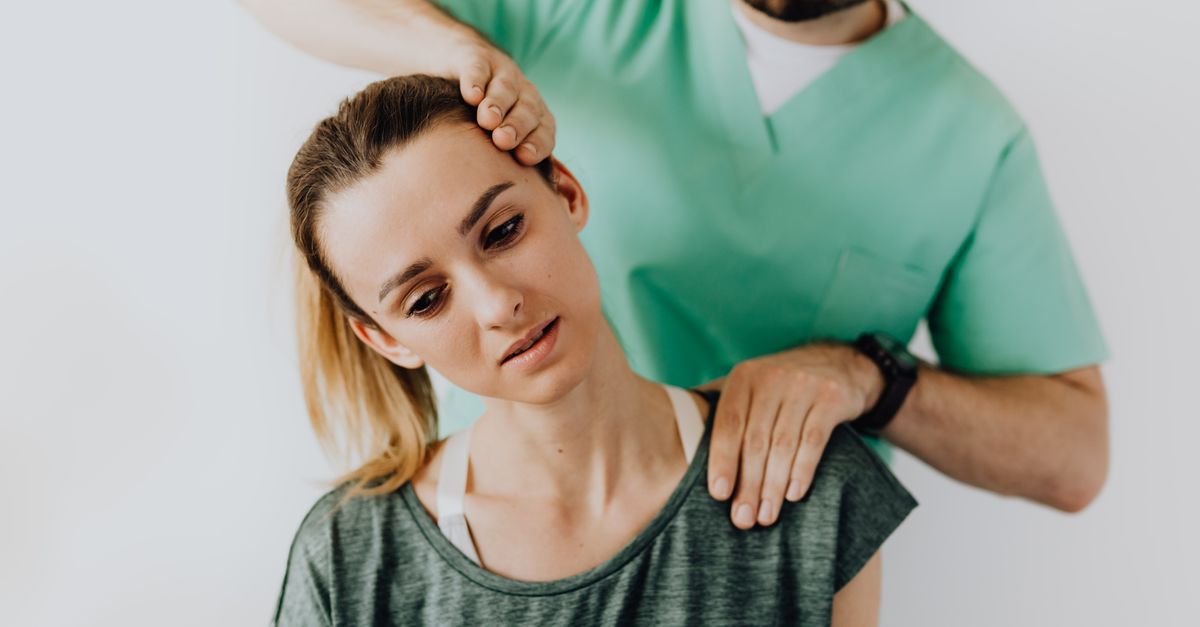
Splenius cervicis pain is an ache, tightness, or tenderness in the strap-shaped muscle that runs from the upper thoracic spine (T3 to T6) up to the top three cervical vertebrae (C1 to C3). The pain is usually felt at the back and side of the neck and at the top of the shoulder, and it can make turning your head stiff or uncomfortable. It typically develops from sustained forward head posture, looking down at a phone, and sleeping positions that hold the neck bent or rotated for hours. Gentle stretching, posture changes, heat, and massage to the back of the neck and upper shoulders can ease muscle-based tightness, while neck pain with fever, arm weakness, or pain after a fall needs prompt medical evaluation.
You turn your head to check a blind spot, and a pulling ache grabs the side of your neck and settles into the top of your shoulder. If that sounds familiar, you may be dealing with splenius cervicis pain, a muscle problem that is easy to miss because the muscle sits underneath several better-known ones. The splenius cervicis is a thin, strap-like muscle that anchors in your upper back and climbs into your neck. When it gets overloaded by hours of looking down at a screen or sleeping with your head twisted, it can stay tight and tender for days.
This guide is for desk workers, frequent phone users, side sleepers, and anyone whose neck stiffness seems to start lower than expected, somewhere between the shoulder blades. It covers the anatomy of the muscle, how it differs from the splenius capitis, the habits that strain it, where massage fits, stretches you can do at home, and the warning signs that mean you should see a doctor.
What Is the Splenius Cervicis Muscle?
The splenius cervicis belongs to a small group of deep neck muscles that extend and rotate the head and neck. It lies beneath the trapezius, the rhomboids, and the serratus posterior superior, so you cannot see its outline even on a lean, muscular back. Knowing where it runs explains why its pain can feel like it belongs to the neck, the shoulder, and the upper back all at once.
Origin, Insertion, and What It Does
The splenius cervicis starts at the spinous processes of the third through sixth thoracic vertebrae (T3 to T6), roughly between your shoulder blades. From there it angles upward and outward, attaching to the transverse processes of the top two or three cervical vertebrae (C1 to C3). It is supplied by branches of the lower cervical spinal nerves.
The muscle has three main jobs:
- Working with its partner on the opposite side to extend the neck, holding your head up and back
- Rotating the neck toward the same side when only one side contracts
- Bending the neck sideways toward the same shoulder
Because it spends the whole day resisting the forward pull of your head's weight, the splenius cervicis is a postural workhorse. Positions that tip the head forward make it work harder for longer.
Splenius Cervicis vs. Splenius Capitis
The two splenius muscles are close neighbors, and it is easy to mix them up. The splenius capitis starts a little higher, from the ligamentum nuchae and the spinous processes of roughly C7 to T3, and attaches to the skull at the mastoid process just behind the ear. The splenius cervicis starts lower, at T3 to T6, and attaches to the neck vertebrae rather than the skull.
That difference shows up in where you feel symptoms. Splenius capitis tightness tends to be felt toward the base of the skull and the back of the head, and it is frequently tied to tension-type headaches. Splenius cervicis tightness tends to sit lower, at the angle where the neck meets the shoulder. If your symptoms center on the back of the head, our guide to splenius capitis massage and headache-related neck tension covers that muscle in detail.
Where You Feel Pain in the Splenius Cervicis
Pain from an irritated splenius cervicis rarely stays in one tidy spot. Typical symptoms include:
- A deep ache at the back and side of the neck, worse on one side
- Pain or tightness at the top of the shoulder, near the base of the neck
- Stiffness or a pulling sensation when you turn your head toward or away from the sore side
- Tenderness when you press along the side of the neck or the upper back between the spine and shoulder blade
- An ache that can refer toward the back of the head or behind the eye on the same side
Muscle-based neck pain usually changes with movement and position. Pain that is constant regardless of position, or that comes with nerve symptoms in the arm, points to something other than a tight muscle and is covered in the red flags section below.
What Causes Splenius Cervicis Pain?
Mayo Clinic describes neck pain as commonly linked to muscle strain from poor posture, such as leaning over a computer or hunching over a workbench. The splenius cervicis fits that description closely. It rarely gets injured by a single dramatic event and is far more often worn down by positions held for hours.
Forward Head Posture
When your head drifts forward of your shoulders, the muscles at the back of the neck have to hold it up against gravity at a mechanical disadvantage. The further the head moves forward, the more load those muscles carry. The splenius cervicis, anchored low in the upper back, is one of the muscles that stays contracted to keep your head from dropping.
Over weeks and months, that constant effort can leave the muscle tight, fatigued, and sensitive to pressure. Correcting the posture itself takes time and practice, and our article on massage and exercises for forward head posture walks through that process.
Phone Use and Screen Time
Looking down at a phone combines two strains at once: the head tips forward, and the neck flexes downward. Neck pain from phone use often builds slowly over a day, so it is easy to miss the link until the ache is already established. Laptops create a similar problem because the screen sits well below eye level.
Monitors set too high cause the opposite problem. Tilting your chin up for hours keeps the neck extensors shortened and working, which can irritate the same muscle group from a different angle.
Sleeping Position and Other Contributors
Waking up with a stiff, painful neck is one of the clearest signs of splenius cervicis strain. Stomach sleeping forces the head to rotate fully to one side for hours, and a pillow that is too high or too flat holds the neck bent sideways all night. The muscle on one side stays shortened while the other stays stretched.
Other habits that load the muscle include:
- Cradling a phone between your ear and shoulder
- Carrying a heavy bag on the same shoulder every day
- Long drives with your head pushed forward toward the windshield
- Stress that keeps your shoulders raised toward your ears
- Sudden movements, such as whiplash or a quick head turn during sports
Where Massage Fits for Splenius Cervicis Pain
Massage does not change the anatomy of your neck or undo years of posture habits. What it can do is work on tight, overused muscle tissue so movement feels easier and stretching becomes more comfortable. Massage works best alongside whatever your doctor or physical therapist has recommended, not in place of it.
What Massage Does for Tight Neck Muscles
Because the splenius cervicis sits beneath the trapezius and other layers, massage at the back of the neck and upper shoulders works on the whole group of muscles in that region rather than isolating one. That suits this problem well, since the trapezius, levator scapulae, and splenius muscles tend to tighten together under the same postural load.
Heat adds a second benefit. Warming stiff muscle tissue before or during massage tends to make it more pliable, which is why heat is a standard first step for posture-related stiffness.
Using the Neck Massager on the Neck and Upper Shoulders
The MedMassager Neck Massager with built-in heat is designed for the back of the neck and the upper shoulders, the exact zone where splenius cervicis tightness shows up. It is an FDA-registered Class I medical device that uses dual-direction rotating massage nodes rather than a flat vibrating surface.
Here is how that mechanism lines up with posture-related neck pain:
- For upper back and shoulder tightness, dual-direction nodes target the trapezius and surrounding muscle tissue, helping relieve tightness from prolonged sitting or stress.
- For neck stiffness, rotating massage nodes combined with built-in heat warm and loosen tight muscles, supporting blood flow through the neck.
- For cervical strain from posture and screen time, rotating massage motion supports blood flow through neck muscles affected by overuse, with built-in heat aiding muscle relaxation.
When the Tightness Reaches Between Your Shoulder Blades
Because the splenius cervicis anchors as low as T6, tightness can extend down between the shoulder blades, an area a neck-focused device does not cover. For that lower zone, a Body Massager from the MedMassager body massager collection has a large, soft, cushioned pad that forms to the upper back and oscillates in a circular motion. That circular oscillating movement stimulates muscle tissue, helping circulate blood through areas that commonly tighten, and you can rest it between your back and the back of a chair.
You can also compare both options side by side in the full MedMassager therapeutic massager catalog.
Stretches and a Daily Neck Routine
Stretching, short massage sessions, and small posture changes work better together than any one of them alone. The routine below takes about 15 to 20 minutes and fits into a workday.
Splenius Cervicis Stretches
Move slowly and stay within a comfortable range. A stretch should feel like gentle tension, never sharp pain or tingling.
- Chin tuck: Sit tall and glide your chin straight back, as if making a double chin, without tipping your head down. Hold for 5 seconds and repeat 10 times.
- Diagonal neck stretch: To stretch the right side, turn your head about 45 degrees to the left, then lower your chin toward your left armpit. Hold for 20 to 30 seconds, repeat 2 to 3 times, then switch sides.
- Side bend: Keep your shoulders level and tip your left ear toward your left shoulder. Hold for 20 to 30 seconds per side, 2 to 3 times.
- Upper back extension: Sit in a chair with a firm, low back. Rest your hands lightly behind your head without pulling, and gently arch your upper back over the top of the chair. Repeat 5 to 8 times.
- Shoulder blade squeeze: Draw your shoulder blades back and down, hold for 3 to 5 seconds, and release. Repeat 10 times.
Adding Massage to the Routine
Massage before stretching can make the stretches feel easier because the tissue is already warm. A reasonable starting point is about 10 minutes, once or twice a day. Sit upright with your back supported, and position the MedMassager Neck Massager for upper back and neck tension across the back of your neck and the tops of your shoulders. The rotating nodes and built-in heat warm the layered muscles in that zone and support blood flow through tissue that has been held tight by posture.
Keep the device off the front of the neck, and skip areas with broken skin, recent injury, or unexplained swelling. If an area feels worse afterward rather than looser, shorten the session or stop and check with your doctor.
Posture Habits That Take Load Off the Muscle
Small daily adjustments reduce how hard the splenius cervicis has to work:
- Raise your phone closer to eye level instead of dropping your head to it
- Set the top of your monitor at or slightly below eye level
- Choose a pillow height that keeps your neck in line with your spine when you sleep on your side or back
- Switch bag shoulders, or use a backpack with both straps
- Stand up and do a set of chin tucks every 30 to 45 minutes at a desk
Red Flags: When Neck Pain Needs a Doctor
Most of this article assumes your neck pain comes from a tight, overworked muscle. Some neck pain does not, and certain symptoms mean you should stop self-care and get evaluated before stretching or using any massager.
Seek urgent or emergency care for:
- Neck pain with fever, severe headache, and a stiff neck that makes it hard to bring your chin to your chest
- Neck pain after a fall, car accident, sports collision, or any blow to the head or neck
- Sudden weakness, loss of coordination, trouble walking, or loss of bladder or bowel control
Make an appointment with your doctor promptly for:
- Numbness, tingling, or weakness that travels into an arm or hand
- Pain that is severe, worsening, or wakes you at night
- Neck pain with unexplained weight loss or a history of cancer
- Pain that has not improved after a few weeks of rest, stretching, and posture changes
Arm symptoms in particular can signal nerve involvement from the cervical spine, which needs a proper diagnosis. A physical therapist or physician can also confirm whether the splenius cervicis is actually the source of your pain.
Frequently Asked Questions
Where do you feel pain from the splenius cervicis?
Pain from the splenius cervicis is usually felt at the back and side of the neck and at the top of the shoulder where the neck meets it. It can also cause stiffness when turning the head and a deeper ache that refers toward the back of the head or behind the eye on the same side. Tenderness along the upper back between the spine and shoulder blade is also typical because the muscle anchors there.
What is the difference between splenius capitis and splenius cervicis?
The splenius capitis attaches to the skull behind the ear and mainly moves the head, while the splenius cervicis attaches to the upper neck vertebrae and moves the neck. The splenius cervicis also starts lower, from the T3 to T6 vertebrae in the upper back. As a result, splenius capitis tightness tends to be felt near the base of the skull, and splenius cervicis tightness tends to be felt lower, toward the shoulder.
How long does a strained neck muscle take to heal?
A mild neck muscle strain often settles within a few days to a couple of weeks with gentle movement, heat, and posture changes. Strain caused by long-term posture habits can linger or return until those habits change. If pain has not improved after a few weeks, or if it comes with arm symptoms, see a doctor for evaluation.
Can sleeping wrong cause splenius cervicis pain?
Yes, sleeping position is a frequent trigger. Stomach sleeping holds the neck fully rotated for hours, and a pillow that is too high or too flat keeps the neck bent sideways all night. Both positions leave the splenius cervicis on one side shortened and strained, which is why the pain often shows up first thing in the morning.
Is heat or ice better for a tight neck muscle?
Heat is generally the better choice for posture-related stiffness and tight neck muscles because it helps tissue relax and move more easily. Ice is more useful in the first day or two after a sudden injury when there is swelling. If you are unsure which applies, or if the pain followed a fall or accident, ask your doctor before using either.
Can a neck massager help with splenius cervicis tightness?
A neck massager placed on the back of the neck and upper shoulders can help with the muscle tightness that comes from posture and screen time. The MedMassager Neck Massager uses rotating massage nodes combined with built-in heat to warm and loosen tight muscles, supporting blood flow through the neck. It works best alongside stretching, posture changes, and any care plan your doctor has recommended.
The Bottom Line
Splenius cervicis pain comes from a deep strap muscle that runs from between your shoulder blades into your upper neck, which is why the ache can show up in the neck, the top of the shoulder, and the upper back at the same time. Forward head posture, phone use, and awkward sleeping positions are the usual culprits, and chin tucks, diagonal neck stretches, and better screen and pillow setup address the load directly.
Heat and massage can make that work more comfortable by loosening the layered muscles at the back of the neck. If you want a tool for daily use on that area, explore the rotating-node Neck Massager with heat, whose dual-direction nodes and built-in heat warm tight neck muscles and support blood flow while you use it. See a doctor promptly if your neck pain comes with fever, arm weakness, or follows a fall.
This content is for informational purposes only and is not intended as medical advice, diagnosis, or treatment. Always consult a qualified healthcare professional before starting any new treatment or therapy. MedMassager products are FDA-registered Class I medical devices.


