
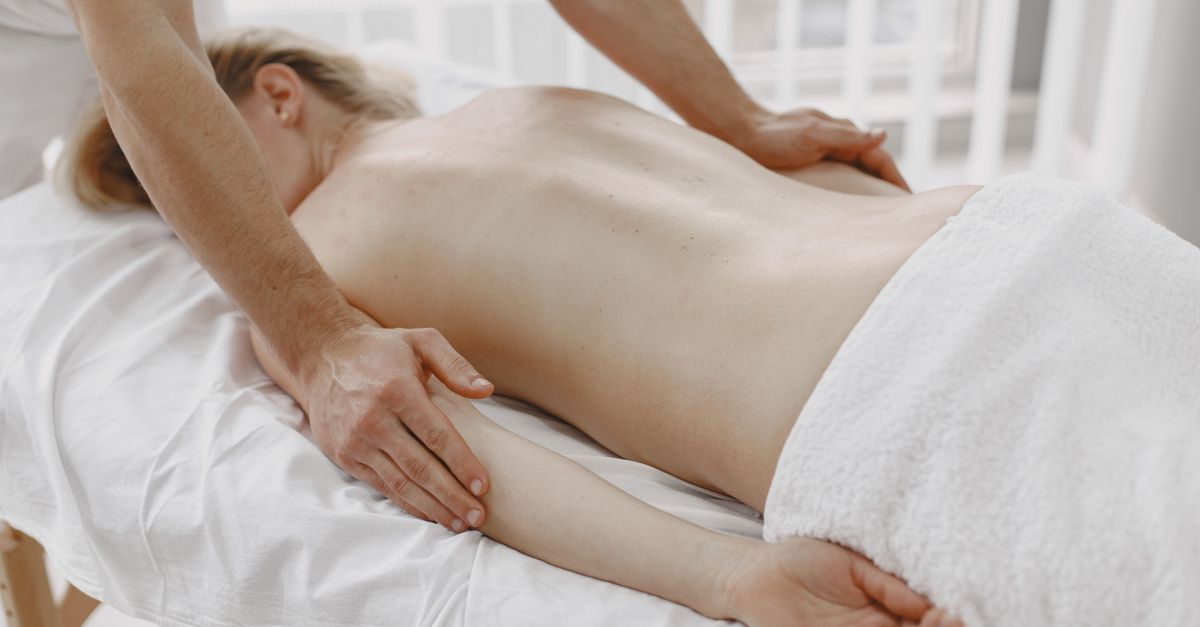
A back massager for scoliosis should apply broad, adjustable pressure to the muscles beside the spine rather than pressing hard on the spine itself. The most useful features are a large cushioned pad that contours to an uneven back, adjustable intensity that starts low, and the ability to use it seated or lying down. Massage does not change the curve of the spine, but it can increase local blood flow in back muscles that tighten unevenly around a scoliosis curve. Adults with scoliosis should check with a doctor or physical therapist before using any massager.
If you live with scoliosis, you probably know the ache that settles into one side of your back after a long day at a desk or a long drive. Shopping for a back massager for scoliosis adds a complication, because a massager built around a straight, symmetrical back may not line up with yours. A rib prominence on one side, a flatter area on the other, and muscles that feel tight in one spot and fatigued in another all change what "good fit" means.
This guide is for adults with idiopathic scoliosis that began earlier in life or degenerative scoliosis that developed later, who want an at-home tool to use alongside guidance from their doctor or physical therapist. It focuses on muscle tightness, not on the curve itself, which is a medical matter for your care team. You'll learn why one side of the back tightens, what features matter, how handheld and chair-style massagers compare, how to start a safe routine, and when to check in with a professional first.
Why Scoliosis Tightens One Side of the Back
Mayo Clinic describes scoliosis as a sideways curvature of the spine. In adults, the curve is either a continuation of scoliosis that began in childhood or adolescence, or degenerative scoliosis that develops as the discs and facet joints of the spine wear unevenly. Either way, the curve changes how the muscles around the spine share the work of holding you upright.
How a Sideways Curve Changes Muscle Workload
Your spine is supported by layers of muscle on both sides. In a straight spine, those muscles pull in balance. When the spine bends to one side and rotates, they no longer pull evenly, and the muscles closest to the curve absorb most of the strain:
- Erector spinae: long muscles running along both sides of the spine from the pelvis toward the base of the skull.
- Quadratus lumborum: a deep lower back muscle connecting the pelvis to the lowest rib and the lumbar spine.
- Rhomboids and middle trapezius: muscles between the shoulder blades that can pull unevenly when a thoracic curve rotates the rib cage.
- Latissimus dorsi: the broad muscle spanning the mid and lower back.
Concave Side vs. Convex Side
On the concave, or inner, side of a curve, muscles sit in a shortened position for hours at a time. Muscle held short for long periods tends to feel tight and knotted. On the convex, or outer, side, muscles are lengthened and under constant low-level tension, which can register as fatigue or a dull ache.
You may feel discomfort on one side, both sides, or in different spots depending on where your curve sits and whether you have more than one curve. For a deeper look at hands-on and device options, see our guide to massage for scoliosis.
Why Long Days of Sitting Add to the Strain
Sitting holds the trunk in one fixed position, so the unevenly loaded muscles never get a break. Prolonged sitting also slows blood flow through muscle tissue that stays contracted. That combination of static posture and an asymmetric load explains much of the one-sided stiffness you feel at the end of a workday.
Where Massage Fits for Scoliosis
Massage does not straighten, reduce, or stop a scoliosis curve. Monitoring and managing the curve belongs to your doctor, spine specialist, or physical therapist. What a massager can do is address the muscle side of the picture between appointments.
What Massage Can and Cannot Do
Setting accurate expectations protects you from wasted money and from skipping care that matters. A massager is a tool for muscle tissue, and it cannot:
- Change the angle or shape of your spinal curve
- Replace bracing, physical therapy exercises, or monitoring by your doctor
- Correct posture on its own
- Address nerve compression or structural changes in the spine
Within those limits, regular massage gives you a practical way to work on tight paraspinal muscles at home, on your own schedule.
How Oscillation Works on Uneven Back Muscles
Back massagers are often sold as vibration massagers. MedMassager uses oscillating technology to deliver deeper, more controlled vibration than conventional massagers. The Body Massager oscillates in a circular motion, combining vibration and circular rotation through a large, soft, cushioned pad. For scoliosis-related back tightness, the mechanism is direct: oscillation penetrates deep muscle layers, increasing local blood flow in muscles affected by prolonged sitting.
Because the pad contours to the body, it spreads pressure across a broad area instead of concentrating it at a single point. That matters on an uneven back, where a rib prominence on one side and a flatter area on the other create surfaces a rigid head may not meet evenly. The MedMassager Body Massager collection includes the Classic and Plus models, both FDA-registered Class I medical devices built around that cushioned contouring pad.
Back Massager for Scoliosis: What to Look For
When you compare options, judge each massager by how well it adapts to an asymmetric back. Use this checklist as a quick filter:
- A large, soft pad that contours to uneven surfaces
- Adjustable intensity with a genuinely low starting setting
- Use seated, lying down, or with the pad resting against a chair back
- Handles that let you position the pad on your own
- Broad, even pressure instead of hard points on the spine
- A clear description of how the device moves, not vague claims
A Large, Cushioned Pad
A small, hard massage head targets a narrow spot, which can be awkward on a back with a rib hump or uneven shoulder blades. A large cushioned pad forms to the shape underneath it and covers the full band of muscle beside the spine. That gives you more even contact on both the tight concave side and the fatigued convex side.
Adjustable Intensity That Starts Low
Tight, chronically loaded muscle can feel tender at first. Variable speed lets you begin gently and increase only when your body tolerates it. The Body Massager offers adjustable intensity, so the same unit works for a light first session and deeper work later.
Seated and Lying-Down Use
Flexible positioning lets you work around your curve instead of contorting to reach a spot. The Body Massager can be used seated, lying down, or resting between your back and the back of a chair. In each position, the circular oscillating action moves through the cushioned pad into the muscle tissue, which supports circulation in the paraspinal muscles during use.
No Hard Pressure on the Spine
The goal is to work the muscles alongside the spine, not to press on the vertebrae themselves. Look for a design that makes it easy to keep pressure off the bony ridge. Across the full MedMassager catalog, the Body Massager is the product designed for back muscles, delivering its circular oscillating action through a cushioned pad you place exactly where you need it.
Handheld vs. Chair-Style Back Massagers for Scoliosis
Back massagers generally fall into two groups: handheld units you position yourself and chair-style units, such as seat cushions and massage chairs, that you lean into. With scoliosis, the key difference is who controls placement.
How Chair-Style Massagers Work
Chair-style massagers generally work along a fixed path built into the unit behind your back. The massage goes where the unit sends it rather than where your muscles need attention. With a sideways curve and spinal rotation, that path may run over the spine itself or miss the tight side entirely.
How a Handheld Body Massager Compares
A handheld massager puts placement in your hands. The Body Massager has easy-to-hold, slip-resistant handles and a cushioned pad you can set on the left or right paraspinal muscles, the lower back, or the area between the shoulder blades. You can also rest the pad between your back and a chair, which lets you sit back while the circular oscillation works into the muscle and supports local blood flow. If you prefer resting the pad against a chair back, a handheld body massager for back muscles can still do the job a chair-style unit is designed for.
Here is how the two formats compare on the points that matter most for an asymmetric back:
- Placement: Handheld units go wherever you set them. Chair-style units follow their built-in path.
- Pressure: A cushioned pad spreads pressure broadly. Chair-style units tend to concentrate it into smaller points.
- Spine contact: A handheld pad is easy to keep beside the spine. Chair-style units may track along the center of the back.
- Asymmetry: With a handheld unit, you can spend more time on the tighter side. Chair-style units treat both sides the same.
- Positions: Handheld units work seated or lying down. Chair-style units are mainly used seated.
How to Use a Back Massager with Scoliosis
Start with about 10 minutes at the lowest setting, once or twice a day. That gives your muscles time to adjust and gives you a clear sense of how your back responds before you change anything.
Before Your First Session
Ask your doctor or physical therapist which areas to focus on and which to avoid, especially if you have had surgery or wear a brace. Pick a supportive chair or a firm, comfortable surface for lying down. Wear a thin layer of clothing or use the pad directly on the skin, whichever feels better.
A Starting Routine
- Sit upright in a supportive chair and rest the pad between your back and the chair back, or lie down and hold the pad against the target area.
- Place the pad on the band of muscle running alongside the spine, not on the bony ridge in the center.
- Turn the unit on at the lowest intensity.
- Spend about 2 to 3 minutes on the side that feels tightest.
- Move the pad to the same level on the opposite side for another 2 to 3 minutes.
- Shift to the next region, such as the lower back or the area between the shoulder blades, and repeat.
- Stop right away if you feel sharp pain, numbness, tingling, or pain that travels down a leg.
Building From There
Keep the starting routine for a week or two before adjusting time or intensity. If a session leaves you sorer than before, shorten it or lower the setting. On the upper back, mechanical movement stimulates muscle tissue, helping circulate blood through areas that commonly tighten.
If most of your discomfort sits between the shoulder blades, our guide to choosing a massager for upper back pain covers placement for that region in more detail.
Check With Your Doctor or Physical Therapist First
Scoliosis varies widely in curve location, severity, and treatment history. A quick conversation with your care team before you start helps you use a massager in a way that fits your situation.
Spinal Fusion and Implanted Hardware
If you have had spinal fusion or have rods or screws in place, ask your surgeon or care team whether massage near the surgical area is appropriate and when. Bring the details of the device: the Body Massager oscillates in a circular motion through a cushioned pad, and the intensity is adjustable. That circular oscillating action creates continuous movement in the muscle tissue beside the spine, which supports local blood flow during use. Those specifics help your team give you a clear answer.
Bracing, Bone Density, and Active Treatment
If you wear a brace, are in a structured physical therapy program, or have been told you have low bone density, your team may want to guide where and how often you use a massager. Massage should support that plan, not compete with it. Use any device alongside whatever your doctor or physical therapist has recommended.
Symptoms That Need Medical Attention
Some symptoms point to something a massager cannot address. Contact your doctor promptly if you notice:
- Numbness, tingling, or weakness in the legs
- Changes in bladder or bowel control
- Back pain that worsens quickly or wakes you at night
- A visible change in your posture, shoulder height, or hip alignment
- Back pain along with fever or unexplained weight loss
Frequently Asked Questions
Is it safe to use a back massager if you have scoliosis?
A back massager can be a reasonable at-home option for scoliosis-related muscle tightness, but safety depends on your curve, your history, and any surgery or hardware. Keep the massager on the muscles beside the spine rather than on the spinal bones, and start at the lowest setting. Check with your doctor or physical therapist before your first session.
Can massage straighten a scoliosis curve?
No. Massage works on muscle tissue, not on the shape of the spine, and it does not reduce, correct, or stop a scoliosis curve. Monitoring and managing the curve, including bracing or surgery when needed, is handled by your doctor or spine specialist.
Where should you place a massager if you have scoliosis?
Place it on the band of muscle running alongside the spine, not directly on the bony ridge of the spine itself. Spend time on the side that feels tight, then work the opposite side as well, since both sides carry uneven loads. A physical therapist can show you the specific areas that match your curve.
How often should you use a back massager for scoliosis?
Start with about 10 minutes at the lowest setting, once or twice a day. Keep that routine for a week or two and note how your back feels afterward before increasing time or intensity. If a session leaves you sorer than before, shorten it or lower the setting.
Can you use a back massager after scoliosis surgery?
Use one only after your surgeon or care team has cleared it. Spinal fusion and implanted hardware change how the surrounding area should be handled, and healing timelines differ from person to person. Ask your team specifically whether massage on the muscles near the surgical site is appropriate and when you can begin.
What type of back massager works best for scoliosis?
A handheld massager with a large cushioned pad and adjustable intensity gives you control over placement, which matters when your back is asymmetric. The MedMassager Body Massager oscillates in a circular motion through a soft, contouring pad, and that oscillation penetrates deep muscle layers, increasing local blood flow in muscles affected by prolonged sitting. You can use it seated, lying down, or with the pad resting between your back and a chair.
The Bottom Line
The right back massager for scoliosis works with your asymmetry instead of against it. Look for a large cushioned pad, adjustable intensity that starts low, flexible seated or lying-down use, and placement on the muscles beside the spine rather than on the spine itself.
Massage will not change your curve, but it gives you a practical way to address one-sided muscle tightness between appointments, alongside whatever your doctor or physical therapist has recommended. The Body Massager's circular oscillating action moves through its cushioned pad into the muscle tissue beside the spine, supporting local blood flow during use. Once your care team has weighed in, explore MedMassager Body Massagers and compare the Classic and Plus models.
This content is for informational purposes only and is not intended as medical advice, diagnosis, or treatment. Always consult a qualified healthcare professional before starting any new treatment or therapy. MedMassager products are FDA-registered Class I medical devices.


