
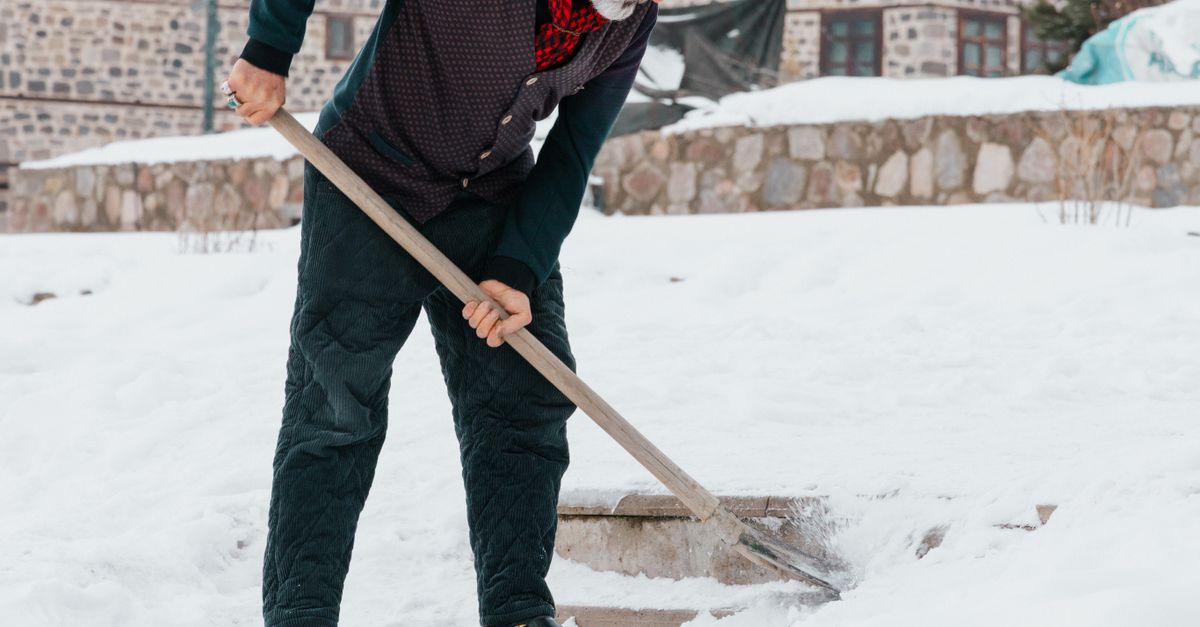
Shoveling snow back pain is usually a muscle or ligament strain in the lower back caused by repeated bending, twisting, and throwing heavy loads. The lumbar spine absorbs most of that force, especially when you lift with straight legs or toss snow over your shoulder. You can lower your risk by warming up, using a lighter push-style shovel, bending at the knees, and taking frequent breaks. Chest pain, chest pressure, or shortness of breath while shoveling is a medical emergency: stop immediately and call 911.
The first real storm of the season tends to arrive the same way. The driveway is buried overnight, the car needs to move by 7 a.m., and the shovel hasn't been touched since last March. An hour later the snow is gone, and your lower back has started to tighten. Shoveling snow back pain is one of the most predictable winter injuries, because few household chores load the spine as hard, as fast, or with as little preparation.
This guide is for anyone who clears their own walkway, whether that means one storm a season or every snowfall from December to March. Cold weather can make back discomfort feel worse on its own, a topic covered in our article on why back pain gets worse in winter. The fixes for shoveling-related strain are mostly simple: a short warm-up, the right shovel, leg-driven technique, sensible pacing, and a recovery routine that includes knowing which symptoms mean stop.
Why Shoveling Snow Causes Back Pain
Snow shoveling combines three movements the lower back handles poorly under load: bending forward, twisting, and throwing. Each one stresses a different part of the lumbar spine, and shoveling stacks all three into a single motion repeated dozens or hundreds of times in one session.
Bending Forward Under Load
The lumbar spine is made up of five vertebrae separated by intervertebral discs, which act as shock absorbers between the bones. When you bend at the waist with straight legs to scoop snow, the erector spinae muscles running along both sides of the spine have to hold up your entire upper body plus the shovel load out in front of you.
The farther the load sits from your body, the more leverage works against those muscles. That is why a full shovel held at arm's length feels far heavier than the same weight held against your chest. Repeated forward bending also increases pressure on the front of the discs, and over a long session that pressure can irritate the discs and fatigue the muscles that protect them.
Twisting and Throwing
The throw is usually the riskiest part of the shoveling motion. Tossing snow to the side or over your shoulder rotates the trunk while the spine is bent and loaded. That combination places shearing force on the small facet joints at the back of each vertebra and on the discs between them.
The obliques and the quadratus lumborum, a deep muscle connecting the pelvis to the lower ribs and spine, take much of that rotational strain. A sudden twist with a heavy load is a classic setup for a strain or spasm. The pain may hit mid-throw, or it may show up hours later as stiffness that makes getting out of a chair difficult.
Cold Muscles and Heavy Snow
Cold muscle tissue is less pliable than warm tissue, so it tolerates sudden effort poorly. Early-morning shoveling adds another factor: the discs absorb fluid while you lie down overnight, leaving them fuller and less tolerant of deep bending right after you wake up. Snow weight also varies widely, and wet, packed snow is much heavier than light powder, so the same stroke can carry a very different load from one storm to the next.
The result is usually one of these injuries:
- Muscle strain: overstretched or torn fibers in the back muscles, causing soreness and stiffness.
- Ligament sprain: overstretching of the tough bands that connect the vertebrae.
- Muscle spasm: an involuntary, painful tightening as muscles guard an irritated area.
- Disc irritation or herniation: stress on a disc that can cause pain spreading into the buttock or leg.
Warm Up Before You Pick Up a Shovel
Treat shoveling like the physical workout it is. Five to ten minutes of light movement indoors raises muscle temperature and gets blood moving into the back, hips, and legs before they take on load. Try this sequence before heading outside:
- March in place or walk around the house for two to three minutes.
- With hands on your hips, make 10 slow hip circles in each direction.
- Stand tall and slowly turn your torso to the left and right, 10 times each way, keeping the movement small and controlled.
- Do 10 sit-to-stands from a sturdy chair, the same leg-driven pattern you'll use to lift snow.
- Place one heel on a low step and lean forward gently to stretch the hamstring, holding 20 to 30 seconds per side.
Dress in layers so your muscles stay warm once you step outside, and keep your lower back covered. If you can, give yourself 30 minutes or so of moving around after waking before you start shoveling.
How to Shovel Snow Without Back Pain
Technique matters more than strength. The goal is to keep the load small, low, and close to your body, and to let your legs and feet do the work your lower back would otherwise absorb.
Choose the Right Shovel
The shovel itself shapes how much you bend and how much you carry with every stroke. Look for these features:
- A lightweight plastic or aluminum blade, so you aren't lifting extra weight on every scoop
- A smaller blade, which naturally limits how much snow you pick up
- A curved or bent shaft, which can reduce how far you have to bend forward
- A shaft long enough that you can push without hunching over
- A wide, plow-style pusher blade for clearing driveways without lifting
A light coat of cooking spray or a nonstick product on the blade keeps wet snow from sticking, so you aren't hauling extra weight or jerking the shovel to free it.
Push Instead of Lift
The safest scoop is the one you never lift. Push snow to the edge of the driveway in long, straight passes, like a plow, and lift only when you need to clear a bank. Pushing moves snow with your legs and body weight while keeping the load low.
During a heavy storm, clear in stages. Two passes of 4 inches each are far easier on your back than a single pass through 8 inches of packed snow.
Lift With Your Legs and Keep the Load Close
When you do have to lift, follow this sequence:
- Face the snow with your feet about hip-width apart.
- Bend at the hips and knees while keeping your back straight and chest up.
- Place one hand close to the blade to shorten the lever arm.
- Scoop a small, manageable load.
- Straighten your legs to lift, keeping the shovel close to your body.
- Pivot your feet to turn toward the drop spot, or walk the snow there. Never throw snow over your shoulder or twist at the waist.
Pace Yourself
Rushing is hard on both your heart and your back. Work for 10 to 15 minutes, then take a short break to stand upright, walk around, and gently arch backward with your hands on your hips. Drink water, since cold, dry air dehydrates you even when you don't feel sweaty.
If you have heart disease, high blood pressure, or a history of back injury, or if you haven't been physically active, ask your doctor whether shoveling is safe for you. A snow blower or help from someone else may be the better choice.
Where Massage Fits After Shoveling Snow
Once the snow is cleared, the muscles that did the work are fatigued and often tight. Massage is one recovery tool among several, alongside rest, gentle movement, and heat or cold, and it can help those tissues loosen as they settle.
Vibration Versus Oscillation
Many back massagers are sold as vibration massagers. MedMassager uses oscillating technology to deliver deeper, more controlled vibration than conventional massagers. The Body Massager oscillates in a circular motion, combining vibration with circular rotation, so the movement travels into the muscle beneath the skin.
What Happens in Your Lower Back
The key mechanism is blood flow. Oscillation penetrates deep muscle layers and increases local blood flow in the tissue beneath the pad. That same deep, rhythmic movement reaches the erector spinae and surrounding tissue in the lower back, whether you use it right after bending and lifting or later, when you've been sitting stiffly in a chair.
Shoveling also works the glutes and hamstrings hard. For soreness in those areas, deep oscillation increases local blood flow in large muscle groups, which supports those muscles as they recover during rest.
Why the Body Massager Fits Post-Shoveling Use
The MedMassager Body Massager for the lower back is an FDA-registered Class I medical device. Its design suits a tired lower back:
- A large, soft, cushioned pad that contours to the curve of the lower back
- Easy-to-hold, slip-resistant handles for positioning it on your own
- Variable speed, so you can start gently and adjust
- Use while seated or lying down, including resting it between your back and a chair
Your Recovery Routine After Shoveling
What you do in the first few hours after shoveling shapes how your back feels the next morning. Use this as a starting routine:
- Cool down. Walk around indoors for a few minutes instead of dropping straight onto the couch.
- Get warm and dry. Change out of damp clothes so your muscles don't stiffen in the cold.
- Stretch gently. Try lying knee-to-chest stretches, pelvic tilts, and child's pose, holding each for 20 to 30 seconds. Stop if anything produces sharp pain.
- Use cold or heat. For a freshly irritated area, apply a cold pack wrapped in a towel for 15 to 20 minutes. After the first day or two, warmth helps loosen stiff muscle.
- Massage with the chair method. Sit in a firm chair and rest the Body Massager pad between your lower back and the chair back. Start with about 10 minutes at the lowest setting, once or twice a day, and let the circular oscillating action work on the muscles along your spine.
- Keep moving. Take short walks over the next few days. Long stretches of bed rest tend to leave the back stiffer.
If your back locks up into a spasm, read our guide to using massage for a back spasm. Oscillation moves deep muscle tissue and increases local blood flow, which supports a tight, guarded area as it relaxes. If the pain is sharp, or you suspect more than muscle soreness, ask your own care team before applying massage to the area. You can compare models in the Body Massager collection for back and leg muscles.
Red Flags: When to Stop Shoveling
Shoveling is demanding on the heart as well as the back. Cold air narrows blood vessels, and heavy lifting with sustained effort raises heart rate and blood pressure quickly. Some symptoms during or after shoveling call for immediate action, not rest.
Heart Warning Signs: Call 911
Stop shoveling immediately and call 911 if you notice any of these:
- Chest pain, pressure, tightness, or squeezing
- Shortness of breath that feels out of proportion to the effort
- Pain spreading to the arm, jaw, neck, or upper back
- Lightheadedness, a cold sweat, or nausea
Do not try to finish the driveway or drive yourself to the hospital.
Back and Nerve Warning Signs
See a doctor promptly if back pain comes with numbness, tingling, or weakness in a leg or foot, or with pain shooting below the knee. These can signal nerve involvement from a disc problem. Also get checked if the pain worsens instead of easing over several days, wakes you at night, or comes with a fever.
Loss of bladder or bowel control, or numbness in the groin or inner thighs, requires emergency care right away.
Frequently Asked Questions
Why does my lower back hurt after shoveling snow?
Shoveling combines bending forward, lifting a load away from your body, and twisting to throw, all of which concentrate force on the lumbar spine. That repetition fatigues and can strain the erector spinae, obliques, and quadratus lumborum muscles. Cold, stiff tissue and heavy wet snow make a strain more likely.
How long does back pain from shoveling snow last?
A simple muscle strain often improves noticeably within a few days, with soreness fading over one to two weeks. Gentle movement usually helps it resolve faster than prolonged bed rest. Pain that worsens, lasts beyond a couple of weeks, or comes with leg numbness or weakness should be checked by a doctor.
Should I use heat or ice after shoveling snow?
Cold is useful in the first day or two for a freshly irritated area, applied for 15 to 20 minutes with a towel between the pack and your skin. Once the initial soreness settles, heat helps relax stiff muscles and encourages blood flow. You can also alternate the two; either is fine as long as it feels comfortable.
Is it better to push or lift snow?
Pushing is safer for your back because it keeps the load low and uses your legs and body weight instead of your spine. Push snow to the edge of the area in straight passes and lift only when you need to clear a bank. When you must lift, bend your knees, keep the load small, and walk the snow to its spot instead of throwing it.
Can a massager help back pain after shoveling?
A therapeutic massager can be one part of a recovery routine alongside rest, stretching, and heat or cold. The MedMassager Body Massager oscillates in a circular motion that penetrates deep muscle layers and increases local blood flow in the lower back. A reasonable starting point is about 10 minutes at the lowest setting, once or twice a day, after checking with your doctor if the pain is sharp.
Should I keep shoveling if my back starts to hurt?
No, stop when back pain starts, because continuing to bend and lift on a strained muscle can turn minor soreness into a more significant injury. Go inside, walk gently, and let the area rest. Finish the job later with lighter loads, ask for help, or use a snow blower if the pain lingers.
The Bottom Line
Shoveling snow back pain comes from a predictable mix of bending, twisting, and throwing heavy loads with cold muscles. A short warm-up, a lighter push-style shovel, leg-driven lifting, and regular breaks remove much of that strain before it starts.
Afterward, gentle movement, heat or cold, and gentle massage can help tired back muscles recover. The Body Massager's circular oscillating action moves deep muscle tissue along the spine and supports local blood flow while you rest. Chest pain, pressure, or shortness of breath during shoveling always means stopping and calling 911. To add oscillating massage to your post-shoveling routine, explore our therapeutic Body Massagers for the back or browse the full MedMassager therapeutic massager catalog.
This content is for informational purposes only and is not intended as medical advice, diagnosis, or treatment. Always consult a qualified healthcare professional before starting any new treatment or therapy. MedMassager products are FDA-registered Class I medical devices.


