
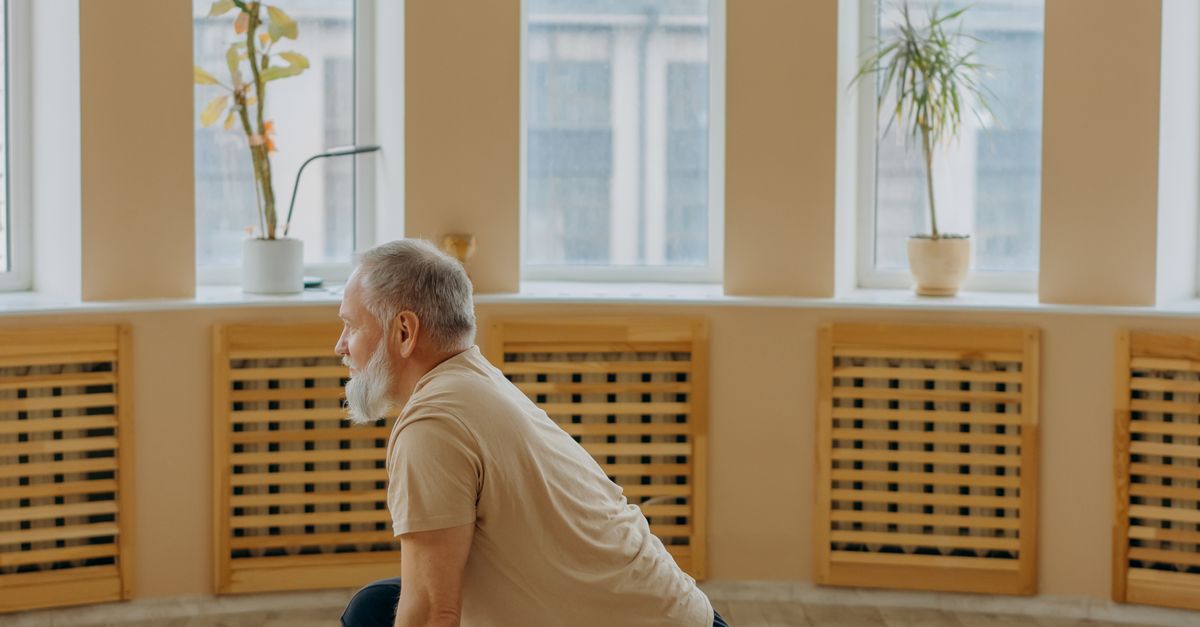
Psoas muscle pain is discomfort that comes from the psoas major, a deep hip flexor that connects the lumbar spine to the top of the thigh bone. It typically shows up as a deep ache in the front of the hip or groin, lower back pain, or stiffness when you try to stand up straight after sitting. Long periods of sitting hold the psoas in a shortened position, which is a frequent contributor to tightness and pain. Gentle stretches such as the half-kneeling lunge, regular movement breaks, and massage of the surrounding back, hip, and thigh muscles can help, while abdominal pain, fever, or pain with no clear cause should be checked by a doctor.
You stand up after a long drive or a full afternoon at your desk, and for the first few steps your hip feels locked and your lower back won't fully straighten. That stiff, deep ache in the front of the hip is one of the clearest signs of psoas muscle pain. The psoas is difficult to feel and easy to overlook because it sits deep inside the body, behind the abdominal organs, rather than just under the skin.
That depth explains why psoas pain is so often mistaken for a back problem, a groin pull, or general hip stiffness. This guide is for desk workers, frequent drivers, and anyone whose lower back or hip pain hasn't improved with back-focused care alone. It covers where the psoas sits, how sitting shortens it, which stretches help, how to use massage safely around it, and which warning signs mean you should call a doctor instead.
Where Is the Psoas Muscle?
The psoas is one of the few muscles that directly connects your spine to your legs. Knowing its path makes the pain patterns in the rest of this guide easier to recognize.
The Deep Hip Flexor Connecting Spine and Thigh
The psoas major attaches to the sides of the lower thoracic and lumbar vertebrae, from roughly T12 down through L5. From there it travels down and forward through the pelvis, crosses the front of the hip joint, and attaches to a small bony knob on the inner thigh bone called the lesser trochanter.
Cleveland Clinic describes the hip flexors as the group of muscles that let you lift your knee toward your body and bend forward at the waist. The psoas is the deepest member of that group. A smaller muscle, the psoas minor, sits in front of it, though it isn't present in everyone.
The Iliopsoas Partnership
Inside the pelvis, the psoas joins the iliacus, a fan-shaped muscle lining the inner surface of the hip bone. The two share a tendon and work as a unit called the iliopsoas. When clinicians talk about iliopsoas pain or iliopsoas tendinopathy, they are referring to this combined muscle group.
Why It Affects Both the Hip and the Back
Because the psoas anchors to the spine at one end and the femur at the other, it influences movement at both locations. Its main jobs include:
- Lifting the thigh toward the chest, as when climbing stairs or getting into a car
- Helping bend the trunk forward and sit up from lying down
- Stabilizing the lumbar spine during standing and walking
- Supporting upright posture by balancing forces across the pelvis
When the psoas is tight or irritated, it can pull on the lumbar spine above and the hip joint below. That is why one muscle can produce pain in two seemingly separate places.
What Causes Psoas Muscle Pain?
Psoas pain rarely comes from a single event. It usually builds from repeated positions and movement habits, with sitting at the top of the list.
How Long Sitting Shortens the Psoas
When you sit, your hips bend to roughly 90 degrees. That position brings the two ends of the psoas closer together, so the muscle rests in a shortened state for as long as you stay seated. Over hours of desk work, driving, or screen time, the tissue adapts to that shorter length.
The problem appears when you stand. The psoas now has to lengthen quickly, and a muscle accustomed to sitting resists. You feel it as a pulling sensation in the front of the hip or a lower back that wants to stay slightly bent. Meanwhile, the glutes on the back of the hip spend those seated hours mostly inactive, which leaves the psoas doing more stabilizing work once you're up and moving.
Other Triggers for Psoas Strain
Sitting is a major factor, but several other situations can irritate or strain the psoas:
- Repetitive hip flexion from running, cycling, kicking, or climbing stairs
- Sudden forceful movements, such as sprinting or lifting a heavy object from a bent position
- Weak abdominal or glute muscles that leave the psoas to stabilize the spine alone
- Sleeping curled up with the hips tightly bent for many hours
- Changes in walking pattern after a foot, knee, or hip injury
- Underlying hip conditions such as iliopsoas bursitis or tendinopathy
Several of these can overlap. A runner who also sits at a desk all day, for example, is loading a psoas that is both overworked and chronically shortened.
Psoas Pain Symptoms: Hip and Low Back
Psoas pain symptoms tend to cluster in two areas: the front of the hip and the lower back. Recognizing the pattern helps you and your clinician separate psoas involvement from a disc problem, hip joint issue, or groin strain.
Front-of-Hip and Groin Pain
The hip-side symptom is usually a deep ache in the groin or the crease at the front of the hip. It often feels as though it lives "inside" the joint rather than on the surface. Lifting your knee can sharpen it, so tasks like putting on socks, stepping into a car, or climbing stairs become noticeable.
You may also feel or hear a snap at the front of the hip when you move the leg. This is known as internal snapping hip and occurs when the iliopsoas tendon slides over a bony ridge in the pelvis.
Lower Back Pain Patterns
Psoas-related back pain sits low in the lumbar spine, on one side or both. A tight psoas pulls the lumbar vertebrae forward, which can increase the arch in your lower back and compress the joints there. The pain tends to be worst when you first stand after sitting and often eases when you bend slightly forward or lie on your back with your knees bent.
Other Signs That Point to the Psoas
Beyond the two main pain locations, a few everyday patterns suggest the psoas is involved:
- Difficulty standing fully upright after sitting for a while
- Tightness or back discomfort when lying flat with legs straight
- Relief when the hips are bent, such as lying with a pillow under the knees
- A shortened stride or slight limp on the affected side
- Discomfort that spreads into the front of the thigh
Where Massage Fits With Psoas Muscle Pain
Massage can be a useful part of managing psoas muscle pain, but only when it's applied to the right places. The psoas itself is not a safe target for home massage.
Why You Should Never Press Into the Abdomen
The psoas lies behind the intestines, close to major blood vessels such as the abdominal aorta, and near the kidneys and ureters. Pressing deep into the belly to reach it can irritate or injure these structures. Do not dig into your abdomen with your hands, a ball, or any device, and never place a massager on your abdomen.
Direct psoas release is something to discuss with a licensed physical therapist or your own care team. At home, the safer and more practical approach is to work on the muscles that surround the psoas and compensate for it.
Targeting the Muscles Around the Psoas
When the psoas is tight, neighboring muscles pick up extra work and tighten too. These areas are accessible from the outside of the body:
- The lower back muscles alongside the lumbar spine
- The glutes, which often become underactive during long sitting
- The outer and side hips
- The front of the thighs, where the hip flexor group continues toward the knee
For lower back pain linked to long sitting, a Body Massager for the lower back and hips works on those surrounding tissues. Its circular oscillating action penetrates deep muscle layers, increasing local blood flow in muscles affected by prolonged sitting. Applied to the thighs and glutes, the same oscillation reaches large muscle groups and supports recovery during rest.
Oscillation Compared With Standard Vibration
Many massagers are sold as vibration massagers, built around a motor that shakes the unit. MedMassager uses oscillating technology to deliver deeper, more controlled vibration than conventional massagers. The Body Massager oscillates in a circular motion, combining vibration and circular rotation through a large, soft, cushioned pad that contours to the lower back, hips, and thighs.
The Body Massager is an FDA-registered Class I medical device with variable speed, so you can start gently and increase intensity as your muscles tolerate it. For a hands-on approach to the same area, see this hip flexor massage technique guide.
Stretches That Help a Tight Psoas
Stretching addresses the root issue of a psoas that has adapted to a shortened position. Move slowly, breathe steadily, and stop if any stretch causes sharp pain rather than a gentle pull.
The Half-Kneeling Lunge
The half-kneeling lunge is one of the most direct ways to lengthen the psoas because it extends the hip while keeping the spine stable.
- Kneel on your right knee with a folded towel or cushion under it. Place your left foot flat on the floor in front of you, with the left knee bent to about 90 degrees.
- Stand tall and gently tuck your pelvis under, as if pointing your tailbone toward the floor.
- Squeeze your right glute and shift your weight slightly forward until you feel a stretch in the front of the right hip.
- Keep your lower back from arching. The stretch should come from the hip, not from bending backward.
- Hold for about 30 seconds, then switch sides. Repeat two to three times per side.
For a deeper stretch, raise the arm on the kneeling side overhead and lean very slightly away from it.
Other Gentle Options
If kneeling is uncomfortable, or you want variety, three other moves target the same area. Glute bridges, done lying on your back with the hips lifted, strengthen the glutes so they share the load with the psoas. The edge-of-bed stretch lets gravity do the work: lie near the edge of a bed, hug one knee to your chest, and let the other leg hang off the side. A standing hip flexor stretch works anywhere, with one hand on a wall, one foot stepped back, and the pelvis tucked under.
Movement Breaks Matter as Much as Stretching
A stretch once a day can't fully offset eight hours in a chair. Stand up and walk for a minute or two every 30 to 60 minutes, which gives the psoas regular chances to lengthen. For more hands-on ideas, read about how to massage your hip flexors safely.
A Daily Routine for a Tight Psoas
Consistency matters more than intensity. This routine fits around a desk-based day, and none of it takes more than a few minutes at a time.
- Morning: Do two to three rounds of the half-kneeling lunge on each side before you sit down for the day.
- During work: Stand and walk every 30 to 60 minutes. Set a timer if you lose track.
- Midday: Rest the cushioned pad of a handheld body massager between your lower back and the back of your chair. The circular oscillating action works on the lumbar muscles, increasing local blood flow in tissue affected by prolonged sitting.
- Evening: Seated or lying down, apply the pad to your glutes, outer hips, and front of the thighs. Start with about 10 minutes at the lowest setting, once or twice a day, and keep the device off your abdomen.
- Before bed: Finish with a set of glute bridges and a light hip flexor stretch.
If a step aggravates your pain rather than easing it, drop that step and keep the rest. The goal is steady, tolerable movement throughout the day, not a demanding program.
When to See a Doctor for Psoas Pain
Most of this guide assumes muscle tightness from sitting or overuse. Some symptoms in the hip and lower back, however, come from problems that stretching and massage cannot address. Stop home care and contact a doctor promptly if you notice any of the following:
- Abdominal pain, especially alongside hip or back pain
- Fever, chills, or feeling generally unwell
- Pain with no clear cause, or pain that worsens at night or at rest
- Numbness, tingling, or weakness in the leg
- Changes in bladder or bowel control
- Pain after a fall or injury, or an inability to bear weight
- Unexplained weight loss
Fever combined with hip or groin pain can signal an infection in or near the muscle, known as a psoas abscess, which requires medical treatment. Abdominal, kidney, and digestive conditions can also send pain to the same region. If you've had recent hip or spine surgery, are pregnant, or have a history of blood clots, ask your own care team before starting stretches or massage.
Frequently Asked Questions
What does psoas pain feel like?
Psoas pain usually feels like a deep ache in the front of the hip or groin, often paired with lower back pain. It tends to be worst when you stand up after sitting and may ease when you bend slightly forward or lie with your knees bent. You may also notice a snapping sensation at the front of the hip.
Can sitting too much cause psoas pain?
Yes, long periods of sitting are a major contributor to psoas tightness. Sitting holds the hips bent, which keeps the psoas in a shortened position for hours at a time. When you stand, the shortened muscle resists lengthening and can pull on the hip and lower back.
Can a tight psoas cause lower back pain?
A tight psoas can contribute to lower back pain because it attaches directly to the lumbar vertebrae. When it shortens, it pulls the lower spine forward and can increase the arch in the lower back. This places extra load on the lumbar joints and surrounding muscles.
Is it safe to massage the psoas yourself?
Pressing directly into the abdomen to reach the psoas is not safe at home because the muscle sits behind organs and major blood vessels. A safer approach is to massage the surrounding lower back, glutes, hips, and thighs. Direct psoas work should be discussed with a licensed physical therapist or your care team.
How long does it take for a tight psoas to loosen?
Mild tightness from sitting may ease over a few weeks of consistent stretching and regular movement breaks. A true strain or tendon irritation can take longer. If your pain hasn't improved after about two weeks of home care, or it keeps getting worse, see a healthcare professional.
Does a body massager help with psoas pain?
A body massager cannot safely reach the psoas itself, but it can work on the muscles that tighten around it. The MedMassager Body Massager oscillates in a circular motion through a cushioned pad applied to the lower back, glutes, hips, and thighs. That oscillation penetrates deep muscle layers, increasing local blood flow in muscles affected by prolonged sitting.
The Bottom Line on Psoas Pain
Psoas muscle pain usually traces back to a deep hip flexor that has adapted to long hours of sitting, and it shows up as front-of-hip aches, low back pain, or stiffness when standing upright. Regular movement breaks, the half-kneeling lunge, and work on the surrounding back, hip, and thigh muscles address the problem from several directions.
Keep all massage off the abdomen, and treat abdominal pain, fever, or pain with no clear cause as reasons to see a doctor. The Body Massager's circular oscillating action creates continuous, repetitive movement in the lower back, hip, and thigh muscles, which supports circulation during use. To add that oscillating massage to your routine, explore the MedMassager Body Massager collection, or browse all MedMassager therapeutic massagers.
This content is for informational purposes only and is not intended as medical advice, diagnosis, or treatment. Always consult a qualified healthcare professional before starting any new treatment or therapy. MedMassager products are FDA-registered Class I medical devices.


