
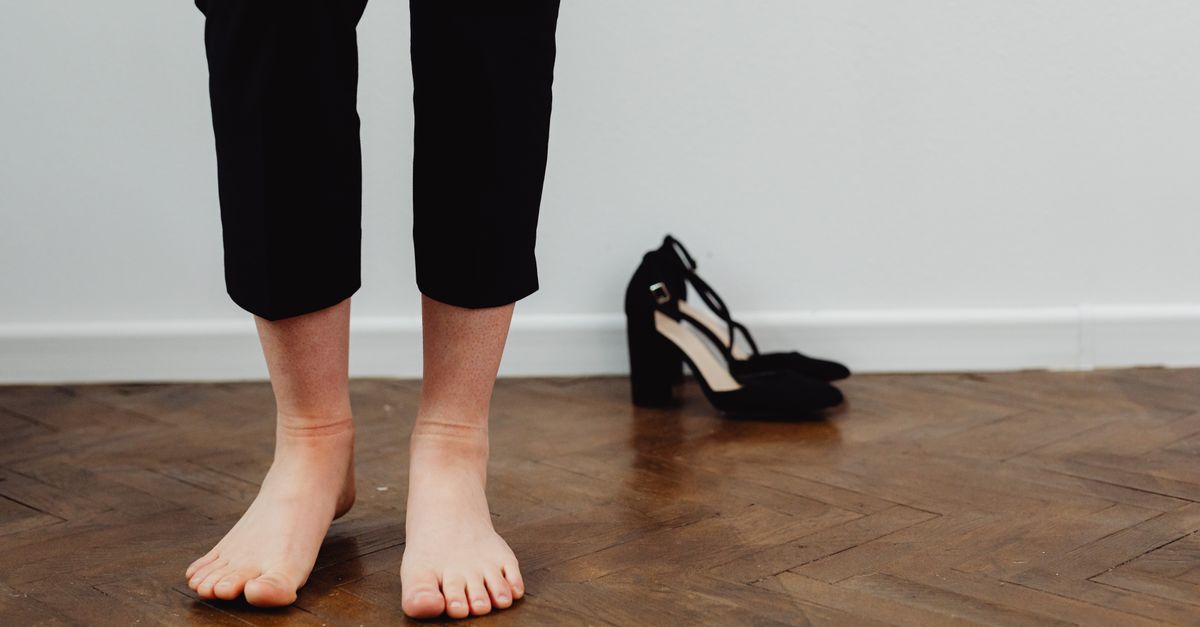
Tight calves from wearing heels happen because high heels hold the ankle in a pointed position, which keeps the calf muscles and Achilles tendon in a shortened state for hours at a time. With repeated wear, the calf and Achilles adapt to that shorter length, so switching to flats or going barefoot stretches them further than they are used to. Gradual calf stretching, rotating heel heights, and massage that keeps blood moving through the lower leg can ease the stiffness over several weeks. A sudden pop at the back of the ankle, heel pain that persists, or swelling in one calf should be checked by a clinician.
If you've spent a full workday in heels, you know the feeling when you finally kick them off: your calves feel like tightened cables, and the first few steps in flats pull at the back of your ankle. Tight calves from wearing heels are a predictable result of how heels position the foot, and they respond well to a consistent, gradual approach. This guide is for you if you wear heels for work, events, or daily style and have started noticing calf stiffness, Achilles tightness, or an ache that shows up when you change shoes.
It explains the anatomy behind the tightness, why flats can feel worse before they feel better, and what you can do about it at home. It also covers the warning signs that point to something beyond ordinary stiffness.
Why Heels Leave Your Calves Tight
The tightness starts with ankle position. In a heel, your ankle sits in plantar flexion, the same toe-pointed position you use to stand on your tiptoes. The higher the heel, the more pronounced that angle becomes.
The Calf and Achilles Anatomy Involved
Your calf is made of two main muscles. The gastrocnemius is the larger, visible muscle that crosses both the knee and the ankle. The soleus sits underneath it and crosses only the ankle. Both merge into the Achilles tendon, which Mayo Clinic describes as the band of tissue connecting the calf muscles at the back of the lower leg to the heel bone.
When your heel is lifted, all three structures sit in a shortened position. For a deeper look at the larger of the two muscles, see this guide on how to massage the gastrocnemius muscle.
How Repeated Heel Wear Changes the Calf
Muscles and tendons adapt to the positions you hold them in most often. Hours of daily heel wear give the calf and Achilles little reason to work through their full range. Over time, they become less accustomed to lengthening, and the ankle loses some ability to flex upward toward the shin.
This happens gradually, so the stiffness often goes unnoticed until it limits movement. Signs that heel wear is affecting your calves include:
- Calf stiffness that feels worse in the morning or after sitting
- A pulling sensation at the back of the ankle in flat shoes
- Difficulty squatting deeply with your heels on the floor
- Sore calves from heels that linger into the next day
- Heel discomfort during the first steps after rest
Why Your Calves Hurt in Flats After Heels
It seems backward, but calves that hurt after switching to flats are one of the clearest signs of heel-related tightness. A flat shoe drops your heel several centimeters lower than a heel does. That asks the calf and Achilles to stretch to a length they no longer reach regularly, and the tissue registers that as tension, aching, or soreness along the back of the leg.
Going barefoot or wearing completely flat sandals can intensify this, since there is no cushioning or heel lift at all. The same applies to walking long distances in flats right after a period of daily heel wear. Your calves need time to readjust, and sudden changes tend to produce the most discomfort.
A gradual transition is easier on the tissue:
- Step down through a moderate or block heel before going fully flat
- Choose supportive flats with a slight heel-to-toe drop rather than zero-drop shoes
- Limit barefoot walking on hard floors during the adjustment period
- Add stretching before you increase time in flat footwear
If the ache settles within a few days of consistent stretching and gradual change, it is usually ordinary adaptation. Pain that sharpens or persists is a different matter, covered in the clinician section below.
Where Massage Fits for Tight Calves From Heels
Massage doesn't replace stretching, but it pairs well with it. Tight calf muscles that have spent the day in a shortened position benefit from movement and fresh blood flow before you ask them to lengthen. MedMassager offers two ways to bring that movement to the calves, and both are FDA-registered Class I medical devices.
The Foot Massager: Seated Calf Activation
The MedMassager Foot Massager is used sitting upright, with your feet resting flat on its open platform. It oscillates in a circular motion, moving your feet continuously while you sit. That repeated foot motion engages the calf muscles without you having to work them actively.
For calf stiffness, the mechanism is direct: repeated foot motion activates the calf muscles, pushing blood upward instead of letting it pool. This makes it useful at the end of a day in heels, when your calves have been held still in one position for hours. You can browse the full range of therapeutic foot massagers for more detail.
The Body Massager: Direct Pad Contact on the Calves
The Body Massager works differently. It is a handheld unit with slip-resistant handles and a large, soft, cushioned contouring pad that forms to the body. You apply the pad directly to the calf, moving it from just below the knee down to the lower calf while seated, stopping above the Achilles tendon.
The pad's circular oscillating movement helps move blood through the calf muscle tissue, so the Body Massager reaches the gastrocnemius and soleus from the outside. Adjustable intensity lets you start gently on stiff tissue. See the MedMassager Body Massager for calves and legs for details.
Vibration vs. Oscillation for Calf Stiffness
Conventional foot massagers are typically marketed as vibration massagers. MedMassager uses oscillating technology to deliver deeper, more controlled vibration than conventional massagers. Instead of a motor simply shaking the surface, the circular oscillating action moves the feet or the pad through a rhythmic path, which is what engages the calf muscle tissue. The two products suit different needs:
- Foot Massager: seated use, with calf activation through continuous foot motion
- Body Massager: targeted pad contact directly on the calf muscles
Using both, or alternating between them, covers the calf from two directions. Both offer adjustable intensity settings, so you can start low and build up as the tissue loosens.
Stretching and Footwear Rotation for Tight Calves
Stretching is the part that restores length over time. Footwear rotation keeps the calves from tightening back up as quickly. Together, they address tight calves from wearing heels at the source.
Four Calf Stretches to Do Gradually
Hold each stretch for about 30 seconds and repeat two or three times per side. Aim for mild tension, never sharp pain, and do not bounce.
- Straight-knee wall stretch: Stand facing a wall with one foot back, heel down and knee straight. Lean forward until you feel the stretch in the upper calf. This targets the gastrocnemius.
- Bent-knee wall stretch: Use the same position, but bend the back knee slightly while keeping the heel down. The stretch moves lower, into the soleus.
- Seated towel stretch: Sit with your legs extended, loop a towel around the ball of your foot, and gently pull your toes toward you. This works well first thing in the morning.
- Step heel drop: Stand with the balls of your feet on a stair edge, holding the rail, and slowly lower your heels below the step. Start shallow and increase depth over weeks, not days.
Consistency matters more than intensity. Short daily sessions over several weeks do more than an occasional deep stretch.
Rotating Heel Heights Through the Week
You don't have to give up heels to reduce calf stiffness from high heels. The goal is to stop holding your calves at the same shortened length every day. Alternating heel heights gives the tissue regular exposure to a fuller range of motion.
Practical ways to rotate include:
- Commute in supportive, lower-heeled shoes and change at your destination
- Avoid wearing your highest heels on consecutive days
- Choose block heels over stilettos when you'll be standing for long periods
- Take heels off during seated stretches of the day when you can
An Evening Routine for Heel-Tight Calves
This sequence fits into about 20 to 25 minutes after you take your heels off. Massage comes first so your calves have blood moving through them before you stretch. The order matters: warming the tissue with movement makes the stretches that follow feel easier and less abrupt.
- Sit upright with the Foot Massager. Rest your feet flat on the platform. Start with about 10 minutes at the lowest setting, once or twice a day, and increase intensity only if it stays comfortable.
- Apply the Body Massager to each calf. Still seated, place the cushioned pad on the upper calf and work it slowly down toward the ankle for about 3 to 5 minutes per leg. Stop above the Achilles tendon.
- Add hands-on work if you like. These hands-on calf massage techniques can follow the device session.
- Stretch. Move through the straight-knee and bent-knee wall stretches, holding each for about 30 seconds.
- Finish with the towel stretch. Repeat it the next morning before putting on heels.
If you prefer one device, the seated Foot Massager for calf activation handles the warm-up step on its own while you rest. Its circular oscillating action keeps the feet and calves moving continuously, which supports circulation during use. Track how your calves feel in flats each week to gauge progress.
When Heel or Achilles Pain Needs a Clinician
Ordinary tightness improves with stretching and gradual footwear changes. Some symptoms, however, suggest injury or a condition that needs a professional evaluation. Mayo Clinic describes Achilles tendinitis as an overuse injury of the Achilles tendon, and plantar fasciitis as inflammation of the thick band of tissue running across the bottom of the foot. Both can develop alongside heel-related calf tightness.
See a doctor, podiatrist, or physical therapist if you notice:
- A sudden pop or snap at the back of the ankle, especially with sharp pain
- Inability to rise onto your toes on the affected side
- Pain, thickening, or a tender lump along the Achilles tendon
- Stabbing heel pain with your first steps in the morning that doesn't improve
- Calf pain that persists or worsens after two weeks of rest and stretching
- Numbness, tingling, or weakness in the foot
Swelling, warmth, and redness in one calf, particularly with tenderness, can signal a blood clot. Seek medical care promptly in that case and do not massage the leg. If you have diabetes, neuropathy, circulation problems, or a recent injury, ask your own care team before starting any massage routine.
Frequently Asked Questions
Can wearing high heels permanently shorten your calves?
Regular heel wear causes the calf muscles and Achilles tendon to adapt to a shorter working length. This adaptation builds gradually and generally responds to consistent stretching and lower heel heights over several weeks. If your ankle range stays limited despite regular stretching, a physical therapist can assess it.
Why do my calves hurt when I switch from heels to flats?
Flats lower your heel and stretch the calf and Achilles further than heels allow. If those tissues have adapted to a shortened position, the extra length registers as aching or pulling. Stepping down gradually through moderate heels and stretching daily reduces this discomfort.
How long does it take to loosen tight calves from heels?
Noticeable improvement usually takes a few weeks of daily stretching and reduced time in high heels. Longer periods of heavy heel wear can take longer to reverse. Steady, gentle practice works better than aggressive stretching in short bursts.
Should I stop wearing heels completely to fix tight calves?
Stopping completely is usually unnecessary. Rotating heel heights, choosing block heels for long days, and stretching consistently can keep calf tightness manageable. Persistent pain is a reason to talk with a clinician about your footwear.
Does a foot massager help tight calves?
A foot massager that moves your feet can engage the calf muscles while you sit. The MedMassager Foot Massager oscillates in a circular motion, and that repeated foot motion activates the calf muscles, pushing blood upward instead of letting it pool. It works best as a warm-up before stretching rather than a replacement for it.
Is it okay to stretch my calves right after taking off heels?
Gentle stretching after removing heels is fine, but avoid forcing a deep stretch on tissue that has been shortened all day. Easing in with light movement or massage first makes the stretch more comfortable. Stop if you feel sharp pain rather than mild tension.
The Bottom Line
Tight calves from wearing heels come from hours of holding the calf and Achilles in a shortened position, and the ache in flats is a sign that those tissues need time to readjust. Gradual stretching, rotating heel heights, and a short seated massage routine address the stiffness from several angles.
Watch for warning signs like a pop at the ankle, persistent heel pain, or swelling in one calf, and see a clinician if they appear. To add calf activation to your evening routine, explore MedMassager's Foot Massagers for seated calf activation. The circular oscillating action moves the feet continuously while you sit, which engages the calf muscles and supports circulation during use.
This content is for informational purposes only and is not intended as medical advice, diagnosis, or treatment. Always consult a qualified healthcare professional before starting any new treatment or therapy. MedMassager products are FDA-registered Class I medical devices.


