
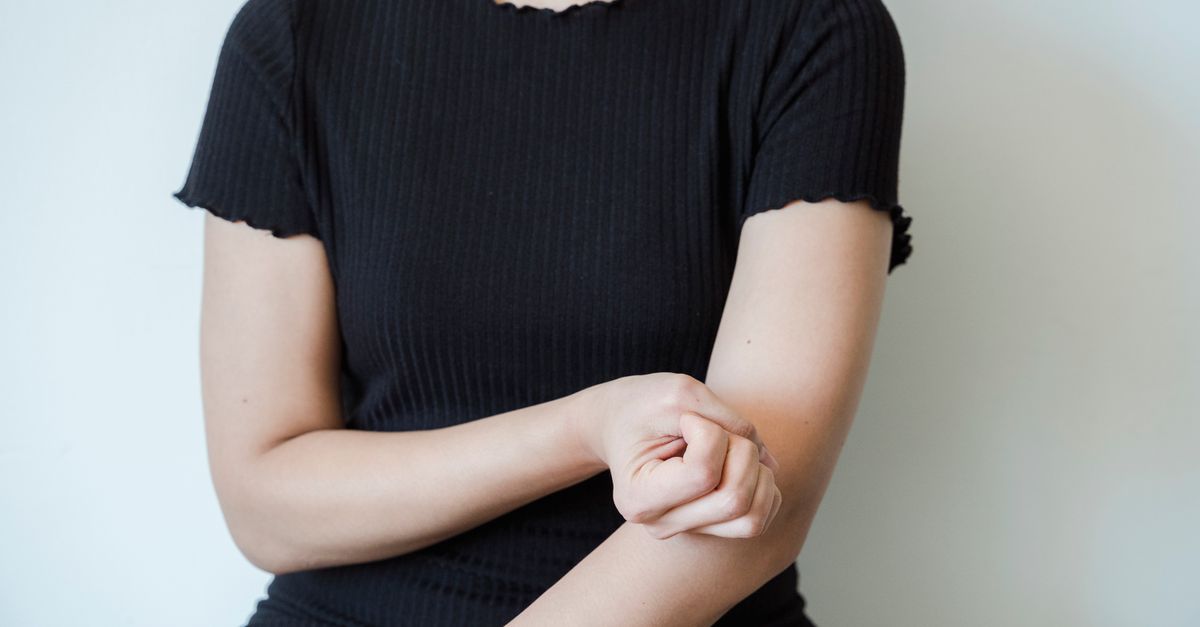
Pronator teres pain is an ache or tenderness in the upper inner forearm, just below the elbow crease, coming from the muscle that rotates the forearm to turn the palm down. It typically develops from repetitive gripping, twisting tools, golf, and racket sports, and it often overlaps with golfer's elbow. Rest, activity changes, and gentle stretches help ease muscle-related forearm pain. Numbness or tingling in the thumb and first fingers can signal pronator syndrome and should be evaluated by a clinician.
Turning a doorknob, twisting a screwdriver, or swinging a golf club should not send an ache into the inside of your forearm. When it does, the source may be pronator teres pain, a problem in a small but hardworking muscle that sits just below the bend of your elbow. Because it shares territory with the tendons involved in golfer's elbow, it is easy to mistake one for the other or to have both at once.
Inner forearm pain from gripping and rotating the hand shows up in tradespeople, golfers, tennis and pickleball players, gardeners, and anyone who spends hours with hand tools. Below you will find where the muscle sits and what it does, what strains it, how it relates to golfer's elbow and pronator syndrome, which stretches help, how massage fits in, and which symptoms mean you should see a clinician first.
Where Is the Pronator Teres Muscle?
The pronator teres is a short, diagonal muscle in the front of the forearm. You can feel it as the fleshy area on the inner side of your forearm, about two to three finger-widths below the elbow crease. When it is irritated, pressing on this spot often reproduces the ache.
Two Heads, One Job
The muscle has two points of origin. The larger humeral head starts at the medial epicondyle, the bony bump on the inside of the elbow, where several forearm muscles share a common tendon. The smaller ulnar head starts from the coronoid process of the ulna, one of the two forearm bones.
Both heads run diagonally across the forearm and attach to the outer side of the radius, roughly halfway down. That angle gives the muscle leverage to rotate the radius over the ulna.
What the Pronator Teres Does
Pronation is the movement that turns your palm to face down, like pouring water out of a cup or turning a key. The pronator teres works alongside a smaller muscle near the wrist, the pronator quadratus, to produce this rotation. The pronator teres contributes most during fast or resisted pronation, and it also assists with bending the elbow.
Everyday movements that load this muscle include:
- Turning a screwdriver, wrench, or key
- Typing and using a mouse with the palm turned down
- Carrying a bag or bucket with the palm facing your body or the floor
- Swinging a golf club, tennis racket, or pickleball paddle
- Pouring, wringing out cloths, and opening jars
Neighboring Structures
The pronator teres sits close to the common flexor tendon at the inner elbow, which is why its problems overlap with golfer's elbow. The median nerve also passes between its two heads on its way to the hand. That anatomy explains why some forearm complaints include finger symptoms, which is covered in detail below.
What Causes Pronator Teres Pain?
Most pain in this muscle comes from overuse: repeated rotation and gripping without enough recovery time. The muscle may develop tightness, tender spots, or a mild strain. Less often, a single forceful twist or a sudden jump in activity triggers it.
Gripping and Twisting Tools
Hand tools combine two loads the pronator teres handles at once: a firm grip and forceful rotation. Driving screws by hand, turning wrenches, using pliers, and running power drills that kick back all ask the muscle to contract hard and repeatedly. Jobs and hobbies built around these motions, such as carpentry, plumbing, auto repair, and gardening, place steady demand on the inner forearm.
Grip size matters too. Handles that are too thin or too thick force you to squeeze harder, which increases tension through the forearm flexors and pronators.
Golf and Racket Sports
The golf swing loads the trail arm's inner forearm, especially when the club strikes the ground or the grip is too tight. In tennis, a heavy topspin forehand and some serve techniques involve forceful forearm rotation. Pickleball, squash, and badminton create similar loads with fast, repeated wrist and forearm turns.
Other Triggers
Several other factors can push the muscle past what it can handle:
- A sudden increase in activity, such as a weekend of yard work or a new training block
- Weight training with curls, presses, or pull-ups done with heavy load or poor wrist position
- Throwing sports and repetitive overhead work
- Playing instruments that require sustained forearm rotation
- Carrying heavy items for long periods with a tight grip
Golfer's Elbow, Pronator Syndrome, and Pronator Teres
Pain in the inner forearm can come from the muscle itself, from the tendon it shares at the elbow, or from the nerve that runs through it. These overlap, and a clinician is the right person to sort out which one is driving your symptoms.
How Golfer's Elbow Fits In
Mayo Clinic describes golfer's elbow, or medial epicondylitis, as pain where the tendons of the forearm muscles attach to the bony bump on the inside of the elbow. Because the pronator teres starts at that same bump, the two problems share causes and often occur together. Golfer's elbow pain tends to center right on the bony point and flare when you bend the wrist or grip.
Pronator teres pain usually sits a little lower, in the fleshy muscle belly, and flares most when you turn the palm down against resistance. For a closer look at the tendon side of this problem, see our guide to massage for golfer's elbow.
What Pronator Syndrome Is
Pronator syndrome is a condition in which the median nerve is compressed in the forearm, often where it passes through the pronator teres. Along with an ache in the front of the forearm, it can cause numbness or tingling in the thumb, index finger, middle finger, and part of the palm. Its symptoms can resemble carpal tunnel syndrome, and a clinician can use a physical exam and, when needed, nerve testing to tell them apart.
Telling the Patterns Apart
These general patterns can help you describe your symptoms to a clinician, though they are not a way to diagnose yourself:
- Muscle-related pronator teres pain: ache and tenderness in the upper inner forearm, worse with resisted palm-down rotation, no finger numbness
- Golfer's elbow: pain focused on the bony inner elbow, worse with gripping and wrist bending
- Pronator syndrome: forearm ache plus numbness, tingling, or weakness in the thumb and first fingers
When Numbness Needs a Clinician
Muscle ache alone often settles with rest and activity changes. Numbness is different. If you have persistent numbness in the thumb or fingers, see a clinician before using any massager on the forearm, and let them guide what is appropriate for your arm.
Book an appointment with your doctor or a physical therapist if you notice any of the following:
- Numbness or tingling in the thumb, index, or middle finger that lasts or keeps returning
- Weakness when pinching, gripping, or writing, or dropping objects
- Pain that started after a fall, a pop, or a sudden forceful movement
- Swelling, bruising, warmth, or a visible change in the shape of the arm
- Pain that wakes you at night or steadily gets worse
- No improvement after two to three weeks of rest and reduced activity
- Neck pain alongside arm or hand symptoms
A clinician may recommend relative rest, a brace, physical therapy, anti-inflammatory medication, or other care depending on what they find. Any home routine you use, including massage and stretching, works best alongside that plan rather than in place of it.
Where Massage Fits for Forearm Muscle Tension
When muscle-related pain in the pronator teres comes from repeated gripping and twisting, the tissue tends to feel tight and tender. Massage applied to the muscle belly and surrounding tissue can help that area feel looser and more comfortable between activity sessions.
What Massage Does in the Forearm
Hard-working forearm muscles spend long stretches contracted. Mechanical movement applied from outside the arm moves that tissue in a way the muscle does not do on its own while you rest. For the overused tendons involved in golfer's elbow, deep oscillation moves surrounding muscle tissue, helping increase blood flow in areas that are stiff or overused.
Massage is a comfort and recovery tool for muscle tissue. It does not replace an evaluation for numbness or weakness, and it is not a substitute for care your doctor recommends.
Vibration vs. Oscillation for the Forearm
Many handheld massagers are sold as vibration massagers. MedMassager uses oscillating technology to deliver deeper, more controlled vibration than conventional massagers. The Body Massager oscillates in a circular motion, combining vibration with circular rotation so the movement reaches into the muscle instead of buzzing at the skin's surface.
That matters on the forearm, where the muscles are layered close together. Oscillating motion increases local blood movement in surrounding muscle tissue, and adjustable intensity lets you start gently on a tender area.
Using the Body Massager on the Arm
The MedMassager Body Massager is a handheld unit with slip-resistant handles and a large, soft, cushioned contouring pad that forms to the body. On the arm, the pad can rest along the inner forearm and the upper arm without pressing a hard point into a sore spot. It is an FDA-registered Class I medical device with variable speed.
Key features for forearm use include:
- A cushioned contouring pad that molds to the curve of the forearm and upper arm
- Adjustable intensity, so you can begin at the lowest setting
- Easy-to-hold handles for self-use while seated or lying down
You can compare options in our handheld body massager collection. If you are also weighing tools for other areas, the complete MedMassager catalog lists every product; for the forearm and upper arm, the Body Massager is the option designed for this kind of use.
Stretches for Pronator Teres Pain
Gentle stretching lengthens the pronator teres by doing the opposite of its job: turning the palm up while the elbow straightens. Stretch to a mild pull, never to sharp pain. Hold each stretch for 20 to 30 seconds and repeat two or three times, once or twice a day.
Four Gentle Stretches
- Straight-arm pronator stretch: Hold your affected arm out in front with the elbow straight and palm facing up. Use your other hand to gently press the fingers down toward the floor until you feel a stretch along the inner forearm.
- Bent-elbow supination stretch: Keep your elbow at your side, bent to 90 degrees. Turn your palm up as far as is comfortable, then use your other hand at the wrist to guide it slightly further.
- Tabletop wrist flexor stretch: Place your palms flat on a table with the fingers pointing toward you. Keep your elbows straight and lean back slowly until you feel a stretch through both forearms.
- Light forearm rotations: Once pain has settled, hold a light object such as a small hammer near its head with your forearm resting on a table. Slowly turn the palm down and up through a comfortable range for 10 repetitions.
Stop any stretch that increases numbness or tingling in your fingers, and mention it to your clinician.
Activity Changes That Support Recovery
Stretching works best when you also reduce the load that caused the problem. Take breaks during repetitive tasks, use tools with padded or properly sized handles, and loosen your grip on clubs and rackets. If a sport triggers the pain, ask a coach to check your technique.
A Daily Massage Routine for the Forearm
A short, consistent routine works better than occasional long sessions. The steps below assume muscle-related forearm pain with no persistent numbness.
Before You Start
Confirm that you do not have ongoing numbness, tingling, or weakness in your hand. If you do, skip massage on that forearm and see a clinician first. If you are recovering from an injury or procedure, ask your own care team whether massage is appropriate for you.
Step-by-Step Session
- Sit with your forearm resting palm-up on a table, armrest, or your thigh. You can also lie down with the arm supported on a pillow.
- Set the Body Massager to its lowest intensity.
- Rest the cushioned pad on the fleshy inner forearm just below the elbow crease. Avoid pressing directly on the bony bump at the inside of the elbow.
- Move the pad slowly down the inner forearm toward the wrist, then back up.
- Shift the pad to the front of the upper arm, over the biceps, for a minute or two.
- Start with about 5 minutes per arm at the lowest setting, once or twice a day. Increase intensity gradually only if it stays comfortable.
- Stop if you feel sharp pain or any new tingling.
Throughout the session, oscillating motion increases local blood movement in surrounding muscle tissue, which is why slow, steady pad placement matters more than pressing hard. The tools in our oscillating massagers for arm and shoulder muscles are designed for this kind of self-directed use.
Pairing Massage With Stretching
Massage right before stretching can make the forearm feel looser going into each hold. Follow your session with the stretches above, keeping each one gentle. If your symptoms extend down toward the wrist, our article on massage for wrist pain covers that area in more depth.
Frequently Asked Questions
How do I know if my forearm pain is from the pronator teres?
Pronator teres pain usually sits in the fleshy upper inner forearm, a few finger-widths below the elbow crease. It tends to flare when you turn your palm down against resistance, such as turning a screwdriver or a stiff doorknob. Pressing on the muscle often reproduces the ache. A clinician can confirm the source with a physical exam.
Is pronator teres pain the same as golfer's elbow?
They are related but not identical. Golfer's elbow involves the tendons attached to the bony bump on the inside of the elbow, while pronator teres pain comes from the muscle belly slightly lower in the forearm. Because the pronator teres starts at that same bony bump, the two often occur together.
What does pronator syndrome feel like?
Pronator syndrome typically causes an ache in the front of the forearm along with numbness or tingling in the thumb, index finger, middle finger, and part of the palm. Some people also notice weakness when pinching or gripping. Because these symptoms overlap with carpal tunnel syndrome, a clinician should evaluate them.
How long does pronator teres pain take to heal?
Mild muscle strain or tightness often improves within a few weeks of reduced activity, stretching, and better tool and sports technique. Pain that has built up over months may take longer. If symptoms do not improve after two to three weeks, or if numbness appears, see a clinician.
Can a massager help with inner forearm pain?
A massager can help with muscle-related tightness in the inner forearm. The MedMassager Body Massager oscillates in a circular motion, and oscillating motion increases local blood movement in surrounding muscle tissue. If you have persistent numbness in your fingers, see a clinician before using any massager on the forearm.
Should I use heat or ice for a sore pronator teres?
Apply ice for 10 to 15 minutes after an activity that flared the pain, especially in the first few days. Use gentle heat before stretching to help a tight forearm feel looser. Protect your skin with a cloth layer in both cases, and follow your clinician's guidance if they have given you specific instructions.
The Bottom Line on Pronator Teres Pain
Pronator teres pain comes from the muscle that turns your palm down, and it usually builds from repeated gripping, twisting tools, golf, and racket sports. It shares its starting point with golfer's elbow, and the nerve that passes through it explains why some forearm problems include finger symptoms. Rest, smarter technique, and gentle supination stretches form the foundation of home care.
Numbness in the thumb and fingers is the signal to see a clinician before using any massager on the forearm. For muscle tightness without those symptoms, a short daily session with a cushioned, oscillating pad on the forearm and upper arm can fit alongside whatever your care team recommends. The circular oscillating action moves the surrounding muscle tissue, which supports blood flow in the forearm during use. To see the options, explore the MedMassager Body Massager lineup.
This content is for informational purposes only and is not intended as medical advice, diagnosis, or treatment. Always consult a qualified healthcare professional before starting any new treatment or therapy. MedMassager products are FDA-registered Class I medical devices.


