
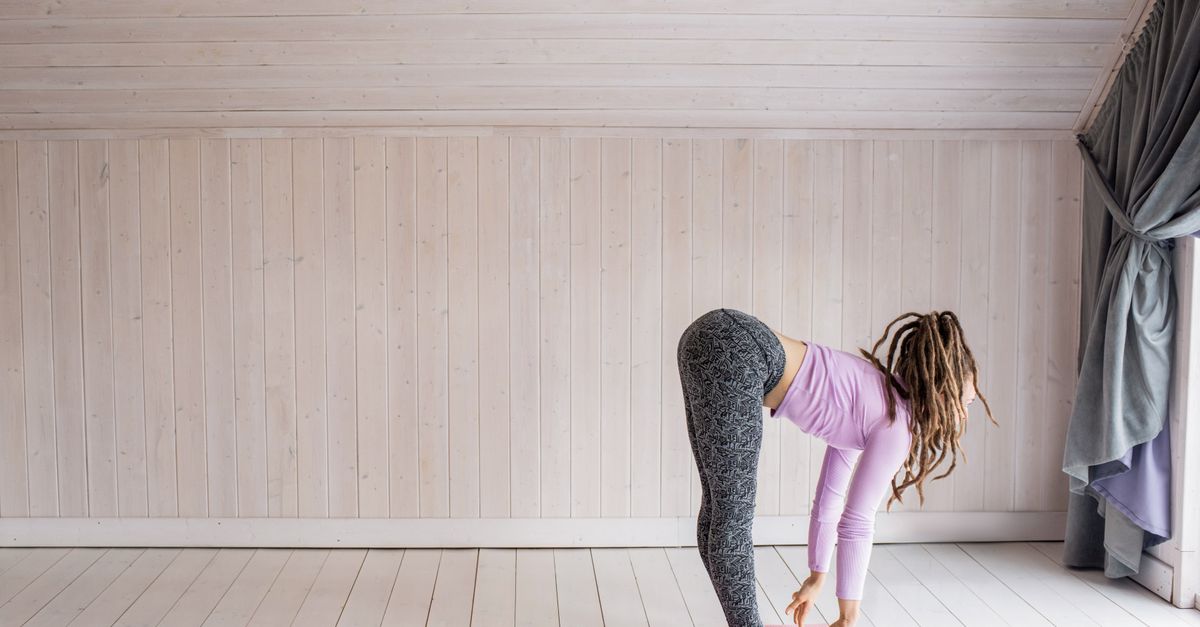
Lower back pain when bending over is usually caused by a strained muscle or ligament, an irritated or herniated spinal disc, tight hamstrings that force the lower spine to round, or posture habits that load the lumbar spine unevenly. Muscle strain tends to feel like a localized ache or spasm. Disc-related pain often sharpens with forward bending and can travel into the buttock or leg. Hinging at the hips with a neutral spine, keeping loads close to your body, and adding gentle daily movement can reduce strain, while numbness, leg weakness, or bladder or bowel changes need prompt medical care.
You lean down to tie a shoe, load the dishwasher, or lift a laundry basket off the floor, and a sharp catch or deep ache grabs the base of your spine. Lower back pain when bending over is one of the clearest signals your back sends, because forward bending loads the muscles, ligaments, and discs of the lumbar spine at the same time. The type of pain and where it travels can tell you which structure is most likely involved.
Whether the twinge appeared after one awkward lift or built up over months of desk work, relief usually starts with figuring out which structure is complaining and changing how you bend. Massage has a role too, as long as it targets the muscles around the spine rather than the spine itself. Some symptoms, though, mean you should skip the home routine and call a doctor first.
Why Lower Back Pain When Bending Over Happens
Bending forward is a team effort between your hips, pelvis, and lumbar spine. When one part of that chain is strained, stiff, or irritated, the others take on extra load, and pain shows up at the weakest link. Mayo Clinic lists muscle or ligament strain and bulging or ruptured disks among the causes of back pain, and both are closely tied to bending.
The quality of the pain offers useful clues about where it starts:
- A dull, localized ache or spasm on one or both sides of the spine points toward muscle or ligament strain.
- Sharp pain that worsens with bending, sitting, coughing, or sneezing, especially pain that travels into the buttock or leg, points toward a disc.
- A pulling sensation behind the thighs as you reach toward the floor points toward tight hamstrings.
- Stiffness that builds through the day and eases when you move points toward posture and prolonged sitting.
Muscle and Ligament Strain
The erector spinae muscles run along both sides of your spine. When you bend forward, they lengthen under load to control the descent, then contract hard to pull you back upright. A sudden twist, a heavy lift, or repeated bending can overstretch these fibers or the ligaments that connect your vertebrae.
A lower back strain usually produces an ache that is worst when you bend or straighten up, along with muscle guarding that makes the area feel tight and protective. Uncomplicated strains often settle within days to a few weeks with gentle activity.
Disc Irritation or Herniation
Mayo Clinic describes a herniated disk as a problem with one of the rubbery cushions between the vertebrae, in which some of the soft center pushes out through a tear in the tougher exterior. Forward bending compresses the front of each lumbar disc and shifts pressure toward the back, which is where the spinal nerve roots sit. That is why disc-related pain often spikes when you bend, sit for long periods, or lift with a rounded back.
When a disc presses on a nerve root, pain can radiate down the leg along the sciatic nerve, sometimes with tingling or numbness. Discs also hold more fluid after a night lying down, so bending first thing in the morning can feel worse. For more on this specific condition, see our guide to massage and a herniated disc.
Tight Hamstrings and Hips
Your hamstrings attach to the sit bones at the bottom of your pelvis. When they are tight, the pelvis can't tilt forward smoothly as you bend, so the lumbar spine rounds further to make up the difference. That extra rounding puts more stress on the lower back muscles and discs, even during a light task like picking up a pen.
Posture and Desk Habits
Long hours of slumped sitting keep the lower spine in a flexed position and leave the back and hip muscles stiff and underused. When you then stand and bend, those muscles are asked to work hard from a cold start. Weak core and glute muscles add to the problem by shifting more of the load onto the spine itself.
Where Massage Fits for Lower Back Pain
Massage is not a fix for a disc problem or a substitute for a medical evaluation. It works on soft tissue: the muscles that tighten and guard around a sore lower back. Used alongside whatever your doctor has recommended, it can be one part of a routine that keeps those muscles moving.
What Massage Can and Can't Do
Oscillation penetrates deep muscle layers, increasing local blood flow in muscles affected by prolonged sitting. That makes massage a reasonable fit for the muscular side of back pain when bending forward, such as stiffness from desk work or a mild strain that is already improving. For a broader look at the evidence and limits, read whether massage helps lower back pain.
Areas worth targeting around the lower back include:
- The muscles on either side of the lumbar spine (not directly on the bones of the spine)
- The glutes, which share the load of bending and lifting
- The hips and outer hip muscles
- The hamstrings, where deep oscillation increases local blood flow in large muscle groups, supporting recovery during rest
Oscillation vs. Vibration Massagers
Conventional handheld back massagers rely on a motor shaking the unit, which produces a less controlled vibration. MedMassager uses oscillating technology to deliver deeper, more controlled vibration than conventional massagers. The MedMassager Body Massager oscillates in a circular motion, combining vibration with circular rotation, and delivers it through a large, soft, cushioned pad that contours to the body. It is a professional-grade, FDA-registered Class I medical device with adjustable intensity, so you can start gently on a sore back.
Using the Pad Against a Chair
The Body Massager has easy-to-hold, slip-resistant handles, so you can place the pad on your lower back yourself without reaching awkwardly. You can also sit back and rest the pad between your lower back and the back of a chair, which lets your back muscles relax while the circular oscillating action works. Lying down with the pad under or against the target area is another option. You can see the unit in the MedMassager Body Massager collection.
If You Have a Disc Diagnosis
If you have a confirmed herniated or bulging disc, ask your own doctor or physical therapist whether massage is appropriate for you before starting. When it is, the goal is the surrounding muscle, not the disc: oscillation increases local blood flow in the back muscles that tighten and guard around the injury. Stop if massage increases leg pain, tingling, or numbness.
Red Flags That Need Prompt Care
Most bending-related back pain is mechanical, but some symptoms point to nerve compression or another serious problem. Do not try to manage these at home, and do not use a massager on the area until you have been evaluated. Seek prompt care if you notice:
- Numbness or tingling in the groin, buttocks, or inner thighs
- New weakness in a leg or foot, or a foot that drags or slaps when you walk
- Changes in bladder or bowel control, including difficulty urinating or loss of control
- Back pain after a fall, car accident, or other trauma
- Fever, unexplained weight loss, or a history of cancer alongside new back pain
- Pain that is severe at night or at rest and doesn't change with position
Bladder or bowel changes and numbness in the groin area can signal cauda equina syndrome, which is a medical emergency. Go to an emergency department the same day if these appear.
Safer Bending to Ease Lower Back Pain
How you bend matters as much as how often. Shifting the work from your lumbar spine to your hips and legs reduces the load on sore muscles and irritated discs.
Learn the Hip Hinge
The hip hinge is the foundation of safer bending. Practice it without a load until it feels natural:
- Stand with your feet about hip-width apart and your knees softly bent.
- Place your hands on the front of your hips.
- Push your hips backward as if closing a car door with your rear, letting your chest tilt forward.
- Keep your back flat, from your head to your tailbone, rather than rounding.
- Stop when you feel a stretch in your hamstrings, then drive your hips forward to stand.
Lifting Smarter
For anything heavier than a few pounds, get close to the object first. Squat or hinge down with your feet straddling the load, brace your stomach muscles gently, and lift by straightening your legs. Keep the object against your body the whole way up.
Avoid twisting while you hold weight. Turn by moving your feet instead. If something is too heavy to lift without rounding your back, split the load or get help.
Everyday Bending Swaps
Small changes cut down on repetitive forward bending during the day. Drop into a half-kneel to reach low shelves or pick up a child. Put one foot up on a step to tie your shoes, and keep frequently used items between knee and shoulder height. Sitting down to put on socks and pants removes one of the most awkward bends of the morning.
Gentle Movement and a Daily Routine
For mechanical back pain, staying gently active usually works better than extended bed rest. Movement keeps the back muscles from stiffening and encourages blood flow through the area.
Gentle Movements to Try
Move slowly and stay in a range that feels comfortable. Mild stretching is fine, but sharp pain or pain that travels down the leg means stop.
- Pelvic tilts: Lying on your back with knees bent, flatten your lower back into the floor, hold for a few seconds, then release.
- Knee-to-chest: Draw one knee toward your chest, hold briefly, and switch sides.
- Cat-cow: On hands and knees, slowly round and then gently arch your back.
- Supported hamstring stretch: Lying on your back, loop a towel around one foot and raise the straight leg until you feel a stretch behind the thigh.
- Walking: Short, regular walks keep the spine and hips moving without forcing a bend.
If you have a disc problem, ask your care team which of these suit you, since some flexion-based stretches may need to be skipped early on.
A Simple Daily Massage Routine
Massage pairs well with gentle movement, especially after long periods of sitting. Oscillation reaches the deeper muscle layers and increases local blood flow in back muscles that stiffen with prolonged sitting, so timing a session after desk work is a practical choice. Here is a reasonable starting point with the Body Massager:
- Sit in a supportive chair and rest the cushioned pad between your lower back and the chair, or hold it against the muscles beside your spine.
- Start with about 10 minutes at the lowest setting, once or twice a day.
- Move the pad to the glutes and hamstrings for a few minutes each if those areas feel tight.
- Increase intensity gradually over several days only if the lower setting feels comfortable.
- Follow the session with a short walk or a few pelvic tilts.
You can find options built for this kind of use among our professional-grade body massagers for the lower back, or browse the full MedMassager catalog to see the Body Massager alongside other models.
When to Reassess
If your pain is not clearly improving after a couple of weeks, or it keeps returning every time you bend, see a doctor or physical therapist. They can check for disc involvement, test your hip and hamstring mobility, and build a strengthening plan targeted to your back.
Frequently Asked Questions
Why does my lower back hurt when I bend over but not when I stand?
Standing keeps the lumbar spine in a fairly neutral position, while bending forward stretches the back muscles under load and compresses the front of the spinal discs. If a muscle is strained or a disc is irritated, that extra load triggers pain that disappears when you return upright. Tight hamstrings can make this worse by forcing your lower back to round further.
Is lower back pain when bending over a sign of a herniated disc?
It can be, but muscle strain is also a frequent cause. Disc-related pain often worsens with sitting, coughing, or sneezing and may travel into the buttock or down the leg. A doctor can examine you and decide whether imaging is needed to confirm a disc problem.
How long does a lower back strain take to heal?
Mild lower back strains often improve within a few days to a few weeks with gentle activity. More significant strains can take longer. If pain is not improving after a couple of weeks or keeps returning, a doctor or physical therapist can assess what is slowing healing.
Should I rest or keep moving with lower back pain?
For mechanical back pain, gentle movement is usually better than extended bed rest. Short walks, pelvic tilts, and light stretching help keep the muscles from stiffening. Avoid heavy lifting and any movement that causes sharp pain or pain traveling down the leg.
Can tight hamstrings cause lower back pain?
Yes, tight hamstrings can contribute to lower back pain. They attach to the pelvis and limit how far it can tilt forward when you bend, so the lumbar spine rounds more to compensate. Regular hamstring stretching and practicing the hip hinge can reduce that extra strain.
Can a massager help lower back pain from bending?
A massager can help with the muscular side of back pain, such as stiffness and tightness after long periods of sitting. The MedMassager Body Massager oscillates in a circular motion, and that oscillation penetrates deep muscle layers to increase local blood flow in the back muscles. It does not act on spinal discs, so if you have a disc diagnosis, check with your own care team first.
The Bottom Line
Lower back pain when bending over usually traces back to strained muscles, an irritated disc, tight hamstrings, or posture habits that overload the lumbar spine. Hinging at the hips, keeping loads close, and adding gentle movement each day take pressure off the structures that hurt.
Massage can support the muscular side of that routine, since the circular oscillating action increases local blood flow in the back muscles that tighten and guard around a sore spine. Keep watching for red flags like numbness, leg weakness, or bladder and bowel changes. If you want a tool for the lower back muscles you can use seated against a chair, explore MedMassager's therapeutic body massagers.
This content is for informational purposes only and is not intended as medical advice, diagnosis, or treatment. Always consult a qualified healthcare professional before starting any new treatment or therapy. MedMassager products are FDA-registered Class I medical devices.


