
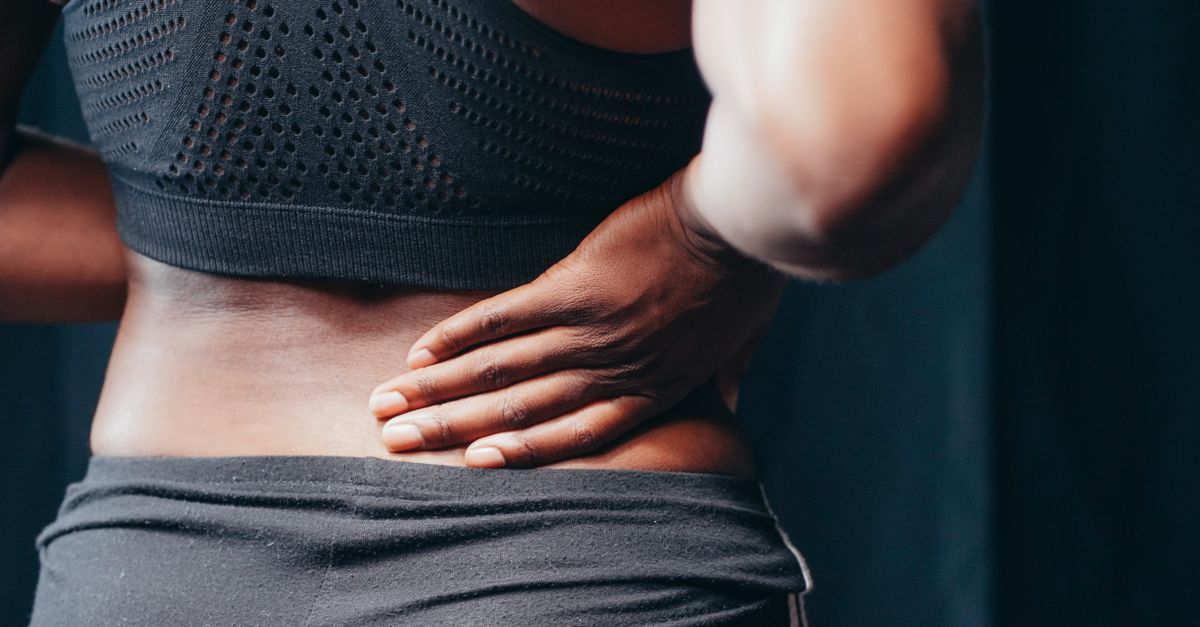
Lower back pain after standing is usually caused by fatigue in the muscles that hold the spine upright, an exaggerated arch in the lower back, and the steady load of hard floors. When the pain eases as soon as you sit down or bend forward, spinal stenosis, a narrowing of the spaces around the spinal nerves, is a possible cause. Shifting your weight, propping one foot on a low footrest, and relaxing tired back muscles at the end of the day can reduce strain. Numbness, leg weakness, or any change in bladder or bowel control requires prompt medical evaluation.
It starts as a dull ache somewhere around the second hour at the register, the stove, or the workbench. By late afternoon, lower back pain after standing has turned into a deep, tight soreness that makes you lean on the counter or look for anything to sit on. Then you sit down, and within a few minutes most of it fades. That pattern of pain when you stand and relief when you sit is a useful clue about what is going on in your spine.
This guide is for you if your job or daily routine keeps you upright for long stretches. That includes nurses, teachers, retail and warehouse workers, cooks, and anyone who has noticed that leaning on a shopping cart makes a trip through the store easier. The steps below apply whether the ache shows up after six hours or after twenty minutes. The rest of this guide covers the main causes, how standing pain differs from sitting pain, posture and footrest strategies, an evening routine, and the red flags that need a doctor's attention.
Why Lower Back Pain After Standing Happens
Standing looks passive, but your lower back is working the entire time. Four factors account for most standing-related back pain, and they often overlap.
Muscle Fatigue in the Spinal Stabilizers
The erector spinae, multifidus, and quadratus lumborum run along the lower spine and keep you upright against gravity. When you stand still, these muscles hold a steady, low-level contraction for hours without the contract-and-relax rhythm that walking provides. That rhythm is part of what moves blood through muscle tissue.
Without it, the muscles tire, stiffen, and start to ache. Weak abdominal and glute muscles make the problem worse because the back muscles end up carrying load that the core and hips should share.
An Increasing Arch in the Lower Back
As your stabilizers fatigue, your pelvis tends to tip forward and the natural inward curve of your lower back, called lumbar lordosis, deepens. This arched, extended position shifts weight onto the small facet joints at the back of the spine and compresses the tissue around them. Several things push you further into that arch:
- Locked or hyperextended knees
- Tight hip flexors, often from sitting the rest of the day
- Weak abdominal and gluteal muscles
- Extra weight carried around the midsection, including pregnancy
- Shoes with a raised heel, which tip the pelvis forward
Hard Floors and Unsupportive Footwear
Concrete, tile, and other hard surfaces have almost no give. Every small shift of your weight sends force up through your feet, knees, and hips into the lower back. Thin or worn-out soles remove what little cushioning you had, and flattened arches can change how your legs and pelvis line up. Lower back pain from standing on hard floors is often a whole-chain problem that starts at the feet.
Spinal Stenosis: Pain That Eases When You Bend Forward
Mayo Clinic describes spinal stenosis as a narrowing of the spaces within the spine, which can put pressure on the nerves that travel through it. In the lower back, it typically develops gradually from age-related changes such as thickened ligaments, bulging discs, and bone spurs.
Standing upright straightens and slightly extends the lumbar spine, which narrows those spaces further. Sitting or bending forward opens them back up. That is why pain from stenosis often eases when you sit, lean on a cart, or bend over a counter.
Stenosis symptoms can also travel into the buttocks and legs as aching, heaviness, or tingling. For a closer look at that pattern, see this guide on how spinal stenosis causes leg symptoms.
Standing Pain vs. Pain From Sitting Too Long
Back pain from standing and back pain from sitting too long can feel similar, but they tend to follow opposite patterns. Paying attention to which positions help and which hurt gives you, and your doctor, useful information.
- Standing-related pain builds the longer you stay upright, often feels worse with arching backward, and eases when you sit or bend forward. It points toward muscle fatigue, extension strain on the facet joints, or stenosis.
- Sitting-related pain builds the longer you stay seated, often feels worse when slouching or bending forward, and eases when you stand up and walk. It more often involves sustained pressure on the discs and stiffness from inactivity.
Both patterns can show up in the same back. If your back hurts after standing and after sitting, general muscle deconditioning may be the common thread, and building core and hip strength usually matters more than any single posture fix. Keeping a simple log for a week, noting which position triggered the pain and what relieved it, makes your next appointment far more productive.
Where Massage Fits for Lower Back Pain After Standing
Once the fatigue has set in, the goal is to get the overworked muscles to let go and to get blood moving through them again. Massage is one way to do that, alongside rest, stretching, and whatever your doctor has recommended.
What Massage Can and Can't Do
Massage works on muscle and soft tissue. It can loosen the erector spinae and surrounding muscles that have been gripping all day and encourage local blood flow through them. If you want more background on that question, this article covers whether massage helps lower back pain in more detail.
Massage does not widen the spinal canal or take pressure off a compressed nerve. If spinal stenosis is behind your symptoms, a massager can address the muscle tension that builds up around the problem, but the stenosis itself needs a medical plan from your care team.
How Oscillation Differs From Vibration
Many massagers are sold as vibration massagers, built around a motor that shakes the unit. MedMassager uses oscillating technology to deliver deeper, more controlled vibration than conventional massagers. The MedMassager Body Massager for lower back pain oscillates in a circular motion, combining vibration with circular rotation. Oscillation penetrates deep muscle layers, increasing local blood flow in muscles worn down by prolonged standing or sitting.
That matters for muscles that have spent the day holding you upright. The movement travels through a large, soft, cushioned contouring pad that forms to the curve of your lower back, and variable speed settings let you start gently. The Body Massager is an FDA-registered Class I medical device with professional-grade power.
Using the Pad Against a Chair
The Body Massager is handheld, with slip-resistant handles, so you can apply the pad yourself while seated or lying down. After a long shift, one of the simplest setups is to sit in a sturdy chair and rest the pad between your lower back and the chair back, letting the chair hold it in place. Areas worth working on include:
- The thick muscles on either side of the lower spine
- The glutes, which share the work of stabilizing your pelvis
- The hips, where tightness can pull the pelvis into an arch
- The hamstrings and thighs, which also influence pelvic position
You can compare the Body Massager Classic and Plus alongside other options in the full MedMassager catalog.
Footrest and Posture Strategies That Reduce Strain
You may not be able to stand less, but you can change how you stand. Small adjustments reduce the arch in your lower back and give your stabilizer muscles brief breaks throughout the day.
Use a Footrest or Rail
Placing one foot on a low step, box, or rail a few inches high tilts your pelvis slightly backward and flattens the lumbar curve. This is the same reason bar counters have a foot rail. Switch feet every few minutes so neither hip stays loaded for too long. If stenosis is a factor, this slight flattening of the lower back may feel especially good because it opens the spaces in the lower spine.
Adjust How You Hold Yourself
A few cues help counter the arch that builds as you tire. Keep them gentle; the goal is a neutral spine, not a rigid one.
- Keep a soft bend in your knees instead of locking them.
- Lightly draw your belly button toward your spine to engage your core.
- Shift your weight between both feet rather than sinking into one hip.
- Bring work surfaces closer to elbow height so you aren't leaning or reaching.
Change the Surface Under You
An anti-fatigue mat adds some give to hard floors and encourages small, constant shifts in your stance. Supportive shoes with cushioned soles and a low heel matter just as much. Replace work shoes once the cushioning feels flat. If you can, take a seated break or a short walk every 30 to 60 minutes, since movement restores the muscle rhythm that static standing removes.
An Evening Routine for Tired Back Muscles
What you do in the first half hour after a long day on your feet affects how your back feels the next morning. This routine takes about 20 minutes:
- Unload your spine. Lie on your back with your knees bent and your feet flat, or rest your calves on a couch cushion. Stay there for three to five minutes and let your lower back settle toward the floor.
- Stretch gently. Pull both knees toward your chest, hold a child's pose, and do slow pelvic tilts. Hold each stretch about 30 seconds and stay within a comfortable range.
- Apply the massager. Sit in a supportive chair with the Body Massager pad resting between your lower back and the chair, or hold it against your hips and glutes. Start with about 10 minutes at the lowest setting, once or twice a day. The circular oscillating action increases local blood flow in the muscles around your lower spine while you rest.
- Adjust gradually. Increase the intensity or session length only if the lower setting feels comfortable. Keep the pad on muscle on either side of the spine rather than pressing directly on the bones of the spine.
- Note what changed. Jot down how your back felt before and after, along with how long you stood that day. Patterns show up quickly.
If you want a tool for step three, browse the handheld body massagers with a cushioned contouring pad. If you have a diagnosed spine condition, recent back surgery, or an implanted device, ask your own care team whether massage is appropriate for you before starting.
Red Flags: When to See a Doctor
Most standing-related back pain is muscular and improves with posture changes and rest. Some symptoms, however, suggest nerve involvement or another problem that needs medical evaluation. See a doctor promptly if you notice any of the following:
- Numbness or tingling that spreads into your buttocks, legs, or feet
- Leg weakness, a foot that drags, or difficulty walking
- New trouble controlling your bladder or bowels
- Numbness in the groin or inner thighs
- Pain after a fall or injury
- Fever, unexplained weight loss, or pain that is worse at night
- Pain that has not improved after a few weeks of self-care
Bladder or bowel changes and groin numbness can signal cauda equina syndrome, a compression of the nerve roots at the base of the spine. Treat these as an emergency and go to the emergency room right away. Progressive leg weakness also warrants urgent attention.
Frequently Asked Questions
Why does my lower back hurt after standing but not sitting?
Standing keeps your lower back in a slightly arched, extended position that loads the facet joints and keeps the stabilizing muscles contracted. Sitting relaxes those muscles and flexes the spine, which takes pressure off those structures. If sitting or bending forward relieves the pain within minutes, spinal stenosis is one possible explanation worth discussing with your doctor.
Is lower back pain after standing a sign of spinal stenosis?
It can be, but muscle fatigue and posture are more frequent causes. Stenosis is more likely when the pain eases quickly with sitting or bending forward, when it spreads into the buttocks or legs, and when walking upright makes it worse. Only a medical evaluation, often including imaging, can confirm stenosis.
How long should I stand before taking a break?
A reasonable starting point is a short seated break or walk every 30 to 60 minutes. Between breaks, shift your weight, alternate a foot on a low step, and keep your knees soft. If your pain starts sooner, take breaks sooner and build your standing tolerance gradually.
Can a footrest help with back pain from standing?
Yes, a footrest can reduce strain on the lower back. Propping one foot on a low step tilts the pelvis slightly backward and flattens the lumbar arch. Switching feet every few minutes keeps either hip from staying loaded too long.
Does massage help lower back pain from standing?
Massage works on the muscular side of standing-related back discomfort by loosening fatigued tissue and encouraging local blood flow. A body massager that oscillates in a circular motion works through deep muscle layers, increasing local blood flow in the muscles along the lower spine. Massage does not change spinal structure, so pain from stenosis or nerve compression needs a medical plan as well.
Can hard floors and flat shoes cause lower back pain?
Hard floors and unsupportive shoes can contribute to lower back pain by sending more force up through the legs with every shift in weight. Flattened arches and worn soles can also change how your pelvis lines up. An anti-fatigue mat and cushioned, low-heeled shoes reduce that load.
The Bottom Line
Lower back pain after standing usually comes from tired spinal stabilizers, a deepening lumbar arch, and hard surfaces, with spinal stenosis as a possible cause when sitting or bending forward brings fast relief. A footrest, softer knees, better shoes, and regular breaks reduce the strain during the day.
At night, gentle stretching and time spent relaxing the lower back muscles help you start the next shift in better shape. Watch for red flags such as numbness, leg weakness, or bladder and bowel changes, and get them checked promptly. The circular oscillating action of a body massager creates continuous, repetitive movement in the muscles along the lower spine, which supports local blood flow during use. If you want a way to work on those muscles from your own chair, explore the professional-grade body massager collection.
This content is for informational purposes only and is not intended as medical advice, diagnosis, or treatment. Always consult a qualified healthcare professional before starting any new treatment or therapy. MedMassager products are FDA-registered Class I medical devices.


