
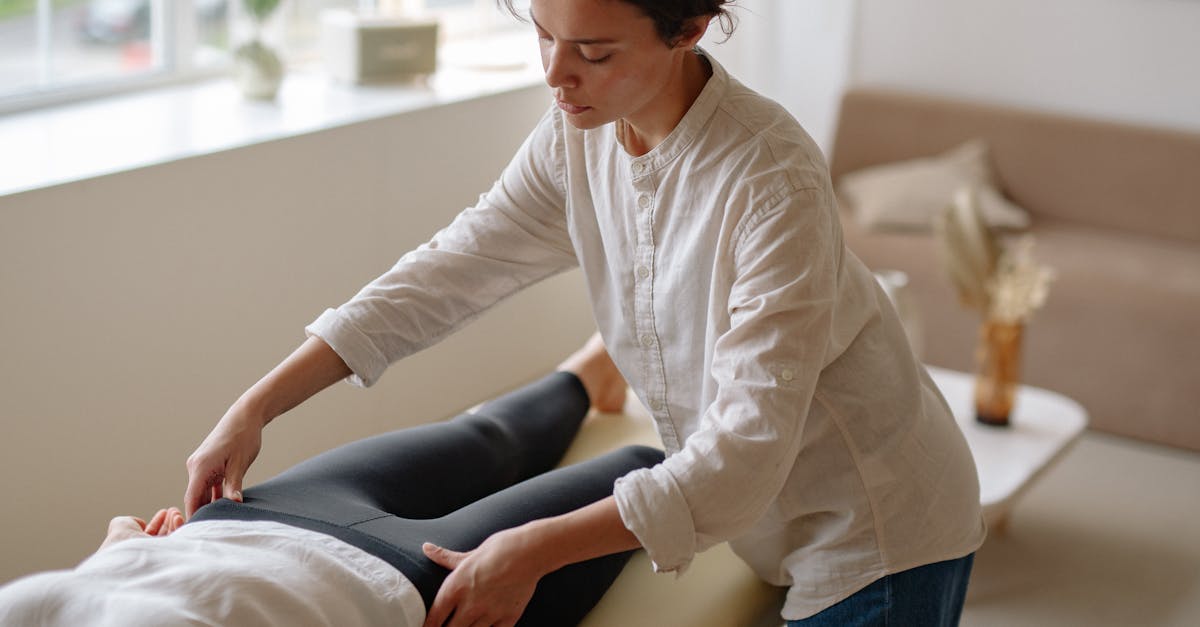
To massage a hip flexor, apply firm pressure along the front of the hip and upper thigh using your thumbs, fingertips, or a body massager, working slowly across the iliopsoas and rectus femoris muscles from the hip crease down toward the mid-thigh. Start with light effleurage strokes to warm the tissue, then gradually increase pressure to work deeper into the muscle belly, spending extra time on any tender or knotted areas. For best results, perform the massage while lying on your back with your knee slightly bent to reduce muscle tension, and follow with gentle hip flexor stretches to extend the benefits.
You've been sitting at a desk for most of the day, and when you finally stand up, there's that familiar tug — a deep pull at the front of your hip that stops you mid-stride. That tension is your hip flexors talking. For many people, hip flexor massage is one of the most effective ways to release that grip, whether it builds up from long hours of sitting, intense lower-body training, or just the demands of daily movement. The problem is that the hip flexors are some of the hardest muscles in the body to reach, and most people aren't sure how to approach them safely and effectively. This post walks through exactly how to massage your hip flexor — the anatomy behind the tightness, the right technique, and how to build a practical routine that keeps these muscles moving freely.
Why Hip Flexors Get Tight
Hip flexor tightness isn't random. There are specific patterns of use and posture that drive it, and knowing them helps you target your massage more precisely.
The Muscles You're Working With
The hip flexors aren't a single muscle — they're a group. The primary players are the iliopsoas (itself a combination of the iliacus and psoas major), the rectus femoris (part of the quadriceps group), and the tensor fasciae latae (TFL), which runs along the outer hip. The iliopsoas is the deepest and often the most problematic — it originates along the lumbar spine and inner pelvis, crosses the hip joint, and attaches to the top of the femur. When it tightens, it can pull the lower back into extension and compress the lumbar vertebrae.
The rectus femoris attaches to the front of the hip and runs straight down the thigh, which is why hip flexor tightness often overlaps with quad tightness. These muscles work together during every step you take, every time you climb stairs, and every time you lift your knee.
The Sitting Problem
When you sit, your hip flexors are held in a shortened position for extended periods. Over time, the muscle tissue adapts to that shortened length through a process called adaptive shortening — the muscle essentially learns to rest at a shorter resting length. Physical therapists recognize this as one of the leading contributors to both hip flexor tightness and chronic lower back pain in sedentary populations.
The problem compounds because a tight iliopsoas pulls the pelvis into an anterior tilt — the front of the pelvis tips downward and the lower back arches forward. This position puts sustained load on the lumbar spine and can radiate discomfort into the lower back, groin, and even the knee.
Athletic Overuse
For active people, hip flexor strain comes from the opposite direction: overuse. Running, cycling, rowing, and any sport involving repeated knee drive place high repetitive demand on these muscles. Without adequate recovery — which includes massage and mobility work — the muscle tissue accumulates micro-tension that doesn't release on its own.
- Runners often develop hip flexor tightness on the dominant stride side
- Cyclists hold the hip in a flexed position for long durations, driving adaptive shortening
- Strength training movements like squats and deadlifts heavily recruit the hip flexors under load
- Core imbalances can shift compensatory load onto the hip flexors, accelerating fatigue
How to Massage the Hip Flexor
Hip flexor massage requires more care than working on the quads or hamstrings — the area is close to major blood vessels, nerves, and the hip joint itself. The goal is to work systematically, starting superficially and building depth as the tissue warms and releases.
Positioning
Get this right before anything else. Lie on your back on a firm surface — a massage table, yoga mat, or firm bed works. Bend the knee on the side you're working on and place your foot flat on the surface. This position shortens the hip flexor slightly, which paradoxically makes it easier to access — the muscle is less guarded when it's not fully stretched.
If you're massaging your own hip flexor, you'll be working from the side. If you're working on someone else, stand at the side of the table near the hip you're targeting.
Step-by-Step Technique
- Warm the tissue first. Before applying any deep pressure, use light effleurage strokes — long, sweeping passes with the flat of your hand — across the front of the hip and upper thigh for 60–90 seconds. This increases local blood flow and makes deeper work more effective and comfortable.
- Locate the hip crease. The hip flexor sits just below and slightly medial to the front of the hip bone (ASIS — anterior superior iliac spine). Place two or three fingertips just inside the hip bone and sink in slowly, applying gradual pressure downward into the muscle belly.
- Apply sustained pressure on tender points. When you find a spot that feels dense, knotted, or refers sensation, hold gentle sustained pressure for 20–30 seconds. This is a form of myofascial release — you're waiting for the tissue to soften and yield rather than forcing it.
- Crossfiber friction on the rectus femoris. Move your fingers or thumbs across the muscle fibers (perpendicular to the direction the muscle runs) along the upper thigh. This technique is effective for breaking up adhesions in the rectus femoris specifically.
- Work the TFL and outer hip. Move laterally toward the outer hip bone and work down into the tensor fasciae latae, which runs from the hip crest toward the iliotibial band. Tight TFL often accompanies hip flexor tightness and responds well to slow, firm strokes.
- Finish with light effleurage. Return to sweeping strokes to flush the area with fresh blood flow and signal the nervous system to relax.
Pressure and Depth Guidelines
The iliopsoas is a deep muscle — you're working through the lower abdominal contents to reach it, which is why pressure must be applied slowly and with attention. Never jam fingers in forcefully. The tissue should soften gradually under sustained pressure, not brace against it.
A good rule: if the person being massaged (or you, if self-massaging) is involuntarily holding their breath or tensing up, the pressure is too much. Discomfort during effective trigger point work is normal. Sharp pain or breath-holding is not.
Using a Body Massager for Hip Flexor Release
Manual technique gets results, but it's demanding — especially for self-massage, where hand fatigue limits how long and deep you can work. A therapeutic body massager changes the equation significantly, letting you apply consistent oscillating pressure without the effort of manual technique.
Why Oscillation Works on Tight Hip Flexors
MedMassager's Body Massager uses oscillating technology — not simple vibration — to deliver controlled, rhythmic movement deep into muscle tissue. For hip flexor release specifically, oscillation penetrates deep muscle layers and increases local blood flow in muscles affected by prolonged sitting. That increased circulation softens tight tissue and helps the muscle return to its resting length more effectively than surface-level vibration alone.
Because the iliopsoas is deep, consistent oscillating pressure applied at the right angle does what a fatigued thumb cannot — it maintains steady, controlled depth over several minutes without losing intensity.
How to Use the Body Massager on the Hip Flexor
The MedMassager Body Massager is well-suited for the hip flexor area because of its variable speed control and the angle at which you can position the head. Here's how to use it effectively:
- Start on the lowest speed setting and position the massager head at the front of the hip, just below the hip bone
- Apply light downward pressure and hold for 30–45 seconds before moving slowly along the muscle
- Work from the hip crease down through the upper thigh, following the line of the rectus femoris
- Move laterally to cover the TFL and outer hip region
- Increase speed gradually as the tissue warms and the muscle softens
- Avoid pressing directly over the hip joint itself — stay on the muscle belly
For people managing hip pain related to tight hip flexors, the Body Massager's professional-grade oscillating power delivers the kind of therapeutic depth that's difficult to replicate manually — the same level of intensity used in physical therapy settings.
Building a Hip Flexor Massage Routine
A single massage session helps, but consistent work over time is what actually changes tight hip flexors. Think of it as a habit, not a one-time fix.
Frequency and Duration
For general maintenance — if you sit for long periods or train regularly — aim for hip flexor massage two to three times per week, spending five to eight minutes per side. For acute tightness or post-training soreness, daily sessions of three to five minutes can accelerate recovery. Don't exceed 10 minutes on one area in a single session; overworking the tissue can increase inflammation rather than reduce it.
Pairing Massage with Stretching
Massage alone releases the muscle in the short term. Stretching extends that release and trains the muscle to maintain a longer resting length over time. The combination is significantly more effective than either alone.
After each massage session, follow with:
- Kneeling hip flexor stretch: Drop to one knee, tuck the pelvis under, and press gently forward through the hip. Hold 30–60 seconds per side.
- Standing quad stretch: Stand on one foot, pull the opposite heel toward the glute, and keep the knees together. This stretches the rectus femoris specifically.
- Supine figure-four stretch: Cross one ankle over the opposite knee and gently press the raised knee away to open the hip and TFL.
Timing Within Your Day
The best time for hip flexor massage is after activity — post-workout, post-run, or after a long period of sitting. Muscles that have been working are warmer, better perfused, and more receptive to manual therapy. Morning massage on cold, stiff tissue is still beneficial, but expect to spend more time in the warming phase before going deeper.
When Hip Flexor Tightness Needs Medical Attention
Most hip flexor tightness is muscular and responds well to massage, stretching, and movement. But some symptoms warrant professional evaluation rather than home treatment.
Signs to Watch For
Seek evaluation from a physical therapist, orthopedic specialist, or your primary care provider if you experience:
- Sharp, pinching pain deep in the hip joint (not just muscle soreness) — this may indicate labral issues or hip impingement
- Pain that radiates down the leg below the knee, which can signal nerve involvement
- Swelling, warmth, or redness over the hip area
- Pain that worsens significantly with massage rather than improving
- Hip flexor tightness accompanied by unexplained lower back pain that doesn't resolve with stretching
Hip Flexor Massage for Specific Populations
For older adults, the hip flexors often shorten from years of habitual posture. Pressure should be lighter, and more time should be spent warming the tissue before applying deeper work. For people managing lower back conditions like disc issues or spinal stenosis, consult a physical therapist before doing deep iliopsoas work, since the psoas attaches directly to the lumbar vertebrae. Pregnant individuals should avoid direct pressure over the lower abdominal region and consult their OB or midwife before beginning hip flexor massage.
Frequently Asked Questions
How do I know if my hip flexor is tight or injured?
A tight hip flexor typically produces a dull pulling or aching sensation at the front of the hip that eases gradually with movement and stretching. An injured hip flexor — such as a strain or tear — usually involves a sharper, more acute pain that worsens with activity, may be accompanied by swelling or bruising, and doesn't improve with gentle movement. If your pain came on suddenly during activity, especially with a popping sensation, consult a healthcare provider rather than attempting self-massage.
Can tight hip flexors cause lower back pain?
Yes. The iliopsoas muscle attaches directly to the lumbar vertebrae, and when it tightens, it pulls the lower spine into an anterior tilt, increasing lumbar extension and compressing the lumbar facet joints. This is one of the most common and underrecognized contributors to lower back pain, particularly in people who sit for long hours. Releasing the hip flexors through massage and stretching often produces noticeable improvement in lower back discomfort.
How long does it take to loosen tight hip flexors?
Mild tightness from a single day of prolonged sitting may ease within one to two sessions of massage and stretching. Chronic hip flexor tightness — built up over months or years of habitual posture or repetitive activity — typically requires consistent work over four to eight weeks before meaningful, lasting changes in resting muscle length occur. Frequency matters more than session length: short, regular sessions outperform infrequent long ones.
Is it safe to massage your own hip flexors?
Self-massage of the hip flexors is generally safe when done with appropriate technique — slowly, with gradually increasing pressure, and without forcing through sharp pain. The main caution is working too close to the abdominal midline or applying excessive pressure over the femoral triangle (the inner hip crease area), which contains major blood vessels and nerves. If you're new to hip flexor massage, start with light pressure and work your way inward gradually over multiple sessions.
Does a body massager help with hip flexor release?
A body massager can be very effective for hip flexor release because it delivers consistent oscillating pressure without the fatigue of manual technique. When applied along the front of the hip and upper thigh, the oscillating motion penetrates deep muscle layers and increases local blood flow, helping tight tissue soften and relax. Variable speed control is important — starting at a lower setting and building intensity allows the muscle to warm up before deeper work is applied.
What stretches should I do after massaging my hip flexors?
After hip flexor massage, a kneeling hip flexor stretch — where you drop to one knee, tuck the pelvis, and press forward — is the most effective follow-up for the iliopsoas. A standing quad stretch targets the rectus femoris specifically. Adding a figure-four hip opener addresses the TFL and outer hip. Hold each stretch for at least 30 seconds per side to allow the freshly released muscle tissue to lengthen.
Why do hip flexors feel tighter in the morning?
Hip flexors often feel tightest in the morning because the body has been in a low-activity, low-circulation state overnight, and the muscles have cooled and stiffened in whatever position you slept in. If you sleep with your knees drawn up, the hip flexors are held in a shortened position for hours, which amplifies morning stiffness. Light movement, a warm shower, and gentle stretching before deep massage or vigorous activity helps the tissue warm and become more pliable.
The Bottom Line on Hip Flexor Massage
Knowing how to massage your hip flexor correctly — warming the tissue, locating the right anatomy, applying graduated pressure, and following with stretching — makes the difference between temporary relief and lasting change. The hip flexors are involved in nearly every movement you make, and chronic tightness in these muscles can drive lower back pain, reduce your range of motion, and limit how you move through your day.
For consistent, deep therapeutic work, a professional-grade body massager extends what's possible with manual technique alone. The oscillating technology in the MedMassager Body Massager delivers the depth and consistency needed to reach the iliopsoas and surrounding hip musculature effectively, session after session. Pair regular massage with targeted stretching and — where needed — guidance from a physical therapist, and tight hip flexors become a manageable problem rather than a persistent one.
Browse the full range of MedMassager therapeutic massagers to find the right tool for your hip flexor routine and any other areas of chronic tension.
This content is for informational purposes only and is not intended as medical advice, diagnosis, or treatment. Always consult a qualified healthcare professional before starting any new treatment or therapy. MedMassager products are FDA-registered Class I medical devices.


