
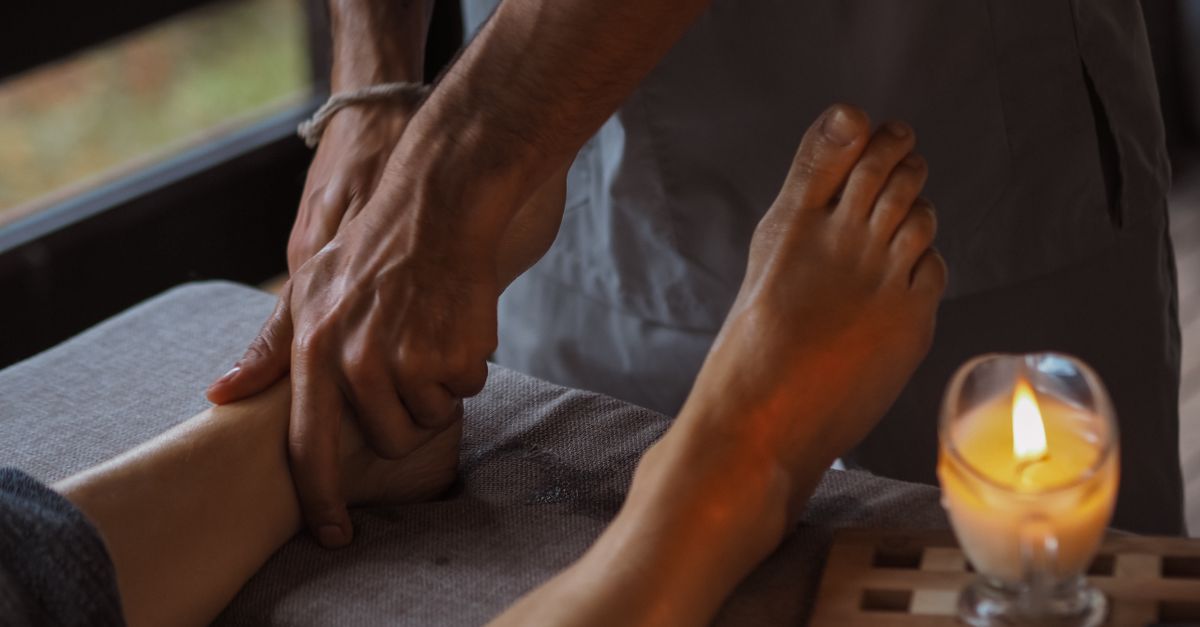
With a podiatrist's okay, a foot massager can often be used with a plantar fibroma if you keep the intensity low, stay seated, and avoid concentrated pressure directly on the nodule. A plantar fibroma is a benign, firm lump in the arch of the foot, and pressing hard on it often causes discomfort. An open-platform massager that moves the whole foot is generally a better fit than one with rotating nodes that dig into the arch. Check with a podiatrist before starting, especially if the nodule is new, growing, or painful.
You found a firm lump in your arch, a podiatrist called it a plantar fibroma, and now your evening foot massage feels like a question mark. If you're asking whether you can use a foot massager with a plantar fibroma, the short answer is usually yes, with conditions. How you use the massager matters more than whether you use one at all.
This guide is for people who already have a fibroma diagnosis, or suspect one, and want to keep using foot massage without aggravating the nodule. If you want a broader look at the condition itself, our overview of plantar fibroma symptoms and management covers causes and treatment options in depth. Here, the focus is narrower and practical. You'll learn why direct pressure on a fibroma hurts, which massager designs work best, how to run a low-intensity seated session, and which warning signs mean you should stop and call your podiatrist.
What Is a Plantar Fibroma?
Before deciding how to massage around a fibroma, it helps to know what the lump actually is and why it reacts to pressure the way it does.
A Benign Knot in the Plantar Fascia
The American College of Foot and Ankle Surgeons describes a plantar fibroma as a fibrous knot in the arch of the foot. It forms within the plantar fascia, the thick band of connective tissue that runs from your heel to the base of your toes. Fibromas are non-cancerous and tend to grow slowly, if they grow at all. When several nodules develop, the condition is called plantar fibromatosis, also known as Ledderhose disease.
Common features of a plantar fibroma include:
- A firm, rubbery lump in the middle of the arch
- Little or no pain in the early stages
- Discomfort that increases when shoes or hard floors press against the nodule
- Nodules in one foot or both feet
Why Direct Pressure Hurts
A fibroma sits slightly below the surrounding fascia, so it takes a concentrated share of any load placed on the arch. When something presses into it, the dense tissue compresses the fascia and nerve endings around it. That is why many people first notice the lump while walking barefoot or wearing shoes with firm arch support.
Massage tools that dig into the arch recreate that same concentrated pressure. Thumb-driven deep tissue work, hard massage balls, and rotating nodes can all press directly on the nodule. Kneading also won't break a fibroma apart, because it is made of dense collagen rather than a muscle knot. For a full rundown of how podiatrists manage plantar fibromas, including orthotics and injections, see our condition guide.
Is a Foot Massager Safe for Plantar Fibroma?
For most people, a foot massager is safe with a plantar fibroma when the design spreads movement across the whole foot instead of concentrating force on the arch. The type of massager you choose makes a larger difference than any other factor.
Why Open-Platform Oscillation Is Different
Many people look for a vibrating foot massager because they want stimulation without hands or hard nodes pressing into the arch. MedMassager uses oscillating technology to deliver deeper, more controlled vibration than conventional massagers, and the intensity is adjustable, so you can start at the gentlest setting. The Foot Massager oscillates in a circular motion beneath an open flat platform, which moves the entire foot rather than pushing a single point into the nodule. That circular oscillating motion supports blood flow through the foot during use instead of letting it settle while you rest.
Here is how common massager designs compare when you have a fibroma:
- Shiatsu-style units with rotating nodes press into the arch, and the nodule is hard to avoid.
- Massage balls and rollers focus pressure exactly where you roll, which often lands on the lump.
- Open flat platforms that oscillate move the whole foot, and you control how your feet rest.
If you're comparing options, our therapeutic foot massagers with an open platform are built around this whole-foot approach. The Foot Massager is an FDA-registered Class I medical device designed for seated use.
What Massage Can and Can't Do
No massager shrinks, dissolves, or removes a plantar fibroma. Its role is comfort and movement in the surrounding foot and calf, especially if you spend long periods sitting or standing. Think of it as a complement to whatever your podiatrist has recommended, such as custom orthotics, stretching, or injections, not a replacement for that plan.
Using a Foot Massager With a Plantar Fibroma
A careful, low-intensity routine lets you gauge how your nodule responds before you commit to longer sessions. The circular oscillating action creates continuous, repetitive movement in the foot and calf, which supports circulation during use. The goal is steady movement across the whole foot, not pressure on the lump.
Step-by-Step Seated Routine
- Get a go-ahead from your podiatrist, particularly if the fibroma is newly diagnosed or has changed recently.
- Sit in a supportive chair with your back against the backrest and your feet resting on the platform. The Foot Massager is designed for seated use only.
- Start at the lowest intensity setting. Adjustable-intensity foot massagers make this easy to control.
- Let your feet rest naturally without leaning your weight into them. On a flat surface, the arch usually stays lifted.
- If you feel the nodule bearing down, shift your feet slightly forward or back until the pressure eases.
- Stop after 10 minutes for your first few sessions, then check the arch for tenderness or swelling.
How Often and How Long
Once you know how your foot responds, you can build up gradually. From there, one or two sessions a day, extending to 15 or 20 minutes over a week or two, is a reasonable progression if your foot stays comfortable. Raise intensity one step at a time, and only after several comfortable sessions at the current level.
If the fibroma feels more tender the next morning, drop back to the previous setting or shorten the session. You can browse the full lineup of MedMassager therapeutic massagers if you also want options for other areas of the body.
When to Stop and See a Podiatrist
Gentle massage should feel comfortable throughout the session and afterward. Discomfort that builds is a signal to pause, not to push through.
Stop the Session If You Notice
- Sharp or pinpoint pain at the nodule
- Tenderness that lingers into the next day
- Swelling, warmth, or redness around the arch
- Numbness, tingling, or burning that wasn't there before
- A nodule that feels larger or firmer than it did a few weeks ago
Questions to Bring to Your Podiatrist
Ask whether home foot massage fits with your current treatment, and whether any intensity or duration limits apply to you. If you've had a steroid injection or surgery, ask how long to wait before resuming massage, since the tissue needs time to settle.
People with reduced sensation in their feet, such as those with diabetes or peripheral neuropathy, should get specific guidance first. When you can't feel pressure clearly, you may miss the early warning signs listed above.
Frequently Asked Questions
Is it safe to massage a plantar fibroma?
Gentle massage around a plantar fibroma is generally safe for most people, but firm pressure directly on the nodule often causes pain. Keep pressure light and spread across the foot rather than focused on the lump. Ask your podiatrist first if the fibroma is new, growing, or painful.
Can massage shrink or dissolve a plantar fibroma?
No, massage does not shrink or dissolve a plantar fibroma. The nodule is made of dense fibrous tissue that does not break apart with kneading or rubbing. Treatments that address the fibroma itself, such as orthotics, injections, or surgery, are managed by a podiatrist.
What type of foot massager is best with a plantar fibroma?
An open-platform massager with adjustable intensity is usually the most comfortable choice, because it moves the whole foot instead of pressing nodes into the arch. The MedMassager Foot Massager oscillates in a circular motion under a flat platform, and that circular oscillating motion supports blood flow through the foot during use instead of letting it settle. Use it seated, starting at the lowest setting.
Is plantar fibroma the same as plantar fasciitis?
No, they are different conditions that affect the same tissue. A plantar fibroma is a firm nodule within the plantar fascia, usually in the arch. Plantar fasciitis is inflammation of the fascia that typically causes heel pain, often worst with the first steps in the morning.
Can shoes make a plantar fibroma more painful?
Yes, shoes with firm or high arch supports can press directly into the nodule and increase discomfort. Many podiatrists recommend custom orthotics with a cutout or soft area that relieves pressure on the fibroma. Shoes with cushioned, flexible midsoles are often more comfortable than rigid designs.
When should I see a doctor about a lump in my arch?
See a podiatrist about any new lump in your arch, even if it does not hurt, so it can be properly identified. Return promptly if the nodule grows quickly, becomes painful, or changes how you walk. A podiatrist may use imaging to confirm that the lump is a fibroma and not something else.
The Bottom Line
You can use a foot massager with a plantar fibroma in most cases, as long as you keep sessions seated, start at low intensity, and avoid concentrated pressure on the nodule. An open platform that moves the whole foot is easier on a fibroma than nodes or rollers that dig into the arch. The circular oscillating action creates continuous movement in the foot and calf, which supports circulation during use without concentrating force on the lump.
Watch for warning signs, build up slowly, and keep your podiatrist in the loop. When you're ready to compare options, explore the MedMassager Foot Massager collection to find a seated, adjustable-intensity model that fits your routine.
This content is for informational purposes only and is not intended as medical advice, diagnosis, or treatment. Always consult a qualified healthcare professional before starting any new treatment or therapy. MedMassager products are FDA-registered Class I medical devices.


