
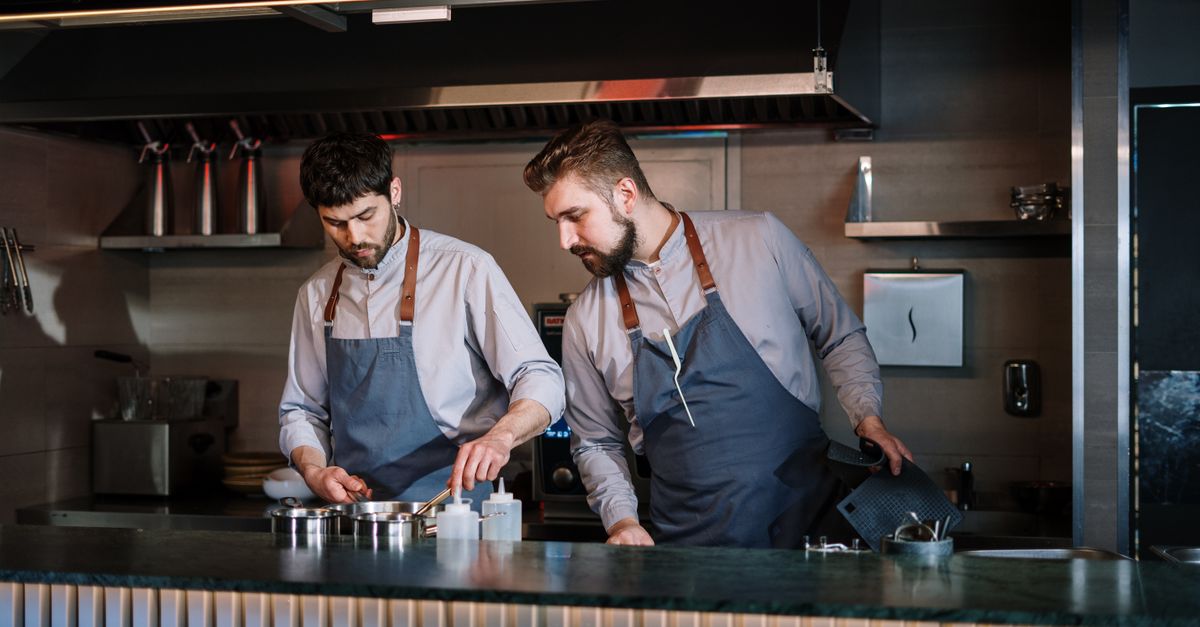
The best foot massager for chefs is a seated, oscillating foot massager with an open platform and adjustable intensity settings, since kitchen staff need a device that fits a short break between prep and service without requiring them to remove work shoes for long. MedMassager's Foot Massager line uses circular oscillating motion to keep blood moving through feet that have been standing on hard kitchen floors for 10 to 14 hours. For chefs working double shifts, the priority is a massager that works in a seated position during closing-time downtime, not a standing platform.
By the time the last ticket clears and the line finally slows down, most chefs and cooks have been on their feet since morning prep. If you're searching for the best foot massager for chefs, you already know the floor under your station isn't carpet or cushioned flooring. It's tile, poured concrete, or rubber matting laid over concrete, and after a 12-hour double it feels every bit as unforgiving as it sounds.
You're probably not looking for a spa gadget. You want something that works fast, works seated, and fits the reality of restaurant hours. This guide covers why kitchen work is uniquely hard on feet, how oscillating massage addresses it, and what to look for before you buy.
Why Kitchen Floors Wreck Chefs' Feet
Standing itself is hard on the body, but the kitchen environment adds layers most standing jobs don't have. Chefs move constantly across short distances, pivoting between stations on floors chosen for drainage and slip resistance rather than shock absorption. That combination of hard surfaces, non-stop micro-movement, and long unbroken shifts creates a specific kind of foot fatigue that's different from a retail or office job spent mostly standing still.
Hard Surfaces and No Breaks
Commercial kitchen flooring is built for safety and sanitation, not comfort. Quarry tile, sealed concrete, and rubber matting all transmit impact straight up through the foot and into the ankles and knees with every step. Mayo Clinic describes plantar fasciitis as inflammation of the band of tissue connecting the heel to the toes, a condition commonly associated with prolonged standing on hard surfaces. Chefs rarely get to sit during a shift, and even short breaks are often spent standing at a prep table rather than off their feet entirely.
Double Shifts and Closing-Time Swelling
Restaurant scheduling often means lunch service, a short gap, then dinner service back to back. On a double shift, a line cook or chef can be upright for 14 hours with only brief seated breaks, if any. Gravity pulls fluid downward throughout a long shift, and without regular calf muscle contraction to push blood back up the leg, feet and ankles swell by closing time. This is why so many kitchen workers describe their feet as feeling "packed" or "thick" after a double, distinct from simple soreness.
Common Conditions Among Kitchen Staff
Years of standing shifts on hard floors show up in specific, recognizable patterns among restaurant workers:
- Plantar fasciitis, heel pain that's often worst with the first steps after sitting down
- Swelling and heaviness in the feet and ankles by the end of a shift
- Varicose veins from years of blood pooling in the lower legs
- General joint strain in the knees and hips from constant weight-bearing
None of these appear overnight. They build gradually across a career spent on kitchen floors, which is why recovery habits matter more the longer someone works in the industry.
How Vibration and Oscillation Help After Shift
Search for a foot massager and most results talk about vibration. It's the term most people use, and it's the mechanism behind most massagers on the market. MedMassager uses oscillating technology to deliver deeper, more controlled vibration than conventional massagers, and that distinction matters for people who are on their feet all day rather than using a massager occasionally for relaxation.
What Oscillation Does for Tired Feet
Rather than a motor shaking the whole unit, MedMassager's Foot Massager oscillates in a circular motion across an open platform. That repeated motion activates the calf and foot muscles the same way walking does, encouraging blood to move upward through the leg instead of settling in the feet after a long shift. For chefs dealing with plantar fasciitis specifically, the circular oscillating action keeps blood moving through the foot and calf during rest, the stretch of time when tissue otherwise stiffens and blood settles after hours on tile.
Why Seated Use Fits a Kitchen Break
Every MedMassager foot massager is used seated, with both feet resting flat on the oscillating platform. For restaurant work, that's an advantage. A short seated session fits into gaps that already exist in a kitchen day:
- The break between lunch and dinner service on a double
- The back office or a prep stool right after close
- At home before bed on the longest days
A longer routine rarely survives a restaurant schedule, but five or ten minutes seated does. The guide on foot massagers for people who stand all day covers the general mechanics of standing-related foot fatigue in more depth if you want the broader picture beyond restaurant work specifically.
Choosing a Foot Massager for Kitchen Work
Not every foot massager is built for someone coming off a double shift with swollen feet and fifteen minutes before the next ticket prints. A few features matter more for kitchen staff than for people who sit at desks all day:
- Adjustable intensity for feet that are far more sensitive at the end of a shift
- An open flat platform that's quick to wipe down between uses
- Enough intensity range to reach deep muscle, not just the skin surface
- Registration as a Class I medical device rather than a consumer novelty
Adjustable Intensity
Feet that have been standing on concrete for 12 hours are more sensitive than feet at the start of a shift. A massager with adjustable intensity lets you start gentle when your feet are inflamed and increase pressure once they've relaxed. This flexibility also matters across a career, since a newer line cook's feet respond differently to pressure than a chef who's been standing kitchen floors for fifteen years.
An Open, Easy-to-Clean Platform
Kitchen work means grease, moisture, and the general grime of a commercial kitchen end up on shoes and socks. An open flat platform is simpler to wipe down between uses than an enclosed foot-shaped chamber, which matters when you're using the device daily in a break room or at home right after a shift.
Enough Intensity to Reach Deep Muscle
A lot of consumer foot massagers produce little more than a light surface buzz. That's not enough for feet carrying a full shift's worth of impact. Surface-level vibration alone won't reach the deep muscle tissue in the foot and calf that fatigues after standing all day, so look for a device with enough intensity range to work past the skin surface. This is one of the clearest differences between the MedMassager foot massager collection and a low-cost gadget from a general retailer.
Class I Registration Status
A foot massager used daily is functionally a piece of recovery equipment, not a novelty gift, so it makes sense to confirm it's registered to a real regulatory standard. MedMassager's Foot Massager line is an FDA-registered Class I medical device, the FDA's lowest-risk device classification, which places it in a different category than massage gadgets sold purely as consumer electronics.
A Post-Shift Foot Recovery Routine
The routine that works best for kitchen staff is short, seated, and consistent, rather than a long occasional session on a day off.
- Sit down as soon as possible after clocking out, ideally within the first 15 minutes after your shift ends.
- Remove shoes and rest both feet flat on the oscillating platform.
- Start at a lower intensity setting for the first two or three minutes, especially if your feet feel swollen or tender.
- Increase intensity gradually over a 10 to 15 minute session as your feet adjust.
- Repeat after every shift, and consider a second short session before bed on double-shift days.
Consistency matters more than session length. A short daily session after close does more for kitchen workers over time than an occasional 40-minute session once a week. Many people managing standing-related foot fatigue find that an evening session on a foot massager built for daily seated use fits naturally into an already tight kitchen schedule.
Considerations Across a Restaurant Career
Kitchen work is physically demanding at every age, but the toll it takes changes over a career. Younger cooks often push through soreness without much recovery routine at all, while chefs who've spent 15 or 20 years on their feet tend to deal with more persistent swelling, joint stiffness, and vein issues that don't fully resolve overnight.
For Career Kitchen Staff
If you've worked kitchen floors for a decade or more, a few patterns tend to show up:
- Foot and ankle stiffness in the morning
- Visible swelling that takes longer to go down than it used to
- A persistent heaviness in the lower legs after a shift
Building a consistent seated recovery habit, rather than treating foot pain as something to push through, matters more the longer you stay in the industry.
For Diabetic Kitchen Workers
Standing shifts are particularly demanding for kitchen staff managing diabetes, where circulation in the lower legs is already a concern. Seated foot massage is relevant here for the same reason it helps anyone standing long hours: repeated foot motion activates the calf muscles, pushing blood upward instead of letting it pool in the feet. Anyone managing diabetes, especially with reduced sensation in the feet, should check with a doctor before adding a foot massager to their routine.
Frequently Asked Questions
What is the best foot massager for chefs and kitchen staff?
The best option is a seated, oscillating foot massager with adjustable intensity and an open platform that's easy to clean between uses. Chefs need something that works in a short seated break, not a standing device, since kitchen shifts already involve enough time on your feet. Look for enough intensity to reach deep muscle rather than a light surface-buzz consumer gadget, since kitchen work fatigues deep tissue, not just the skin surface.
How long should a chef use a foot massager after a shift?
A 10 to 15 minute seated session right after clocking out is generally enough to notice relief in swelling and stiffness. Starting at a lower intensity for the first few minutes is a reasonable approach when feet are freshly swollen from a long shift. On double-shift days, a second short session before bed can help as well.
Can standing all day in a kitchen cause plantar fasciitis?
Prolonged standing on hard, unforgiving surfaces like commercial kitchen flooring is one of the well-recognized contributors to plantar fasciitis. Mayo Clinic describes the condition as inflammation of the plantar fascia, the tissue band connecting the heel to the toes, and standing shifts on tile or concrete put sustained stress on that tissue. Supportive footwear and recovery habits like seated foot massage can help manage the strain, though persistent or worsening heel pain should be evaluated by a podiatrist or physician.
Do foot massagers actually help with foot swelling after standing shifts?
Foot massagers that use repeated muscle activation, like oscillating platforms, encourage blood flow back up through the leg rather than letting it settle in the feet and ankles. This mechanical action mimics some of the muscle-pumping effect that walking normally provides, which is reduced when someone stands mostly in place for a long shift. It's a supportive measure for everyday swelling, not a treatment for underlying medical conditions.
Is it better to stand or sit for foot massage after a kitchen shift?
Seated foot massage is the appropriate and intended use for foot massager platforms, including MedMassager's Foot Massager line, since the feet need to rest flat and still on the oscillating surface. This also gives kitchen workers an actual seated break, which is valuable after a shift that involved no sitting at all. Standing on a massage platform is not how these devices are designed to be used.
What should line cooks look for besides a foot massager to protect their feet?
Supportive, slip-resistant kitchen shoes with adequate cushioning are the first line of defense against the impact of standing on hard floors. Anti-fatigue mats at prep and cook stations reduce some of the direct impact where staff stand in one spot for extended periods. Stretching the calves and rotating the ankles during short breaks can also help maintain circulation during a long shift.
Do MedMassager foot massagers help with varicose veins from kitchen work?
MedMassager foot massagers are not designed to treat or reverse varicose veins, which are a vascular condition that should be evaluated by a physician. The oscillating motion supports general circulation by encouraging blood flow through the lower leg, which some people managing standing-related vein issues find helpful as a supportive daily habit. Anyone with diagnosed vein disease should talk to a doctor before starting a new routine.
Bottom Line for Chefs Choosing a Foot Massager
Kitchen work puts a specific, cumulative strain on feet that most standing jobs don't replicate: hard flooring, double shifts, and almost no seated breaks during service. The best foot massager for chefs is one built for a short seated session with real oscillating power and adjustable intensity, not a light consumer gadget meant for occasional use. MedMassager's Foot Massager line is built around circular oscillating motion designed to move blood through tired feet after exactly the kind of long, standing shifts that define restaurant work. If closing-time foot recovery is part of your routine, or needs to become one, take a look at the full foot massager collection built for people who stand all day to compare options.
This content is for informational purposes only and is not intended as medical advice, diagnosis, or treatment. Always consult a qualified healthcare professional before starting any new treatment or therapy. MedMassager products are FDA-registered Class I medical devices.


