
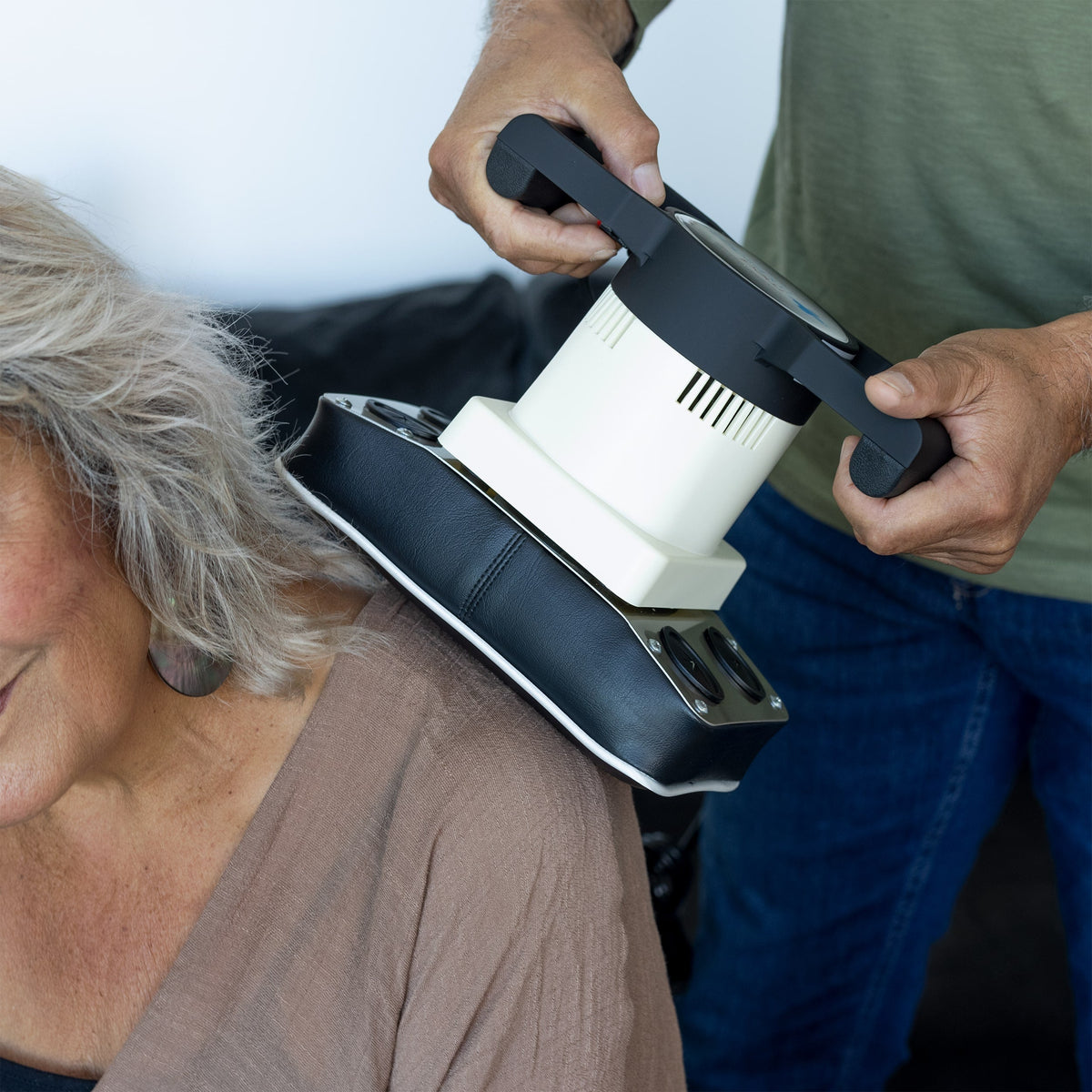
The best massager for frozen shoulder is one that delivers gentle, adjustable pressure to the muscles around the shoulder joint without forcing the joint itself to move. A handheld massager with a broad, cushioned pad and a low intensity setting suits this use, because it can be applied to the upper back, shoulder blade, and upper arm with little arm movement. Massage works on the surrounding muscles, not the stiffened joint capsule, so it fits best as a complement to the physical therapy plan set by your clinician.
If you have frozen shoulder, you already know how much daily life depends on one joint: reaching for a seatbelt, fastening clothing, rolling over in bed. When you start looking for the best massager for frozen shoulder, you are probably hoping for something that eases the ache between physical therapy sessions without making things worse. That is a reasonable goal, and the right tool can help with comfort and muscle tension, provided you match it to your stage and use it carefully.
This guide is for people living with frozen shoulder, also called adhesive capsulitis, who are weighing a home massager. It is not a replacement for your doctor or physical therapist, and every recommendation here assumes their guidance comes first. If you are still deciding whether massage helps at all, start with our article on whether massage therapy helps frozen shoulder. This post picks up from there: the three stages of the condition, how massage fits alongside therapy, what to look for when shopping, how to apply a massager to the shoulder and upper back, and what to avoid during painful phases.
The Three Stages of Frozen Shoulder
Frozen shoulder behaves differently from a typical muscle strain. Understanding what is happening inside the joint explains why some massage approaches fit and others do not.
What Happens Inside the Shoulder
Mayo Clinic describes frozen shoulder as a condition marked by stiffness and pain in the shoulder joint. The shoulder joint is wrapped in a capsule of connective tissue, and in adhesive capsulitis that capsule thickens and tightens around the joint. Bands of scar-like tissue can form, and the lubricating fluid inside the joint may decrease, which limits how far the arm can move in any direction.
The key point for anyone buying a massager is location. The restriction sits deep inside the joint, beneath layers of muscle. A home massager cannot reach or loosen the capsule. What it can reach are the muscles that surround and compensate for the stiff joint, such as the trapezius, rhomboids, deltoid, and the muscles across the shoulder blade.
Frozen shoulder is more common in certain groups, including:
- Adults over 40, with women affected more often than men
- People with diabetes
- People with thyroid conditions
- Anyone whose shoulder was immobilized after surgery, a fracture, or a stroke
Stage One: Freezing
The freezing stage is usually the most painful. Pain builds gradually, often worsens at night, and range of motion starts to shrink. This stage can last for months. Because the tissue is irritable, aggressive stretching or deep pressure during this phase often backfires.
Stage Two: Frozen
During the frozen stage, pain may ease somewhat, but stiffness is at its worst. Daily tasks that require lifting or rotating the arm become difficult. Many people develop tension in the neck and upper back here, because they hike the shoulder or lean the torso to make up for lost motion.
Stage Three: Thawing
In the thawing stage, motion slowly returns. The full course of frozen shoulder commonly takes one to three years, though it varies widely from person to person. Physical therapy is often most productive here, and comfort-focused tools can help you stay consistent with the exercises your therapist assigns.
How a Massager Fits Alongside Physical Therapy
Physical therapy for frozen shoulder centers on gentle range-of-motion and stretching work that gradually restores movement. A massager plays a supporting role. It addresses the muscle tension that builds around a stiff shoulder, which can make sessions and daily life more comfortable.
Working the Muscles Around the Joint
When one shoulder stops moving normally, the muscles around it pick up extra load. The upper trapezius tightens from constant shrugging, the muscles between the shoulder blades fatigue, and the upper arm can feel guarded and sore. These are the areas where gentle massage makes sense.
Applied to these muscles, mechanical movement stimulates muscle tissue, helping circulate blood through areas that commonly tighten. That is the realistic benefit: warmer, less guarded muscles around the joint, not a looser capsule. Many people find that relaxed surrounding muscles make it easier to start their prescribed stretches.
Why Oscillation Differs From Ordinary Vibration
Most people shopping for shoulder relief search for a vibration massager or a vibrating handheld unit. MedMassager uses oscillating technology to deliver deeper, more controlled vibration than conventional massagers. The cushioned MedMassager body massagers oscillate in a circular motion, combining vibration and circular rotation through a large, soft pad that forms to the body.
For a sensitive shoulder, the pad matters as much as the motion. A broad, contouring surface spreads pressure across a wide area instead of driving it into a single point. That is a better fit for tissue that is already irritable.
Where Massage Belongs in Your Care Plan
Your treating clinician decides how massage fits your plan. Some people use a massager before stretching to help the surrounding muscles relax, others afterward for comfort, and some are told to wait until a painful phase settles. Ask your physical therapist these questions before you start:
- Is massage around the shoulder appropriate for my current stage?
- Which areas should I work on, and which should I avoid?
- Should I use it before or after my exercises?
- What intensity and session length make sense for me?
Choosing the Best Massager for Frozen Shoulder
The best massager for frozen shoulder is the one you can apply gently, control precisely, and position without straining the affected arm. That rules out several popular options and points toward a few specific features.
Features That Matter for a Stiff Shoulder
Prioritize these features when comparing massagers:
- Low starting intensity: You need a setting gentle enough for the freezing stage, with room to increase later.
- Adjustable intensity: Tolerance changes from week to week, so devices with little room for adjustment are a poor match.
- A broad, cushioned contact surface: Wide pads distribute pressure, while narrow heads concentrate it.
- Operable with your good arm: Look for handles you can grip securely while the affected arm stays relaxed.
- Usable seated or lying down: Positions that support the arm reduce strain on the joint.
How Common Massager Types Compare
Each massager category approaches the shoulder differently. Massage guns deliver concentrated, forceful strikes through a small head. That focus can feel like too much on an irritable shoulder, and holding one in place against your own shoulder takes reach and grip you may not have right now.
Shiatsu neck and shoulder wraps use rotating nodes and often drape over the shoulders. Many people find them pleasant for the upper trapezius, though the nodes may press where you would rather not. Small handheld vibrating massagers are easy to hold, but they tend to feel surface-level, and a small head covers little area at a time.
Oscillating massagers with a cushioned pad combine deeper circular oscillation with a wide, contouring surface. That pairing offers depth without a sharp point of pressure, which is the balance a sensitive shoulder needs.
Why the Body Massager Suits This Use
The MedMassager Body Massager for shoulder and upper back tension is an FDA-registered Class I medical device built around the features above. It has easy-to-hold, slip-resistant handles, variable speed, and a large, soft massage pad that you apply directly to the back, shoulders, neck, and arms. Because it is applied to the muscles around a frozen shoulder, its circular oscillating action moves the muscle tissue and helps circulate blood through areas that commonly tighten.
You can also rest the pad between your back and the back of a chair, which lets you work the shoulder blade area without lifting either arm. For the frozen stage, when neck and trapezius tension from compensation tends to peak, some people add the Neck Massager with built-in heat. Its dual-direction rotating nodes and built-in heat work the trapezius muscle, helping loosen tissue that tightens from poor posture or extended screen time. Check with your clinician before using heat on a painful shoulder.
How to Use a Massager for Frozen Shoulder
The routine below assumes your clinician has cleared massage around the shoulder. Start conservatively, because the goal is comfort and relaxation, not pushing the joint.
- Get supported. Sit in a chair with a backrest or lie on your side with the affected shoulder up and the arm resting on a pillow. The affected arm should stay relaxed throughout.
- Set the lowest intensity. Turn the Body Massager on at its lowest setting before placing it on your body.
- Start away from the joint. Hold the unit with your unaffected hand and apply the pad to the upper trapezius, between the neck and shoulder, for one to two minutes.
- Move to the shoulder blade. Rest the pad between your upper back and the chair, or reach it across to the muscles around the shoulder blade, for two to three minutes.
- Work the upper arm gently. Apply the pad to the outer upper arm over the deltoid, below the point of the shoulder, for one to two minutes.
- Keep total time short. Limit early sessions to about five to ten minutes, once or twice a day. Increase only if your shoulder tolerates it well over several days.
- Follow with your prescribed exercises if advised. If your therapist recommends it, move into your stretches while the surrounding muscles feel relaxed.
Throughout the routine, the Body Massager oscillates in a circular motion, and that mechanical movement stimulates muscle tissue around the frozen shoulder, helping circulate blood through areas that commonly tighten. Pressure should feel mild. If you notice yourself bracing or holding your breath, lower the intensity or move the pad farther from the joint.
What to Avoid During Painful Phases
Using a massager on a frozen shoulder is mostly about restraint. The freezing stage in particular calls for a light touch, and some practices should be avoided at any stage.
Common Mistakes to Skip
- Pressing the massager directly into the front or top of the joint where pain is sharpest
- Using high intensity to "break up" stiffness, which a massager cannot do
- Combining the massager with forced stretching beyond what your therapist assigned
- Lifting or rotating the affected arm to position the device
- Pushing through sharp, pinching, or radiating pain
- Long sessions on an irritable shoulder, especially right before bed
Stage-by-Stage Adjustments
During the freezing stage, keep the massager on the neck, upper back, and shoulder blade, and use the lowest setting. Some clinicians will advise waiting entirely until pain settles. During the frozen stage, you may tolerate slightly more time on the deltoid and the muscles around the shoulder blade.
In the thawing stage, the massager can support your exercise routine, but progress still comes from the movement work, not the device. Throughout every stage, stop and contact your clinician if pain increases after sessions or lingers into the next day.
Special Considerations for Diabetes and Post-Surgical Shoulders
Frozen shoulder is more common in people with diabetes, and diabetes can also affect skin sensation. If feeling in your shoulder or arm is reduced, use the lowest setting and check your skin afterward. If you have had manipulation under anesthesia, shoulder surgery, or a recent fracture, get specific clearance before using any massager near the area.
You can review the full range of MedMassager therapeutic massagers with your clinician to decide which device, if any, fits your situation. The Body Massager uses a circular oscillating action through its cushioned pad, which creates continuous, repetitive movement in the surrounding muscle tissue and supports circulation during use. Starting on the lowest setting is sensible when sensation or healing tissue is a concern.
Frequently Asked Questions
Is massage good for frozen shoulder?
Gentle massage of the muscles around a frozen shoulder can help with comfort and muscle tension, especially in the neck, upper back, and shoulder blade. It does not loosen the thickened joint capsule that causes the stiffness. Most people get the best results when massage supports a physical therapy plan rather than replacing it.
Should I use a massager during the freezing stage of frozen shoulder?
Only if your clinician approves it, and only at the lowest intensity. The freezing stage is usually the most painful, and deep pressure can aggravate irritable tissue. If you do use one, keep it on the upper back and trapezius rather than the joint itself and keep sessions short.
Can a massager break up adhesions in frozen shoulder?
No. The thickening and scar-like tissue in frozen shoulder sit inside the joint capsule, deeper than any home massager reaches. A massager works on the surrounding muscles, and restoring joint motion depends on the gradual stretching and range-of-motion work your therapist prescribes.
Is heat or ice better for frozen shoulder?
Many clinicians suggest moist heat before stretching to help muscles relax, and some recommend ice afterward if the shoulder feels sore. The right choice depends on your stage and how your shoulder responds. Ask your physical therapist which approach fits your current plan.
How long does frozen shoulder take to go away?
Frozen shoulder commonly runs its course over one to three years, moving through freezing, frozen, and thawing stages. The timeline varies widely between people. Some regain nearly full motion, while others keep mild stiffness, which is why consistent physical therapy matters.
What is the best massager for frozen shoulder?
Look for a massager with a low starting intensity, adjustable settings, and a broad cushioned pad you can hold with your unaffected arm. The MedMassager Body Massager fits these criteria, and its circular oscillating action stimulates muscle tissue around the shoulder, helping circulate blood through areas that commonly tighten. Confirm with your clinician that massage suits your stage before you start.
The Bottom Line
Frozen shoulder is a joint capsule problem, so no massager will free up the joint on its own. What a good massager can do is ease the muscle tension that builds around a stiff shoulder and make your therapy routine more comfortable.
The best massager for frozen shoulder offers gentle, adjustable intensity, a broad cushioned pad, and a grip you can manage with your good arm. Use it at low settings, keep it away from the painful joint, and let your clinician guide timing and stage. When you are ready, explore the professional-grade body massager collection to find the FDA-registered Body Massager that fits your routine, with a circular oscillating action that moves the surrounding muscle tissue and supports blood flow during use.
This content is for informational purposes only and is not intended as medical advice, diagnosis, or treatment. Always consult a qualified healthcare professional before starting any new treatment or therapy. MedMassager products are FDA-registered Class I medical devices.


