
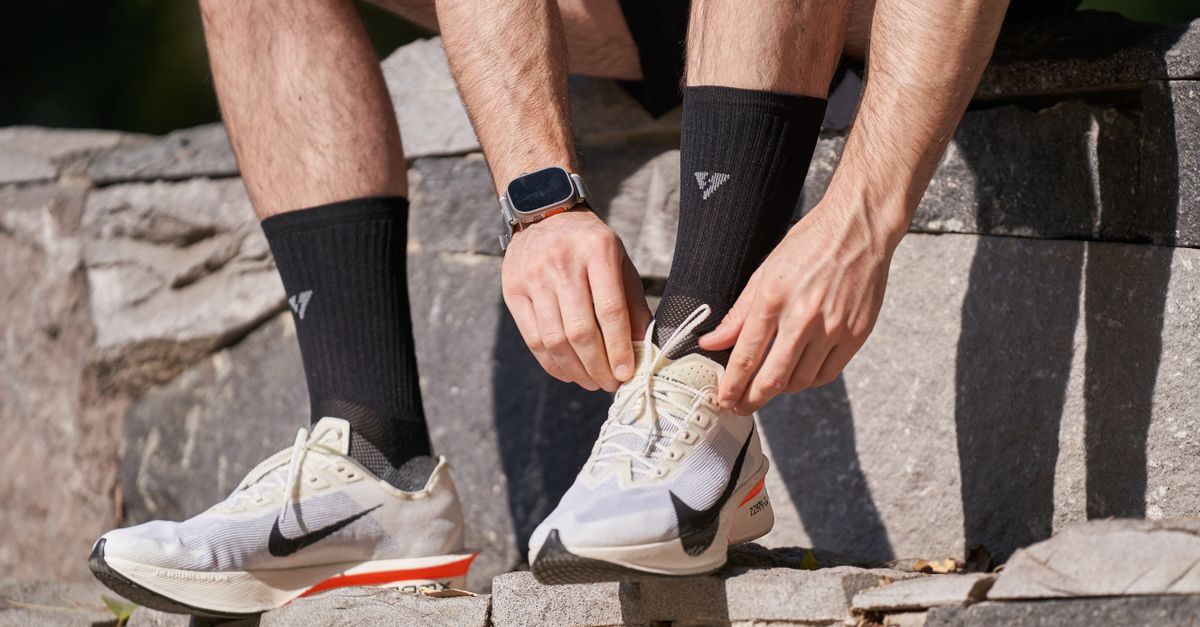
Compression socks and a foot massager solve different parts of the circulation problem and are not direct substitutes for each other. Compression socks apply passive, graduated pressure that is worn continuously throughout the day to prevent blood and fluid from pooling in the lower legs. A foot massager provides active, seated oscillating motion in dedicated sessions to stimulate blood flow and muscle activity. Many people managing swelling, fatigue, or circulation concerns use both: socks for all-day support and a foot massager for targeted sessions at home.
If you deal with swollen ankles, tired legs by evening, or a doctor has mentioned "circulation" during a checkup, you've probably come across both compression socks and a foot massager while searching for relief. The compression socks vs foot massager question comes up constantly because the two products get lumped into the same category, even though they work in completely different ways.
One is worn passively through your day. The other is an active device you use while seated for a set period. Understanding how each one actually works, who tends to benefit from each, and when combining both makes sense clears up most of the confusion.
What Causes Swelling in Feet and Legs
Swelling in the feet and lower legs, known clinically as edema, usually comes down to fluid and blood not moving efficiently back up toward the heart. Gravity constantly pulls blood downward, and the veins in your legs rely on muscle contractions and one-way valves to push it back up. When that system slows down, fluid leaks into surrounding tissue and legs feel heavy, tight, or puffy by the end of the day.
Venous Insufficiency and Gravity
Chronic venous insufficiency occurs when the valves inside leg veins weaken and allow blood to flow backward and pool, according to Harvard Health Publishing. This is one of the more common reasons adults develop visible swelling, aching, or varicose veins over time. It tends to worsen with age and with jobs that involve long hours on your feet.
Prolonged Sitting or Standing
Sitting at a desk for hours reduces the calf muscle activity that normally helps push blood upward, allowing it to settle in the lower legs and feet. Standing all day has a similar effect, since gravity works against circulation the longer you stay in one position. Both patterns are common contributors to end-of-day swelling, independent of any underlying disease.
Underlying Health Conditions
Diabetes, peripheral neuropathy, and plantar fasciitis can all contribute to poor circulation symptoms in the feet. Some causes of foot and leg swelling include:
- Diabetes-related circulation changes in the lower extremities
- Peripheral neuropathy, which reduces natural foot movement
- Pregnancy-related fluid retention
- Extended air travel or car rides
- Sedentary work with minimal movement throughout the day
How Compression Socks Work
Compression socks apply graduated pressure to the leg, meaning the pressure is tightest at the ankle and gradually loosens moving up toward the calf and knee. This gradient is designed to assist venous return by mechanically narrowing the veins, which helps blood move upward more efficiently against gravity. Because they are worn continuously, they work passively in the background while you go about your day.
Who Compression Socks Are Built For
Compression socks are typically recommended for people who are on their feet or seated for extended stretches without much movement. Good candidates often include:
- People who travel frequently by plane or car
- People with jobs that involve long periods of standing
- People managing mild venous insufficiency under a doctor's guidance
- Pregnant individuals dealing with lower-leg swelling, after discussing it with an OB-GYN
What Compression Socks Don't Do
Because compression socks are passive, they don't actively contract muscles or generate movement. They maintain pressure but don't stimulate the foot or calf the way physical activity does. For people whose circulation issues stem from reduced natural movement, such as neuropathy or extended immobility, passive pressure alone may not address the muscle-pump side of the equation.
How a Foot Massager Uses Oscillation
A foot massager works on the opposite principle. Instead of passive pressure worn all day, it delivers active, mechanical vibration and movement in focused sessions while you sit with your feet on the platform. Many general vibration foot massagers on the market rely on simple, low-intensity shaking that moves the surface rather than the muscle tissue underneath. MedMassager uses oscillating technology to deliver deeper, more controlled vibration than conventional massagers, moving in a circular oscillating action that engages the muscles of the foot and calf rather than just the skin surface.
Mechanism-Specific Benefits
The physical action behind oscillation is what separates it from passive compression. It matters most when natural movement is limited:
- For neuropathy, continuous movement helps keep blood flowing through the feet when natural movement is limited
- For plantar fasciitis, oscillating motion keeps blood flowing through the foot instead of settling during rest
- For diabetes-related circulation concerns, repeated foot motion activates the calf muscles, pushing blood upward instead of letting it pool in the feet
Active vs Passive: The Core Difference
This is the real distinction in the compression socks vs foot massager comparison. Compression socks are static and worn continuously. A foot massager is active and used in sessions, engaging muscle tissue rather than simply applying pressure to it. Browsing MedMassager's collection of seated foot massagers shows how the oscillating platform is built specifically around this active mechanism.
Compression Socks vs Foot Massager: Key Differences
Because these two products solve overlapping problems through entirely different mechanisms, it helps to see the differences side by side.
- Mechanism: Compression socks use passive graduated pressure; a foot massager uses active oscillating motion
- Wear pattern: Socks are worn continuously through the day; a foot massager is used in seated sessions
- Muscle engagement: Socks apply external pressure only; oscillation physically stimulates calf and foot muscle activity
- Best for: Socks suit all-day support during travel or standing jobs; a foot massager suits focused circulation support at home
- Setup: Socks require no equipment; a foot massager is a seated therapeutic device used for set periods
Neither one is a replacement for the other. A person managing mild swelling from a desk job might rely almost entirely on compression socks. Someone managing neuropathy symptoms with reduced natural foot movement may get more day-to-day relief from a therapeutic foot massager session in the evening, since the circular oscillating action creates continuous, repetitive movement in the foot and calf that supports circulation during use.
Combining Compression Socks and a Foot Massager
For many people, the two products fill different gaps in the same day rather than competing with each other. Socks can be worn during work hours, travel, or long periods of standing, while a foot massager session at the end of the day adds active muscle stimulation that passive compression can't provide on its own.
A Practical Combined Routine
A common pattern looks like this:
- Wear compression socks during the day, as recommended by a doctor
- Remove them in the evening once you're done standing, sitting at a desk, or traveling
- Sit down for a 10 to 20 minute oscillating foot massager session
This lets the passive support handle daytime circulation demands while the active session addresses muscle stimulation and blood flow when you're finally sitting down to rest.
Different From Compression Boot Systems
Compression socks are not the same category as compression boot systems, which use inflatable chambers and sequential air pressure rather than daily-wear fabric. If you're weighing an active foot massager against a compression boot device specifically, our separate comparison of compression boots and foot massagers covers that distinction in more depth, since boots are a different device entirely from daily-wear socks.
How to Use a Foot Massager Safely
A foot massager is designed for seated use, with your feet resting on the oscillating platform. It is not intended for standing use or as an exercise platform. A simple daily approach looks like this:
- Sit in a stable chair with both feet resting flat on the massager platform
- Start with a lower intensity setting for the first few minutes if you're new to the device
- Use the session for 10 to 20 minutes, once or twice daily
- Pair sessions with periods of elevating your feet if swelling is a concern
- Adjust intensity based on comfort rather than pushing through discomfort
Browsing therapeutic foot massagers built for seated use can help you find an intensity range that matches your comfort level and daily routine.
When to See a Doctor About Circulation
Swelling and mild circulation discomfort are common, but some symptoms warrant medical attention rather than at-home management alone. According to the Mayo Clinic, the following should be evaluated promptly, as they can indicate blood clots or other serious vascular issues:
- Sudden swelling in one leg
- Skin discoloration
- Warmth in a specific area of the leg
- Swelling accompanied by chest pain or shortness of breath
People with diabetes, a history of blood clots, or diagnosed peripheral artery disease should talk to a physician before starting either compression socks or a new foot massager routine. A doctor can confirm whether graduated compression is appropriate for your specific circulation profile and whether active oscillation fits safely into your routine.
Frequently Asked Questions
Can I use compression socks and a foot massager on the same day?
Yes, many people wear compression socks during the day and use a foot massager in a separate seated session, often in the evening. The two work through different mechanisms, so using both on the same day is common practice rather than something that conflicts.
Do compression socks help with circulation the same way a foot massager does?
No, compression socks apply passive graduated pressure that supports venous return while worn, while a foot massager provides active oscillating motion that stimulates the muscles and blood flow during a session. They approach circulation support through different mechanisms rather than duplicating the same effect.
Is a foot massager better than compression socks for swelling?
Neither is universally better since they address swelling differently. Compression socks work continuously throughout the day through pressure, while a foot massager works in active sessions through muscle stimulation, and many people find the combination more useful than choosing one over the other.
How long should I wear compression socks each day?
Wear time for compression socks depends on your specific circulation needs and should be guided by a physician, especially if you have an underlying vascular condition. Many people wear them during waking hours on days involving travel, prolonged standing, or extended sitting.
Should I check with a doctor before using a foot massager for diabetes-related circulation?
Yes, anyone managing diabetes should talk to a physician before starting a new foot massager routine, particularly if there is any reduced sensation in the feet. A doctor can help determine appropriate intensity and session length based on your individual circulation and nerve health.
What is the difference between compression socks and compression boots?
Compression socks are daily-wear fabric garments that apply constant graduated pressure while worn during normal activities. Compression boots are a separate device using inflatable chambers and sequential air pressure in dedicated sessions, which makes them a fundamentally different category from daily-wear socks.
Can I stand on a foot massager instead of sitting?
No, foot massagers are designed for seated use only, with the feet resting on the oscillating platform while you sit. Standing on the unit is not a supported or intended use of the device.
Bottom Line on Compression Socks vs Foot Massager
Compression socks and a foot massager aren't competing products. They're built around different mechanisms that address different parts of the circulation picture. Socks offer passive, all-day graduated pressure, while a foot massager delivers active, seated oscillation during focused sessions.
For many people managing swelling, fatigue, or circulation-related discomfort, using both fills the gaps that either one leaves on its own. The circular oscillating action creates continuous, repetitive movement in the foot and calf, which supports circulation during use. If you're ready to add an active session to your routine, explore the full range of MedMassager foot massagers built around seated oscillating motion.
This content is for informational purposes only and is not intended as medical advice, diagnosis, or treatment. Always consult a qualified healthcare professional before starting any new treatment or therapy. MedMassager products are FDA-registered Class I medical devices.


