
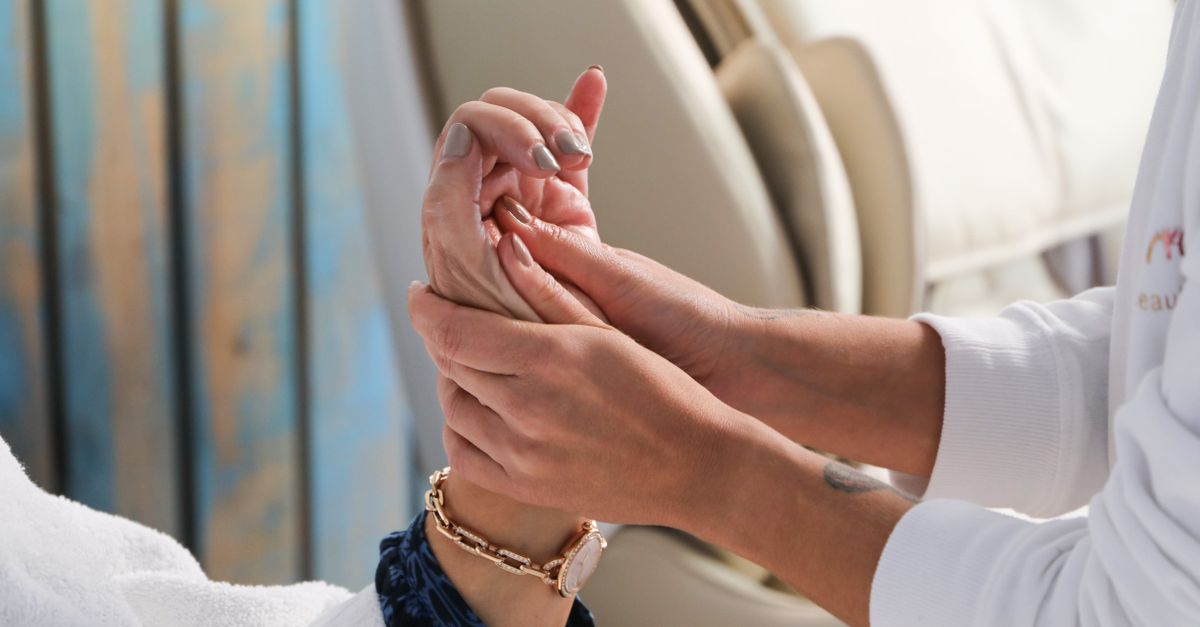
Caregiver hand pain and fatigue develop from the repetitive gripping, lifting, and transferring demands placed on the hands, wrists, and forearms during daily caregiving tasks. Over time, these movements strain the tendons, muscles, and small joints of the hand and wrist, leading to chronic soreness, weakness, and early signs of overuse injury. Addressing caregiver hand pain requires a combination of technique adjustments, targeted rest, forearm self-care, and tools that reduce the manual load — before the pain becomes a condition that limits your ability to care for someone at all.
You're the one doing the lifting, repositioning, bathing, and transferring — and somewhere along the way, your hands started to pay for it. Caregiver hand pain and fatigue are rarely talked about in caregiving resources, because most of that content focuses on the person receiving care. But the physical toll on caregivers is real, and the hands and wrists are among the first places that toll shows up.
The repetitive gripping, clenching, and reaching that caregiving requires can quietly accumulate into tendon strain, wrist soreness, and forearm fatigue that doesn't fully resolve overnight. If your hands ache at the end of a shift — or wake you up at night — you're not alone, and this isn't something you just push through indefinitely. This post covers why caregiving is so hard on the hands, the warning signs you shouldn't ignore, practical adjustments you can make today, and how to take care of your own body so you can keep taking care of someone else.
Why Caregiving Overloads the Hands
Most people think of lifting as a back problem. But every lift, transfer, and repositioning task begins and ends with the hands. The grip, the hold, the controlled release — all of it runs through the same small joints, tendons, and muscles that were never designed for this volume of use.
The Mechanics of Repetitive Grip Strain
The hand and wrist are supported by an intricate network of tendons that connect forearm muscles to the fingers. When you grip a gait belt, hold a wheelchair arm, or support someone through a transfer, those forearm muscles contract forcefully and repeatedly. Over the course of a caregiving day — which might include dozens of repositioning events — these muscles fire hundreds of times without adequate recovery between contractions.
This is the textbook definition of a repetitive strain injury (RSI). According to the National Institute for Occupational Safety and Health (NIOSH), RSIs develop when the rate of tissue microtrauma exceeds the body's ability to repair between exposures. For professional caregivers and home care providers alike, that threshold is crossed regularly.
Transferring and Repositioning: The Hidden Load
Transfers are especially demanding because they combine heavy load with an awkward grip position. When you're moving someone from a bed to a wheelchair — or turning them to prevent pressure sores — your wrists are often bent or twisted while bearing significant force. Wrist flexion under load is one of the primary risk factors for carpal tunnel syndrome, de Quervain's tenosynovitis, and general wrist tendinopathy.
Repositioning a person in bed adds its own challenge: the motion is frequently repetitive, performed with the wrists in non-neutral positions, and done across long shifts without structured breaks. Research on healthcare worker musculoskeletal injuries consistently identifies the hand and wrist as high-injury zones for nursing aides and personal care workers.
Manual Massage as an Overlooked Contributor
Many caregivers also provide hands-on comfort care — rubbing a loved one's back, massaging their feet, or working lotion into stiff limbs. While this care is meaningful, it adds significant mechanical load to already-fatigued hands. Manual massage requires sustained grip pressure, repeated thumb and knuckle pressure, and prolonged static holds — all of which compound the strain from transfers and other caregiving tasks.
This is worth naming directly: if you're giving someone else a massage to help them, your hands are absorbing the cost. That cumulative load is a real contributor to caregiver hand pain, and it's one that tools and technique adjustments can meaningfully reduce.
Warning Signs You Shouldn't Dismiss
Hand and wrist pain in caregivers often starts subtly. The early signals are easy to rationalize as tiredness, especially when you're focused on someone else's needs. But catching these signs early is what separates a recoverable overuse pattern from a chronic injury that limits function.
Signs That Deserve Attention
- Morning stiffness in the fingers or wrists that takes more than a few minutes to loosen up
- Aching forearms that persist hours after your caregiving tasks end
- Numbness or tingling in the thumb, index, or middle fingers — a common early marker of carpal tunnel compression
- Grip weakness — dropping items more than usual, or struggling with jar lids or turning keys
- Tenderness along the thumb side of the wrist, especially when pinching, which may indicate de Quervain's tenosynovitis
- Pain that wakes you at night, particularly if shaking or repositioning the hand temporarily relieves it
- Swelling at the wrist or knuckle joints that doesn't resolve with rest
Any of these symptoms that persist longer than a week, worsen with activity, or begin to limit your ability to grip and carry should prompt a conversation with a physician or occupational therapist. Occupational therapists specialize in hand and wrist injury recovery and can provide custom splinting, exercise protocols, and ergonomic guidance tailored to caregiving tasks.
When It's More Than Fatigue
There's a meaningful difference between hand fatigue — the normal tiredness of demanding physical work — and the early stages of a musculoskeletal disorder. Fatigue resolves with rest. A developing RSI does not, and may worsen with continued exposure even if the activity level stays constant. If your symptoms are no longer resolving after a full night of sleep, the tissue needs more than rest alone.
Technique Adjustments That Reduce the Load
You may not be able to reduce how often you transfer or reposition someone, but you can change how you do it. Small technique adjustments distribute force more broadly, reduce wrist strain, and meaningfully lower the cumulative load on the hands over a full caregiving day. The following changes are worth building into your standard practice.
- Keep wrists neutral during transfers. A neutral wrist — roughly straight, neither bent up nor curled down — is the position where tendons and carpal tunnel contents are under the least mechanical pressure. Actively think about keeping your wrists flat under load, which often means repositioning your body rather than compensating with wrist angle.
- Use a gait belt consistently. Gripping clothing or limbs directly concentrates force and forces the wrist into awkward positions. A gait belt distributes grip force and keeps the wrist more neutral during transfers.
- Use a full palmar grip, not fingertips. Fingertip gripping concentrates force through the small joints and strains the tendons running from fingertip to forearm. Whenever possible, get the entire palm in contact with the surface — wheelchair handles, bed rails, or a person's forearm during a transfer.
Reduce Manual Massage Load With Tools
If you regularly provide massage or rubbing for the person you care for — to relieve their leg cramps, foot pain, or back tension — this is an area where a therapeutic massager can directly relieve your hands. A professional-grade body massager transfers the mechanical work to the device rather than your hands and forearms. You guide it, but you're not generating the pressure. Over the course of a week, that shift can meaningfully reduce the repetitive load on already-fatigued tissue.
MedMassager's Body Massager uses oscillating technology to deliver deep, controlled vibration into muscle tissue — offering the therapeutic benefit of manual massage without requiring the caregiver's hands to do the work. Oscillation penetrates deep muscle layers, increasing local blood flow in the muscles being treated, which is the same mechanism that makes manual massage effective.
Forearm Self-Care: What Actually Helps
The forearms are the engine of hand function. Almost every grip, pinch, and hand movement is powered by muscles that originate in the forearm. Caregivers who develop hand pain will almost always find significant tenderness in the forearm when they look for it — even if the pain is felt primarily at the wrist or fingers.
Forearm Stretching Protocol
Simple forearm stretches, done consistently, can meaningfully reduce tension buildup over a caregiving day. They take less than three minutes and don't require any equipment. Aim to run through this sequence at least twice during a shift — mid-morning and mid-afternoon are natural break points.
- Wrist extensor stretch: Extend one arm in front of you, palm facing down. Use the other hand to gently bend the wrist downward until you feel a stretch along the top of the forearm. Hold 30 seconds. Repeat on the other side.
- Wrist flexor stretch: Extend one arm, palm facing up. Gently bend the wrist backward with the other hand until you feel a stretch along the underside of the forearm. Hold 30 seconds.
- Finger spread and release: Make a tight fist, hold for 5 seconds, then spread all fingers as wide as possible. Repeat 10 times per hand. This activates the intrinsic hand muscles and reduces grip fatigue.
Consistent, frequent low-intensity stretching reduces cumulative tension better than a single long stretch session. The goal isn't to stretch once and forget it — it's to interrupt the buildup before it compounds.
Self-Massage for the Forearms
Cross-friction massage on the forearm muscles — using the thumb of the opposite hand to press firmly along the muscle belly from elbow to wrist — can release localized tension and reduce aching between shifts. Spend 60–90 seconds on each forearm, using moderate pressure and short strokes across the muscle fibers rather than along them.
A therapeutic body massager can also be used on your own forearms. Resting the forearm lightly against the massager head — letting the oscillation do the work rather than pressing hard — brings blood flow into chronically tight forearm muscles without requiring the opposite hand to do the work. This is the right use of a massager for caregiver self-care: it reduces the manual load rather than adding to it.
Heat, Cold, and Recovery Windows
Heat applied to the forearms for 10–15 minutes after a heavy caregiving shift increases local circulation and helps muscle fibers relax. A warm compress or heating pad works well here. For acute flare-ups — wrist or forearm pain with a distinct onset following a specific event — ice for 10–15 minutes in the first 24 hours can reduce early inflammatory swelling.
Recovery windows matter more than most caregivers realize. On a long shift, building in two or three genuine hand-rest periods of even five minutes — where your hands are not gripping anything — allows the forearm muscles partial recovery throughout the day rather than running to full depletion.
Using Massagers to Reduce Your Manual Load
One of the most practical shifts a caregiver can make is recognizing that a therapeutic massager isn't just for the person receiving care — it's a tool that reduces the physical demand on the caregiver's body. Protecting your hands is part of sustaining your ability to give care at all.
For the Person You Care For
Many tasks caregivers do with their hands — rubbing someone's feet, working out a cramped calf, massaging a stiff lower back — can be performed more effectively and with far less hand fatigue using an oscillating foot massager or body massager. The person receiving care gets consistent, controlled therapeutic movement. You keep your hands out of the equation for that task.
MedMassager's Foot Massager delivers oscillating motion that activates the calf muscles and promotes blood flow through the feet — particularly useful for people who are sedentary, have diabetes, or have circulation concerns. Continuous movement helps keep blood flowing through the feet when natural movement is limited, without requiring manual rubbing or massage on your part.
For Your Own Recovery
Using the MedMassager Body Massager on your own forearms, shoulders, and upper back at the end of a shift addresses the muscle fatigue that accumulates from a full day of physical caregiving. Mechanical movement stimulates muscle tissue and helps circulate blood through areas that tighten under repetitive load. This is basic recovery physiology — and it's the kind of self-care that caregivers consistently skip because they're focused on someone else.
The point isn't to add a complicated routine to your already full day. Setting the massager on your forearms while sitting down for ten minutes costs almost no effort and returns measurable benefit. Make the recovery your body needs as low-effort as possible.
Frequently Asked Questions
Why do my hands hurt so much from caregiving?
Caregiving involves repetitive gripping, lifting, and transferring tasks that place high mechanical demand on the tendons and muscles of the hand, wrist, and forearm. When these movements are performed frequently throughout a shift without adequate recovery, tissue microtrauma accumulates faster than the body can repair it — the core mechanism behind repetitive strain injuries. The wrists are especially vulnerable when force is applied while the joint is bent or twisted, which is common during transfers and repositioning.
What is the difference between hand fatigue and a repetitive strain injury?
Hand fatigue is the normal tiredness that follows demanding physical work, and it typically resolves after a full night of rest. A repetitive strain injury involves actual tissue damage — to tendons, tendon sheaths, or the structures inside the carpal tunnel — that does not fully resolve with ordinary rest. If your hand or wrist pain persists after sleep, worsens over days or weeks, or is accompanied by numbness, tingling, or grip weakness, it has likely moved beyond simple fatigue and warrants evaluation by a physician or occupational therapist.
Can forearm stretching actually prevent caregiver hand pain?
Stretching alone cannot prevent overuse injury if the underlying volume and mechanics of the work remain unchanged. Consistent forearm stretching does reduce the rate at which tension accumulates in the muscles that power hand function, which can meaningfully delay the onset of pain during a shift and reduce post-shift soreness. It works best as part of a broader strategy that also includes grip technique adjustments, regular rest breaks, and load-reduction tools.
Is numbness in my fingers a sign of something serious?
Numbness or tingling in the thumb, index, or middle fingers — particularly if it worsens at night or during repetitive hand activity — is a common early sign of carpal tunnel syndrome, caused by compression of the median nerve at the wrist. Early-stage carpal tunnel often responds well to rest, splinting, and activity modification, but it does not typically resolve on its own if the causative activities continue. Anyone experiencing persistent hand or finger numbness should be evaluated by a physician, as untreated carpal tunnel can progress to permanent nerve damage.
How can I give a massage without hurting my own hands?
Using a therapeutic massager instead of your hands is the most direct way to provide massage-like benefit without loading your own joints and tendons. A device transfers the mechanical work away from your hands, so you're guiding the tool rather than generating pressure yourself. If manual massage is preferred, using your palm rather than fingertips, keeping your wrists neutral, and limiting sessions to short durations all reduce the strain per session.
Should caregivers wear wrist braces while working?
Wrist braces can reduce strain during specific high-risk tasks by keeping the wrist in a neutral position and limiting the range of motion that places tendons under peak load. They are particularly useful during transfers and repetitive hand tasks. Braces are most effective as a protective measure when introduced early, before significant injury develops, and they should be fitted by an occupational therapist or physician rather than used as a self-directed fix for significant ongoing pain.
When should a caregiver see a doctor about hand pain?
Seek medical evaluation when hand or wrist pain does not resolve after a full night of rest, when numbness or grip weakness accompanies the pain, when symptoms are worsening week over week, or when pain is severe enough to interrupt sleep. An occupational therapist is often the most appropriate first specialist for hand and wrist overuse injuries, as they can provide splinting, graded exercise, and ergonomic recommendations tailored specifically to caregiving tasks.
The Bottom Line
Caregiver hand pain and fatigue are the predictable result of physically demanding work performed without enough recovery — not a sign of weakness, and not something to simply endure. The hands and wrists absorb the load of every transfer, grip, and hands-on task across a full caregiving shift, and that load adds up faster than most people expect.
The most effective approach combines technique adjustments — neutral wrists, palmar grip, consistent use of transfer aids — with deliberate forearm stretching, recovery breaks built into the day, and targeted self-care for the muscles that power hand function. Using therapeutic tools to reduce the manual massage load on your hands is one of the simplest high-return changes a caregiver can make.
Protecting your hands isn't a luxury. It's what allows you to keep providing care. Explore MedMassager's therapeutic body massagers — built for people who need real, consistent relief from muscle fatigue and overuse pain, including the caregivers who rarely think of themselves first.
This content is for informational purposes only and is not intended as medical advice, diagnosis, or treatment. Always consult a qualified healthcare professional before starting any new treatment or therapy. MedMassager products are FDA-registered Class I medical devices.


