
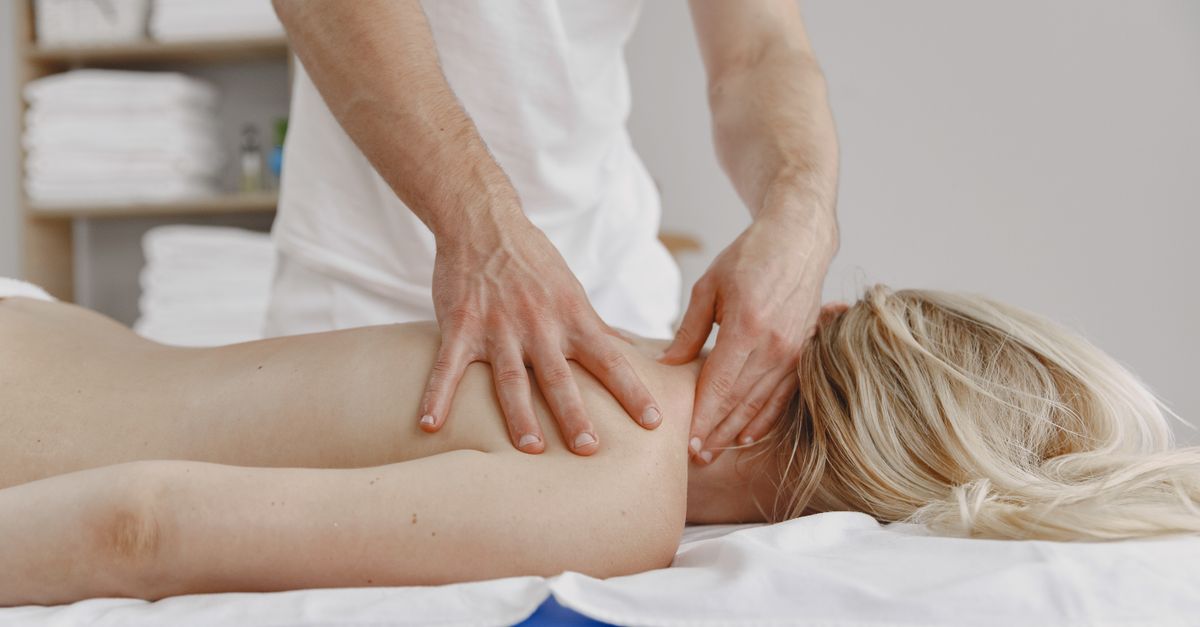
Bruising after massage happens when pressure breaks small blood vessels near the skin's surface, letting blood leak into the surrounding tissue. The most frequent causes are pressure that is too high, skin that has thinned with age, blood-thinning medications, and low platelet counts. A small, tender bruise in a massaged area that fades within about two weeks is usually harmless. Bruises that appear without clear cause, keep growing, or come with other bleeding signs should be checked by a doctor.
You finished a massage feeling looser, and two days later you found a purple mark on your calf or shoulder blade that you don't remember earning. Bruising after massage is unsettling because the session may have felt fine at the time, or only a little intense. The mark is real, though, and it is worth understanding where it came from before your next session.
Sometimes the explanation is simple: the pressure was more than your tissue could take. Other times the bruise points to something about your body, such as thinner skin that comes with age, a blood thinner you take every morning, or a platelet count that runs low. This guide is for anyone who uses massage at home or in a clinic and wants to keep doing it without collecting marks. It covers why bruises form, how to tell a harmless bruise from one that needs a doctor, and how to adjust pressure and intensity so your sessions stay comfortable.
Why Bruising After Massage Happens
Mayo Clinic explains that most bruises form when small blood vessels called capillaries, located near the skin's surface, break from impact or pressure. Blood escapes into the surrounding tissue and becomes visible as a dark patch. Whether a massage leaves that patch depends on two things: how much force reaches your capillaries and how well your body resists and repairs that damage.
Pressure and Technique
The most direct cause is force that exceeds what the tissue can absorb. Deep tissue work, pressing hard with elbows or knuckles, lingering too long on one spot, and working directly over bone all concentrate force on a small area. Bony regions like the shins, kneecaps, and the top of the foot have little padding between skin and bone, so capillaries there get pinched with less pressure than you might expect.
Duration matters too. A moderate setting used for 40 minutes can stress tissue that would have handled the same setting for 10 minutes without a mark.
Thinner Skin With Age
Skin thins as you get older. It loses collagen and some of the fat layer that cushions blood vessels, and the vessel walls themselves become more fragile. Years of sun exposure add to the fragility, which is why flat purple patches often appear on the forearms and backs of the hands in older adults with very little contact. Pressure that left no trace at 40 can leave a bruise at 75.
Blood Thinners and Other Medications
Medications that affect clotting don't make capillaries break more easily, but they make it harder for a small break to seal. A minor leak that would normally stop in seconds keeps going and spreads into a larger bruise. Medications and supplements that can raise bruising risk include:
- Anticoagulants such as warfarin, apixaban, and rivaroxaban
- Antiplatelet drugs such as aspirin and clopidogrel
- NSAID pain relievers such as ibuprofen and naproxen, especially with regular use
- Long-term corticosteroids, which also thin the skin
- Supplements such as fish oil, vitamin E, and ginkgo, which may affect bleeding
Low Platelets and Clotting Disorders
MedlinePlus, the National Institutes of Health's consumer health resource, describes thrombocytopenia as a lower-than-normal number of platelets in the blood. Platelets are the cells that plug damaged vessels, so a low count means even light pressure can produce bruising. Low platelets can accompany chemotherapy, liver disease, some autoimmune conditions, and certain medications. Inherited clotting disorders such as von Willebrand disease and hemophilia have a similar effect on how readily you bruise.
Is Bruising After Massage Normal?
A bruise is a sign of minor tissue damage, so it is never the goal of a massage. That said, an occasional small bruise after firm pressure is usually not dangerous. The questions to ask are where the bruise is, how big it is, and how it changes over the following days.
Signs of a Harmless Massage Bruise
A typical massage bruise shows up within a day or two, sits in an area that received pressure, and feels tender when touched. It starts red or purple, shifts to blue, then turns green and yellow as your body breaks down the trapped blood. Most minor bruises fade within about two weeks, though they can take longer if you take a blood thinner or have thinner skin.
Muscle soreness for 24 to 48 hours after deep work is a separate issue. Soreness without discoloration is not bruising.
When to Call a Doctor
Some bruising patterns suggest a problem beyond massage pressure. Contact your doctor if you notice any of the following:
- Bruises in places the massage never touched, or bruising with no pressure you can identify
- A bruise that keeps growing, becomes very swollen, or forms a firm lump
- Pain that seems far out of proportion to the pressure used
- Tiny red or purple pinpoint spots on the skin, called petechiae
- Bleeding gums, frequent nosebleeds, or blood in your urine or stool
- New, easy bruising after starting a medication or supplement
- A bruise that hasn't started to fade after two weeks
Swelling, warmth, and pain in one calf need prompt medical attention, because they can signal a blood clot. Do not massage a leg with those symptoms. If you take a medication that affects clotting, report unusual bruising to the clinician who prescribed it, and do not stop or change the dose on your own.
How Vibration and Oscillation Affect Bruising Risk
Bruising is a pressure problem at its core. How a device delivers movement matters as much as how strong it is, because the same force feels very different when it is spread out versus driven into a single point. That is the difference between a motor shaking a unit against the skin and circular oscillation that moves the tissue as a whole.
Concentrated Pressure Versus Distributed Movement
Many foot massagers are sold as vibration massagers, so vibration is the term you will see most often while shopping. MedMassager uses oscillating technology to deliver deeper, more controlled vibration than conventional massagers. Instead of buzzing in place, the Foot Massager and Body Massager oscillate in a circular motion, moving the tissue as a whole.
The Body Massager with its cushioned contouring pad uses a large, soft pad that forms to the body, so contact spreads across a broad surface rather than a knuckle-sized area. The oscillation moves deep muscle layers and supports local blood flow without you needing to lean into the device. The therapeutic foot massagers use an open flat platform where your feet rest while you sit, and the circular oscillating action does the work instead of downward force.
Why Adjustable Intensity Matters
Strong oscillation is useful only if you can turn it down. The MedMassager Foot Massager and Body Massager are FDA-registered Class I medical devices with adjustable intensity settings, which lets you match the force to your skin rather than the other way around. The variables that most affect bruising risk are:
- The intensity setting
- How long each session lasts
- Whether the device sits on muscle or over bone
- How hard you press a handheld device into the body
No massager removes bruising risk entirely. If you bruise easily, control over these variables is what keeps sessions comfortable.
How to Adjust Massage Intensity Safely
Treat intensity as something you build toward, not something you start with. Changing one variable at a time shows you exactly where your limit is.
A Step-by-Step Starting Routine
- Check your skin first. Skip any area with a fresh bruise, broken skin, a rash, bulging varicose veins, or a recent injection site.
- Start low. Begin with about 10 minutes at the lowest setting, once or twice a day.
- Use the Foot Massager seated. Sit upright in a stable chair with your feet flat on the platform, and let the oscillation move your feet without pressing down extra.
- Use the Body Massager with light contact. Apply the pad to muscle, such as the upper back beside the spine, the calves, or the thighs, and let it rest rather than pushing it in. You can use it seated, lying down, or resting between your back and the back of a chair.
- Keep the Body Massager moving. Shift it to a new spot every minute or two, and avoid bony areas like the shins and kneecaps.
- Check again the next day. Bruises can take 24 to 48 hours to appear, so look over the area before your next session.
- Increase one thing at a time. After several sessions without marks, raise the intensity one step or add a few minutes, but not both at once.
If you are comparing devices, the MedMassager catalog of therapeutic massagers includes the Foot Massager and Body Massager, both of which oscillate in a circular motion with adjustable intensity.
What to Do If a Bruise Appears
Drop back to the last setting that left no marks, and keep the device off the bruised area until it has fully faded. For the first day or two, a cold compress wrapped in a cloth and elevating the area can help limit swelling. If bruises keep appearing even at the lowest setting, stop and talk with your doctor before continuing.
Extra Precautions for Higher-Risk Skin
If you take a blood thinner, have low platelets, have thinning skin, or live with diabetes, a lower starting point and closer skin checks make sense. These situations don't automatically rule out massage, but they raise the stakes of using too much pressure.
Blood Thinners and Low Platelets
Ask the clinician who manages your medication or blood counts whether massage is appropriate for you and how much pressure is reasonable. Useful questions to bring to that conversation include:
- Is home massage safe with my current medication or platelet count?
- Are there areas of my body I should avoid?
- Which bruising signs should make me call your office?
- Does anything change if my dose or lab results change?
The Foot Massager oscillates in a circular motion beneath the soles while you sit, rather than pressing into one point. That circular oscillating action creates continuous, repetitive movement in the foot and calf, which supports circulation during use. For a closer look at this situation, read about using a foot massager while on blood thinners.
Aging Skin
Start at the lowest setting, keep sessions short, and favor areas with more muscle and padding, such as the calves and thighs. Keep a handheld device away from the forearms and backs of the hands, where aging skin is most fragile.
Diabetes and Neuropathy
Reduced sensation in the feet means you may not feel when pressure is too high, and you may not notice a bruise without looking. Inspect your feet before and after each session, and use a mirror for the soles if needed. With the Foot Massager, repeated foot motion activates the calf muscles, which supports blood flow back up the legs rather than letting it pool in the feet when natural movement is limited. If you are exploring foot massagers built for seated use, confirm with your care team that foot massage fits your situation first.
Frequently Asked Questions
Is it normal to bruise after a deep tissue massage?
A small, tender bruise in an area that received firm pressure can happen after deep tissue work, and it usually fades on its own within about two weeks. It still means the pressure exceeded what the capillaries in that spot could handle. Ask for lighter pressure next time, and see a doctor if bruises are large, appear in areas that weren't massaged, or show up after every session.
How long does bruising after massage last?
A minor bruise typically fades over one to two weeks, changing from purple or blue to green and then yellow. Bruises can take longer to clear if you take a blood thinner or have thinner skin. A bruise that hasn't begun to fade after two weeks should be checked by a doctor.
Can you get a massage if you take blood thinners?
Massage is not automatically off-limits on blood thinners, but your bruising risk is higher and pressure needs to stay light. Talk with the clinician who manages your medication before starting, and tell any massage therapist that you take it. Never stop or adjust a blood thinner on your own to make massage easier.
Should you massage a bruise?
Do not massage directly over a fresh bruise, because pressure and movement on damaged capillaries can increase bleeding under the skin. A cold compress wrapped in cloth and elevating the area are reasonable steps for the first day or two. Wait until the bruise has fully faded before massaging that spot again.
Why do older adults bruise more easily from massage?
Skin thins with age, loses some collagen and protective fat, and small blood vessels become more fragile. Years of sun exposure add to that fragility, especially on the forearms and hands. As a result, pressure that caused no marks earlier in life can leave a bruise later on.
Can a handheld massager cause bruising?
Any massager can cause bruising if the intensity is too high, the session runs too long, or you press it hard into one spot or over bone. A device with a cushioned contact surface and adjustable intensity gives you more control, but it doesn't remove the risk. Start at the lowest setting, keep the device moving, and check your skin the next day.
The Bottom Line on Massage Bruising
Bruising after massage comes down to force meeting vulnerability: pressure that's too high, skin that has thinned, blood that clots more slowly, or platelets that run low. A small bruise that fades within two weeks is usually harmless, while bruises that spread, appear without cause, or come with other bleeding signs call for a doctor.
Start low, change one variable at a time, keep a handheld device moving and off bone, and ask your own care team about massage if you take a blood thinner or have a clotting condition. The Body Massager's cushioned pad spreads circular oscillation across a broad surface, moving the muscle as a whole rather than driving force into one point, which supports local blood flow during use. To compare cushioned, adjustable-intensity options, see the MedMassager Body Massager collection.
This content is for informational purposes only and is not intended as medical advice, diagnosis, or treatment. Always consult a qualified healthcare professional before starting any new treatment or therapy. MedMassager products are FDA-registered Class I medical devices.


