
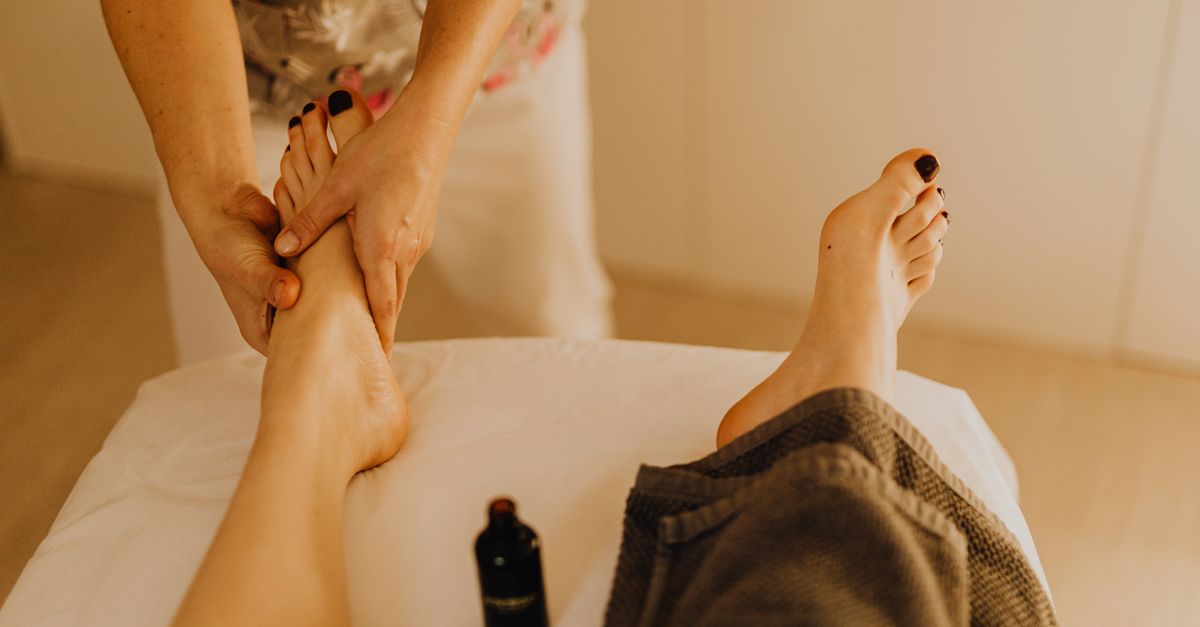
The best foot massager for Morton's neuroma is one with an open, flat platform that lets the forefoot rest without squeezing the toes together. Morton's neuroma is aggravated by compression across the ball of the foot, so enclosed designs that wrap, squeeze, or press nodes into the forefoot can be uncomfortable for many people with the condition. A seated, open-platform massager with adjustable intensity lets you control how much movement reaches the sensitive area. Footwear changes and a podiatrist's evaluation should come first, with a massager used alongside that care.
If you've ever slid your foot into a snug pair of shoes and felt a sharp, burning jolt shoot through the ball of your foot, you already know what makes shopping for the best foot massager for Morton's neuroma tricky. Many popular massagers work by squeezing, wrapping, or pressing into the feet. For a forefoot that reacts badly to compression, that design can feel like the problem rather than a break from it.
This guide is for people who already know they're dealing with Morton's neuroma, or strongly suspect it, and want to add a massager to their routine without making the forefoot angrier. If you're looking for stretches, icing tips, and other at-home care, our self-care guide to Morton's neuroma foot pain relief covers that ground. Here, the focus is on equipment. You'll learn why forefoot compression aggravates the condition, how different massager designs compare, what features to look for, how to use a massager safely, which footwear changes matter, and when a podiatrist visit should come before any purchase.
Why Squeezing the Forefoot Aggravates Morton's Neuroma
Understanding where Morton's neuroma sits in the foot explains almost everything about which massagers work for it and which don't. The condition is a problem of space, and anything that reduces that space tends to make symptoms worse.
What Morton's Neuroma Is
Mayo Clinic describes Morton's neuroma as a thickening of the tissue around one of the nerves leading to the toes. It most commonly develops between the third and fourth toes, in the ball of the foot. People often describe the sensation as standing on a pebble or a folded sock, along with burning pain in the forefoot and tingling or numbness in the toes.
The affected nerve runs between the metatarsal heads, the rounded ends of the long bones that form the ball of your foot. A ligament sits across those bones, and the nerve passes beneath it. That tight corridor leaves very little room for thickened tissue.
How Compression Makes It Worse
When the forefoot is squeezed from the sides, the metatarsal heads are pushed closer together. That narrows the already limited space around the thickened tissue and increases pressure on it. This is why many people notice symptoms ease when they take off their shoes and rub the ball of the foot, then flare again once the shoes go back on.
The same principle applies to massagers. A device that clamps around the forefoot or drives firm points between the toes recreates the squeeze of a narrow shoe. Common sources of forefoot compression include:
- Shoes with a narrow or pointed toe box
- High heels, which shift body weight forward onto the ball of the foot
- Tight athletic shoes or ski boots that pinch the forefoot
- Activities with repeated forefoot impact, such as running or court sports
- Foot shapes such as bunions, hammertoes, high arches, or flat feet, which can change how pressure lands on the forefoot
Foot Massager Designs and Morton's Neuroma
Not all foot massagers apply force the same way. Before comparing brands or features, it helps to sort massagers by how they contact the foot, because that design choice matters more for Morton's neuroma than almost any other spec. Most foot massagers fall into one of three groups:
- Enclosed compression and air-bag massagers that squeeze the foot from the sides
- Rotating node and shiatsu massagers that knead into the sole
- Open flat-platform massagers that move beneath feet resting on top
Enclosed Compression and Air-Bag Massagers
Enclosed massagers have you slide your feet into chambers lined with air bags that inflate and squeeze. For someone without forefoot problems, that squeeze can feel pleasant. For someone with Morton's neuroma, inflation around the sides of the foot pushes the toes and metatarsals together, which is the exact motion that aggravates the condition. You also have limited control over where the pressure lands.
Rotating Node and Shiatsu Massagers
Shiatsu-style massagers use rotating nodes inside an enclosed chamber to knead the soles. The concern for Morton's neuroma is targeting. Nodes can press directly into the ball of the foot or between the metatarsal heads, and many models combine nodes with side compression. If the nodes happen to land on the irritated spot, there's little you can do besides pulling your foot out.
Open Flat-Platform Massagers
An open, flat platform takes a different approach. Your feet rest on top of the surface with nothing wrapping around the toes or squeezing the sides of the forefoot. The movement travels up through the sole instead of being pressed in from multiple directions. You can also shift your foot position on the platform to keep the most sensitive area from bearing weight.
| Design | How It Contacts the Foot | Forefoot Compression | Control Over Pressure Point |
|---|---|---|---|
| Enclosed air compression | Inflating bags squeeze the sides and top | High | Low |
| Rotating node / shiatsu | Nodes knead into the sole inside a chamber | Moderate to high | Low |
| Open flat platform | Feet rest on top of a moving surface | None from the sides | High (reposition freely) |
How Circular Oscillation Supports a Sensitive Forefoot
Most people start their search by looking for a vibration foot massager, and vibration is a reasonable starting point. The difference lies in how that movement is produced. MedMassager uses oscillating technology to deliver deeper, more controlled vibration than conventional massagers, and the Foot Massager oscillates in a circular motion across an open platform rather than squeezing or kneading the foot.
What the Movement Actually Does
The circular oscillating action moves the whole foot gently and continuously while you sit. That repeated motion works the muscles of the feet and lower legs, and it keeps blood flowing through the foot instead of settling during rest. This matters for people who spend long stretches sitting because walking is uncomfortable.
This is a circulation and muscle-movement benefit, not a nerve treatment. A massager does not shrink thickened tissue or change the condition itself. What it can do is give your feet movement and circulation support without the side compression that tends to provoke symptoms.
Why the Open Platform Matters Here
Because nothing wraps around the toes, your forefoot is never squeezed together during use. You decide where your foot sits on the platform and how much weight you place through the ball of the foot. Practical advantages for Morton's neuroma include:
- No compression of the toes or metatarsal heads from the sides
- Freedom to shift weight toward the heel and arch during a flare
- Adjustable intensity, so you can start gently and increase only if comfortable
- Seated use, so your body weight isn't pressing down on the forefoot
MedMassager's therapeutic foot massagers are FDA-registered Class I medical devices built around this open-platform, circular oscillation design.
Choosing the Best Foot Massager for Morton's Neuroma
Once you rule out designs that squeeze the forefoot, the remaining decision comes down to a handful of features. Use this checklist when comparing options:
- Open, flat platform: Your feet should rest on top of the unit, not inside a chamber or sleeve.
- No side compression: Avoid air bags, wraps, or sidewalls that press inward on the toes.
- No fixed nodes under the forefoot: Hard points that land between the metatarsal heads can concentrate pressure exactly where you don't want it.
- Adjustable intensity: Multiple settings let you begin low on sensitive days and adjust as you learn your tolerance.
- Room to reposition: You should be able to move your feet so the ball of the foot carries less load.
- Clear motion type: Look for a described mechanism, such as circular oscillation, rather than vague "massage modes."
Intensity range matters too, but only in the sense of control. A unit with a wide range of settings is useful because the lowest settings stay gentle on sensitive days while higher settings remain available for the arches and heels on good days. The circular oscillating action creates continuous, repetitive movement in the foot, which supports circulation during use without pressing in from the sides. You can compare open-platform foot massager options side by side, or browse the full range of MedMassager therapeutic massagers if you also deal with tightness elsewhere in the body.
Seated Foot Massager Routine for Morton's Neuroma
A thoughtful routine helps you get circulation and muscle-movement benefits without aggravating the forefoot. The Foot Massager is used seated only, with your feet resting on the platform. Its circular oscillating action keeps blood moving through the feet and calves while you rest, without squeezing the toes together.
Set up in a stable chair where your feet rest flat on the platform with your knees bent comfortably. Go barefoot or wear thin socks so nothing compresses the forefoot during the session. For your first few sessions, run the lowest intensity and place more of your foot's weight through the heel and midfoot, keeping the ball of the foot relaxed. That position gives you a baseline for how your forefoot responds before you change anything.
Once you have a comfortable position, build from there:
- Keep early sessions to about 10 minutes, extending gradually toward 15 to 20 minutes if the forefoot stays comfortable.
- Raise the intensity only after several sessions pass without irritation.
- Shift your foot position whenever the ball of the foot starts to feel the movement too directly.
- Stop if burning, tingling, or the pebble sensation increases, then lower the intensity or reposition before trying again.
Many people find one or two sessions a day fits easily into evening TV time or a break from desk work. Consistency tends to matter more than intensity. Explore the MedMassager open-platform foot massagers when you're ready to build a seated routine.
Footwear Changes That Ease Forefoot Pressure
No massager can make up for shoes that squeeze the ball of the foot all day. Footwear is usually the first change a podiatrist will discuss, and it often makes the biggest daily difference. The goal is simple: give the metatarsal heads room to spread and reduce the load on the forefoot.
Look for shoes and inserts with these features:
- A wide, deep toe box that lets the toes sit naturally without touching each other
- Low heels, ideally under an inch or two, so weight doesn't shift onto the ball of the foot
- Cushioned, shock-absorbing soles for hard floors and pavement
- Metatarsal pads placed just behind the ball of the foot, which help spread the metatarsal heads
- Laces or adjustable closures you can loosen across the forefoot
Shop for shoes later in the day, when feet are slightly larger. If a shoe feels snug across the toes in the store, it will feel tighter after a long day. A podiatrist can also recommend custom orthotics if over-the-counter pads don't redistribute pressure well enough for your foot shape.
When to See a Podiatrist First
A foot massager is a comfort and circulation tool, not a diagnosis. Forefoot pain has several possible causes, including stress fractures, metatarsalgia, joint inflammation, and nerve problems unrelated to Morton's neuroma. Getting a proper evaluation ensures you're addressing the right problem.
Book an appointment with a podiatrist or foot and ankle specialist if any of the following apply:
- Forefoot pain has lasted more than a few days despite changing shoes
- Numbness or tingling is spreading or becoming constant
- Pain is interfering with walking, work, or sleep
- You notice swelling, redness, warmth, or a visible change in foot shape
- You have diabetes, peripheral artery disease, or reduced sensation in your feet
A podiatrist may confirm the diagnosis with a physical exam or imaging and recommend options such as orthotics, footwear modifications, injections, or other treatments depending on severity. Ask whether a seated foot massager fits your plan, especially if you have circulation issues or reduced sensation.
Frequently Asked Questions
What type of foot massager is best for Morton's neuroma?
An open, flat-platform foot massager is generally the most comfortable choice for Morton's neuroma because it does not squeeze the toes or forefoot from the sides. Enclosed air-compression and shiatsu node designs can press the metatarsal heads together or push directly into the sensitive area. A seated massager with adjustable intensity lets you control how much movement reaches the ball of the foot.
Can massage make Morton's neuroma worse?
Massage can aggravate Morton's neuroma if it squeezes the forefoot or applies deep, focused pressure between the metatarsal heads. Gentle movement with no side compression is less likely to provoke symptoms. If burning, tingling, or sharp pain increases during any massage, stop and check with a podiatrist.
What shoes are best for Morton's neuroma?
Shoes with a wide, deep toe box, low heels, and cushioned soles are usually the best fit for Morton's neuroma. These features give the toes room to spread and reduce the load on the ball of the foot. Many people also benefit from metatarsal pads or custom orthotics recommended by a podiatrist.
Does Morton's neuroma go away on its own?
Morton's neuroma does not typically disappear without changes, but symptoms often improve when forefoot pressure is reduced through better footwear and activity adjustments. Some people need additional care from a podiatrist, such as orthotics or injections. Persistent or worsening symptoms should always be evaluated by a specialist.
Is a foot massager safe if I have diabetes and Morton's neuroma?
Talk with your doctor or podiatrist before using any foot massager if you have diabetes, especially if you have reduced sensation in your feet. A seated, open-platform massager that oscillates in a circular motion avoids squeezing the forefoot, and the repeated foot motion engages the calf muscles, which supports blood flow back up through the lower legs. Start on the lowest setting and check your feet for redness or irritation after each session.
Can I stand on a foot massager to target the ball of my foot?
No. An open-platform unit such as the MedMassager Foot Massager is designed for seated use only, with your feet resting on the platform. Standing would also put your full body weight onto the forefoot, which is the opposite of what a sensitive ball of the foot needs. Sitting lets you shift weight toward the heel and arch while the platform moves beneath you.
The Bottom Line
The best foot massager for Morton's neuroma is one that leaves your forefoot alone from the sides: an open, flat platform, adjustable intensity, and seated use. Enclosed compression and node-based designs can squeeze the metatarsal heads together and recreate the pressure of a tight shoe.
Pair any massager with roomy, low-heeled footwear and a podiatrist's evaluation, and use it alongside whatever your doctor has recommended. MedMassager builds its FDA-registered Class I medical devices around circular oscillation on an open platform, so the foot moves continuously without being pressed from the sides. When you're ready, compare MedMassager foot massagers to find the model that fits your routine.
This content is for informational purposes only and is not intended as medical advice, diagnosis, or treatment. Always consult a qualified healthcare professional before starting any new treatment or therapy. MedMassager products are FDA-registered Class I medical devices.


