
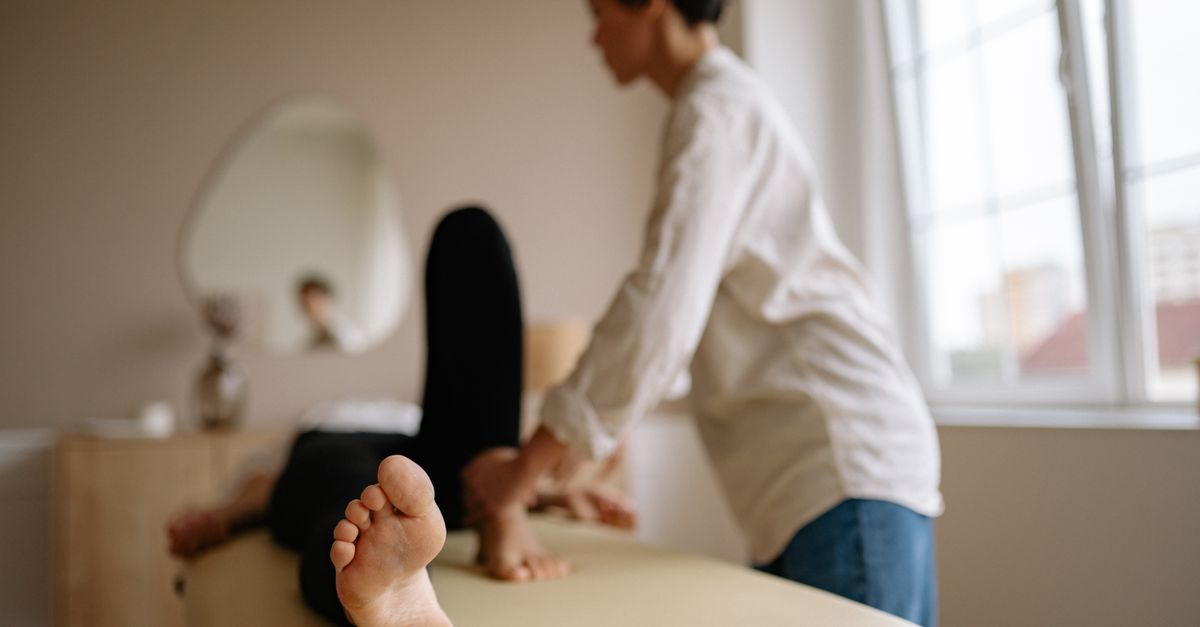
Morton's neuroma foot pain relief typically involves a combination of footwear modifications, targeted self-care, and therapies that reduce pressure on the irritated nerve tissue between the toes. People managing this condition benefit from wide-toe-box shoes, metatarsal pads, gentle interdigital massage, and strategies that maintain healthy circulation around the affected forefoot. Oscillating foot massage can support blood flow through the metatarsal region, helping reduce the tension and pooling that accompanies prolonged standing or tight footwear. Consistent self-care between podiatrist visits is key to managing daily symptoms and slowing symptom progression.
You've already been to the podiatrist. You have a diagnosis — Morton's neuroma — and you know that nerve tissue between your third and fourth toes (or second and third) is being compressed and irritated. What you don't always get at that appointment is a detailed plan for the days, weeks, and months between visits.
Morton's neuroma foot pain relief doesn't happen all at once. It happens in small, consistent steps: better shoes, targeted pressure relief, gentle massage of the interdigital spaces, and keeping circulation moving through a forefoot that would rather lock up than cooperate. This guide is written specifically for people who've already been diagnosed and are now managing daily symptoms at home. It covers the self-care strategies that actually make a difference — and how to build them into a routine that supports what your podiatrist is doing.
What's Happening in Your Forefoot
Understanding the mechanics behind Morton's neuroma helps explain why certain self-care strategies work and others don't. This isn't just general foot pain — it's a specific structural problem with a specific set of triggers.
The Anatomy of an Interdigital Neuroma
Morton's neuroma — more accurately called an interdigital neuroma — is a thickening of the tissue surrounding a nerve between the metatarsal heads. It most commonly occurs in the third intermetatarsal space (between the third and fourth toes), though the second space is also frequently affected. The nerve becomes compressed between adjacent metatarsal bones, producing the characteristic burning, tingling, or "pebble in the shoe" sensation that most people with this condition describe.
The tissue thickening is a response to chronic irritation. As the nerve is repeatedly compressed, the protective sheath undergoes fibrotic change — scar-like tissue replaces healthy nerve sheath tissue. This process doesn't reverse quickly on its own, which is why consistent symptom management matters so much between clinical interventions.
Why the Forefoot Is So Vulnerable
The forefoot bears a disproportionate share of ground reaction forces during walking, especially during the push-off phase of your gait. When metatarsal spread is restricted — by narrow shoes, high heels, or tight lacing — the interdigital nerves are repeatedly pinched with each step. Cumulative compression over time builds the kind of irritation that becomes Morton's neuroma.
Several factors compound this vulnerability:
- High-heeled footwear shifts body weight forward onto the metatarsal heads, dramatically increasing forefoot pressure
- Narrow toe boxes physically compress the metatarsals together, closing the interdigital spaces
- Flat arches or abnormal pronation alter how load distributes across the forefoot
- High-impact activities — running, racquet sports, dancing — increase repetitive compressive loading
- Prolonged standing on hard surfaces amplifies forefoot fatigue without the pressure-relief of movement
What Circulation Has to Do With It
Nerve tissue is metabolically demanding. It requires consistent, healthy circulation to function and to manage the low-grade inflammation that surrounds a neuroma. When the forefoot is compressed in tight footwear all day, or kept still for extended periods, local circulation slows — the small vessels supplying the interdigital nerves don't get the exchange of oxygen and metabolic waste that healthy tissue needs.
This is one reason pain often flares after prolonged sitting followed by standing. The foot that hasn't been moving lacks the circulation buffer that active movement provides. Supporting forefoot circulation is a physiology-grounded component of symptom management, not a secondary concern.
Footwear and Padding: The Foundation
No amount of massage or self-care overrides eight hours in the wrong shoes. Footwear modification is the highest-leverage self-care intervention available for Morton's neuroma foot pain relief — everything else builds on it.
What Your Shoes Need to Do
The primary goal is decompressing the metatarsal heads — giving the interdigital spaces room to spread so the nerve isn't pinched with every step. Prioritize these features:
- Wide toe box: The shoe should allow your toes to splay naturally at rest and during push-off, without squeezing the metatarsals together
- Low heel-to-toe drop: A flatter profile reduces the forward weight shift that loads the forefoot; anything over 4mm can increase pressure on the metatarsal heads
- Firm midsole with forefoot cushioning: Overly soft midsoles that compress under load can allow excessive metatarsal splay, which paradoxically increases nerve tension; a structured midsole provides more stable support
- Removable insole: This allows room for aftermarket orthotics or metatarsal pads without crowding the toe box
Metatarsal Pads: Small Device, Significant Impact
A metatarsal pad placed just proximal to (behind) the metatarsal heads shifts load away from the compressed interdigital space. Studies on conservative management of Morton's neuroma consistently include metatarsal padding as a first-line intervention, and most podiatrists recommend it as a bridge between office visits.
Placement matters significantly. The pad should sit behind the metatarsal heads — not under them. When positioned correctly, it slightly elevates the metatarsals, spreading the transverse arch and opening the interdigital space. If the pad sits directly under the heads, it can actually increase the pressure you're trying to relieve. Your podiatrist can mark the ideal position on your insole if you're unsure.
What to Avoid
Even on days when symptoms feel manageable, some footwear choices consistently worsen Morton's neuroma over time. Heels above two inches, pointed-toe shoes, and minimalist flats without arch support are the most common culprits. Flip-flops and backless clogs encourage gripping toe mechanics that increase tension in the forefoot flexors and compound nerve irritation.
Oscillating Foot Massage and Forefoot Circulation
Many people managing Morton's neuroma focus entirely on pressure reduction and overlook circulation. Decompression is the first priority — but circulation support is an underutilized part of the daily management picture, particularly for people who spend long hours on their feet or at a desk.
The Role of Movement in Nerve Health
Gentle, repetitive movement through the forefoot and metatarsal region helps maintain the vascular supply to irritated nerve tissue. When the foot is immobile for extended periods — at a desk, in a car, during sleep — local blood flow slows, and the mild inflammatory environment around the neuroma is less efficiently cleared. Reintroducing movement, even passive movement from an external source, helps restore that exchange.
This is the physiological rationale for using a therapeutic foot massager as part of a Morton's neuroma self-care routine. Oscillating motion activates the muscles of the foot and lower leg, pushing blood upward and maintaining circulatory activity through the forefoot — without the compressive loading of standing or walking.
Why Oscillation Matters for This Condition
Not all foot massagers work the same way. Many consumer-grade devices deliver surface-level stimulation that doesn't penetrate the deeper metatarsal structures. MedMassager uses oscillating technology to deliver deeper, more controlled vibration than conventional massagers — the kind of sustained mechanical input that engages the intrinsic foot muscles and supports genuine circulatory response rather than just surface sensation.
The MedMassager Foot Massager is an FDA-registered Class I medical device with 11 adjustable speed settings, allowing people managing foot conditions to start at a low, gentle intensity and adjust as tolerance develops. For Morton's neuroma, lower settings are typically most appropriate — the goal is circulation support and muscle activation, not aggressive pressure on an already-irritated nerve. Oscillating motion keeps blood flowing through the foot during rest, which is particularly relevant for people who notice symptoms worsen after long periods of inactivity followed by standing.
What a Foot Massager Cannot Do
A foot massager does not treat or reverse the fibrotic changes in the nerve sheath. It is not a substitute for podiatric care, cortisone injections, or — in cases that have progressed — surgical intervention. What it does is support the circulatory environment around the affected tissue during conservative management, making it a useful adjunct to the rest of your self-care plan rather than a standalone treatment.
Interdigital Space Massage: Hands-On Technique
Manual massage of the interdigital spaces is one of the most direct self-care interventions available for Morton's neuroma. Done gently and consistently, it reduces localized tension around the neuroma and provides temporary symptom relief. Done incorrectly — with too much pressure directly on the nerve — it can aggravate symptoms.
Basic Interdigital Massage Technique
Sit in a comfortable chair and place the affected foot across your opposite knee. Start by warming the foot with broad, flat-palm strokes along the sole for 30–60 seconds — this increases local circulation before any focused work.
Using your thumb and index finger, gently pinch the web space between the affected toes (typically between toes 3 and 4). Apply light, sustained pressure — not digging or pressing into the metatarsal heads themselves. Hold for 5–10 seconds, release, and repeat. A slow, circular friction motion in the interdigital space works well here: move the soft tissue rather than compressing the nerve directly. If any technique reproduces sharp, shooting, or electric pain, stop immediately and reassess your placement and pressure.
Metatarsal Arch Work
Tension in the transverse arch — the arch that runs across the ball of the foot — directly affects how much the metatarsals can spread during weight-bearing. Using both thumbs, apply gentle pressure along each intermetatarsal space, moving from the base of the toes back toward the midfoot. This is a slow, exploratory technique.
Note: the metatarsal squeeze test, which compresses the forefoot from side to side, is a diagnostic maneuver podiatrists use to reproduce neuroma pain. Avoid replicating this in your self-massage. Work along and between the metatarsals, not across them.
Finishing With a Toe Stretch
After massage, gently separate each toe using your fingers, holding for 5 seconds per space. This passive spreading mimics the decompression that a wide-toe-box shoe provides and can temporarily reduce pressure between metatarsal heads. It's a simple two-minute add-on that many people find relieves the "bunched up" sensation that Morton's neuroma often creates.
Building a Daily Self-Care Routine
The gap between knowing what to do and doing it consistently is where most Morton's neuroma self-care falls apart. A realistic, low-friction routine built around your existing schedule is more valuable than an elaborate protocol that gets abandoned after a week.
Morning: Set Up for a Low-Symptom Day
Before getting out of bed, do 10–15 repetitions of toe spreading — actively spreading your toes wide and holding for two seconds each rep. This gently mobilizes the forefoot before your first weight-bearing steps. Then confirm you're reaching for the right shoes. Many people have a "good shoes" pair and default to the wrong ones on casual days; every day counts when managing Morton's neuroma. Finally, check that your metatarsal pad is properly positioned before leaving the house. Pads shift during use, and a misplaced pad can add pressure rather than reduce it.
Midday: Circulation Break
If your work involves prolonged sitting or standing, build in a five-minute midday break. Remove your shoes if possible, do a brief interdigital massage using the technique above, and spend a few minutes with your foot elevated if you've been on your feet all morning.
If you work from home or have a desk setup, using the MedMassager Foot Massager at low intensity during a work break is an easy way to support forefoot circulation without interrupting your day.
Evening: Targeted Recovery Session
- Begin with 5 minutes of hands-on interdigital massage — warm-up strokes, interdigital space work, metatarsal arch work, toe stretches.
- Follow with 10–15 minutes on the Foot Massager at a comfortable low-to-medium setting. Let the oscillating motion activate circulation through the foot and lower leg while you rest.
- Elevate the foot for 10 minutes after the session. Elevation after therapeutic massage helps drain residual fluid from the forefoot, which can reduce the puffiness that sometimes accompanies chronic nerve irritation.
- If your podiatrist has prescribed stretching — calf stretches or plantar fascia work — add these at the end while the foot is warm from the session.
Tracking What's Working
Morton's neuroma symptoms fluctuate. Keeping a simple log — a daily 1–10 pain rating and a note on footwear and activity level — helps you identify what's driving flares and what's helping. It also gives your podiatrist useful data at follow-up visits, which leads to better-tailored recommendations.
When Self-Care Isn't Enough
Self-care between visits is valuable, but it has limits. These specific changes warrant a conversation with your podiatrist sooner rather than waiting for your scheduled follow-up:
- Pain that is worsening despite consistent footwear modification and self-care over 4–6 weeks
- Numbness or tingling that is spreading beyond the original affected toes
- Pain at rest or during the night — Morton's neuroma typically hurts with weight-bearing, not at rest, so nighttime pain may signal a different or additional diagnosis
- Visible swelling or redness over the dorsum (top) of the foot near the affected metatarsals
- Sharp pain that reproduces with the lightest touch, even without weight-bearing
Conservative management — footwear modifications, padding, corticosteroid injections, physical therapy — resolves Morton's neuroma symptoms in many cases. For people who don't respond after a sustained trial, surgical options including nerve decompression or excision have a strong evidence base and are worth discussing with your podiatrist if symptoms significantly limit daily function.
Frequently Asked Questions
What is the fastest way to relieve Morton's neuroma pain at home?
The most immediate relief usually comes from removing tight or heeled footwear and offloading the forefoot. Placing a metatarsal pad just behind the affected metatarsal heads reduces direct nerve compression, and gently massaging the interdigital spaces can ease localized tension around the irritated nerve. Ice applied to the ball of the foot for 10–15 minutes — never directly against skin — can also help calm acute flares.
Can massage make Morton's neuroma worse?
Massage can aggravate Morton's neuroma if it applies direct compressive pressure to the nerve itself or replicates the metatarsal squeeze maneuver podiatrists use for diagnosis. Gentle massage of the interdigital web spaces and soft tissue along the metatarsals — avoiding direct deep pressure on the nerve — is generally well-tolerated and supports local circulation. If any technique reproduces sharp, shooting, or electric pain, stop immediately and reassess your placement and pressure.
How long does Morton's neuroma take to improve?
Conservative management typically takes weeks to months before significant improvement is observed, and results vary considerably depending on how long the neuroma has been present and how consistently self-care strategies are applied. Many people notice meaningful symptom reduction within 6–12 weeks of consistent footwear modification, padding, and activity adjustment. Neuromas with established fibrotic changes tend to respond more slowly than those caught earlier in their development.
Is it okay to walk and exercise with Morton's neuroma?
Low-impact movement — walking in appropriate footwear, swimming, cycling — is generally well-tolerated and supports circulation through the forefoot. High-impact activities that load the metatarsal heads repeatedly, such as running on hard surfaces or court sports requiring lateral cutting, are more likely to aggravate symptoms during active flares. Monitor how your foot responds after activity and adjust intensity or surface accordingly, rather than avoiding all movement.
What shoes are best for Morton's neuroma?
The most important features are a wide toe box that allows natural toe splay, a low heel-to-toe drop (ideally under 4mm), and a firm but cushioned midsole that provides structural support without excessive compression. Brands that specialize in wide-toe-box designs — such as Altra or Topo Athletic — are worth exploring, as are therapeutic footwear brands recommended by your podiatrist. A removable insole is also important to accommodate metatarsal pads or custom orthotics.
Does a foot massager help with Morton's neuroma?
A foot massager supports circulation through the forefoot and metatarsal region, which is a legitimate component of daily symptom management for Morton's neuroma. Oscillating foot massage activates the foot and calf muscles, helping maintain blood flow through the affected area during periods of rest. It does not treat or reverse the nerve thickening itself, but as an adjunct to footwear modification, padding, and podiatric care, it can help reduce the circulatory stagnation that contributes to forefoot discomfort.
Should I see a podiatrist or orthopedist for Morton's neuroma?
Either specialist can diagnose and manage Morton's neuroma, but podiatrists typically have the most focused expertise in foot-specific conditions and are well-versed in the full range of conservative interventions — padding, custom orthotics, corticosteroid injections, and surgical referral when needed. If you haven't yet received a formal diagnosis, imaging such as ultrasound or MRI is often used to confirm the neuroma and rule out other forefoot pathology such as stress fractures or bursitis.
The Bottom Line on Morton's Neuroma Self-Care
Managing Morton's neuroma foot pain between podiatrist visits comes down to consistent, layered self-care: decompressing the forefoot with appropriate footwear, protecting the metatarsal space with properly placed padding, maintaining circulation through gentle interdigital massage, and supporting the foot's recovery with therapeutic movement. None of these strategies work in isolation, but together they build the kind of daily management routine that keeps symptoms from accelerating between clinical interventions.
For the circulation component, the MedMassager Foot Massager — an FDA-registered Class I medical device — gives you a reliable, adjustable tool for supporting forefoot blood flow during your evening recovery routine without adding compressive stress to an already-irritated nerve. Its 11 speed settings let you start conservatively and calibrate to what your foot actually tolerates.
If you're building out a broader self-care toolkit, explore the full range of MedMassager therapeutic massagers — including options for the legs, back, and neck that complement foot care during a full recovery day. The best self-care between visits is the kind that's sustainable, targeted, and built around what your foot actually needs.
This content is for informational purposes only and is not intended as medical advice, diagnosis, or treatment. Always consult a qualified healthcare professional before starting any new treatment or therapy. MedMassager products are FDA-registered Class I medical devices.


