
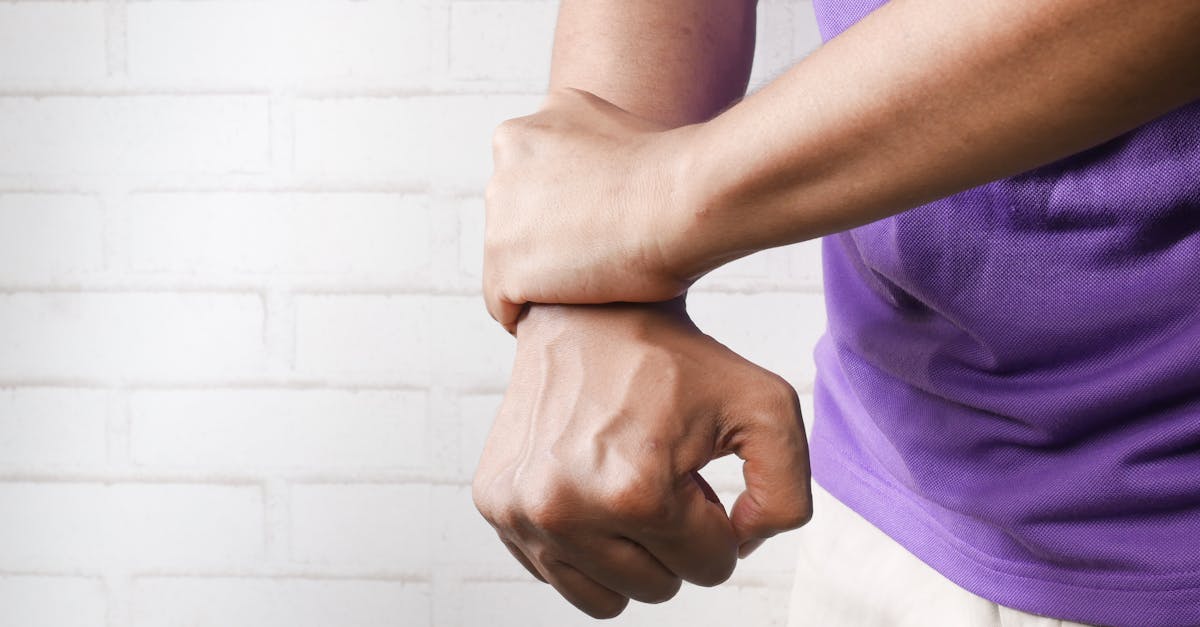
Wrist massage for pain works by increasing blood flow to the tendons, muscles, and connective tissue surrounding the wrist joint, which can help reduce stiffness, ease muscle tension, and support the body's natural recovery process. Massage techniques such as circular friction, compression, and forearm stripping target the flexor and extensor muscles that run from the hand through the wrist and into the forearm. Regular wrist massage is commonly used to manage discomfort from repetitive strain injuries, carpal tunnel syndrome, tendonitis, and general overuse. It is most effective when combined with rest, stretching, and — where appropriate — guidance from a physical therapist or physician.
You reach for your mouse, shift your grip on your phone, or lift a coffee mug — and there it is again. That familiar ache at the base of your wrist, or the dull throb that spreads into your palm and up toward your elbow. Wrist massage for pain is one of the most searched-for remedies among people who spend long hours typing, using handheld tools, or doing repetitive work with their hands. It is also one of the most misunderstood — most people know massage helps, but few understand why, or how to do it effectively.
This post covers the anatomy behind wrist pain, how massage addresses the underlying physical mechanisms, what techniques actually work, and how to build a simple daily routine that fits into a busy schedule.
Why Wrist Pain Develops
Wrist pain rarely comes from a single dramatic event. For most people, it accumulates — the result of repeated small stresses on tissue that never fully recovers between sessions.
The Anatomy of a Vulnerable Joint
The wrist is not a simple hinge. It is a complex arrangement of eight small carpal bones, held together by a web of ligaments and traversed by multiple tendons, nerves, and blood vessels. The flexor tendons that allow you to curl your fingers pass through a narrow channel called the carpal tunnel, along with the median nerve. The extensor tendons run across the back of the wrist. All of this structure sits in a relatively small space, with limited room for swelling or inflammation.
The muscles that control most wrist and finger movement actually originate in the forearm — the flexor digitorum superficialis, flexor carpi radialis, and extensor carpi ulnaris, among others. When these muscles become tight or fatigued, the tension they place on the wrist is continuous, even when your hands are at rest.
Common Causes of Chronic Wrist Pain
Understanding what is driving your pain helps determine which massage techniques will be most effective. The most common culprits include:
- Repetitive strain from typing, mouse use, or touchscreen work
- Carpal tunnel syndrome, caused by compression of the median nerve
- Tendonitis or tenosynovitis, involving inflammation of the tendon sheaths
- De Quervain's tenosynovitis, affecting the thumb-side tendons
- Overuse from manual trades — construction, barbering, cooking, or musical instrument playing
- Poor ergonomic positioning that keeps the wrist in sustained flexion or extension
Carpal tunnel syndrome affects a significant portion of working adults, with higher rates among people who perform repetitive hand and wrist motions for extended periods. Tendon-related conditions follow a similar pattern — prolonged low-grade stress without adequate recovery time.
Why the Forearm Is Often the Real Problem
One of the most overlooked factors in wrist pain is forearm tightness. The long flexor and extensor muscles of the forearm attach via tendons that cross the wrist. When these muscles are chronically tight — which is extremely common in desk workers and manual laborers alike — they create a constant compressive load on the wrist joint and the structures within it.
This is why effective wrist massage rarely stops at the wrist itself. Releasing tension in the forearm musculature is often what provides lasting relief rather than temporary comfort.
How Massage Relieves Wrist Pain
Massage works on wrist pain through several distinct physical mechanisms, each targeting a different layer of the problem.
Increasing Local Blood Flow
Tendons and ligaments have relatively poor blood supply compared to muscle tissue. This is one reason they heal slowly and accumulate tension so readily. Manual massage — or mechanical oscillation applied to the surrounding muscles — increases local circulation, delivering oxygen and nutrients to the area while helping flush out metabolic waste products that contribute to soreness.
Deep oscillation applied to the forearm and wrist area moves surrounding muscle tissue rhythmically, helping increase blood flow in areas that are stiff or overused. This is the core mechanism behind how therapeutic massagers support wrist and forearm recovery. For people dealing with symptoms consistent with carpal tunnel or tendonitis, improved circulation in the surrounding tissue can meaningfully reduce the background tension that aggravates those conditions.
Releasing Muscle Tension and Trigger Points
Sustained gripping, typing, and repetitive motion create myofascial trigger points — localized spots of muscle fiber dysfunction that refer pain to nearby areas. In the forearm, these trigger points frequently refer pain directly into the wrist, palm, and fingers, mimicking the symptoms of nerve compression.
Sustained pressure on these points — a technique called ischemic compression — encourages the muscle fibers to release. This is why a targeted deep-tissue approach to the forearm and the muscle bellies near the elbow often relieves wrist pain more effectively than massaging only the wrist itself.
Reducing Nerve Compression Indirectly
Massage cannot physically enlarge the carpal tunnel or decompress a nerve directly. What it can do is reduce the muscular tension and tissue swelling that contribute to compression. Research published in bodywork and movement therapy literature found that massage applied to the forearm and wrist area was associated with reduced pain and improved grip strength in people with carpal tunnel symptoms — though researchers noted the importance of treating massage as a complementary approach alongside medical management.
Reducing the muscle bulk and tension in the forearm lowers the compressive demand on the carpal tunnel, even if it does not eliminate the underlying anatomical narrowing.
Improving Range of Motion
Chronic wrist pain typically comes with reduced mobility. The joint stiffens as the body's protective response limits movement to avoid aggravating inflamed tissue. Massage — particularly effleurage (gliding strokes) and joint mobilization techniques — helps restore fluid movement to the joint and the surrounding connective tissue, making stretching more effective and daily tasks less painful.
Wrist Massage Techniques That Work
Not all massage is equally effective for wrist pain. The techniques below address the layered causes of wrist discomfort, from superficial tissue to deep muscle.
Forearm Stripping
This is arguably the most important technique for wrist pain relief. Using your thumb or the heel of your opposite hand, apply firm, gliding pressure along the length of the forearm — from just above the wrist to the elbow — along both the flexor (underside) and extensor (top) surfaces. Move slowly, about an inch every two to three seconds. This releases tension through the full length of the muscles that control wrist movement.
Cover the forearm in three to four parallel passes. Spend extra time on any area where you feel a taut band or a spot that refers sensation elsewhere in your hand.
Circular Friction at the Wrist
Using two or three fingertips, apply small circular pressure directly over the wrist — both on the palm side at the base of the hand and across the back of the wrist. Work around the joint line, not pressing hard into bone, but sinking into the soft tissue on either side. This technique increases local circulation and helps loosen the joint capsule and surrounding ligaments.
Spend roughly 60 to 90 seconds on each area, keeping pressure moderate. If a spot is acutely inflamed or swollen, skip it and work the tissue just proximal to it.
Thumb Web and Palm Compression
The thenar muscles (at the base of the thumb) and the hypothenar muscles (at the base of the little finger) are often neglected. Grip your hand with the opposite thumb in the palm and fingers across the back, then apply sustained compression across the muscle belly of the thenar eminence. Hold for 10 to 15 seconds, release, and move to adjacent areas.
Many people find immediate relief from repetitive strain symptoms with this technique because these intrinsic hand muscles work intensely during typing and tool use and rarely get direct attention.
Using a Therapeutic Massager on the Forearm
For people who struggle to apply consistent manual pressure — or who need to treat both wrists regularly — a professional-grade body massager can make forearm and wrist massage faster and more effective. When applied to the flexor and extensor muscle bellies of the forearm, oscillating motion increases local blood movement in surrounding muscle tissue, reaching deeper into muscle layers than most people can comfortably sustain by hand.
The MedMassager Body Massager is built for exactly this kind of application — delivering clinic-grade oscillation to tight forearm musculature with adjustable intensity, so you can work at a level that is effective without aggravating already-sensitive tissue. It is an FDA-registered Class I medical device designed for therapeutic use.
Building a Daily Wrist Massage Routine
Consistency matters far more than session length. A five-minute daily routine will outperform a 30-minute session done once a week. The following protocol is designed for people dealing with repetitive strain, mild carpal tunnel symptoms, or chronic forearm tightness from desk or manual work.
Morning Preparation (3–5 Minutes)
- Warm the tissue first. Before any massage, hold your hands under warm water for 60 seconds or wrap them briefly in a warm towel. Warm muscle is more pliable and responds better to pressure.
- Forearm effleurage. Using light gliding strokes with your opposite hand, sweep from wrist to elbow on both the top and underside of your forearm. Do this for 30 to 45 seconds to increase circulation before deeper work.
- Forearm stripping, flexors. Turn your palm up. Using your opposite thumb, apply firm gliding pressure from the wrist crease to the elbow along the center of your forearm. Three passes, slow and deliberate.
- Forearm stripping, extensors. Turn your palm down and repeat on the top of the forearm.
- Wrist circles. Finish with gentle active range-of-motion: rotate your wrist clockwise and counterclockwise 10 times in each direction to mobilize the carpal joints after the soft tissue work.
Evening Recovery (5–7 Minutes)
The evening session is your opportunity for deeper work, particularly if you have been at a keyboard or performing manual tasks all day.
- Apply forearm stripping as described above, spending extra time on any areas that feel tight or tender.
- Use circular friction at the wrist — both dorsal and palmar surfaces — for 60 to 90 seconds each.
- If using a body massager, apply it to the flexor muscle belly (the thick part of the forearm near the elbow on the underside) for two to three minutes per arm at a comfortable intensity setting.
- Finish with a forearm and wrist stretch: extend your arm in front of you, palm up, and gently pull the fingers downward with your opposite hand. Hold 20 seconds. Repeat with the palm facing down.
Frequency and Progression
Start with once daily and assess your response after one week. Most people with repetitive strain pain notice measurable improvement — reduced morning stiffness, improved grip comfort, less aching at the end of the workday — within two to three weeks of consistent daily work. If pain is worsening rather than improving, discontinue massage and consult a physician or physical therapist.
Special Considerations and When to See a Professional
Carpal Tunnel Syndrome
If your symptoms include nighttime tingling, numbness in the thumb, index, or middle fingers, or weakness in grip, carpal tunnel syndrome is a likely contributor. Massage can help manage the surrounding muscle tension that aggravates median nerve compression, but it is not a substitute for medical evaluation. A physician may recommend nerve conduction studies, splinting, corticosteroid injections, or in some cases surgical decompression — decisions that require clinical assessment.
The MedMassager Body Massager is built for people managing conditions like tendonitis and repetitive strain, where oscillating motion increases local blood movement in surrounding muscle tissue. People with confirmed carpal tunnel syndrome should clear any new massage protocol with their treating provider before beginning.
Acute Inflammation
Massage is contraindicated over acutely inflamed tissue. If your wrist is swollen, hot to the touch, or severely painful at rest, massage will worsen the inflammation rather than help it. In the acute phase — typically the first 48 to 72 hours after a flare — ice, rest, and elevation are the appropriate first response. Introduce massage only after the acute phase has passed.
Rheumatoid Arthritis and Inflammatory Conditions
Wrist pain from rheumatoid arthritis, gout, or other inflammatory joint conditions has a different origin than mechanical overuse pain. These conditions involve immune-mediated joint inflammation, and massage during a flare can cause significant discomfort. If you have an inflammatory arthritis diagnosis, work with a rheumatologist and ideally a physical therapist before adding massage to your routine.
Populations Who Benefit Most
Based on the underlying mechanisms, wrist massage is most effective and best supported for:
- Office workers and remote workers with high keyboard and mouse use
- Tradespeople — electricians, plumbers, carpenters — with sustained grip demands
- Musicians, particularly guitarists, pianists, and string players
- Healthcare workers performing manual procedures
- Gamers and esports players with repetitive controller or mouse use
Frequently Asked Questions
How often should I massage my wrist for pain relief?
Daily massage of five to ten minutes produces better results than occasional longer sessions for most types of repetitive strain and overuse wrist pain. Consistency matters more than duration because the underlying muscle tension that drives wrist discomfort tends to rebuild quickly with continued repetitive activity. Most people see meaningful improvement within two to three weeks of daily practice. If pain does not improve or worsens, consult a physician or physical therapist.
Can massage help carpal tunnel syndrome?
Massage can help manage the forearm and wrist muscle tension that contributes to the compression associated with carpal tunnel syndrome, but it cannot physically enlarge the carpal tunnel or reverse anatomical changes. Research published in bodywork and movement therapy literature suggests massage may reduce pain and improve grip strength in people with carpal tunnel symptoms. It is best used as a complementary strategy alongside medical management rather than as a standalone treatment.
Where exactly should I massage for wrist pain?
The most effective areas to massage for wrist pain are not just the wrist itself — the forearm muscles are often the primary source of tension. Focus on the flexor muscle belly on the underside of the forearm, the extensor muscles across the top, the thenar muscles at the base of the thumb, and the soft tissue immediately surrounding the wrist joint. Working the full flexor-to-wrist chain typically produces more lasting relief than massaging the wrist in isolation.
Is it safe to massage a sore or inflamed wrist?
It depends on the type of soreness. If the wrist is sore from muscle fatigue and repetitive use, gentle to moderate massage is generally appropriate. If the wrist is acutely inflamed — swollen, hot, or severely painful at rest — massage should be avoided until the acute phase passes, typically 48 to 72 hours. Massage over acutely inflamed tissue can worsen inflammation rather than reduce it.
Does a body massager help with wrist and forearm pain?
A body massager can be effective for wrist and forearm pain when applied to the forearm muscle bellies rather than directly over the wrist joint. Oscillating motion applied to the flexor and extensor muscles of the forearm increases local blood flow in the muscle tissue that generates most of the tension contributing to wrist pain. This makes a therapeutic body massager a practical tool for people who need to treat both arms regularly or who have difficulty applying consistent manual pressure on their own.
What stretches should I combine with wrist massage?
The most effective stretches to combine with wrist massage are the wrist flexor stretch (arm extended, palm up, gently pulling fingers downward), the wrist extensor stretch (arm extended, palm down, gently pulling fingers toward you), and the forearm pronation stretch (rotating the forearm outward against gentle resistance). Hold each stretch for 20 to 30 seconds after massage, when the tissue is already warm and pliable. Stretching after massage is significantly more effective than stretching cold tissue.
Why does my wrist hurt more after typing even though I massage it regularly?
If massage provides temporary relief but pain returns quickly after keyboard use, the problem is likely ergonomic as well as muscular. Sustained wrist extension or ulnar deviation during typing places continuous load on the flexor tendons and median nerve, and massage alone cannot counteract that stress if the positioning continues throughout the workday. Reviewing keyboard height, wrist rest positioning, and mouse grip — ideally with an ergonomics assessment — is an important complement to any massage or recovery routine.
The Bottom Line on Wrist Massage for Pain
Wrist massage for pain is one of the most accessible and effective self-care strategies available to people dealing with repetitive strain, tendonitis, or the early stages of carpal tunnel discomfort. The key is targeting the right tissue — not just the wrist, but the full forearm musculature that drives most of the tension — and doing it consistently enough to stay ahead of the daily accumulation of stress.
A daily five-to-ten-minute routine covering forearm stripping, wrist friction, and light stretching will outperform any single intense session. For people who need to treat both arms regularly or want more consistent pressure than manual massage provides, a therapeutic body massager applied to the forearm is a practical and effective tool.
If your symptoms include numbness, nighttime tingling, or significant grip weakness, those are signals to see a physician before relying on self-massage alone. For anyone managing wrist pain alongside a broader upper body recovery routine, exploring MedMassager's full range of therapeutic massagers may offer additional options for neck, shoulder, and upper back tension that often travels hand-in-hand with wrist overuse.
This content is for informational purposes only and is not intended as medical advice, diagnosis, or treatment. Always consult a qualified healthcare professional before starting any new treatment or therapy. MedMassager products are FDA-registered Class I medical devices.


