
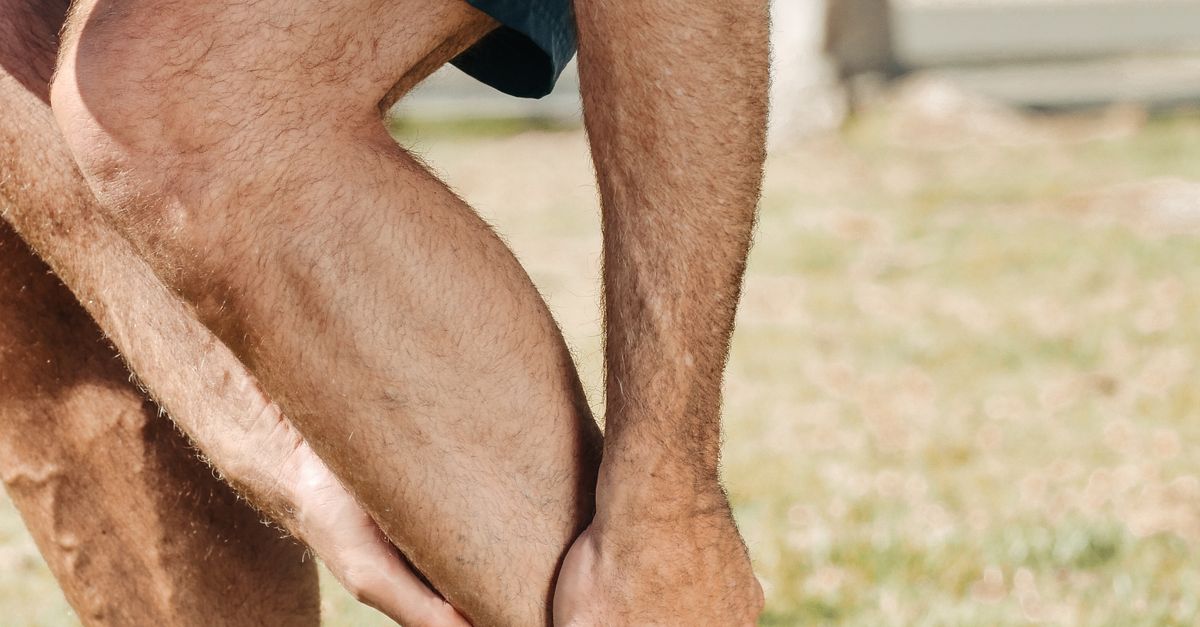
Tibialis anterior pain is an ache or tenderness along the front of the shin, just to the outside of the shinbone, where the tibialis anterior muscle lifts the foot and controls each step. It usually comes from overuse, such as walking downhill, a sudden increase in walking or hiking, or a change in footwear, and it is closely related to anterior shin splints. Relative rest, gentle stretching, gradual strengthening, and calf massage are the usual first steps for mild overuse pain. Foot drop, numbness, or severe swelling in the shin are red flags that need urgent medical care.
You add a few extra miles to your daily walk, or spend a weekend on steep trails, and the next morning the front of your shin aches every time you lift your foot. That is a classic picture of tibialis anterior pain, and it can make an ordinary walk to the mailbox feel like work. The tibialis anterior is the long muscle running down the outer front of your shin, and it works on every step you take.
When it gets overloaded, the soreness can range from a dull ache to a sharp, tender line that flares on stairs or slopes. This guide is for walkers, people returning to activity after time off, anyone who just started a job on their feet, and anyone trying to decide whether the front of the leg needs rest or a doctor. Below, you'll find how the muscle works, what overloads it, how it relates to shin splints, warning signs that need urgent care, safe massage options, and stretches that help.
What the Tibialis Anterior Muscle Does
The tibialis anterior is easy to find. Pull your toes up toward your shin and you'll feel a firm band of muscle tighten just outside the sharp front edge of your shinbone.
Where It Sits
The muscle starts on the upper outer surface of the tibia (shinbone) and the interosseous membrane, a sheet of connective tissue between the tibia and fibula. It runs down the front of the leg and becomes a tendon that crosses the front of the ankle. That tendon attaches on the inner side of the midfoot, at the medial cuneiform bone and the base of the first metatarsal, the bone behind your big toe.
The tibialis anterior lives in the anterior compartment of the lower leg. This is a tight space wrapped in tough fascia, shared with the toe-lifting muscles, the deep fibular (peroneal) nerve, and the anterior tibial artery. Because that compartment has little room to expand, swelling inside it matters, which comes up again in the red flags section.
Its Job on Every Step
The muscle has a few core actions:
- Dorsiflexion: lifting the front of the foot toward the shin
- Inversion: tilting the sole of the foot inward
- Toe clearance: keeping your toes from catching as your leg swings forward
- Controlled lowering: easing the foot down to the ground after your heel lands
That last action is the one that gets overloaded. When your heel strikes, the tibialis anterior lengthens while it contracts, acting like a brake so your forefoot doesn't slap the ground. This lengthening contraction is called an eccentric contraction, and it is more demanding on muscle tissue than simply lifting the foot.
What Causes Tibialis Anterior Pain?
Pain in the front of the shin almost always traces back to a load the muscle wasn't ready for. The tissue adapts well to gradual change. It handles sudden change poorly.
Walking Downhill
Descending a slope forces the tibialis anterior to brake harder and longer on every step. Your foot has farther to drop, so the eccentric work increases sharply. A long downhill hike, a steep neighborhood route, or repeated trips down stadium steps can leave the front of the shin sore for days afterward, even if the uphill portion felt fine.
New or Increased Activity
The muscle also complains when the total amount of walking jumps quickly. Typical triggers include:
- Starting a walking program after months of low activity
- Adding distance or speed faster than the leg can adapt
- A new job that keeps you walking on concrete or hard floors
- Switching from flat routes to hills or trails
- Brisk walking with a long stride, which increases heel strike force
Footwear, Terrain, and Tight Calves
Shoes laced too tightly over the top of the foot can press on the tibialis anterior tendon where it crosses the ankle. Very stiff soles or a sudden switch to minimal footwear changes how the foot lands. Uneven ground adds extra stabilizing work.
Tight calves play a quieter role. The calf muscles on the back of the leg oppose the tibialis anterior, so when they are stiff, the front of the shin has to pull against more resistance with every step. That is one reason calf care shows up throughout this guide.
Is It Shin Splints or Something Else?
"Shin splints" is a loose label for exercise-related pain along the shinbone. Clinicians often separate two versions. Anterior shin splints involve the front and outer part of the shin, where the tibialis anterior sits. Medial tibial stress syndrome involves the inner edge of the shinbone and is the version the term usually refers to.
Tibialis anterior overuse is essentially the anterior form. For a closer look at the broader condition, see this guide to shin splints massage and recovery.
Other Causes of Front Shin Pain
Several conditions can feel similar but need different handling:
- Tibialis anterior tendonitis: pain and sometimes a creaking feeling at the front of the ankle, where the tendon crosses the joint, rather than in the muscle belly
- Tibial stress fracture: a small crack in the bone, usually with pain you can pin to one spot on the bone and pain that lingers at rest or at night
- Chronic exertional compartment syndrome: tightness, aching, or burning that builds during exercise at a predictable point and fades with rest
- Nerve irritation: tingling, numbness, or weakness rather than simple soreness, which points toward the deep fibular nerve or the lower back
Muscle soreness tends to feel diffuse along the muscle and eases as you warm up. Bone pain tends to be focused and gets worse the more you load it. If you can't tell which one you have, a clinician can examine the leg and order imaging if needed.
Red Flags That Need Urgent Care
Most front shin soreness is a simple overuse problem. A few signs are not, and they should never be massaged, stretched, or walked off. Seek urgent medical care if you notice any of the following:
- Foot drop: you can't lift the front of your foot, your toes catch on the ground, or your foot slaps down when you walk
- Numbness or tingling on the top of the foot or in the web space between the big toe and second toe
- Severe swelling in the shin, or a front of the leg that feels hard, tense, or tight like a drum
- Pain far out of proportion to the activity, especially pain that worsens when the toes are gently pointed downward
- Shin pain after a fall, twist, or direct blow
- Redness, warmth, or fever along with leg pain
Severe swelling with intense pain in the anterior compartment can signal acute compartment syndrome, a medical emergency in which pressure cuts off blood flow to the muscles and nerves. Foot drop can come from compression of the fibular nerve near the knee or from a nerve root problem in the lower spine. Both need prompt evaluation, not home care.
Where Massage Fits Without Touching the Shin
Massage can support a sore lower leg, but where you apply it matters. The goal is to keep blood moving through the lower leg and loosen the calves, while leaving the irritated front of the shin alone.
Why the Calves, Not the Shin
The front of the shin has very little padding. The tibia sits right under the skin, and the tibialis anterior lies alongside it. There are a few reasons to keep a powered device off that area:
- Direct pressure can aggravate tissue that is already irritated
- If an undiagnosed stress fracture is present, loading the bone is the last thing it needs
- The anterior compartment has little room for swelling, so extra irritation there matters more than it would elsewhere
The calves are a different story. The gastrocnemius and soleus are large, well-cushioned muscles, and loosening them reduces the resistance the tibialis anterior pulls against on every step. Calf muscle activity also acts as a pump, pushing blood back up the leg. For hands-on approaches, this guide to calf massage techniques walks through manual methods.
Vibration vs. Oscillation
Foot massagers are often sold as vibration massagers. MedMassager uses oscillating technology to deliver deeper, more controlled vibration than conventional massagers. Both the Foot Massager and the Body Massager oscillate in a circular motion, producing a controlled, rhythmic movement that reaches into muscle tissue rather than just buzzing at the surface.
Body Massager on the Calves
The Body Massager is a handheld unit with slip-resistant handles and a large, soft, cushioned contouring pad that forms to the body. For lower leg soreness, place the pad on the back of the calf only, never on the front of the shin. You can use it seated with the leg supported or lying down.
For a calf that tightens alongside a tibialis anterior strain, the circular oscillating action works through the muscle. Repeated rhythmic movement helps move blood through the muscle tissue. A reasonable starting point is 5 to 10 minutes per calf at a low setting. You can see the options in the MedMassager Body Massager collection.
Foot Massager, Used Seated
The Foot Massager has an open flat platform and adjustable intensity settings, and it is used seated only. Sit upright in a sturdy chair with your feet flat on the platform. The motion moves the feet and ankles without asking the sore tibialis anterior to brake against your body weight.
The circular oscillating action creates continuous, repetitive movement in the foot and calf, which supports circulation during use. Calf activation pushes blood upward, supporting blood flow around strained areas. Start with about 10 minutes at the lowest setting, once or twice a day, and stop if the front of the shin feels worse. Browse the therapeutic foot massagers to compare models; each is an FDA-registered Class I medical device.
Massage is a complement to rest and gradual reloading, not a replacement for evaluation. If you have a diagnosed injury or any red flag above, ask your own care team before using any massager on the leg.
Stretches for Tibialis Anterior Pain
Once red flags are ruled out and the sharpest soreness has eased, gentle stretching and gradual strengthening help the muscle tolerate walking again. Stretch to mild tension, never to pain.
Gentle Stretches
- Seated foot point: Sit in a chair and cross one ankle over the opposite knee. With your hand on the top of the foot, gently draw the toes and foot downward until you feel a stretch along the front of the shin. Hold 20 to 30 seconds and repeat 2 to 3 times per side.
- Standing toe-drag stretch: Hold a counter for balance. Place the tops of the toes of one foot on the floor slightly behind you, then gently bend the front knee so the stretch moves along the top of the foot and shin. Hold 20 to 30 seconds.
- Kneeling shin stretch: Kneel on a padded surface with the tops of your feet flat and toes pointing back. Sit back gently toward your heels. Skip this one if your knees or ankles object.
- Wall calf stretch: Place your hands on a wall, step one foot back, and press the heel down with the knee straight. Hold 30 seconds, then repeat with the back knee slightly bent to reach the soleus.
Strengthening Once Pain Settles
Stretching alone doesn't build the capacity the muscle needs for hills and longer walks. When everyday walking feels comfortable, add light strengthening a few times a week. Keep each exercise pain-free and stop at fatigue.
- Seated ankle lifts against a light resistance band looped over the top of the foot
- Slow lowering: lift the forefoot, then lower it over a count of three to train the braking action
- Short bouts of heel walking, about 20 steps, on a flat surface beside a counter or wall for balance
Easing Back Into Walking
Return on flat ground first. Increase walking time gradually over a couple of weeks rather than jumping back to your old distance. Add gentle slopes before steep descents, shorten your stride on downhills, and check that your laces aren't pressing on the front of the ankle.
If pain keeps returning despite a gradual approach, a physical therapist can assess your gait, footwear, and strength. Persistent pain that pins to one spot on the bone deserves a medical exam to rule out a stress fracture.
Frequently Asked Questions
What does tibialis anterior pain feel like?
It usually feels like an ache or tender band just outside the shinbone on the front of the leg. The pain tends to flare when you lift your toes, walk downhill, or climb stairs. Tightness or tenderness may also show up where the tendon crosses the front of the ankle.
How long does a sore tibialis anterior take to heal?
Mild overuse soreness typically improves over several days to a few weeks once the load is reduced. Recovery takes longer if you keep walking hills or long distances before the muscle settles. Pain that lasts beyond a few weeks, or that worsens at rest, should be checked by a clinician.
Why does the front of my shin hurt when walking downhill?
Walking downhill makes the tibialis anterior work as a brake, lowering your foot to the ground with a lengthening contraction on every step. This eccentric work is more demanding than lifting the foot. A long or steep descent can overload the muscle even when uphill and flat walking felt easy.
Is front shin pain the same as shin splints?
Front shin pain from the tibialis anterior is often called anterior shin splints. The more familiar form of shin splints, medial tibial stress syndrome, affects the inner edge of the shinbone instead. Stress fractures and compartment syndrome can also cause shin pain, so persistent or focused pain deserves an exam.
Can you massage the tibialis anterior?
Light hand pressure on the muscle beside the shinbone can feel good for mild soreness. Avoid pressing on the bone itself or on any area that is swollen or tender to a single point. Powered massagers belong on the calves rather than the front of the shin.
Can tight calves cause pain in the front of the shin?
Yes, tight calves can contribute to front shin pain. The calf muscles oppose the tibialis anterior, so stiffness in the back of the leg means the front of the shin pulls against more resistance with each step. Regular calf stretching and loosening can reduce that strain.
When should I see a doctor for shin pain?
Seek urgent care for foot drop, numbness on the top of the foot, severe swelling, or a shin that feels hard and tense. See a doctor promptly if pain follows a fall or impact, pins to one spot on the bone, or persists at rest or at night. Ongoing pain that doesn't improve with a few weeks of reduced activity also warrants an evaluation.
The Bottom Line
Tibialis anterior pain is usually an overuse problem caused by downhill walking, a sudden jump in activity, or footwear changes that overload the muscle lifting your foot. Relative rest, gentle stretching, gradual strengthening, and a slow return to hills help most mild cases settle.
Keep any massager off the front of the shin and focus on the calves, and treat foot drop, numbness, or severe swelling as reasons for urgent care. The circular oscillating action creates continuous, repetitive movement in the foot and calf, which supports circulation during use. To add seated circulation support to your routine, explore the MedMassager Foot Massager for seated lower-leg use or the Body Massager with a cushioned pad for tight calves.
This content is for informational purposes only and is not intended as medical advice, diagnosis, or treatment. Always consult a qualified healthcare professional before starting any new treatment or therapy. MedMassager products are FDA-registered Class I medical devices.


