
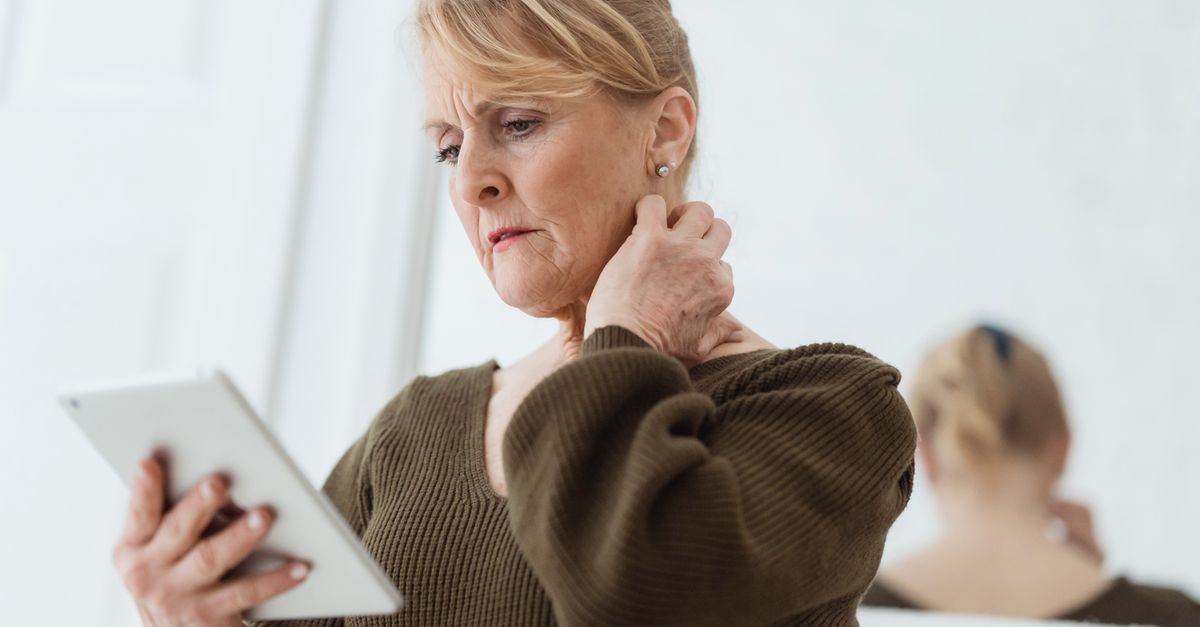
The sternocleidomastoid (SCM) muscle connects directly to anxiety through a well-documented breathing mechanism: when anxiety triggers chest-dominant breathing, the SCM compensates as an accessory respiratory muscle, contracting repeatedly to lift the ribcage with each breath. Over time, this pattern creates chronic tension, soreness, and tightness along the sides of the neck. The connection runs in both directions — anxiety tightens the SCM through stress breathing and jaw clenching, and a persistently tight SCM can amplify sensations that feed back into anxious awareness. Addressing the muscular component through diaphragmatic breathing retraining and targeted SCM release does not treat anxiety itself, but it can meaningfully reduce the physical tension that accompanies it.
If you've noticed that your neck tightens when you're stressed — or that a stressful period leaves you with a sore, ropy tension running up the side of your neck — you're not imagining it. The sternocleidomastoid anxiety connection is one of the more overlooked reasons people develop persistent neck pain during high-stress periods, and it has a specific physiological explanation that goes beyond "stress causes tension." The mechanism runs through your breathing pattern, your jaw, and your nervous system in ways that most people have never been told. This post explains exactly why anxiety recruits the SCM, what that does to the muscle over time, and how a two-part routine combining diaphragmatic breathing with gentle SCM release can help you address the muscular side of what you're feeling.
Why Anxiety Puts the SCM Under Chronic Stress
The sternocleidomastoid is a long, paired muscle running diagonally from behind each ear down to the collarbone and sternum. Most people think of it as a neck-rotation muscle — and it is — but it has a second role that becomes critically important under stress: it functions as an accessory breathing muscle.
The Chest-Breathing Problem
Under normal resting conditions, the diaphragm handles the work of breathing almost entirely on its own. The diaphragm contracts downward, creating negative pressure that draws air into the lungs, and the belly rises slightly with each inhale. The neck stays relatively relaxed throughout.
Anxiety disrupts this default. When the nervous system shifts into a stress state, breathing tends to migrate upward — becoming shallower, faster, and chest-dominant. Instead of the diaphragm doing the work, the ribcage lifts to draw air in. Lifting the ribcage requires accessory muscles, and the SCM is one of the primary ones recruited for that job.
Every chest-dominant breath contracts the SCM slightly. Breathe that way for hours — or days during a prolonged anxious period — and the muscle accumulates fatigue and tension the same way any overused muscle does.
Jaw Clenching Compounds the Problem
Anxiety also drives jaw clenching and teeth-grinding, particularly during sleep. The jaw and neck share close anatomical relationships: the digastric and other suprahyoid muscles attach near the SCM's upper region, and chronic jaw tension creates a downward pull on structures the SCM stabilizes. People who clench often report that their neck soreness extends from the jaw angle down through the SCM's path — because it does.
Forward head posture, another stress-related habit, adds a third layer. When the head drifts forward over a keyboard or phone, the SCM has to work harder to stabilize the head's weight against gravity. Research cited by the National Institutes of Health notes that for every inch the head moves forward from its neutral position, the effective load on neck muscles roughly doubles. For someone already using their SCM as a breathing muscle, this additional stabilization demand can push the muscle past its recovery threshold.
The Feedback Loop
The relationship between the SCM and anxiety doesn't run in just one direction. A chronically tight SCM contains sensory receptors that feed information back to the brain. Persistent tension in the neck region can generate referred sensations — including headaches, a feeling of pressure, and throat tightness — that some people misinterpret as symptoms of anxiety itself.
This misinterpretation can increase anxiety, which deepens chest breathing, which further tightens the SCM. Understanding this cycle is the first step toward interrupting it. The sequence looks like this:
- Anxiety activates the sympathetic nervous system
- Sympathetic activation shifts breathing toward the chest
- Chest breathing recruits the SCM as an accessory respiratory muscle
- Repeated recruitment creates muscular fatigue and tension
- Jaw clenching and forward head posture compound the load
- Referred sensations from SCM tension feed back into anxious awareness
How Diaphragmatic Breathing Releases SCM Tension
The most direct intervention for stress-driven SCM tightness is not stretching the neck — it's changing the breathing pattern that is overloading it. When the diaphragm resumes its primary role, the SCM is progressively unloaded from its accessory breathing function and can begin to recover.
What Diaphragmatic Breathing Actually Does
Diaphragmatic breathing — sometimes called belly breathing or abdominal breathing — shifts the primary work of inhalation back to the diaphragm, where it belongs at rest. The stomach rises on the inhale as the diaphragm presses downward, the ribcage moves minimally, and the neck muscles are not recruited as lifters. The parasympathetic nervous system is activated in the process, which reduces overall sympathetic tone and creates a neurological signal that lowers the body's stress state.
Research published through the NIH has documented that slow, diaphragmatic breathing techniques measurably reduce heart rate variability markers associated with sympathetic arousal. The same breathing shift that unloads the SCM also communicates to the nervous system that the perceived threat has passed — addressing both the muscular and neurological components at the same time.
Why Most People Default Back to Chest Breathing
The challenge is that chest breathing is self-reinforcing under anxiety. When people feel anxious, they often try to take a "big deep breath" — which they accomplish by lifting the chest and expanding the upper ribcage. This activates the SCM rather than relieving it. True diaphragmatic breathing requires conscious practice before it becomes the automatic response under stress, which is why brief daily practice sessions are more effective than trying to use the technique only at peak anxiety moments.
The Mechanical Link to SCM Relief
When diaphragmatic breathing is practiced consistently, a measurable sequence occurs in the SCM:
- The muscle is no longer being recruited with every breath
- Accumulated metabolic waste products from repeated contraction begin to clear through improved circulation
- Residual tension decreases as the muscle's workload drops below its fatigue threshold
- Referred sensations — headache, throat pressure, shoulder tension — begin to diminish as the root mechanical cause is addressed
This process takes days to weeks of consistent breathing retraining, not a single session. Diaphragmatic breathing is a skill with a learning curve, and its benefits for SCM tension accumulate gradually.
A Two-Part Routine for SCM Release
Breathing retraining and direct SCM release work best together. The following routine addresses both the cause (breathing pattern) and the accumulated muscular tension that has already built up in the SCM. It is not a treatment for anxiety — it specifically targets the muscular component of what anxiety does to the neck.
Part One: Diaphragmatic Breathing Practice
Perform this practice once or twice daily, preferably in the morning and before bed. The goal is consistent repetition, not duration.
- Position: Lie on your back with knees bent, or sit upright with your back supported. Place one hand on your chest and one on your belly.
- Inhale: Breathe in slowly through your nose for a count of 4. The hand on your belly should rise; the hand on your chest should remain relatively still.
- Hold: Pause briefly at the top of the inhale for 1-2 counts.
- Exhale: Breathe out through your mouth (or nose) for a count of 6-8, letting the belly fall. The longer exhale activates the parasympathetic response more strongly than the inhale.
- Repeat: Complete 8-10 breath cycles. Total time: approximately 3-5 minutes.
If you notice your chest rising first or your neck tightening during the inhale, reduce the breath depth and focus on the belly movement. Forcing a large breath tends to reactivate chest-breathing mechanics.
Part Two: Gentle SCM Release Techniques
After completing the breathing sequence, the muscle is in a more relaxed state and receptive to manual work. These techniques address the tension that has already accumulated.
Self-massage: Using your fingertips, gently locate the SCM by turning your head slightly to the opposite side (this makes the muscle more prominent). With light pressure, use small circular movements along the length of the muscle from below the ear down to the collarbone. Avoid pressing directly on the carotid artery (the pulse on either side of the windpipe). Spend 60-90 seconds per side.
Gentle SCM stretch: Sit upright, tilt your head to the right, then rotate your chin slightly upward and to the right to lengthen the left SCM. Hold 20-30 seconds. Repeat on both sides. This is a passive stretch — do not pull the head with your hand or force range of motion.
Heat application: Applying gentle heat to the neck for 10-15 minutes after the breathing and self-massage sequence helps relax residual muscle tension and supports local circulation. MedMassager's Neck Massager with built-in heat combines targeted massage with thermotherapy — the dual-direction massage nodes mimic hand kneading on the neck and trapezius, helping loosen tissue that tightens from stress and poor posture, while the built-in heat aids muscle relaxation. It fits naturally into this routine as the final recovery step.
Frequency and Realistic Expectations
Practice both parts of this routine daily for at least two weeks before evaluating results. Acute neck tension from a single stressful event often responds within a few sessions. Chronic SCM tension that has built up over months of stress-driven chest breathing typically requires consistent work over several weeks.
If neck pain is severe, accompanied by numbness or radiating symptoms, or fails to respond to conservative measures, consult a physician or physical therapist before continuing.
When to Seek Professional Support
This routine addresses the muscular component of the sternocleidomastoid anxiety connection — it does not address anxiety itself. That distinction matters. Persistent or worsening anxiety is a medical concern that warrants evaluation by a qualified healthcare professional, including therapists, psychologists, and physicians specializing in anxiety disorders.
Signs That Warrant Professional Evaluation
- Anxiety symptoms that are significantly affecting daily functioning, sleep, or relationships
- Neck pain accompanied by radiating pain, numbness, or tingling into the arms or hands
- Dizziness, visual changes, or ringing in the ears alongside neck tightness (these can sometimes be referred symptoms from the SCM but should be evaluated)
- Neck stiffness following an injury rather than stress
- Symptoms that are worsening despite consistent conservative self-care
The Role of Bodywork Professionals
Licensed massage therapists and physical therapists who specialize in cervical spine issues can work directly with the SCM and surrounding structures more deeply than self-care allows. Physical therapists can also evaluate whether breathing pattern dysfunction is contributing to a broader postural issue — an important consideration for people whose SCM tension seems disproportionate to their anxiety level.
Cognitive-behavioral therapy (CBT) and somatic-based therapies address the psychological drivers of the stress response that ultimately trigger the breathing pattern and muscle tension in the first place. For daily maintenance between professional sessions, a therapeutic-grade massager built for neck use — like the MedMassager Neck Massager — can help manage the muscular component consistently at home. Rotating massage nodes combined with built-in heat warm and loosen tight muscles, supporting blood flow through the neck between professional appointments.
Frequently Asked Questions
Why does anxiety cause neck tightness specifically in the SCM?
Anxiety triggers chest-dominant breathing, which recruits the sternocleidomastoid as an accessory muscle to help lift the ribcage with each breath. When this pattern is sustained over hours or days of heightened stress, the SCM accumulates tension from repeated low-level contraction. Jaw clenching and forward head posture — both common during anxiety — add further load to the same muscle.
Can a tight SCM cause symptoms that feel like anxiety?
A chronically tight SCM can generate referred sensations including headaches at the base of the skull, a sense of pressure or fullness in the head, and throat tightness — all of which overlap with common physical symptoms of anxiety. This overlap can create a feedback loop where SCM-generated discomfort amplifies anxious awareness, which deepens the breathing pattern that tightens the SCM further. Addressing the muscular tension does not eliminate anxiety, but it can reduce the physical sensations that contribute to the cycle.
How long does it take for diaphragmatic breathing to reduce SCM tension?
Most people notice some reduction in acute neck tension within the first several sessions of consistent diaphragmatic breathing practice. Chronic SCM tension that has developed over a prolonged stress period typically requires two to four weeks of daily practice before meaningful improvement accumulates. Diaphragmatic breathing is a learned skill — brief daily practice sessions are more effective than occasional use during peak stress moments.
Is it safe to massage the SCM yourself?
Gentle self-massage along the SCM is generally safe when done with light pressure and proper technique. The key precaution is to avoid pressing directly on the carotid artery, which runs alongside the SCM — if you feel a pulse under your fingers, move slightly away from that point. People with a history of cardiovascular disease, carotid artery disease, or recent neck injury should consult a healthcare provider before performing any neck self-massage.
Does heat help a tight SCM from stress?
Heat increases local blood flow to muscle tissue and helps reduce the stiffness associated with chronic muscular tension, making it a useful complement to stretching and breathing exercises. Applied after diaphragmatic breathing and gentle massage, heat helps relax residual tension in the SCM and surrounding neck muscles. A heat application of 10-15 minutes is generally sufficient for this purpose.
Should I see a doctor about neck tightness from anxiety?
Neck tightness that is mild and clearly linked to periods of stress can often be managed with breathing retraining, gentle stretching, and self-massage. You should consult a doctor or physical therapist if the pain is severe, persistent, or accompanied by numbness, tingling, radiating symptoms, dizziness, or any neurological changes. Anxiety that is significantly affecting daily life warrants separate evaluation by a qualified mental health professional, independent of the muscular component.
What is the difference between SCM tightness from anxiety and a pulled neck muscle?
SCM tightness from anxiety tends to develop gradually during periods of elevated stress, is typically bilateral (both sides), and correlates with breathing pattern changes and jaw tension rather than a specific physical event. A pulled or strained neck muscle usually has an identifiable onset — a sudden movement, impact, or sleeping position — and is more likely to be unilateral with acute localized pain. If you cannot identify a clear mechanical cause for neck pain that appeared suddenly, evaluation by a healthcare provider is appropriate to rule out other causes.
The Bottom Line
The sternocleidomastoid anxiety connection is real, specific, and traceable to a clear mechanism: stress-driven chest breathing recruits the SCM far beyond its normal workload, and jaw clenching and forward head posture compound that demand over time. The result is a muscle that is chronically fatigued, tender, and capable of generating referred sensations that can deepen the very anxiety driving the cycle.
A two-part routine combining diaphragmatic breathing retraining with gentle SCM release addresses the muscular side of this relationship directly. Consistent daily practice over two to four weeks is typically required to see meaningful change in chronic tension patterns. This approach is not a treatment for anxiety — that warrants professional support — but it can meaningfully reduce the physical toll anxiety takes on the neck.
For daily maintenance and recovery support, explore MedMassager's Neck Massager, designed specifically for neck and upper trapezius tension with dual-direction massage nodes and built-in heat. If you're managing broader muscle tension across the neck, shoulders, or back alongside stress, the full range of MedMassager therapeutic massagers includes options built for clinical-grade relief at home.
This content is for informational purposes only and is not intended as medical advice, diagnosis, or treatment. Always consult a qualified healthcare professional before starting any new treatment or therapy. MedMassager products are FDA-registered Class I medical devices.


