
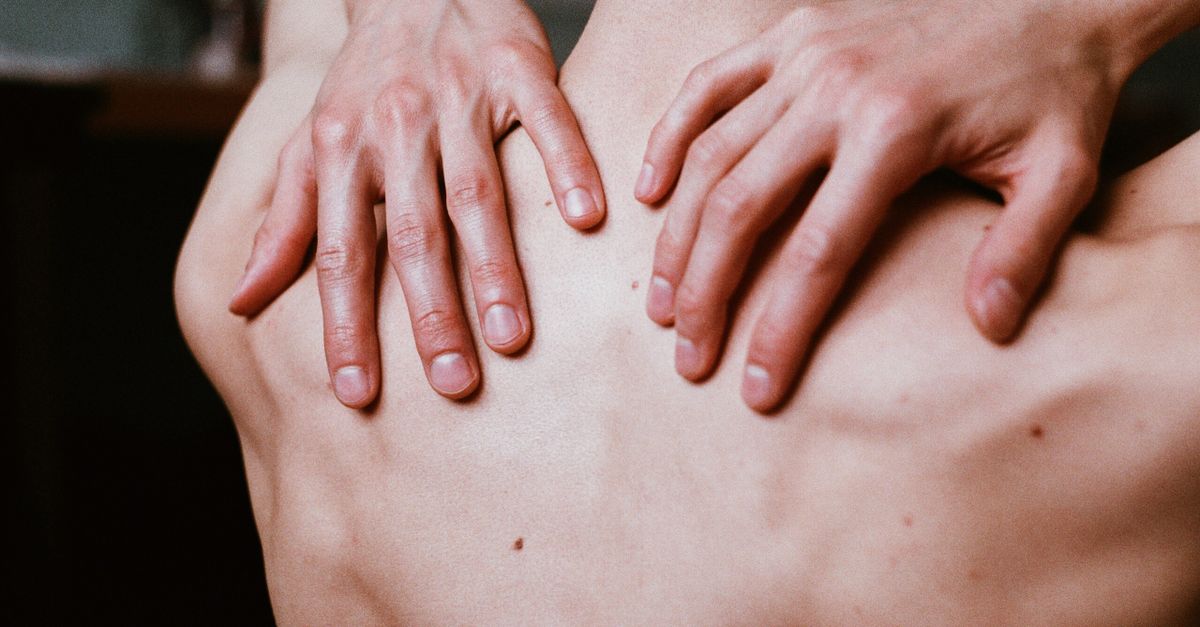
Serratus posterior superior pain is a deep ache under the top of the shoulder blade, caused by strain or trigger points in a thin muscle that runs from the base of the neck and upper spine to the second through fifth ribs. Desk posture, prolonged coughing spells, and carrying heavy bags on one shoulder are frequent triggers. The ache can spread over the back of the shoulder and down the back of the arm toward the little finger. Gentle stretches, posture changes, and massage to the upper back are reasonable first steps, but upper back pain that comes with chest pain, shortness of breath, or fever needs prompt medical care.
If you have a nagging ache tucked under the top of your shoulder blade that no amount of shoulder rolling seems to reach, serratus posterior superior pain is one likely explanation. This small, thin muscle sits beneath the shoulder blade, which is exactly why it is so hard to stretch or rub out on your own. You press where it hurts and find only bone.
This guide is for desk workers who feel the ache build through the afternoon, anyone still coughing their way through the tail end of a chest cold, and anyone who carries a heavy bag on the same shoulder every day. It is also for anyone trying to figure out whether their upper back pain is a muscle problem or something that needs a doctor.
Where the Serratus Posterior Superior Sits
The serratus posterior superior is a thin, roughly four-sided sheet of muscle in the upper back. It sits several layers deep, which shapes both the way it hurts and the way you can reach it.
Attachments and Muscle Layers
The muscle starts at the lower part of the ligamentum nuchae and the spinous processes of the lowest neck vertebra and the top few thoracic vertebrae, roughly C7 through T3. From there its fibers run downward and outward to attach to the upper edges of the second through fifth ribs, just beyond the point where each rib curves forward.
From the skin inward, the upper back is layered like this:
- Trapezius, the large outermost muscle covering the upper back and neck
- Rhomboid major and minor, which connect the spine to the inner edge of the shoulder blade
- Serratus posterior superior, lying just under the rhomboids
- Erector spinae and the deeper muscles that run along the spine
When your arms hang at your sides, the inner edge of the shoulder blade covers much of the muscle's outer portion. This is why a knot here can feel "under" the shoulder blade rather than beside it.
What the Muscle Does
Anatomy texts traditionally describe the serratus posterior superior as an accessory breathing muscle that lifts the upper ribs during inhalation. Its actual contribution to breathing may be small, and it may play more of a sensory role, reporting position and tension in the upper back.
Either way, the muscle works harder whenever breathing becomes labored or whenever posture puts sustained load on the upper thoracic spine. That makes it vulnerable to the irritated, tender spots known as trigger points.
What Causes Serratus Posterior Superior Pain?
Strain in this muscle rarely comes from a single dramatic injury. It builds from repeated or sustained load, and three situations stand out.
Desk Posture and Screen Time
A forward head position with rounded shoulders flexes the upper spine and keeps the upper back muscles under constant low-level tension. Reaching forward to a keyboard or mouse also pulls the shoulder blades outward and holds them there for hours.
The serratus posterior superior sits directly in this zone. Sustained tension without breaks reduces circulation through the tissue, and that is the setting in which trigger points develop.
Coughing Spells and Labored Breathing
Because the muscle helps lift the upper ribs, repeated forceful coughing can overwork it. A lingering cough from a cold, bronchitis, or allergies can leave the upper back sore long after the illness fades.
Shallow chest breathing during stress or anxiety produces a milder version of the same load. When the diaphragm does less of the work, the accessory muscles of the neck and upper back pick up the slack.
Heavy Bags and One-Sided Loads
A heavy shoulder bag, a backpack slung over one strap, or a child carried on the same hip every day pulls the shoulder girdle unevenly. The upper back muscles on one side brace against that pull for as long as you carry the load.
Other contributors to watch for include:
- Cradling a phone between the ear and shoulder
- Sleeping on a pillow that is too high, or on your stomach with your head turned
- Repeated overhead reaching, such as stocking shelves or painting
- Sudden lifting with the arms extended in front of the body
- Postural asymmetry, including scoliosis
How SPS Pain Feels and Where It Spreads
Mayo Clinic describes myofascial pain syndrome as a chronic pain disorder in which pressure on sensitive points in the muscles causes pain in the muscle and sometimes in seemingly unrelated parts of the body, known as referred pain. The serratus posterior superior is a textbook example. Its trigger points can produce pain well away from the muscle itself.
The hallmark is a deep, dull ache under the upper inner part of the shoulder blade. The tender spot is hard to press directly because the shoulder blade covers it, which is why rubbing the area often finds bone instead of relief. From there the ache can spread over the back of the shoulder, down the back of the upper arm, and along the forearm toward the little-finger side of the hand. An ache in the upper chest on the same side can also occur.
The pain tends to flare in a few predictable situations:
- Lying on your back on a firm surface
- Reaching forward and lifting
- Long stretches at a desk or screen
- Coughing spells or labored breathing
Referred muscle pain tends to feel diffuse and achy rather than sharp. Electric, shooting pain, numbness, tingling, or weakness in the arm or hand points more toward a pinched nerve in the neck, thoracic outlet syndrome, or ulnar nerve irritation. Those symptoms deserve an evaluation from a clinician rather than self-care alone.
Serratus Posterior Superior vs. Serratus Anterior Pain
The two serratus muscles share a name and a sawtooth shape, but they sit in different places and hurt in different ways. Telling them apart helps you choose the right stretches. Neighboring muscles like the rhomboids add a third possibility.
- Serratus posterior superior: On the back, near the spine, under the top of the shoulder blade. Pain is a deep upper back ache that can travel down the back of the arm.
- Serratus anterior: On the side of the rib cage, running from the upper eight or nine ribs to the underside of the shoulder blade. Pain shows up along the side ribs and under the armpit, often with pushing motions or deep breaths. For more, see this guide to serratus anterior pain along the side ribs.
- Rhomboids: Between the spine and the inner edge of the shoulder blade, closer to the surface. Pain sits between the shoulder blades and usually stays local. Read more about rhomboid pain between the shoulder blades.
Because the rhomboids lie directly over the serratus posterior superior, the two often tighten together. Desk posture strains both, so working on the whole upper back usually makes more sense than hunting for one exact muscle.
Where Massage Fits for Upper Back Tension
Massage does not reach the serratus posterior superior in isolation, since the trapezius and rhomboids sit on top of it. What massage can do is work the layered upper back tissue as a unit and encourage blood flow through muscles that have been held in one position for hours.
How Oscillation Works on the Upper Back
Handheld massagers are often sold as vibration massagers. MedMassager uses oscillating technology to deliver deeper, more controlled vibration than conventional massagers. The Body Massager oscillates in a circular motion, combining vibration with circular rotation through a large, soft, cushioned pad that contours to the curve of the upper back.
For upper back pain tied to desk work, the mechanism is straightforward: oscillation penetrates deep muscle layers, increasing local blood flow in muscles affected by prolonged sitting. The Body Massager is an FDA-registered Class I medical device with adjustable intensity. You can explore the professional-grade body massager collection to compare the Classic and Plus models.
Moving the Shoulder Blade Out of the Way
Positioning matters more than pressure for this muscle. Reaching the arm on the sore side across your chest slides the shoulder blade outward and uncovers more of the tissue underneath. Placing the pad just beside the spine at the level of the upper shoulder blade then puts the circular oscillating action over the area that aches.
Resting the Pad Between Your Back and a Chair
You do not need a helper or awkward reaching. Sit in a chair with a firm backrest, place the pad between your upper back and the chair, and lean back gently. The slip-resistant handles help you adjust position. You can also use the pad while lying down if that is more comfortable.
Useful placement points include:
- Beside the spine at the level of the top of the shoulder blade
- Along the inner edge of the shoulder blade, with the arm reaching across the chest
- Across the top of the shoulder, where the trapezius meets the neck
When Tension Sits Higher in the Neck
If your tightness concentrates at the base of the neck and the top of the shoulders, a different tool may fit better. The Neck Massager with built-in heat works differently from the Body Massager. Its dual-direction nodes target the trapezius and surrounding muscle tissue, helping relieve tightness from prolonged sitting or stress.
Serratus Posterior Superior Pain Stretches and Routine
Stretches for this muscle focus on spreading the shoulder blades apart and rounding the upper back, which lengthens the tissue underneath. Move slowly, stay in a pain-free range, and stop if you feel sharp or shooting pain.
Stretches to Try
- Self-hug stretch: Cross your arms and grab the opposite shoulder blades. Drop your chin, round your upper back, and breathe into the space between your shoulder blades. Hold 20 to 30 seconds and repeat 2 to 3 times.
- Seated forward reach: Clasp your hands in front of you at chest height and push them away while rounding your upper back. Hold 20 to 30 seconds.
- Chin tucks: Sitting tall, draw your chin straight back as if making a double chin. Hold 3 seconds and repeat 10 times.
- Thoracic extension over a chair: Sit in a chair whose backrest reaches the lower edge of your shoulder blades. With hands supporting your head, lean back gently over the backrest 5 to 8 times.
- Belly breathing: Place one hand on your chest and one on your belly. Breathe so the lower hand rises while the upper hand stays still, for about 5 minutes.
A Simple Massage Routine
Massage works well right before the stretches, while the tissue is warm. With the handheld Body Massager for the upper back, mechanical movement stimulates muscle tissue, helping circulate blood through areas that commonly tighten.
- Sit in a firm-backed chair or lie down on your side or back.
- Reach the arm on the sore side across your chest to slide the shoulder blade outward.
- Place the pad on the muscle beside the spine, not directly on the bony bumps of the spine.
- Start with about 10 minutes at the lowest setting, once or twice a day.
- Raise the intensity gradually over several sessions only if it stays comfortable.
- Follow with the self-hug stretch and belly breathing.
Posture and Breathing Changes
Stretches help, but the strain returns if the cause stays in place. Raise your monitor to eye level, keep your keyboard close enough that your elbows rest near your sides, and stand up to move every 30 to 60 minutes.
Switch bag shoulders, use both backpack straps, or lighten the load. If a cough is behind the ache, getting the cough itself evaluated and managed will take pressure off the muscle.
Red Flags: When Upper Back Pain Needs Care
Pain under the shoulder blade is often muscular, but the upper back is also where several serious conditions can show up. Heart attack, blood clots in the lungs, pneumonia, gallbladder problems, and shingles can all produce pain in this area. A muscle knot should never be assumed when other symptoms are present.
Seek prompt medical care if upper back pain comes with any of the following:
- Chest pain, pressure, or tightness (call emergency services)
- Shortness of breath, sweating, nausea, or lightheadedness
- Fever, chills, or a cough producing discolored mucus
- Numbness, tingling, or weakness in the arm or hand
- Pain that began after a fall or accident
- Pain that wakes you at night or does not change with position
- A burning pain or rash in a band around one side of the chest
- Unexplained weight loss
Hold off on massage during a fever, over a rash or broken skin, or until the cause of new pain is clear. If you have osteoporosis, a history of blood clots, or recent surgery, ask your own care team whether upper back massage is appropriate for you.
Frequently Asked Questions
Where is the serratus posterior superior muscle located?
The serratus posterior superior sits in the upper back, beneath the trapezius and rhomboids. It runs from the base of the neck and the upper thoracic spine, roughly C7 through T3, down and outward to the second through fifth ribs. Much of it lies under the top inner portion of the shoulder blade.
What does serratus posterior superior pain feel like?
It typically feels like a deep, dull ache under the upper part of the shoulder blade that is hard to press directly. The ache can spread over the back of the shoulder, down the back of the arm, and toward the little-finger side of the hand. It often worsens when lying on a firm surface or reaching forward to lift.
Can a tight upper back muscle cause arm pain?
Yes, trigger points in the serratus posterior superior can refer a dull ache down the back of the arm. Referred muscle pain feels diffuse and achy rather than sharp. Numbness, tingling, shooting pain, or weakness in the arm suggest a nerve problem and should be evaluated by a clinician.
How do you stretch the serratus posterior superior?
The most direct stretch is the self-hug: cross your arms, grab the opposite shoulder blades, drop your chin, and round your upper back for 20 to 30 seconds. This spreads the shoulder blades apart and lengthens the tissue beneath them. A seated forward reach with clasped hands creates a similar effect.
Why does my upper back hurt after coughing?
The serratus posterior superior helps lift the upper ribs when you breathe in, so repeated forceful coughing can overwork it. Other breathing-related muscles in the neck and between the ribs can also become sore. If the cough comes with fever, chest pain, or shortness of breath, see a healthcare provider promptly.
How long does serratus posterior superior pain last?
Muscle-related upper back pain from posture or overuse often eases over several days to a few weeks once the strain is reduced and you stay gently active. Pain that persists beyond a few weeks, keeps returning, or worsens despite self-care should be checked by a clinician. Any pain with red-flag symptoms needs prompt attention regardless of duration.
Can a massager help pain under the shoulder blade?
A massager can support the upper back muscles that tighten from desk posture and overuse. The MedMassager Body Massager oscillates in a circular motion through a cushioned pad, and that oscillation penetrates deep muscle layers, increasing local blood flow in muscles affected by prolonged sitting. Reaching the arm across your chest during use helps expose more of the tissue under the shoulder blade.
The Bottom Line
Serratus posterior superior pain comes from a thin breathing-related muscle hidden under the top of your shoulder blade, and it is most often strained by desk posture, coughing spells, and one-sided loads. Its ache can travel down the back of the arm, which is why it is easy to mistake for a shoulder or nerve problem.
Rounding stretches, better workstation setup, belly breathing, and upper back massage give you practical tools for managing it, while chest pain, shortness of breath, fever, or arm weakness mean it is time to get checked. To add oscillating massage to your routine, see the MedMassager Body Massager for upper back tension. Its circular oscillating action creates continuous, repetitive movement in the upper back tissue, which supports circulation during use.
This content is for informational purposes only and is not intended as medical advice, diagnosis, or treatment. Always consult a qualified healthcare professional before starting any new treatment or therapy. MedMassager products are FDA-registered Class I medical devices.


