
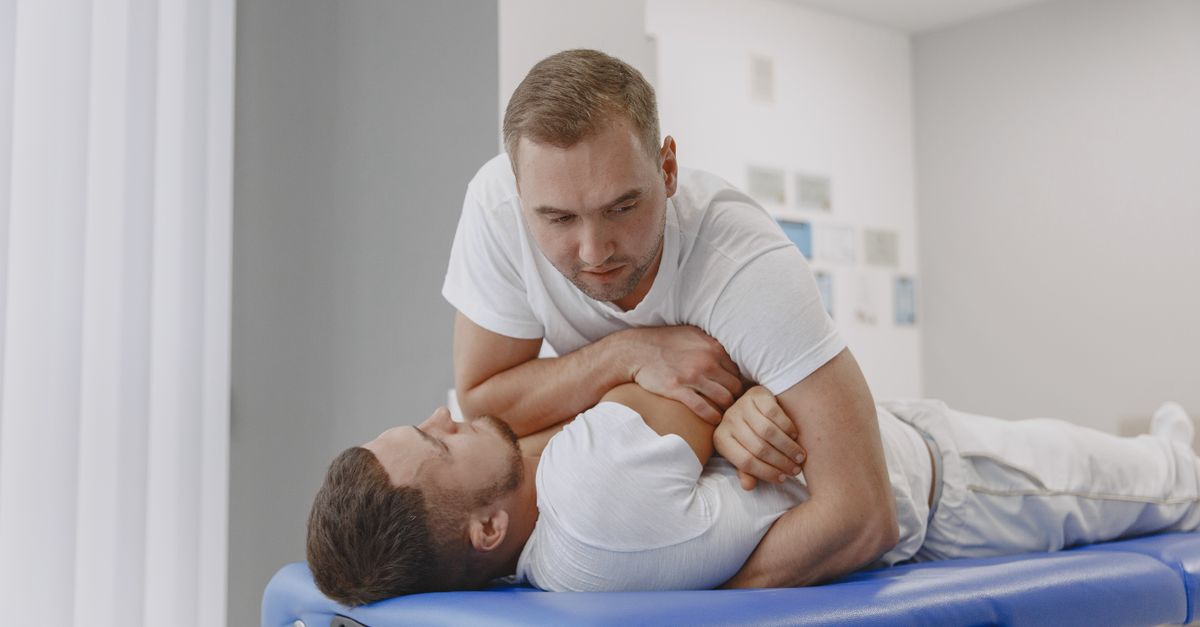
Patellar tendonitis massage focuses on the quadriceps, hip flexors, and surrounding musculature rather than directly on the irritated tendon below the kneecap. Releasing tension in the muscles that pull on the patellar tendon reduces the load the tendon absorbs during activity, which is the central goal of conservative management. Direct, aggressive pressure on an actively inflamed tendon can worsen symptoms — the surrounding soft tissue is where therapeutic massage delivers the most benefit. A physical therapist or physician should evaluate persistent or worsening patellar tendon pain before beginning any massage or exercise protocol.
The dull ache just below your kneecap that flares up when you squat, climb stairs, or push off during a run has a specific name — and it isn't generic knee pain. Patellar tendonitis, often called jumper's knee, is an overload injury of the tendon that connects the kneecap to the shinbone. It's one of the most common sources of anterior knee pain in active adults, but it's frequently misidentified as patellofemoral pain syndrome, a related but distinct condition that originates behind the kneecap rather than at the tendon itself.
Getting the diagnosis right matters, because the approach to massage and load management differs between them. This article covers how patellar tendonitis develops, why massage of the quadriceps and surrounding muscles is more effective than working directly on the tendon, and how tools like the MedMassager Body Massager can support quad work as part of a conservative care routine.
Patellar Tendonitis vs. Patellofemoral Pain
Anterior knee pain is a broad category, and two diagnoses dominate it: patellar tendonitis and patellofemoral pain syndrome. They share geography — both hurt somewhere around the front of the knee — but they are mechanically and anatomically different problems. Treating one as interchangeable with the other produces inconsistent results and, in some cases, makes symptoms worse.
The Anatomy of Jumper's Knee
The patellar tendon runs from the bottom of the kneecap (patella) to the tibial tuberosity, the bony bump just below the knee on the shinbone. Its job is to transmit the force generated by the quadriceps muscle group into the lower leg — every time you extend your knee, the patellar tendon is under load.
Patellar tendonitis develops when that load accumulates faster than the tendon can recover. Repetitive jumping, squatting, running on hard surfaces, and sudden increases in training volume are the most common triggers. Over time, microdamage accumulates in the tendon fibers, leading to the characteristic point tenderness directly at the inferior pole of the patella — the very bottom edge of the kneecap where the tendon attaches.
How Patellofemoral Pain Syndrome Differs
Patellofemoral pain syndrome (PFPS) is a different diagnosis. The pain in PFPS originates from the joint surface between the kneecap and the femur — the groove the patella slides through during knee flexion. Rather than point tenderness at the tendon attachment, PFPS typically produces a broader ache behind or around the kneecap, often aggravated by prolonged sitting, descending stairs, or activities that compress the joint.
The key clinical distinction is location: press your finger directly to the bottom tip of the kneecap. Significant pain there points toward patellar tendon involvement. Diffuse discomfort around or behind the kneecap without that point tenderness is more consistent with patellofemoral syndrome. A sports medicine physician or physical therapist can confirm the diagnosis — and that distinction shapes everything about how you approach treatment.
Why Load Management Matters
Patellar tendonitis is fundamentally a load-tolerance problem. The tendon isn't weak; it's been asked to absorb more cumulative force than it can handle without adequate recovery time. Research published in sports medicine literature consistently supports load management — modifying training volume and intensity — as a cornerstone of tendon rehabilitation, not complete rest.
- Complete rest reduces pain short-term but weakens the tendon over time by removing the mechanical stimulus tendons need to remodel
- Continued overload perpetuates the injury cycle and risks progression to tendinopathy or partial tears
- Relative load management — reducing high-impact activity while maintaining controlled loading — supports tendon recovery without deconditioning
Massage fits into this picture not as a standalone cure but as a way to reduce the muscle tension that amplifies tendon load during activity.
How Massage Reduces Patellar Tendon Strain
The patellar tendon doesn't operate in isolation. Every pound of force the quadriceps generate during knee extension passes directly through it. When the quads are chronically tight, shortened, or fatigued, the baseline tension on the tendon increases — even at rest. Quad-focused soft tissue work is a standard component of physical therapy for jumper's knee precisely because it addresses that upstream tension.
The Muscle-Tendon Relationship
The quadriceps group — rectus femoris, vastus lateralis, vastus medialis, and vastus intermedius — all converge into the quadriceps tendon above the patella, which continues as the patellar tendon below it. When any of these muscles are hypertonic or restricted, the mechanical tension pulling through the tendon increases. The hip flexors, particularly the iliopsoas and rectus femoris, add to this picture because the rectus femoris crosses both the hip and the knee.
Releasing tightness through the entire anterior chain — quads, hip flexors, and the IT band complex that affects lateral patellar tracking — distributes load more evenly and gives the irritated tendon a better mechanical environment to recover in.
Where to Massage (and Where Not To)
Massage for patellar tendonitis targets the musculature, not the tendon itself. The following areas are the primary focus:
- Quadriceps (primary target): Long, broad strokes along the length of the thigh, focusing on the belly of the muscle rather than the attachment points near the knee
- Hip flexors: Gentle work on the upper anterior thigh and hip region to reduce rectus femoris tension
- IT band and lateral structures: The iliotibial band contributes to lateral patellar tracking; reducing tightness here supports patellar mechanics
- Calf and hamstrings: Secondary targets; overall lower limb tension affects knee joint mechanics
- Avoid direct pressure on the tendon: Aggressive massage directly over an irritated or actively inflamed tendon can provoke a flare — work around it, not on it
During an acute flare — significant swelling, warmth, or pain that intensified recently — massage should wait until the acute phase calms. This is another reason professional evaluation matters before starting a home massage protocol.
Deep Oscillation vs. Surface Vibration
Not all vibrating massagers deliver the same depth of stimulation. Conventional vibrating devices work primarily on surface tissue. The MedMassager Body Massager uses oscillating technology to deliver deeper, more controlled vibration than conventional massagers — penetrating into the belly of the quadriceps rather than just the overlying skin and superficial fascia.
Deep oscillation moves surrounding muscle tissue and helps increase blood flow in areas that are stiff or overused, which directly supports the goal of reducing the chronic quad tension that loads the patellar tendon. For people managing patellar tendonitis as a recurring or chronic issue, having a clinical-grade oscillating tool at home means quad maintenance work doesn't have to wait for the next PT appointment.
Using the MedMassager for Quad and Hip Flexor Work
The MedMassager Body Massager is an FDA-registered Class I medical device built for therapeutic soft tissue work. Its oscillating head is large enough to cover broad muscle groups like the quadriceps efficiently, and its variable speed settings allow you to start conservatively and progress as your tolerance builds.
Setup and Starting Position
- Sit in a chair or on a firm surface with your knee slightly bent and relaxed — not locked out, not fully flexed
- Start at the lowest speed setting; the quads don't need maximum intensity to respond
- Position the massager head on the mid-thigh, several inches above the knee, before turning it on
Quadriceps Massage Technique
- Move the massager slowly up the length of the thigh from mid-quad to upper quad, using light to moderate pressure
- Spend 60–90 seconds on the central quad (rectus femoris), then shift laterally to cover the vastus lateralis
- Shift medially to address the vastus medialis (the teardrop-shaped muscle just above the inner knee)
- Keep the massager at least 2–3 inches above the top of the kneecap — do not let it drift onto the patella or tendon
- Total quad work per session: 4–6 minutes per leg
Hip Flexor and Anterior Chain Work
After completing the quad work, move the massager to the upper anterior thigh and hip flexor region. Use lighter pressure here — this area is more sensitive than the quad belly. Spend 60–90 seconds on each side. This targets the rectus femoris at its proximal attachment and the surrounding hip flexor complex, reducing the top-of-chain tension that flows directly down to the patellar tendon.
Frequency and Timing
- Daily maintenance (chronic/recurring cases): 5–8 minutes of quad and hip flexor work per session, once daily
- Pre-activity: A brief 2–3 minute session before training can reduce quad stiffness going into load-bearing exercise
- Post-activity: A 5-minute session after exercise, focused on flushing tension from the quads before it accumulates overnight
- During an acute flare: Pause and consult your physical therapist or physician before continuing
When to See a Physical Therapist or Physician
Massage is a supportive tool within a broader treatment plan — not a replacement for professional evaluation. Patellar tendonitis has a spectrum of severity, and some presentations require clinical intervention that home massage cannot address.
Red Flags That Warrant Professional Evaluation
- Pain that is worsening despite rest and conservative care
- Significant swelling, warmth, or visible changes around the knee
- Pain that wakes you at night or is present at rest without activity
- Weakness or inability to fully extend the knee
- A pop or acute onset of severe pain, which may indicate tendon tear rather than tendinitis
What a Physical Therapist Adds
A licensed physical therapist can confirm the diagnosis, rule out patellofemoral pain syndrome or other anterior knee pathology, and design a progressive loading program — typically built around eccentric and isometric quadriceps exercises — that massage alone cannot replicate. Research in tendon rehabilitation consistently shows that controlled mechanical loading is what drives tendon remodeling and long-term recovery.
Massage supports that process by keeping the surrounding musculature pliable and reducing baseline tendon load, but it works best when paired with appropriate exercise prescription. A sports medicine physician may also evaluate for structural issues including partial tendon tears, which require imaging to identify and have a different management path than inflammatory tendonitis. If conservative care hasn't produced meaningful improvement within 6–8 weeks, imaging and specialist referral are appropriate next steps.
Frequently Asked Questions
Is it safe to massage directly on the patellar tendon?
Massaging directly on an irritated patellar tendon, especially during or shortly after a flare, can increase inflammation and worsen symptoms. The more effective approach is to work on the quadriceps, hip flexors, and surrounding musculature that contribute to tendon overload — not the tendon attachment itself. If your symptoms are in an acute phase with noticeable swelling or warmth, wait until they settle before resuming any massage work.
How is patellar tendonitis different from patellofemoral pain syndrome?
Patellar tendonitis produces point tenderness directly at the bottom of the kneecap where the tendon attaches, and is typically aggravated by jumping, squatting, and push-off movements. Patellofemoral pain syndrome produces a broader ache behind or around the kneecap, often worsened by prolonged sitting, stair descent, or activities that compress the patellofemoral joint. The two conditions require different management strategies, which is why an accurate diagnosis from a physical therapist or sports medicine physician matters before starting treatment.
Why do the quadriceps matter so much in patellar tendonitis?
The quadriceps muscles transmit force directly through the patellar tendon with every knee extension movement. When the quads are chronically tight or fatigued, they maintain elevated resting tension on the tendon — even outside of activity. Reducing that muscle tension through targeted massage and mobility work lowers the baseline mechanical load the tendon is under, creating a better environment for recovery.
How long does patellar tendonitis typically take to improve?
Recovery timelines vary significantly depending on how long the condition has been present and whether contributing factors like training load and muscle tightness are addressed. Mild cases identified early often respond within several weeks of conservative management including load modification, eccentric exercise, and soft tissue work. Chronic or long-standing tendinopathy can take three to six months or longer to meaningfully improve, particularly if tendon remodeling rather than simple inflammation is the primary problem.
Can stretching replace massage for patellar tendonitis?
Stretching and massage address overlapping but distinct aspects of muscle tightness. Stretching targets the length of the muscle-tendon unit and is valuable, but it reaches the surface layers of the muscle differently than sustained soft tissue pressure does. Combining quad stretching with massage of the deeper muscle belly typically produces better results than either approach alone, and physical therapists commonly recommend both as part of a comprehensive conservative program for jumper's knee.
Should I stop exercising completely with patellar tendonitis?
Complete rest is generally not recommended for patellar tendonitis because tendons require mechanical loading to remodel and recover. The current evidence-based approach is relative load management: reducing or modifying high-impact activities like jumping and heavy squatting while maintaining controlled loading through exercises like isometric holds and eccentric squats. A physical therapist can prescribe a loading program appropriate to your current level of tendon irritability.
Does foam rolling help with patellar tendonitis?
Foam rolling the quadriceps can be a useful complementary tool for reducing quad tension that contributes to patellar tendon load. The same caution applies: keep the foam roller on the muscle belly of the thigh and away from the tendon attachment at the knee. For people who find foam rolling difficult to control, or who have limited mobility making floor-based rolling impractical, a handheld oscillating massager offers more precise pressure control on the quad musculature.
The Bottom Line on Patellar Tendonitis Massage
Patellar tendonitis massage is most effective when it targets the right structures — the quadriceps, hip flexors, and anterior chain musculature — rather than the tendon itself. Reducing chronic quad tension is the mechanism that makes massage clinically relevant for jumper's knee, and it's what distinguishes this approach from generic knee pain massage or treatment aimed at patellofemoral pain syndrome.
For people managing recurring or chronic patellar tendon issues, consistent quad maintenance work between training sessions is where the long-term benefit accumulates. An FDA-registered Class I therapeutic massager like the MedMassager Body Massager provides the oscillating depth needed to reach the belly of large muscle groups like the quadriceps, making it a practical home tool for this kind of ongoing soft tissue management.
Massage supports the recovery process — but load management, progressive tendon loading under professional guidance, and accurate diagnosis are the foundation. If your knee pain is worsening, not improving, or you're unsure whether you're dealing with patellar tendonitis or another anterior knee condition, a sports medicine physician or physical therapist should be your first call. Explore the full range of MedMassager therapeutic massagers to find the right tool for your recovery needs.
This content is for informational purposes only and is not intended as medical advice, diagnosis, or treatment. Always consult a qualified healthcare professional before starting any new treatment or therapy. MedMassager products are FDA-registered Class I medical devices.


