
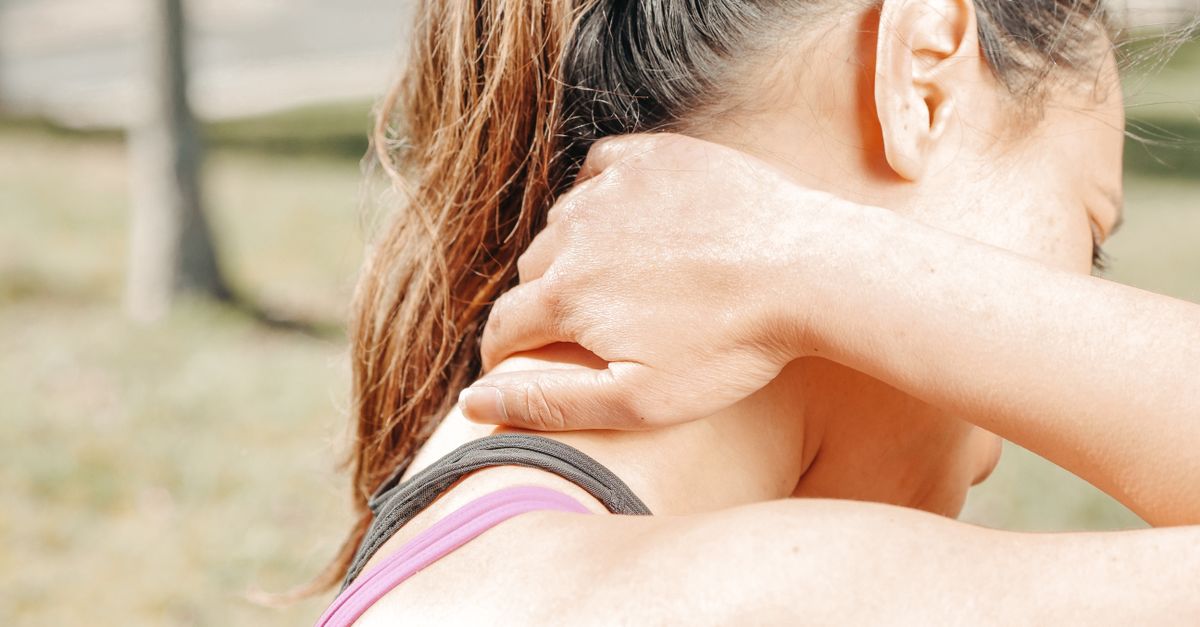
Neck pain on one side is usually caused by muscle strain, an awkward sleep position, or posture habits that load one side of the neck more than the other. The sternocleidomastoid, levator scapulae, and upper trapezius are the muscles most often involved. One-sided neck pain from these causes typically eases within days to a couple of weeks with gentle movement, heat, and massage. Neck pain with fever, numbness, arm weakness, or a visible lump needs prompt medical evaluation.
You turn to check your blind spot, and a sharp pull grabs the left side of your neck. Or you wake up wondering why does my neck hurt on one side, because the right side is so stiff you have to rotate your whole torso to look at the clock. The answer usually comes down to a specific muscle being overworked, compressed, or held in a shortened position for too long.
One-sided neck pain feels alarming because it is so lopsided, but that asymmetry is also a useful clue. It points toward a habit, a sleep position, or a muscle that is working harder on one side than the other.
This guide is for anyone dealing with pain on one side of the neck, whether it showed up overnight or has been building for weeks. It covers the most likely causes, the specific muscles involved, the warning signs that call for a doctor, and a practical routine for easing a sore side of the neck at home.
What Causes Neck Pain on One Side?
The cervical spine supports the weight of your head through seven vertebrae and a network of muscles that work in pairs. When one side of that system is strained, compressed, or held still too long, pain shows up on that side alone. One-sided neck pain usually traces back to mechanical causes rather than disease.
Sleep Position and Pillow Height
Waking up with neck pain on one side is one of the most recognizable versions of this problem. Sleeping on your stomach forces your head to rotate fully to one side for hours, which keeps the muscles on one side shortened and the other side stretched. A pillow that is too high or too flat for side sleeping tilts the neck and creates the same imbalance.
In more pronounced cases, this leads to acute torticollis, sometimes called wry neck. The muscles on one side spasm and hold the head slightly tilted or rotated, and turning toward the painful side becomes difficult. Acute torticollis from sleep position generally improves on its own within several days.
Posture and Screen Habits
Posture problems that cause one-sided pain are usually asymmetrical habits rather than general slouching. These are the habits worth checking first:
- A monitor positioned off to one side, so your head stays rotated all day
- Cradling a phone between your ear and shoulder
- Carrying a heavy bag on the same shoulder every day
- Reading or watching screens in bed propped on one elbow
- Driving long distances with one arm resting on the window or console
Each of these keeps one set of neck muscles contracted while the opposite side stays lengthened. Over hours and days, the contracted side becomes tight, fatigued, and sore.
Muscle Strain and Joint Irritation
A sudden movement, such as whipping your head around or lifting something heavy with poor form, can strain the muscles on one side of the neck. The pain is often sharp at first and then settles into a dull ache that worsens with certain movements.
The facet joints, small paired joints along the back of the spine, can also become irritated on one side. Facet-related pain tends to feel deep and localized and often worsens when you tilt your head back or turn toward the painful side. Pain that travels down one arm, with tingling or numbness, suggests a pinched nerve root (cervical radiculopathy) and should be evaluated by a doctor.
The Muscles Behind One-Sided Neck Pain
Knowing which muscle is involved helps you understand why certain movements hurt and where to focus relief. Three muscles account for a large share of one-sided neck pain.
Sternocleidomastoid (SCM)
The sternocleidomastoid runs from just behind the ear down to the collarbone and breastbone on each side of the neck. It rotates the head to the opposite side and tilts it toward the same side. A tight SCM can cause pain along the front and side of the neck, and it may also refer pain toward the forehead, behind the eye, or around the ear.
The SCM tightens easily with forward head posture and with sleeping with the head turned. If the side of your neck hurts when you turn your head away from the sore side, the SCM is a likely source.
Levator Scapulae
The levator scapulae runs from the upper cervical vertebrae down to the top inner corner of the shoulder blade. It lifts the shoulder blade and helps tilt the neck sideways. This muscle is a frequent culprit when pain sits where the neck meets the shoulder, and it often makes turning your head toward the sore side painful. Our guide to levator scapulae massage techniques covers how to locate and work this muscle directly.
Upper Trapezius
The upper trapezius covers the back of the neck and the top of the shoulders. It tightens with stress, shoulder shrugging, and long hours at a desk. Trapezius tightness on one side commonly pairs with neck and shoulder pain on one side and can contribute to tension headaches.
Use the pattern of your pain as a rough guide:
- Pain at the front or side of the neck, worse turning away: likely SCM
- Pain where the neck meets the shoulder blade, worse turning toward the sore side: likely levator scapulae
- Pain across the top of the shoulder and back of the neck: likely upper trapezius
Neck Pain vs. Swelling on One Side
Pain and swelling are different problems. Muscle-related one-sided neck pain produces tightness, tenderness, and restricted movement, but it does not usually produce a visible lump or a puffy area along the side of the neck.
Swelling on one side of the neck often involves lymph nodes, salivary glands, or the thyroid rather than muscle. Swollen lymph nodes frequently accompany infections such as a cold or sore throat. Have a lump checked by a doctor if it:
- Persists beyond two weeks
- Grows or feels hard to the touch
- Appears without an obvious infection
Massage is not appropriate for an unexplained lump or swelling.
How Massage Helps One-Sided Neck Pain
When a neck muscle tightens on one side, it tends to stay tight. Reduced movement limits blood flow through the tissue, and the muscle remains guarded. Massage interrupts that cycle by mechanically working the tissue and encouraging circulation.
Massage Nodes and Heat for the Neck
The MedMassager Neck Massager with dual-direction massage nodes is built for exactly this kind of localized tightness. For neck stiffness, rotating massage nodes combined with built-in heat warm and loosen tight muscles, supporting blood flow through the neck. For trapezius tightness, the massage nodes mimic hand kneading on the trapezius muscle, helping loosen tissue that tightens from poor posture or extended screen time.
For cervical strain from posture or screen time, rotating massage motion supports blood flow through neck muscles affected by overuse, with built-in heat aiding muscle relaxation. You can position the device over the sore side rather than working both sides equally.
Oscillation for the Shoulders and Upper Back
One-sided neck pain often extends into the shoulder and upper back on the same side. The MedMassager Body Massager oscillates in a circular motion through a large, cushioned contouring pad that forms to the body. For neck and shoulder strain, mechanical movement stimulates muscle tissue, helping circulate blood through areas that commonly tighten.
You can hold the pad against the top of the shoulder or rest it between your upper back and the back of a chair while seated. Browse the Body Massager options for shoulder and upper back tightness if the pain spreads below the neck.
Choosing the Right Tool
Match the device to where the pain sits:
- Pain concentrated in the neck itself: the Neck Massager, which uses nodes and heat rather than oscillation
- Pain spreading into the shoulder blade and upper back: the Body Massager, which uses circular oscillating action
- Both: the two can be used in the same session on different areas
Both are FDA-registered Class I medical devices. You can compare them side by side in the complete MedMassager catalog.
One-Sided Neck Pain Red Flags to Know
One-sided neck pain is usually muscular and improves with time. However, certain symptoms point to infection, nerve involvement, or vascular problems that need prompt medical attention. Seek care right away if your neck pain comes with any of the following:
- Fever, especially with a stiff neck, headache, or sensitivity to light
- Numbness, tingling, or weakness in one arm or hand
- Loss of coordination, difficulty walking, or changes in bladder or bowel control
- Sudden, severe neck pain with a headache unlike any you have had before
- Dizziness, vision changes, slurred speech, or facial drooping
- Pain following a fall, car accident, or other trauma
- A visible lump, swelling, or difficulty swallowing
- Unexplained weight loss, night sweats, or pain that wakes you from sleep
Fever combined with a stiff neck can signal meningitis, which is a medical emergency. Sudden one-sided neck pain with headache or neurological symptoms can occasionally indicate a tear in an artery in the neck. Do not use massage on the neck while waiting to be evaluated for any of these symptoms.
For pain without red flags, book a regular appointment if it has not improved after one to two weeks of home care, or if it keeps returning.
A Daily Routine for One-Sided Neck Pain
Home care for muscular one-sided neck pain focuses on restoring movement, warming the tissue, and removing the habit that caused the problem. For more home options, see our guide to stiff neck remedies for adults.
- Identify the trigger. Check your monitor position, pillow height, sleep position, and bag-carrying side. Correct the one that matches your pain.
- Apply heat. Warmth for 15 to 20 minutes relaxes tight tissue before you stretch or massage it.
- Move gently. Slowly tilt your ear toward each shoulder and turn your head side to side within a pain-free range. Hold each position for 15 to 30 seconds and repeat three times.
- Massage the tight side. Start with about 10 minutes, once or twice a day. Position the heated MedMassager Neck Massager over the sore side so the rotating nodes and heat can loosen the tight muscle. If the pain extends into the shoulder, apply the Body Massager pad to the top of the shoulder, where its circular oscillating action moves the tissue and supports blood flow.
- Take micro-breaks. Every 30 to 45 minutes at a desk, roll your shoulders back and bring your chin gently backward to reset your head over your shoulders.
- Adjust your sleep setup. Side sleepers need a pillow that keeps the nose in line with the center of the chest. Back sleepers need enough support to fill the curve of the neck without pushing the head forward.
Stop any massage or stretch that sharpens the pain or produces tingling. Avoid applying heat to skin with reduced sensation, and ask your own doctor or physical therapist before using a massager if you have a neck injury, cervical surgery history, or a known vascular condition.
Frequently Asked Questions
Why does my neck hurt on one side when I turn my head?
Pain when turning your head usually means a muscle on one side is tight or strained. If turning away from the sore side hurts, the sternocleidomastoid is often involved. If turning toward the sore side hurts, the levator scapulae or a facet joint on that side is a more likely source.
Why do I wake up with neck pain on one side?
Waking with one-sided neck pain is usually caused by sleeping with your head rotated or tilted for hours. Stomach sleeping and pillows that are too high or too flat are the most frequent triggers. Adjusting your pillow and sleep position typically prevents it from recurring.
How long does one-sided neck pain last?
Muscle strain and sleep-related neck pain generally improve within a few days to two weeks. Pain that lasts longer, keeps returning, or worsens over time should be evaluated by a doctor. Any neck pain with fever, arm numbness, or weakness needs prompt medical care regardless of duration.
Can stress cause neck pain on one side?
Stress can cause neck pain on one side by making you tense and shrug the shoulders without noticing. That sustained contraction tightens the upper trapezius and levator scapulae. If you also have a one-sided habit such as a side-facing monitor, the tension tends to concentrate on that side.
Is heat or ice better for a sore neck on one side?
Heat is generally better for muscle tightness and stiffness because it relaxes tissue and encourages blood flow. Ice can help in the first day or two after a sudden strain or injury to limit inflammation. Apply either for 15 to 20 minutes with a barrier between the pack and your skin.
Does a neck massager help with one-sided neck pain?
A neck massager can help when the pain comes from tight muscles rather than injury or infection. The MedMassager Neck Massager uses rotating massage nodes combined with built-in heat to warm and loosen tight muscles, supporting blood flow through the neck. You can position it over the sore side to focus on the muscle that is causing the pain.
When should I worry about neck pain on one side?
You should see a doctor promptly if one-sided neck pain comes with fever, numbness, weakness, dizziness, a lump, or a sudden severe headache. Pain after a fall or accident also needs evaluation. Muscular neck pain that does not improve after one to two weeks of home care warrants a regular appointment.
The Bottom Line
If you're still asking why does my neck hurt on one side, start by looking at what your neck does on that side all day and all night. Sleep position, screen setup, and repetitive habits strain the SCM, levator scapulae, and upper trapezius unevenly, and correcting the habit is the most effective long-term fix.
Heat, gentle movement, and targeted massage help loosen the tight side while it recovers. Keep the red flags in mind, and get checked if fever, neurological symptoms, or swelling appear. When you're ready to add targeted relief to your routine, explore the MedMassager Neck Massager for one-sided neck tightness. Its rotating massage nodes and built-in heat warm the tight muscle and support blood flow through the sore side while you work on the habit behind it.
This content is for informational purposes only and is not intended as medical advice, diagnosis, or treatment. Always consult a qualified healthcare professional before starting any new treatment or therapy. MedMassager products are FDA-registered Class I medical devices.


