
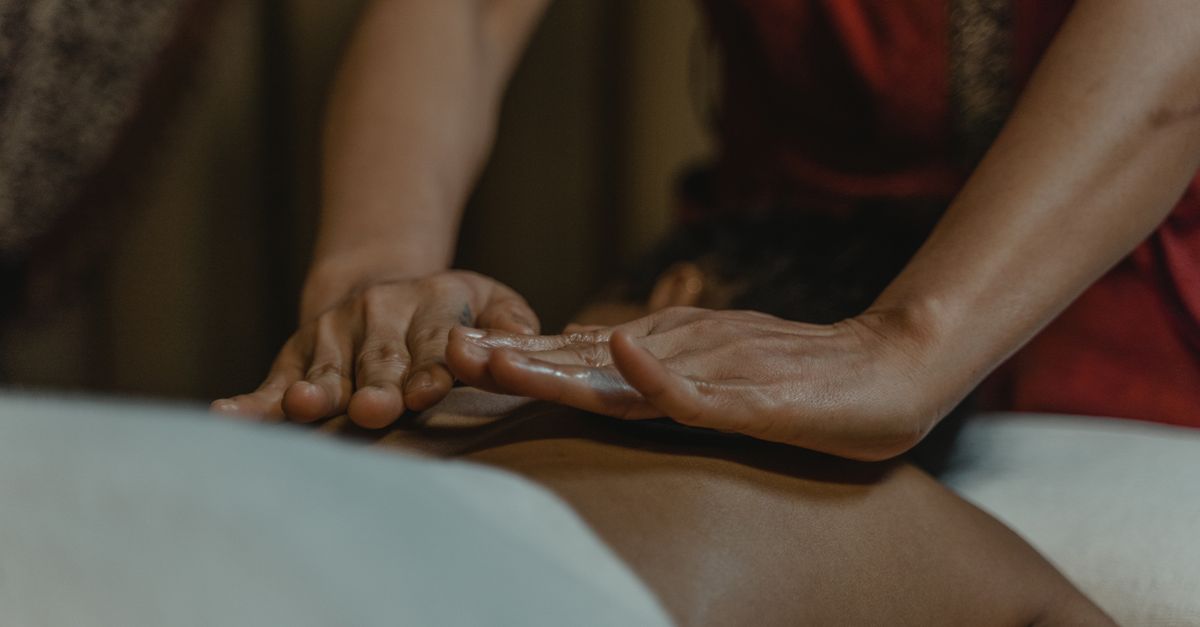
Massage after a long flight can help relieve swollen feet, stiff legs, and the general fatigue that builds up from hours of sitting in a pressurized cabin with limited movement. Prolonged sitting slows venous return — the process by which blood and fluid travel back up from the legs to the heart — causing fluid to pool in the feet and ankles. A post-flight recovery routine that combines gentle walking, leg elevation, calf-pump exercises, and targeted foot massage helps stimulate circulation and move that pooled fluid back into the body's normal circulatory flow. If you notice swelling in only one leg, or experience warmth, redness, or pain in a calf after flying, seek medical evaluation promptly rather than massaging the area, as these can be signs of deep vein thrombosis.
You've landed. You grab your bag, shuffle through the terminal, and notice your feet feel like they've been stuffed into shoes one size too small. Your ankles are puffy, your calves are tight, and your lower back aches from hours of sitting at 35,000 feet in a seat that wasn't designed for comfort. This is what happens to your body after a long flight — and it's more common than most travelers realize.
Massage after a long flight isn't just a luxury. For people who fly regularly — whether for work, family, or annual travel — knowing how to decompress your legs and feet after landing makes a real difference in how quickly you recover. This post walks through exactly why flying does what it does to your circulation, what you can do in-flight to minimize the damage, and a practical post-arrival routine you can start the same evening you land.
Why Long Flights Wreak Havoc on Your Legs
The discomfort you feel after a long flight isn't just stiffness. It's a predictable physiological response to a very specific set of conditions — prolonged immobility, low cabin pressure, dehydration, and reduced oxygen levels — that all work against your body's ability to circulate blood and fluid efficiently.
Venous Return and Why Sitting Shuts It Down
Under normal conditions, your leg muscles act as a pump. Every time you walk, your calf muscles contract and squeeze the veins running through them, pushing blood upward toward the heart. This mechanism — called the calf-muscle pump — is the primary driver of venous return in the lower body.
When you sit motionless for four, eight, or twelve hours, that pump stops working. Blood and interstitial fluid begin to pool in the lower legs and feet. The longer you sit, the more fluid accumulates, and the more swollen and heavy your legs feel by the time you land. Research on travel-related venous health shows that venous blood flow in the legs can drop significantly after just two hours of continuous sitting without movement.
Cabin Pressure and Fluid Shifts
Commercial aircraft cabins are pressurized to an equivalent altitude of roughly 6,000 to 8,000 feet above sea level — lower pressure than you'd experience at ground level. This mild hypobaric environment has a measurable effect on fluid distribution in the body, contributing to the bloating and puffiness many travelers notice mid-flight.
Reduced cabin humidity — typically between 10% and 20%, far drier than most indoor environments — accelerates dehydration. Dehydration thickens the blood slightly and can impair circulation further, compounding the effects of immobility.
The DVT Risk: When Swelling Is a Warning Sign
Most post-flight swelling is benign and resolves within a few hours of normal activity. Prolonged immobility on a plane is, however, a recognized risk factor for deep vein thrombosis (DVT) — a blood clot that forms in a deep vein, most commonly in the calf or thigh.
The warning signs of DVT are distinct from ordinary travel swelling and require prompt medical attention. Do not massage a leg that shows any of these symptoms after flying:
- Swelling in only one leg (asymmetric swelling is the key red flag)
- Warmth, redness, or discoloration in one calf or thigh
- Pain or tenderness in the calf, especially when pressing or flexing the foot
- Sudden shortness of breath, chest pain, or rapid heart rate (possible pulmonary embolism — call emergency services immediately)
If your swelling is bilateral — both feet and ankles puffing equally — with no pain, warmth, or redness, that is typical travel swelling. The recovery routine in this article is designed for that scenario. If anything feels one-sided, painful, or unusual, see a doctor before doing anything else.
What to Do During the Flight
The best post-flight recovery starts before you land. Simple habits during the flight meaningfully reduce how much fluid accumulates in the first place.
Move Your Legs Every Hour
The single most effective in-flight intervention is getting up and walking the aisle. Aim for at least two to three minutes of walking every hour, even if that means a trip to the lavatory you don't strictly need. Aisle seats make this significantly easier — worth requesting on any flight over four hours.
When you can't get up, ankle pumping works surprisingly well. Point your toes down, then flex them up toward your shins — 20 to 30 repetitions every 30 minutes keeps the calf-muscle pump partially active. Heel raises, knee lifts, and calf circles at your seat all contribute. They won't fully replace walking, but they prevent the complete stagnation that causes the worst swelling.
Compression Socks and Hydration
Graduated compression socks — the kind with higher compression at the ankle that grades down toward the knee — are widely recommended by travel medicine specialists for flights over four hours. They mechanically support venous return by applying external pressure to the leg, partly compensating for the absent muscle-pump action during sitting.
Staying hydrated throughout the flight is equally important. Alcohol and caffeine both have diuretic effects, so moderating them and replacing them with water helps maintain blood volume and reduces the viscosity changes that accompany dehydration. The goal isn't to drink aggressively — just to avoid arriving at your destination already dehydrated.
How Post-Flight Massage and Movement Aid Recovery
Once you land, your body needs a signal to shift back into normal circulatory function. Moving fluid that has pooled in the lower legs requires reactivating the calf-muscle pump — and this is where a structured post-flight routine, including targeted vibration massage and calf-pump activation, makes a real difference.
Walking First: The Simplest Intervention
Don't take the closest cab or shuttle if you can help it. Walking through the terminal — even 10 to 15 minutes at a brisk pace — immediately reactivates the calf-muscle pump and begins moving pooled fluid back into circulation. The rhythmic contraction of walking does what hours of sitting prevented.
If your flight arrived late or you're too fatigued for a long walk, even the distance from baggage claim to your car is better than sitting. Prioritize any amount of upright walking before you sit back down in a vehicle for another stretch of time.
Elevation and the Gravity Assist
Once you're settled, elevate your legs above heart level for 15 to 20 minutes. Raising the feet above the heart reverses the downward pooling pressure and allows fluid to drain passively back toward the core. A pillow under the calves and another under the ankles achieves the right angle without requiring any equipment.
Elevation alone helps, but it's more effective when combined with active calf-pump movement. This is the point in the routine where a therapeutic foot massager becomes genuinely useful.
Oscillating Foot Massage and Calf-Pump Activation
Many travelers reach for vibration massage devices after flying — and for good reason. Vibration and oscillation applied to the soles of the feet and the calf muscles simulate the mechanical pumping action that sitting suppresses. MedMassager's Foot Massager uses oscillating technology to deliver deeper, more controlled vibration than conventional massagers, creating the kind of rhythmic muscle activation that helps push blood upward through the lower leg.
The mechanism is direct: repeated oscillating motion activates the calf muscles, pushing blood upward instead of letting it pool in the feet. This is the same calf-pump principle that walking achieves — delivered through targeted mechanical movement while you rest. Pairing 10 to 15 minutes on a foot massager with legs elevated gives you both the gravity assist and the active pump signal simultaneously.
For general leg and lower-back stiffness accumulated during the flight, a therapeutic body massager applied to the calves, hamstrings, and lower back can help. Oscillation penetrates deep muscle layers, increasing local blood flow in muscles that have been compressed and shortened from hours of sitting — reaching the stiffness and tension that foot massage alone doesn't fully address.
A Post-Flight Recovery Routine You Can Follow
The steps below are ordered for a realistic arrival scenario — whether you're landing in the afternoon or stepping off a red-eye at 6 a.m. Adapt the timing as needed, but keep the sequence intact for best results.
- Walk the terminal. Before you sit in any vehicle, walk for at least 10–15 minutes. Take the long route to baggage claim. Use the stairs if they're available.
- Remove compression socks. Once you've walked and are settled somewhere comfortable, take off any compression socks. They've done their job in-flight; removing them now allows the legs to re-acclimate normally.
- Rehydrate. Drink 16–24 ounces of water within the first hour of landing. Avoid alcohol for the first few hours if possible — your body is already working to rebalance fluid distribution.
- Elevate your legs for 15–20 minutes. Lie back and prop your feet above heart level. Use pillows, a couch armrest, or a bed headboard. Let gravity begin moving pooled fluid passively.
- Use a foot massager for 10–15 minutes. While elevated or shortly after, place your feet on a foot massager and let the oscillating motion activate your calf muscles and promote circulation from the ground up. Start at a lower intensity if your feet are particularly sensitive from the flight.
- Apply body massager to calves and lower back. If you have lower leg tightness or back stiffness, follow up with a body massager across the calves, the backs of the thighs, and the lumbar region — 5 to 10 minutes per area.
- Light movement before sleep. Before bed, take a 5-minute gentle walk or do a short round of calf raises and ankle circles. This keeps circulation active one more time before the long overnight rest.
For most travelers, bilateral swelling and general fatigue resolve significantly within a few hours of this routine and fully within 24 hours of normal activity and sleep.
Who Benefits Most From Post-Flight Massage
Anyone can benefit from a post-flight recovery routine, but certain groups experience more pronounced symptoms and see greater gains from consistent recovery habits.
Frequent Business Travelers
People who fly multiple times per month accumulate the circulatory effects of prolonged sitting repeatedly. Over time, chronic venous insufficiency — where the leg veins struggle to return blood efficiently — can develop or worsen with repeated long-haul travel. A consistent post-flight routine that includes calf-pump activation and therapeutic massage is a practical tool for managing this pattern without relying on medication.
Older Adults
Venous return efficiency declines with age. Older adults are more likely to experience significant swelling after flights and take longer to recover baseline circulation. The elevated-legs-plus-foot-massager combination is especially practical for this group because it requires minimal physical exertion — the mechanical oscillation does the circulatory work while the person rests.
People Managing Circulation Conditions
Travelers living with conditions that already affect circulation — such as diabetes, peripheral neuropathy, or chronic venous insufficiency — should speak with their healthcare provider before flying long-haul and before beginning any post-flight massage routine. For those who have received clearance, foot massagers designed for people managing circulation concerns can be part of a broader travel health strategy. The same calf-pump mechanism that makes post-flight massage useful for healthy travelers applies here — but with appropriate medical oversight.
Pregnant Travelers
Pregnancy already increases the risk of venous swelling and DVT. Pregnant women flying more than four hours should consult their OB-GYN before travel, follow all in-flight movement recommendations diligently, and confirm with their provider before using any massage device post-flight. This is a scenario where individualized medical guidance takes priority over any general routine.
Frequently Asked Questions
Is it safe to massage your legs after a long flight?
Massage is generally safe after a long flight when swelling is bilateral — affecting both feet and ankles equally — with no pain, warmth, redness, or discoloration. If one leg is more swollen than the other, or if you notice calf pain or skin that feels warm to the touch, do not massage and seek medical evaluation instead, as these symptoms can indicate deep vein thrombosis. When in doubt, a quick call to your physician before massaging is always the right call.
How long does post-flight swelling last?
For most healthy travelers, post-flight swelling in the feet and ankles begins to resolve within a few hours of landing and is typically gone within 24 hours of normal activity, walking, and sleep. Swelling that persists beyond 48 hours, worsens over time, or is accompanied by pain warrants medical evaluation. Factors like flight length, individual venous health, and hydration levels all influence how quickly the body returns to baseline.
What exercises help reduce swelling after flying?
Ankle pumps — alternately pointing and flexing the foot — are among the most effective exercises for reducing post-flight swelling because they directly activate the calf-muscle pump. Calf raises, heel-to-toe walking, and simple knee lifts all serve the same purpose. A 10–15 minute brisk walk immediately after landing is the single most impactful option, as it fully reactivates venous return in the lower legs.
Why do feet swell more on planes than on long car rides?
Both involve prolonged sitting, but aircraft cabins add two factors that car environments don't: reduced cabin pressure and extremely low humidity. The mild hypobaric conditions at cruising altitude contribute to fluid shifts in body tissue, and the dry cabin air accelerates dehydration — both of which compound the swelling caused by immobility. Most long car rides also allow more frequent stops and movement than a long-haul flight does.
Should I use compression socks before or after the flight?
Compression socks are most effective when worn throughout the flight, not just before or after. Graduated compression socks should be put on before boarding and worn for the duration of the flight. They can be removed once you've landed and completed some initial walking, as the calf-muscle pump takes over from compression once you're mobile again.
Can a foot massager help with jet lag as well as swelling?
A foot massager addresses the physical symptoms of long-haul travel — swelling, circulatory sluggishness, and muscle stiffness — rather than the circadian disruption that causes jet lag. That said, the relaxation and improved circulation that follow a post-flight massage session can support better sleep, which is the primary recovery mechanism for jet lag. Think of foot massage as a tool for physical recovery, with sleep and light exposure managing the circadian side.
How soon after landing should I start a post-flight massage routine?
The sooner the better — ideally within two to three hours of landing. Walking the terminal immediately after deplaning is the first step, followed by elevation and massage once you're settled. Waiting until the next morning means your circulation has been compromised for an extended additional period, and some of the acute swelling will have already distributed into surrounding tissue where it's slower to resolve.
The Bottom Line on Post-Flight Recovery
Massage after a long flight works because it addresses the root cause of post-travel discomfort: the shutdown of your body's natural venous pump during hours of immobility. Walking reactivates it. Elevation assists it with gravity. Oscillating foot massage sustains the calf-pump signal while you rest and recover.
The routine doesn't need to be complicated. Walk the terminal, elevate your legs, use a foot massager for 10 to 15 minutes, address residual stiffness with a body massager, and keep moving gently before sleep. Most travelers who follow this consistently find that the heavy, swollen feeling clears significantly faster than it does with rest alone.
If you're a frequent traveler, investing in the right recovery tools is worth the same attention you give to your carry-on essentials. Explore MedMassager's full range of therapeutic foot massagers and professional-grade body massagers designed for exactly this kind of deep circulatory support — whether you're recovering from a transatlantic flight or a cross-country red-eye.
If anything about your post-flight swelling feels one-sided, painful, warm, or wrong — skip the massage and see a doctor first.
This content is for informational purposes only and is not intended as medical advice, diagnosis, or treatment. Always consult a qualified healthcare professional before starting any new treatment or therapy. MedMassager products are FDA-registered Class I medical devices.


