
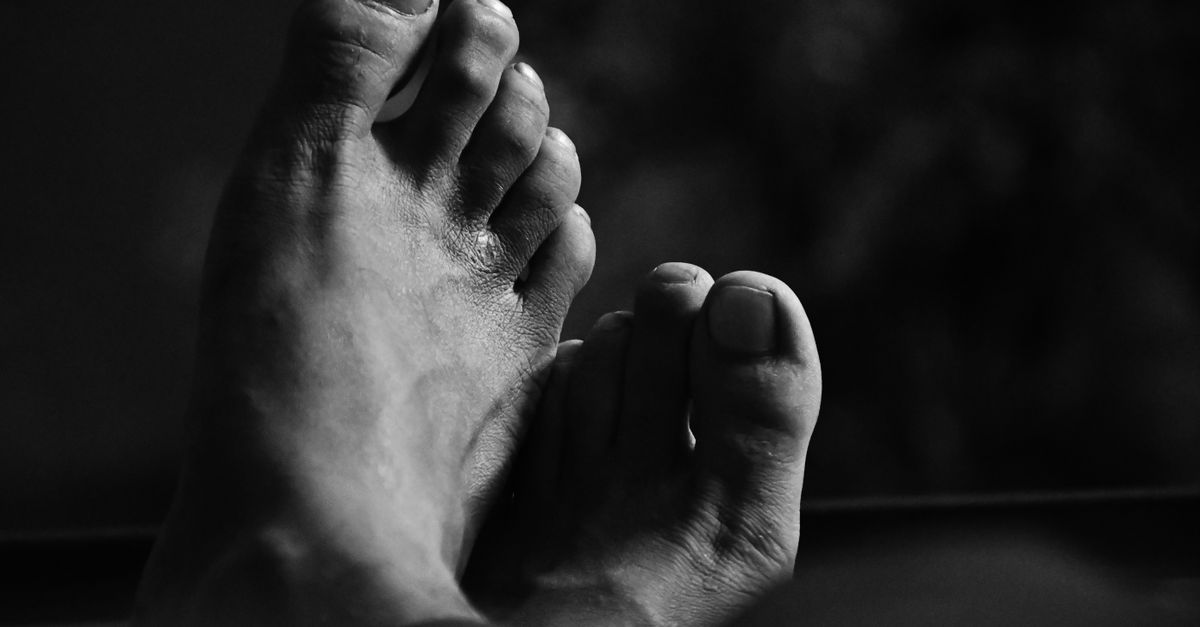
Hammer toe is a progressive toe deformity caused by a muscle-tendon imbalance that forces one or more toes into a permanently bent position at the middle joint. It develops in two stages: a flexible stage, where the toe can still be manually straightened, and a rigid stage, where the joint becomes fixed and conservative options become more limited. Conservative care for hammer toe pain includes proper footwear, toe stretches, protective padding, and soft-tissue massage to address the tendon and joint capsule irritation on the top of the foot and at the ball of the foot. Massage does not straighten the toe or reverse the underlying deformity — it relieves the surrounding soft-tissue discomfort and supports circulation in the forefoot.
If you have ever looked down at your foot and noticed that one of your smaller toes curls downward at the middle joint like a claw, you have likely encountered hammer toe. The condition is common, often starts gradually, and is easy to dismiss as a quirk of shoe fit — until the friction, stiffness, and aching in the ball of your foot make it impossible to ignore. Hammer toe pain relief is a search many people only make after months of pushing through discomfort, by which point the deformity may have already progressed. This post covers why hammer toes develop, what stage your toe may be in, and the full range of conservative strategies that can genuinely ease the soft-tissue pain around the joint — including what massage can and cannot do.
Why Hammer Toes Develop
Hammer toe is not simply a cosmetic problem. It is the visible result of mechanical forces that have gradually pulled a toe out of its neutral alignment. Understanding the cause is the first step toward managing it effectively.
Muscle-Tendon Imbalance at the Root
Each toe is controlled by two opposing sets of muscles: the intrinsic muscles that originate within the foot and the extrinsic muscles that run down from the lower leg. When these forces fall out of balance — typically because the extrinsic flexors overpower the intrinsic stabilizers — the proximal interphalangeal (PIP) joint buckles upward into flexion. The toe tip drops, creating the characteristic bent shape. Over time, the joint capsule, surrounding tendons, and soft tissue adapt to this position and begin to resist correction.
Footwear and Mechanical Contributors
Tight, narrow, or pointed-toe shoes are among the most documented contributors to hammer toe development. Shoes that compress the toes force them to hold a bent position for hours each day, progressively shortening the flexor tendons. High heels add further mechanical load by shifting body weight onto the forefoot and altering the toe's resting position.
Beyond footwear, several structural and biomechanical factors increase risk:
- A second toe longer than the big toe (Morton's toe), which lacks space and buckles under shoe pressure
- Flat feet (pes planus), which alter the pull of the extrinsic tendons across the arch
- High arches (pes cavus), which place more load on the metatarsal heads and forefoot
- Bunions that push the second toe out of alignment
- Prior toe or foot injuries that disrupt normal tendon balance
Genetics and Systemic Conditions
Family history plays a meaningful role. Foot structure — arch height, toe length ratios, ligament laxity — is largely inherited, and people whose parents had hammer toes carry a higher risk of developing them. Systemic conditions that affect joint and tendon health, including rheumatoid arthritis and diabetes-related neuropathy, can also destabilize the intrinsic muscles that keep toes flat, accelerating deformity progression.
Flexible vs. Rigid: Two Stages of Hammer Toe
One of the most clinically important distinctions in hammer toe is whether the deformity is flexible or rigid. The stage of progression directly determines which conservative treatments are likely to help and when a podiatry referral becomes necessary.
Flexible Stage
In the flexible stage, the bent toe can still be manually straightened with gentle pressure. The joint has not yet fixed, meaning the tendons and capsule retain some elasticity. Pain at this stage is typically mild to moderate — often a dull ache at the ball of the foot, friction-related soreness on the top of the toe from shoe contact, or stiffness after long periods of standing.
This is the window where conservative care is most effective. Stretching, footwear changes, padding, and targeted soft-tissue work can slow or halt progression and meaningfully reduce pain.
Rigid Stage
In the rigid stage, the joint has become fixed and can no longer be straightened passively. The surrounding soft tissue has remodeled around the deformity. Pain tends to be more persistent and can include sharp discomfort at the buckled joint, callus formation on the toe tip and the ball of the foot, and difficulty tolerating any shoe pressure on the toe.
Conservative care at this stage shifts from corrective to palliative — the goal becomes managing symptoms and protecting the toe. Surgical consultation with a podiatrist is often appropriate when rigid hammer toe significantly limits function or causes unmanageable pain.
How Massage Helps Hammer Toe Discomfort
Massage does not straighten a hammer toe. The deformity is structural — a matter of bone position, tendon length, and joint capsule changes — and no amount of external massage will reverse that. What massage addresses is the soft-tissue pain that develops around the deformity, which is often the primary source of daily discomfort.
Where the Soft-Tissue Pain Actually Lives
People managing hammer toe typically experience pain in two areas beyond the toe itself. The first is the top of the foot near the affected toe's metatarsophalangeal (MTP) joint, where the extensor tendon is chronically stretched and irritated by the buckled position. The second is the ball of the foot — the metatarsal heads — which absorbs increased pressure when the toe no longer lies flat and distributes load normally. Both areas accumulate tension, experience reduced local circulation from prolonged pressure, and respond well to soft-tissue mobilization.
What Massage Does to the Surrounding Tissue
Therapeutic massage applied to the forefoot and ball of the foot works through several mechanisms. It increases local circulation in the metatarsal region, delivering oxygen and clearing metabolic byproducts that accumulate in compressed soft tissue. It reduces tension in the intrinsic muscles of the foot — particularly the lumbricals and interossei — that run between the metatarsals and contribute to forefoot stiffness. It also helps maintain the mobility of surrounding joints and soft tissue, which is especially valuable in the flexible stage when preserving range of motion has real value.
Oscillation and Forefoot Circulation
Keeping blood moving through the forefoot is an underappreciated priority for people managing hammer toe. Compressed metatarsal tissue and altered weight distribution reduce natural circulation in the ball of the foot during standing and walking. The MedMassager Foot Massager uses oscillating technology to deliver deeper, more controlled vibration than conventional massagers — engaging the entire foot from the heel through the metatarsals. Oscillation penetrates the forefoot's muscle layers and activates the calf muscles, pushing blood upward rather than letting it pool.
A device in this category also delivers consistent, hands-free movement — a practical advantage for people whose forefoot tenderness makes direct manual pressure painful. The oscillating platform engages the foot without requiring targeted pressure on the most sensitive spots, which is exactly when hammer toe discomfort tends to intensify.
Conservative Care for Hammer Toe Pain
Managing hammer toe pain conservatively means addressing multiple contributors at once. No single intervention is sufficient — the most effective approach combines footwear correction, physical therapy, protective padding, and soft-tissue work.
Footwear Changes
Footwear is the most immediate modifiable factor. The goal is to eliminate mechanical forces that push the toe further into flexion and reduce friction on the buckled joint. Look for:
- A wide, deep toe box with enough vertical clearance for the bent toe
- Low or no heel, which reduces forefoot loading
- Flexible forefoot material that does not press down on the top of the toe
- Supportive arch structure to reduce overpronation if flat feet are a contributing factor
Custom or over-the-counter orthotics can also redistribute pressure away from the affected metatarsal heads. A podiatrist can assess whether orthotic support is appropriate for your specific foot mechanics.
Toe Stretches and Strengthening
In the flexible stage, daily stretching can help maintain — and sometimes partially restore — the range of motion at the PIP joint. The goal is to counteract the chronic flexion position by gently extending the toe back toward neutral. Strengthening the intrinsic muscles that stabilize the MTP joint can reduce the imbalance driving the deformity.
Effective exercises include:
- Passive toe extension: Gently hold the bent toe and slowly extend it toward a straight position. Hold for 10–15 seconds. Repeat 10 times, twice daily. Do not force past the comfortable range.
- Towel scrunches: Place a small towel flat on the floor and use all toes to scrunch and grip it. This activates intrinsic foot muscles. Perform 2–3 sets of 10 repetitions.
- Marble pickups: Using only the toes, pick up marbles from the floor and drop them in a cup. This targets the flexor-extensor balance at the MTP joint.
- Toe splaying: While sitting, press all toes flat and then spread them as wide as possible. Hold for 5 seconds and release. Repeat 10–15 times.
These exercises are most effective in the flexible stage. If the toe is already rigid, range-of-motion work will not move the joint but can still help with surrounding soft-tissue mobility.
Protective Padding
Moleskin pads, gel toe caps, and metatarsal pads can significantly reduce the friction and pressure that cause corns and calluses on a buckled toe. Metatarsal pads placed just behind the metatarsal heads redistribute forefoot pressure and reduce the concentrated load on the ball of the foot. These are available over the counter and can be placed inside shoes without requiring a prescription.
When to See a Podiatrist
Conservative care manages symptoms effectively in many cases — particularly in the flexible stage — but there are clear indicators that a podiatry evaluation is appropriate. Recognizing these early prevents unnecessary progression and opens access to interventions that go beyond what home care can achieve.
Signs That Warrant Professional Evaluation
Consider scheduling with a podiatrist if you experience any of the following:
- The toe can no longer be manually straightened (rigid stage)
- Persistent pain that does not improve with footwear changes or conservative care after 4–6 weeks
- Open sores or skin breakdown on the buckled joint from shoe friction
- Pain that is limiting normal walking or daily activity
- Numbness, burning, or tingling in the affected toe (possible nerve involvement)
- Rapid worsening of the deformity
- Diabetes or peripheral vascular disease with any toe wound or skin change — seek evaluation promptly
What a Podiatrist Can Offer
A podiatrist can confirm the stage of the deformity through clinical exam and imaging, prescribe custom orthotics to address the underlying biomechanical driver, and provide corticosteroid injections for acute joint inflammation. When the deformity is rigid and symptomatic, surgical referral becomes an option. Surgical correction for rigid hammer toe is generally outpatient and carries high patient satisfaction rates when performed at the right stage. The American College of Foot and Ankle Surgeons recommends exhausting conservative care before pursuing surgery, which is why early intervention with the strategies above remains the priority.
Frequently Asked Questions
Can hammer toe be reversed without surgery?
Flexible hammer toe — where the toe can still be manually straightened — can often be managed and slowed with conservative care, including toe stretches, proper footwear, and orthotics. The underlying tendon imbalance that caused the deformity does not fully reverse on its own, however. Rigid hammer toe, where the joint has become fixed, cannot be straightened without surgical intervention, though conservative care can still manage symptoms and slow further progression.
Why does the ball of my foot hurt with hammer toe?
When a toe buckles at the middle joint, it can no longer lie flat and distribute pressure evenly across the forefoot. This shifts additional load onto the metatarsal head beneath the affected toe, causing inflammation and pain in the ball of the foot. Over time, a callus or fibrous pad may form under the overloaded metatarsal head, which can itself become a persistent source of discomfort.
What shoes should I wear if I have hammer toe?
Shoes with a wide, deep toe box are the most important feature — they allow the buckled toe to sit without being pressed down by the upper material. Low or flat heels reduce forefoot loading, and flexible forefoot construction prevents direct pressure on the bent joint. Pointed-toe shoes, narrow dress shoes, or any footwear that compresses the toes together will worsen both the deformity and associated discomfort.
How do I know if my hammer toe is flexible or rigid?
Sit down, relax your foot, and try to gently press the bent toe flat with your fingers. If the toe straightens with gentle pressure and springs back when released, it is in the flexible stage. If the toe resists any straightening and feels fixed regardless of gentle pressure, it has progressed to the rigid stage. A podiatrist can confirm staging through clinical exam if you are unsure.
Does a foot massager help with hammer toe pain?
A foot massager does not address the structural deformity of hammer toe, but it can help with the soft-tissue discomfort that surrounds it. Oscillating vibration applied to the forefoot and ball of the foot increases local circulation in the metatarsal region, reduces tension in the intrinsic foot muscles, and helps prevent blood from pooling in compressed forefoot tissue. This makes it a useful complement to stretching and footwear changes for managing the daily aching associated with hammer toe.
Can hammer toe cause pain on top of the foot?
Yes. The buckled position of a hammer toe places chronic stretch and tension on the extensor tendon that runs across the top of the foot to that toe. This tendon irritation, combined with shoe friction directly over the raised joint, is a common source of top-of-foot pain in people with hammer toe. Appropriate shoe clearance, soft-tissue work, and protective padding can reduce this discomfort without addressing the deformity itself.
When should I see a doctor for hammer toe?
See a podiatrist if your toe has become rigid and can no longer be straightened, if pain is limiting your ability to walk or perform normal daily activities, or if you develop open sores or skin breakdown on the buckled joint. People with diabetes or poor circulation should seek evaluation promptly at any sign of skin change near a hammer toe, since wound healing in the foot requires medical supervision in those populations.
The Bottom Line on Hammer Toe Pain Relief
Hammer toe develops gradually from a muscle-tendon imbalance that progressively pulls a toe into a fixed bent position — and the earlier conservative care begins, the better the outcome. Footwear correction, daily stretching, metatarsal padding, and soft-tissue massage address the real daily sources of discomfort: the inflamed extensor tendons on the top of the foot and the overloaded metatarsal heads in the ball of the foot.
Massage is one honest piece of that picture. It will not change the shape of the toe. What it does is support circulation in compressed forefoot tissue, reduce tension in the intrinsic foot muscles, and make the hours of rest between walking more comfortable. For hands-free forefoot circulation support, the MedMassager Foot Massager delivers oscillating movement through the ball of the foot where hammer toe discomfort concentrates.
If your toe has become rigid, if pain is limiting your daily life, or if conservative care has not brought relief after several weeks, a podiatrist evaluation is the appropriate next step. Explore MedMassager's full range of therapeutic foot massagers or browse all MedMassager products to find the right tool for your foot care routine.
This content is for informational purposes only and is not intended as medical advice, diagnosis, or treatment. Always consult a qualified healthcare professional before starting any new treatment or therapy. MedMassager products are FDA-registered Class I medical devices.


