
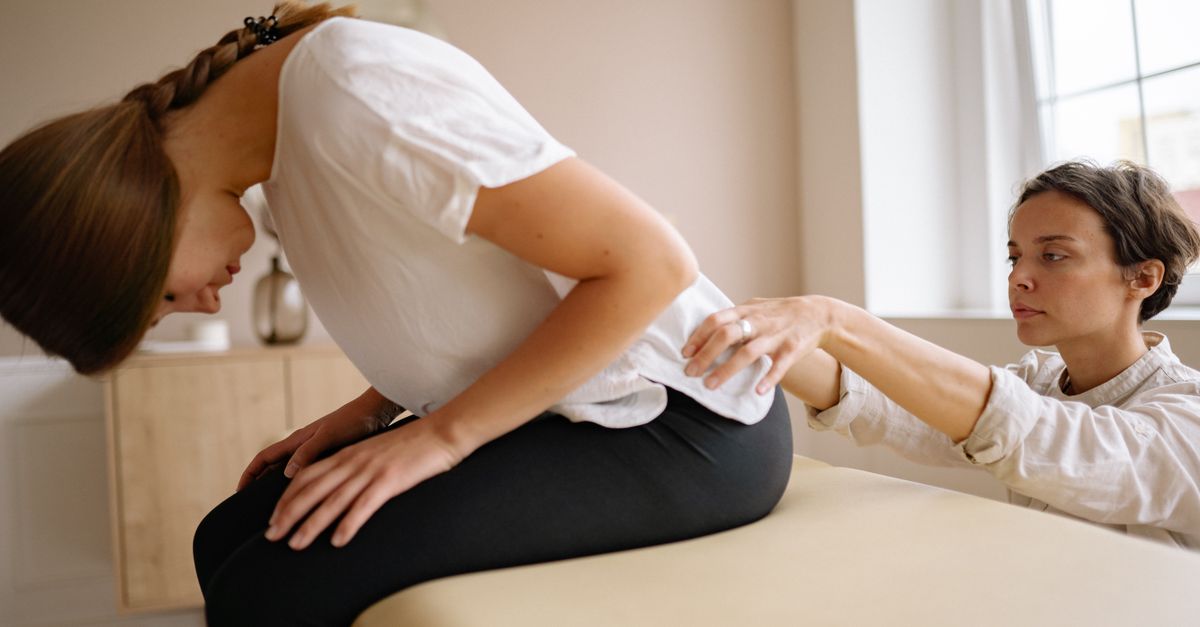
Gluteus maximus pain is aching, tightness, or soreness in the largest muscle of the buttock, usually felt in the fleshy center or upper outer part of the buttock. It typically comes from prolonged sitting, climbing stairs, deep squats, hill walking, or a sudden increase in activity that overloads the muscle. True gluteus maximus pain tends to stay in the buttock, while piriformis and gluteus minimus problems more often send pain down the leg. Pain that travels down the leg with numbness, tingling, or weakness suggests nerve involvement and should be evaluated by a healthcare provider.
You stand up after a long drive or a full afternoon at your desk, and a deep ache settles into one side of your buttock. That ache is often gluteus maximus pain, and it can just as easily follow a weekend of climbing stairs, walking hills, or squatting in the garden, when your backside protests every time you rise from a chair. It is one of the more straightforward sources of buttock discomfort once you know what to look for.
This guide is for anyone trying to figure out what is going on back there: office workers, drivers, older adults working to stay active, and anyone who took on more stairs or lifting than their body was ready for. The gluteal region holds several muscles and a major nerve, so knowing which structure is involved changes what you should do about it. The sections below cover how the gluteus maximus works, what irritates it, how its pain differs from gluteus medius, gluteus minimus, and piriformis pain, which stretches and massage approaches fit, and which symptoms need a doctor's attention.
Gluteus Maximus Pain: Anatomy and Causes
The gluteus maximus is the largest and most superficial of the three gluteal muscles. It forms most of the shape of the buttock and does much of the heavy work every time you move your body upward or forward.
Anatomy of the Largest Buttock Muscle
The gluteus maximus attaches along the back of the pelvis (the outer surface of the ilium), the sacrum, the tailbone, and the thick connective tissue of the lower back. Its fibers run diagonally down and outward, attaching to the upper thighbone and to the iliotibial band on the outside of the thigh. It is supplied by the inferior gluteal nerve.
Its main jobs include:
- Extending the hip, which drives you up out of a chair, up a stair, or up a slope
- Rotating the thigh outward
- Stabilizing the pelvis and trunk when you stand, walk, and lift
- Helping control the lowering phase of a squat or a step down
Because it does so much of the work of rising and climbing, the gluteus maximus takes on heavy loads during everyday tasks that are easy to underestimate.
Why Long Sitting Irritates the Glutes
Sitting places your body weight directly on the gluteal tissue, particularly on hard chairs, car seats, and bleachers. Sustained pressure compresses the muscle and slows blood flow through it, which can leave the area stiff and achy when you finally stand.
Sitting also keeps the hip flexed for hours. The gluteus maximus stays lengthened and mostly inactive in that position while the hip flexors in front shorten. Over weeks and months, this combination can leave the glutes weaker and slower to engage, so they fatigue faster when you do ask them to work.
Stairs, Squats, and Hill Walking
Climbing stairs and walking uphill require repeated hip extension against your full body weight. Deep squats and lifting from the floor load the muscle heavily at its longest point. Walking downhill and stepping down stairs make the muscle work while lengthening to control your descent, a type of effort that tends to produce soreness afterward.
Soreness from unaccustomed activity, known as delayed onset muscle soreness, usually peaks around one to three days after the effort and fades within several days. A true gluteus maximus strain, where fibers are overstretched or partially torn, tends to start more suddenly during the activity and may take a few weeks to settle.
What Gluteus Maximus Pain Feels Like
Pain from this muscle is usually felt in the buttock itself. Typical features include a dull ache or tightness in the fleshy part of the buttock, discomfort when rising from a seat or climbing stairs, tenderness when you press into the muscle, and stiffness after long periods of sitting. Direct bruising from a fall can produce similar local tenderness, sometimes with visible discoloration.
Gluteus Maximus vs. Medius, Minimus, and Piriformis
The gluteus maximus sits on top of several deeper structures, and their symptoms overlap. Location, aggravating activities, and whether pain travels down the leg are the most useful clues.
Gluteus Medius and Gluteus Minimus
The gluteus medius sits higher and more to the side, beneath the upper portion of the gluteus maximus. It holds the pelvis level when you stand on one leg, so problems here show up as pain on the outer hip, discomfort lying on that side, and sometimes a hip drop or limp while walking. If that pattern sounds familiar, our guide to gluteus medius massage techniques covers that muscle in detail.
The gluteus minimus is the smallest and deepest of the three, lying beneath the medius. Irritated areas in this muscle can refer pain down the outside or back of the thigh and calf, which is why it is sometimes mistaken for sciatica. You can read more in our article on gluteus minimus pain and its symptoms.
Piriformis and the Sciatic Nerve
The piriformis is a small, deep muscle running from the sacrum to the top of the thighbone, directly beneath the gluteus maximus. The sciatic nerve passes right next to it. When the piriformis tightens or becomes irritated, it can produce deep buttock pain along with tingling or aching that travels down the back of the leg, often worse with sitting.
Quick Comparison of Buttock Pain Sources
- Gluteus maximus: ache in the fleshy center of the buttock, worse with stairs, hills, squats, and rising from a chair
- Gluteus medius: outer hip pain, worse lying on that side or standing on one leg
- Gluteus minimus: deep outer hip pain that may refer down the side of the leg
- Piriformis: deep buttock pain, sometimes with tingling down the back of the leg, worse with sitting
- Sit-bone area: pain at the bony point you sit on can come from the hamstring tendon attachment rather than the glutes
These patterns are guides, not a diagnosis. A physical therapist or physician can test strength, range of motion, and nerve function to pinpoint the source.
Where Massage Fits for Gluteus Maximus Pain
Massage does not repair a strained muscle, but it can help with the stiffness and reduced blood flow that build up in large muscles kept still or under pressure for long periods. For the glutes, that means addressing the effects of sitting and the tightness that lingers after stairs or hill walking.
Oscillation and Blood Flow in the Glutes
A conventional vibration massager shakes the surface tissue. MedMassager uses oscillating technology to deliver deeper, more controlled vibration than conventional massagers. The Body Massager moves in a circular oscillating motion that reaches thick muscle like the gluteus maximus rather than skimming over it.
That matters for glute pain tied to sitting. The circular oscillating action creates continuous, repetitive movement through the gluteal tissue, which supports local blood flow in a muscle that has been compressed and still for hours. Because the glutes and hips are among the largest muscle groups in the body, that movement covers a lot of tissue in a short session.
How the Body Massager Is Used on the Hips
The Body Massager is an FDA-registered Class I medical device with a large, soft, cushioned contouring pad that forms to the body and easy-to-hold, slip-resistant handles. You can use it on your own in a few positions:
- Lying on your side, holding the pad against the upper buttock or outer hip
- Lying face down, with the pad resting on the fleshy center of the buttock
- Seated, holding the pad against the side of the hip or the upper glute
Adjustable intensity lets you begin gently on sore tissue and increase as it becomes comfortable. You can browse the options in our collection of therapeutic body massagers for the glutes and hips.
Stretches for Gluteus Maximus Pain
Gentle stretching helps restore the hip flexion range that the gluteus maximus allows. Move slowly, stop short of sharp pain, and hold each position for about 30 seconds while breathing steadily.
- Knee to chest: Lie on your back and pull one knee toward your chest with both hands. Keep the other leg flat or bent. Repeat two to three times per side.
- Knee to opposite shoulder: From the same position, guide the bent knee across your body toward the opposite shoulder. This angles the stretch into the outer portion of the muscle.
- Supine figure-four: Cross one ankle over the opposite knee, then pull the lower thigh toward you. This also stretches the piriformis.
- Seated figure-four: Sitting in a sturdy chair, rest one ankle on the opposite knee and lean forward from the hips with a straight back. This version works well during a workday break.
- Child's pose: Kneel, sit back toward your heels, and reach your arms forward. Skip this one if it bothers your knees.
Stretching addresses tightness, but strength matters too. Once the pain settles, a simple glute bridge (lying on your back with knees bent and lifting the hips) helps the muscle engage again after long periods of sitting. A physical therapist can progress this safely if your pain keeps returning.
A Daily Routine for Sore Glutes
Small, consistent habits do more for glute pain from sitting than an occasional long session. The routine below combines movement, stretching, and massage into a simple daily plan.
Break Up Long Sitting
Stand and walk for a minute or two about every 30 to 45 minutes. A cushioned seat reduces direct pressure on the buttock. During long drives, stop periodically to get out and walk.
Pace Stairs, Hills, and Squats
If climbing or squatting triggered the pain, scale back rather than stopping all activity. Take stairs one at a time with the handrail, choose flatter walking routes for a week or two, and reduce squat depth. Reintroduce harder activities gradually as the ache fades.
A Simple Massage and Stretch Sequence
- Warm the area with a few minutes of easy walking.
- Apply the cushioned pad of a body massager for hip and buttock muscles to the sore glute, seated or lying down. Start with about 10 minutes at the lowest setting, once or twice a day.
- Move the pad slowly across the upper buttock, the fleshy center, and the outer hip rather than holding it on one spot.
- Follow with two or three of the stretches above while the muscle is warm.
- Increase intensity gradually over several days if the massage stays comfortable.
Avoid massaging directly over fresh bruising, an open wound, or an area that is swollen and hot. If you want to see the Body Massager Classic and Plus alongside other options, the full MedMassager catalog lists each model.
Red Flags: When Buttock Pain Needs a Doctor
Most muscle-based buttock pain improves with rest, movement, and time. Some symptoms, however, point to nerve compression, joint problems, or other conditions that need proper evaluation. Mayo Clinic describes sciatica as pain that radiates along the path of the sciatic nerve, which branches from the lower back through the hips and buttocks and down each leg.
See a healthcare provider promptly if you notice:
- Pain that runs down the leg below the knee, especially with numbness or tingling
- Weakness in the leg or foot, or difficulty lifting the front of your foot
- Pain that does not improve after a couple of weeks of self-care
- Pain that began after a significant fall or accident
- Swelling, warmth, or redness in the leg
- Fever or unexplained weight loss along with the pain
Seek emergency care right away for numbness in the groin or inner thighs, new loss of bladder or bowel control, or rapidly worsening weakness in both legs. These can signal severe nerve compression that requires urgent treatment.
Frequently Asked Questions
How long does a gluteus maximus strain take to heal?
A mild strain often improves within one to three weeks with relative rest, gentle movement, and stretching. Moderate strains with more fiber damage can take several weeks. Soreness from unaccustomed activity usually fades within a few days. Pain lasting beyond a couple of weeks should be checked by a healthcare provider.
Why does my buttock hurt when I sit for a long time?
Sitting compresses the gluteal muscles under your body weight and slows blood flow through them. It also holds the gluteus maximus in a lengthened, inactive position for hours. Hard seats make the pressure worse, and pain at the sit bone may involve the hamstring tendon attachment rather than the glutes.
Can gluteus maximus pain cause pain down the leg?
Pain from the gluteus maximus usually stays in the buttock and may extend slightly into the upper thigh. Pain that travels down the back or side of the leg, especially below the knee, more often comes from the sciatic nerve, the piriformis, or the gluteus minimus. Leg pain with numbness or weakness needs medical evaluation.
Is it OK to walk with a sore gluteus maximus?
Walking on flat ground is generally fine and helps keep blood moving through the muscle. Reduce stairs, steep hills, and deep squats until the soreness eases. Stop and get evaluated if walking causes sharp pain, a limp, or leg weakness.
What is the best stretch for the gluteus maximus?
The knee-to-chest and knee-to-opposite-shoulder stretches target the gluteus maximus directly. The figure-four stretch, done lying down or seated, also reaches the gluteus maximus along with the piriformis. Hold each stretch for about 30 seconds without forcing it into pain.
Does a massager help with glute pain from sitting?
A massager can help with the stiffness and reduced blood flow that build up in the glutes during long sitting. The MedMassager Body Massager moves in a circular oscillating motion, and that continuous, repetitive movement through the gluteal tissue supports local blood flow in muscle kept still by prolonged sitting. It works best alongside regular movement breaks and stretching, not as a replacement for medical care.
The Bottom Line
Gluteus maximus pain usually stems from long sitting or from stairs, hills, and squats that load the body's largest buttock muscle. It tends to stay in the buttock, which helps distinguish it from gluteus medius, gluteus minimus, and piriformis problems.
Movement breaks, gentle stretching, gradual return to activity, and deep massage on the glutes and hips address the stiffness and reduced blood flow behind this pain. The Body Massager's circular oscillating action creates continuous, repetitive movement in the gluteal muscle, which supports circulation during use. Pain that travels down the leg with numbness or weakness belongs with your doctor. When you are ready to add massage to your routine, explore MedMassager Body Massagers for hip and buttock pain.
This content is for informational purposes only and is not intended as medical advice, diagnosis, or treatment. Always consult a qualified healthcare professional before starting any new treatment or therapy. MedMassager products are FDA-registered Class I medical devices.


