
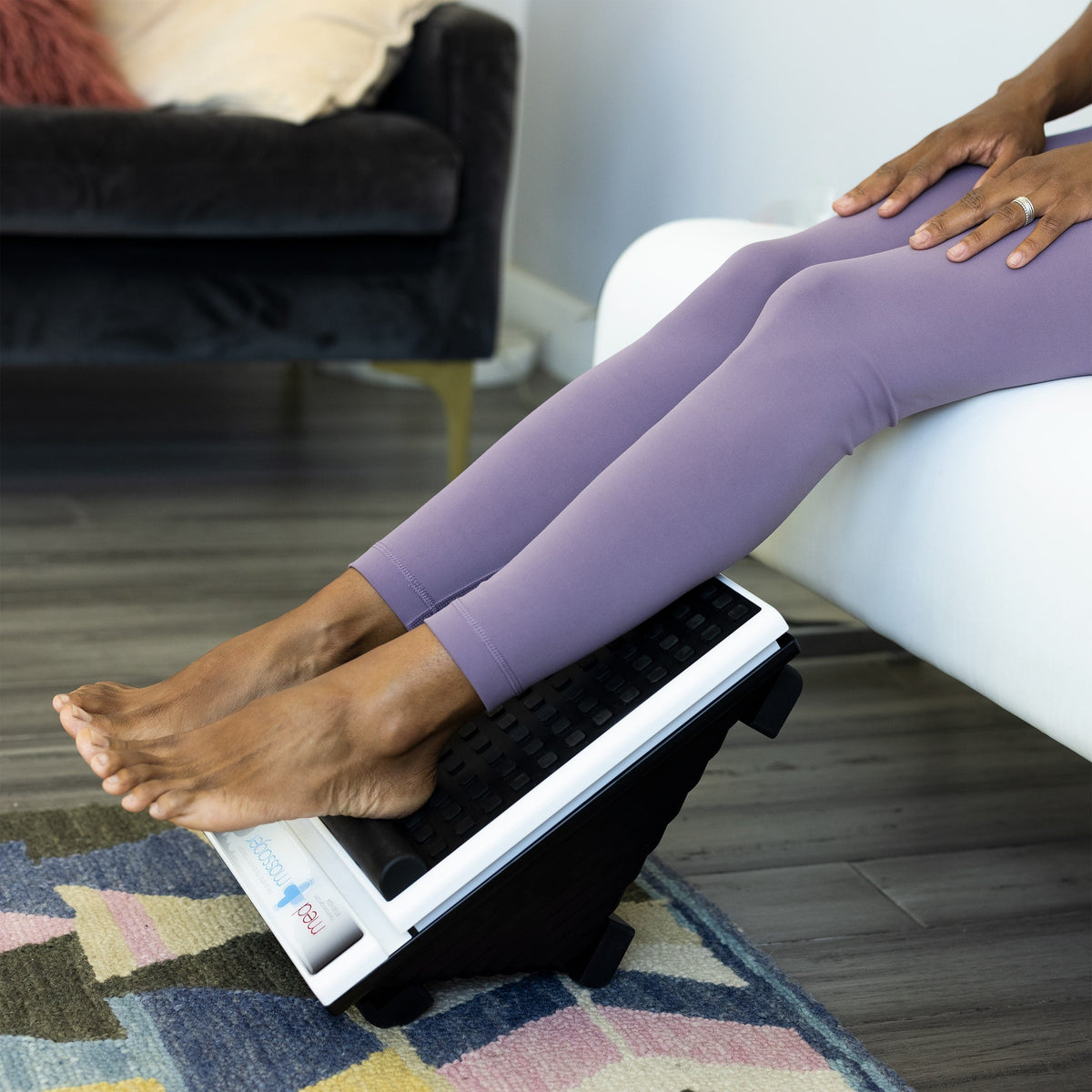
For people with neuropathy, a powered foot massager is usually the more practical choice over a manual foot roller. A roller depends on pressure the user has to judge by feel, and that is harder when sensation in the feet is reduced. A seated oscillating foot massager adds continuous movement to the feet while they rest on a flat platform, so there is no need to press down onto a hard point. Any new foot tool should be cleared by a physician first, and numb feet should be checked for skin changes before and after every session.
If you've been looking for something to help with numb, tingling, or heavy-feeling feet, you've probably run into the foot roller vs foot massager for neuropathy question. One option is a simple manual roller you push your foot across. The other is a powered foot massager that does the moving for you. The choice comes down to a question most product pages skip: how well can you feel what you're doing to your feet?
Rolling a ball or ridged cylinder under the arch works well for many people because they can feel when the pressure is too much. With peripheral neuropathy, that feedback may be dulled or missing. This guide is for people living with neuropathy, and for caregivers shopping on their behalf, who want a plain comparison rather than a sales pitch. It covers how each tool works, the safety checks numb feet need, what to look for in a powered massager, and a seated routine you can discuss with your doctor.
Why Reduced Sensation Changes the Roller Question
A foot roller and a foot massager can look like two versions of the same idea. With neuropathy they are not, because one relies on your sense of touch and the other does not.
What Neuropathy Does to the Feet
Mayo Clinic describes peripheral neuropathy as damage to the nerves outside the brain and spinal cord, often causing weakness, numbness, and pain, usually in the hands and feet. Diabetes is one of the most common causes. Others include chemotherapy, vitamin deficiencies, alcohol use, and some autoimmune conditions.
Symptoms vary from person to person. They commonly include:
- Numbness or a "wearing socks" feeling in the soles
- Tingling, burning, or pins-and-needles sensations
- Reduced ability to sense pressure, temperature, or texture
- Sharp or electric pain that comes and goes
- Poorer balance because the feet send less information about the ground
How a Manual Foot Roller Works
A foot roller is a passive tool. It might be a wooden cylinder, a spiky ball, or a ridged plastic bar. It does nothing until you push your foot into it and roll it with your own leg. The amount of pressure and how long you stay on one spot are entirely up to you.
For someone with full sensation, that is a strength. You feel a tender spot, ease off, and adjust in real time.
The Pressure-Judgment Problem
With reduced sensation, the feedback loop that makes a roller self-limiting gets weaker. You may press harder than you mean to, roll over the same spot longer than intended, or miss a hard ridge pressing into the skin. Spiky or textured rollers concentrate force on small points, which makes this harder still to judge.
A blister, bruise, or small abrasion that goes unnoticed on a numb foot can become a bigger problem over time. That is why the roller question is really a pressure question for people with neuropathy.
Foot Roller vs Foot Massager for Neuropathy Compared
The table below lays out the practical differences between a manual roller and a seated, oscillating powered foot massager.
| Factor | Manual Foot Roller | Seated Oscillating Foot Massager |
|---|---|---|
| Source of movement | Your leg pushes and rolls the foot | The platform oscillates in a circular motion |
| Who controls pressure | You, by feel | Feet rest on the platform; intensity is chosen from adjustable settings |
| Reliance on sensation | High | Lower, because there's no need to press down |
| Contact surface | Narrow ridges, spikes, or a small ball | Open flat platform |
| Continuous movement | Only while you keep rolling | Steady while the unit is running |
| Effort required | Active leg effort throughout | Minimal; you sit and rest your feet |
The biggest difference is where control sits. With a roller, your judgment determines what happens to the sole. With a powered unit, you choose an intensity setting and the platform provides the movement. In practice, that shifts three things for someone with reduced sensation:
- Pressure no longer depends on what you can feel.
- Movement continues without active leg effort.
- The contact surface is flat rather than ridged or spiked.
That steady movement also matters for circulation. People whose neuropathy makes walking uncomfortable often move less during the day, and a powered unit adds motion to the feet on those days.
How a Seated Oscillating Massager Helps
A powered foot massager is not a stronger roller. It works on a different principle: movement delivered to the feet, instead of pressure applied by the feet.
Continuous Movement Without Pushing Down
The MedMassager Foot Massager oscillates in a circular motion beneath an open flat platform. You sit in a chair and rest your feet on top. You don't need to bear down or roll your foot across a hard ridge, so the session doesn't depend on judging pressure you can't fully feel.
For people managing neuropathy, the relevant mechanism is simple. Continuous movement helps keep blood flowing through the feet when natural movement is limited. Many people with painful or numb feet move less during the day, and steady, low-effort movement fills part of that gap. You can browse MedMassager's therapeutic foot massagers to see the platform design.
Calf Activation and Blood Return
The circular oscillating action doesn't stop at the soles. It travels up through the ankles into the lower legs. For people whose neuropathy is related to diabetes, repeated foot motion activates the calf muscles, pushing blood upward instead of letting it pool in the feet.
A roller can create some calf engagement too, but only while you keep working your leg. A powered platform keeps the movement going while you sit still. That matters if fatigue or pain limits how long you can actively roll.
What a Foot Massager Does Not Do
Clarity matters here. A foot massager does not repair nerves, reverse neuropathy, or replace the care plan your doctor has given you. It is a mechanical tool that adds movement, used alongside medication, glucose management, and foot care.
- It supports circulation through repeated movement.
- It adds activity on days when walking is limited.
- It does not restore sensation or change nerve function.
The MedMassager Foot Massager is an FDA-registered Class I medical device, which describes its regulatory category. It is not a claim about treating any condition.
Safety Checks for Numb Feet
Whichever tool you choose, reduced sensation means your eyes have to do the job your nerves can't. Daily foot checks are a standard part of foot care for people with reduced sensation, and they become more important when you add any new tool.
Before You Start
- Ask your physician or podiatrist whether a roller or foot massager is appropriate for you.
- Mention any history of foot ulcers, blood clots, recent injury, or poor circulation.
- Look over both soles, heels, and between the toes for cuts, redness, or blisters.
- Skip the session if you find an open wound, swelling, or warmth in one area.
During and After Each Session
Start at the lowest setting or lightest pressure and keep early sessions short. Afterward, check your feet again. Look for redness that lingers more than a few minutes, new marks, or color changes. A hand mirror or a family member's help makes the soles easier to see.
Rollers call for extra caution here. Ridged and spiked designs can leave marks you won't feel, so the post-session check matters more with a roller than with a flat surface.
Choosing a Foot Roller or Foot Massager
Neither option is right for everyone. Your sensation level, mobility, and your doctor's guidance should drive the decision.
When a Roller May Still Fit
Some people with mild neuropathy keep reliable sensation in parts of the foot. If your physician is comfortable with it, a smooth, non-spiked roller used gently while seated may be reasonable. Situations where a roller is more likely to make sense:
- Your sensation is mostly intact and you can feel pressure clearly.
- You choose a smooth surface over spikes or hard ridges.
- You check your feet carefully before and after each use.
If sensation is significantly reduced, the case for a roller gets weaker. Its core advantage, feel-based control, is the thing neuropathy takes away.
What to Look for in a Powered Massager
Many shoppers search for a vibrating foot massager, and the category covers very different designs. MedMassager uses oscillating technology to deliver deeper, more controlled vibration than conventional massagers. The platform oscillates in a circular motion instead of simply shaking, and that repetitive movement in the foot and calf is what supports circulation during a session. Key features to compare:
- An open flat platform with no hard nodes pressing into the sole
- Adjustable intensity settings so you can start low
- Seated use with your feet simply resting on the platform
- Steady circular oscillation rather than a loose shaking motion
- FDA-registered status, which confirms the device's medical regulatory category
If you've already decided a powered unit is the right direction, our guide to the best foot massager options for neuropathy compares models in more detail. You can also view the full range of MedMassager therapeutic massagers.
A Seated Routine for Neuropathy Feet
A foot massager is used seated, with your feet resting on the platform. The circular oscillating action creates continuous, repetitive movement in the foot and calf, which supports circulation during use, so a consistent routine matters more than a long one. Treat the steps below as a starting point to review with your doctor.
- Inspect your feet. Check the soles, heels, and toes for any marks or open skin before starting.
- Sit in a stable chair. Place the massager on the floor in front of you and rest both feet on the platform.
- Start on the lowest setting. The circular oscillating action should feel steady, not jarring.
- Keep early sessions short. Around 10 to 15 minutes is a reasonable starting point while you learn how your feet respond.
- Increase gradually. Raise intensity or session length only after several sessions without redness or discomfort.
- Re-check your feet afterward. Look for lingering redness or new marks, and pause use if anything changes.
Many people fit sessions into times they're already seated, such as watching television or reading in the evening. Browse seated oscillating foot massagers to find a model that suits your routine.
Frequently Asked Questions
Is a foot roller safe for people with neuropathy?
A foot roller can be used safely by some people with neuropathy, but it depends on how much sensation remains in the feet. Rollers rely on the user to judge pressure by feel, which becomes unreliable when the soles are numb. Smooth rollers are generally less risky than spiked or ridged ones. Check with your physician first, and inspect your feet before and after each use.
Can a foot massager help with neuropathy?
A foot massager does not treat neuropathy or repair nerves, but it can support circulation in the feet. A seated oscillating foot massager adds continuous movement, which helps keep blood flowing through the feet when natural movement is limited. It works best as one part of a broader care plan your doctor oversees.
What is the difference between a foot roller and a foot massager?
A foot roller is a manual tool that only works when you push and roll your foot across it, so you control both pressure and movement. A powered foot massager creates the movement itself, and you choose an intensity setting while your feet rest on it. For people with reduced sensation, that difference determines how much depends on feeling the pressure accurately.
Should I talk to my doctor before using a foot massager with neuropathy?
Yes, you should talk to your physician or podiatrist before starting any new foot tool if you have neuropathy. They can account for foot ulcers, circulation problems, blood clot history, or recent injuries that may affect whether a massager is appropriate. They can also help you set a sensible starting intensity and session length.
How often should you use a foot massager with neuropathy?
Short sessions once or twice a day are a reasonable starting point, but frequency should be confirmed with your doctor. Starting at around 10 to 15 minutes on a low setting lets you watch for skin changes before increasing use. Regular short sessions tend to be more useful than occasional long ones, because the circulation support comes from the repeated movement itself.
Why do people with neuropathy need daily foot checks?
People with neuropathy need daily foot checks because reduced sensation can hide blisters, cuts, and pressure marks that would normally hurt. Small injuries that go unnoticed can worsen over time, especially when circulation is also reduced. A quick visual check of the soles, heels, and toes each day catches problems early.
The Bottom Line
The foot roller vs foot massager for neuropathy decision rests on sensation. A roller puts pressure control in your hands, or rather your feet, which works well when you can feel what's happening and becomes harder when you can't.
A seated oscillating foot massager shifts the work to the device. Your feet rest on a flat platform while the circular oscillating action adds continuous, repetitive movement through the feet and calves that supports circulation. Whichever you choose, check your feet before and after each session and get your physician's input first. When you're ready to compare options, explore MedMassager's seated oscillating foot massagers.
This content is for informational purposes only and is not intended as medical advice, diagnosis, or treatment. Always consult a qualified healthcare professional before starting any new treatment or therapy. MedMassager products are FDA-registered Class I medical devices.


