
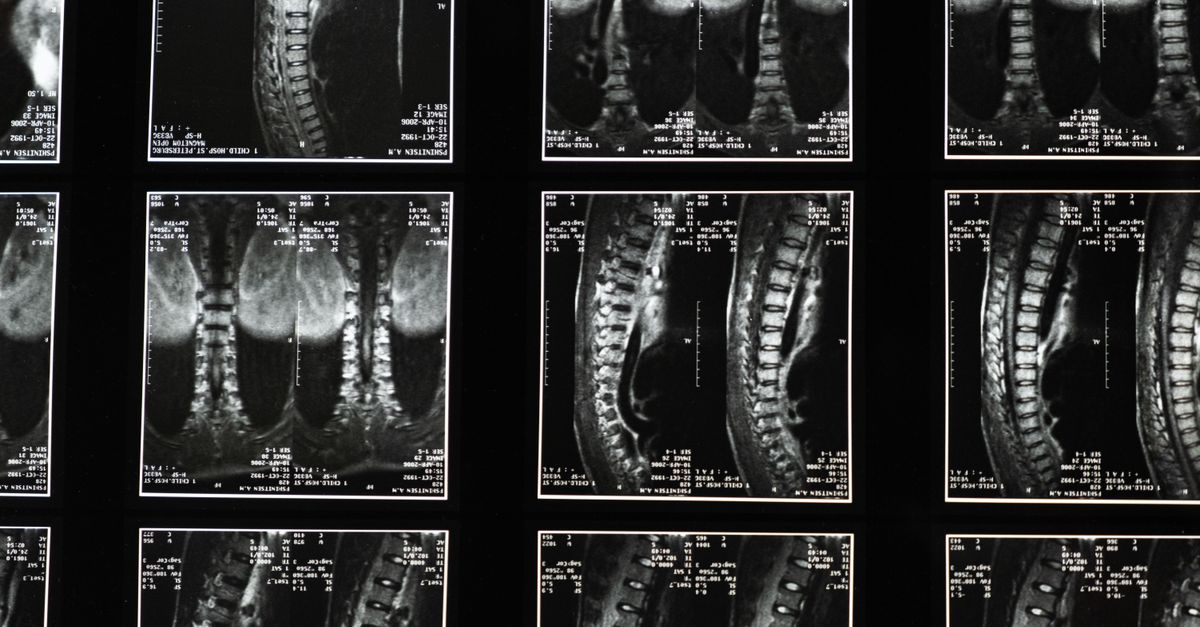
Degenerative disc disease is the term for age-related changes in the spinal discs that cause pain in the neck or lower back. As the discs lose water and height, they absorb shock less effectively, and the nearby joints, nerves, and muscles can become irritated. Disc changes appear on the imaging of adults who have no symptoms at all, so the findings alone do not predict pain, and management centers on exercise, physical therapy, and staying active. Numbness, weakness, or bladder or bowel changes need prompt medical care.
You went in for a stiff lower back and came home with an MRI report that reads "disc desiccation at L4-L5" or "multilevel degenerative changes." When you looked it up, you found the phrase degenerative disc disease, which sounds like something that only gets worse. The name is more alarming than the reality.
Disc degeneration is a normal part of aging and does not always cause pain. When it does hurt, the pain tends to come and go in flares rather than climb steadily.
This guide is for anyone who has been told their discs are wearing, or who lives with recurring neck or lower back pain and wants to understand it. It explains the condition in plain terms, so you can talk with your doctor or physical therapist with a clearer picture. It covers what happens to aging discs, why imaging and pain often don't match, the symptoms in the neck and lower back, the role of exercise and physical therapy, where massage fits, and the red flags that need prompt care.
What Happens to Spinal Discs as You Age
Cleveland Clinic describes the condition as an age-related process in which the discs of the spine break down and cause pain. Despite the name, it is not a disease in the usual sense. The term describes wear that happens in every spine over time, and that wear only sometimes produces symptoms.
Anatomy of a Spinal Disc
Each disc sits between two vertebrae and works as both a shock absorber and a spacer. The outer ring, called the annulus fibrosus, is made of tough, layered fibers. The center, called the nucleus pulposus, is a gel-like core with high water content that spreads pressure evenly when you bend, twist, or carry weight.
Discs have very little direct blood supply. Instead, nutrients diffuse in from the vertebral endplates above and below each disc, and the normal loading and unloading of movement helps that process along. This is one reason staying active is central to managing disc degeneration.
How Discs Change Over Time
Discs begin to change gradually in early adulthood. On an MRI report, these age-related disc changes go by several names:
- Desiccation: the nucleus loses water and appears darker on the scan.
- Loss of disc height: a drier disc flattens and narrows the space between vertebrae.
- Annular fissures: small cracks or tears form in the outer ring.
- Disc bulging: the weakened annulus extends past its normal border.
- Osteophytes: bone spurs develop at the vertebral edges as the spine adapts to changing load.
As disc height drops, the small facet joints at the back of the spine carry more weight. The openings where nerve roots exit the spine can also narrow. Age is the main driver of these changes. Smoking, excess body weight, physically demanding work, earlier back injuries, and family history all affect how early and how quickly they appear.
Why the Neck and Lower Back Are Most Affected
Disc degeneration shows up most in the two most mobile regions of the spine. In the lower back, the L4-L5 and L5-S1 levels carry body weight and absorb repeated bending. In the neck, the C5-C6 and C6-C7 levels handle constant motion as you look down, turn your head, and support its weight.
Cervical disc degeneration often occurs alongside arthritis in the neck joints. Our guide to cervical spondylosis and neck pain covers that combination. A degenerated disc in either region is also more prone to bulging or herniating. If that applies to you, read about using massage safely with a herniated disc before you start any routine.
Why Disc Changes Often Cause No Pain
Disc changes appear on the MRI scans of adults who have never had back or neck pain. In practical terms, they are the spinal version of gray hair: expected with age and not a problem on their own. A report that describes desiccation or a mild bulge is a description of your anatomy. It is not a prediction of how you will feel.
Whether disc changes hurt depends on more than the disc itself. These factors shape your symptoms:
- Whether a bulge or bone spur presses on a nerve root
- Inflammation around an irritated disc or facet joint
- The strength and endurance of the muscles that support the spine
- Muscle guarding, the protective tightening that follows a painful flare
- Sleep quality, stress, and your overall activity level
This is why imaging findings should be read alongside your symptoms and a physical exam. Two people with nearly identical MRIs can have very different experiences.
Degenerative Disc Disease Symptoms in Neck and Back
Symptoms depend on which part of the spine is involved and whether a nerve is affected. Disc-related pain usually comes in flares rather than staying constant. Between flares, you may have stretches of milder discomfort.
Lower Back Symptoms
Lumbar disc degeneration tends to produce:
- A dull, aching pain across the lower back
- Pain that worsens with prolonged sitting, bending forward, or lifting
- Easing when you walk, stand, or change position
- Stiffness after rest, especially in the morning
- Aching that spreads into the buttocks or upper thighs
Pain that shoots below the knee, especially with tingling, points to an irritated nerve root rather than the disc alone. This is commonly called sciatica, and it should be examined by a doctor.
Neck Symptoms
Cervical disc degeneration usually starts as stiffness and reduced range of motion. You may notice it most when you turn your head or look down at a screen. Pain can settle at the base of the skull, across the tops of the shoulders, or between the shoulder blades.
When a cervical nerve root is involved, symptoms travel down the arm. You may notice aching in the shoulder, tingling into specific fingers, or a weaker grip.
How Flares Behave Over Time
A flare often follows a trigger such as a long drive, a day of yard work, or an awkward lift. It may last a few days or several weeks before settling. Pain levels do not track neatly with imaging, so a scan that looks worse years later does not necessarily mean more pain.
Exercise and Physical Therapy for Degenerative Disc Disease
Movement is the foundation of managing disc degeneration. Because discs depend on diffusion for nutrients, regular loading and unloading supports disc health. Stronger trunk muscles also share the work that degenerated discs no longer handle as well. Prolonged bed rest, by contrast, tends to increase stiffness and weaken those supporting muscles.
What a Physical Therapy Program Includes
A physical therapist starts with an exam to find which movements aggravate your symptoms and which ease them. From there, a program typically combines several elements:
- Core and trunk strengthening, including the deep abdominal and back muscles
- Hip mobility and glute strengthening to reduce strain on the lower back
- Deep neck flexor exercises and posture work for neck symptoms
- Nerve gliding exercises when a nerve root is irritated
- Movement retraining for sitting, lifting, and bending
- A graded walking or aerobic plan
Your symptoms may ease when you bend backward and worsen when you bend forward, or the reverse. A therapist can tailor your exercises to that directional preference.
Low-Impact Activity You Can Build On
Walking, water exercise, stationary cycling, and gentle tai chi load the spine rhythmically without jarring impact. A reasonable starting point is a 10 to 15 minute walk on most days. Add a few minutes each week as your back tolerates it.
If one activity reliably triggers a flare, scale it back rather than stopping activity altogether. Staying active at a lower level is better than resting until the pain fully clears.
Daily Habits That Reduce Disc Strain
Sitting puts more pressure on the lumbar discs than standing does, so stand and move every 30 to 45 minutes. When you do sit, use a chair with lower back support and raise your screen to eye level to reduce strain on the neck. Lift with your hips and knees rather than a rounded back.
Keeping a healthy body weight lowers the load on your lumbar discs. Quitting smoking matters too, because smoking reduces blood flow to spinal tissues that already have a limited supply.
Where Massage Fits for Degenerative Disc Disease
Massage does not rebuild disc height or rehydrate a disc. What it can address is the muscle side of back and neck pain. That includes the paraspinal muscles that tighten and guard around a painful segment, and the neck and shoulder muscles that stiffen from hours at a screen. Use it alongside exercise and whatever your doctor or physical therapist has recommended, as one part of a broader plan.
The Body Massager Beside Your Spine
Massagers in this category are often sold as vibration massagers. MedMassager uses oscillating technology to deliver deeper, more controlled vibration than conventional massagers. The Body Massager oscillates in a circular motion through a large, soft, cushioned pad that contours to your body. You hold it by its slip-resistant handles.
For back pain linked to disc degeneration, the circular oscillating action creates continuous, repetitive movement in the muscle tissue under the pad, which supports local blood flow in muscles tightened by prolonged sitting. The MedMassager Body Massager for back pain is an FDA-registered Class I medical device. It has adjustable intensity, so you can start gently. Apply the pad to:
- The long muscles on either side of your lower spine
- The muscles between your shoulder blades and your spine
- The glutes and hips, which tighten when the lower back is guarded
- The hamstrings, which can pull on the pelvis when tight
Sitting is a frequent trigger for lumbar disc pain. One practical option is to rest the pad between your back and the back of a chair, positioned to one side of the spine rather than directly over it.
The Neck Massager for Neck Stiffness
For the neck, a different tool fits better. The Neck Massager with built-in heat uses dual-direction rotating massage nodes. For stiffness that accompanies cervical disc degeneration, the rotating nodes and built-in heat warm and loosen tight muscles, supporting blood flow through the neck.
The dual-direction nodes also target the trapezius and surrounding muscle tissue, which helps ease upper back tightness from prolonged sitting or stress. Keep the nodes on the muscles beside the spine rather than pressing on the vertebrae themselves. Start with a short session at a low setting and see how your neck responds over the next day.
When to Hold Off on Massage
Skip massage over an area that is acutely inflamed, or during a flare in which pain is sharp and spreading rather than dull and local. If you have numbness, weakness, or radiating pain down an arm or leg, ask your doctor or physical therapist before adding any massage tool. Massage does not treat nerve compression, and pressure near an irritated nerve root can make symptoms worse.
Red Flags That Need Prompt Medical Care
Most flares settle on their own with movement and time. A small number of symptoms signal something more serious than disc wear and should not wait for a routine appointment. Contact a doctor promptly, or go to an emergency department, if you notice:
- New weakness in a leg or arm, or a foot that drags or slaps when you walk
- Numbness in the groin, inner thighs, or around the buttocks
- Loss of bladder or bowel control, or difficulty starting to urinate
- Back pain with fever, unexplained weight loss, or a history of cancer
- Pain that began after a fall or accident
- Night pain that does not ease with any position
These signs can point to nerve compression, infection, fracture, or other conditions that need a different kind of care than exercise and massage. Getting them checked early protects your long-term function.
The Bottom Line on Degenerative Disc Disease
Degenerative disc disease describes normal aging in the spine, not a steady decline toward disability. Your MRI findings matter less than how you move, how strong your supporting muscles are, and how well you manage flares. Staying active, working with a physical therapist, and adjusting daily habits do the heavy lifting.
Massage supports that plan by addressing the muscle tension that builds around a painful segment. The Body Massager's cushioned pad applies circular oscillation to the muscles beside the spine, creating continuous movement that supports blood flow in tissue tightened by guarding. Pair it with the exercise and advice your care team has recommended, and seek care quickly if any red flag appears.
Frequently Asked Questions
Is degenerative disc disease actually a disease?
No. The term describes age-related wear in the spinal discs, which happens in every spine over time. It is called a disease only by convention, and the changes it describes are often found in adults who have no pain at all.
Does degenerative disc disease always get worse?
Disc changes on imaging generally progress with age, but pain does not follow the same path. Symptoms tend to come in flares that settle, and a scan that looks worse years later does not necessarily mean more pain. Strength, activity level, and flare management shape how you feel far more than the imaging does.
What is the best exercise for degenerative disc disease?
Walking is the simplest starting point, because it loads the spine rhythmically without jarring impact. A physical therapist can add core and hip strengthening, posture work for the neck, and movement retraining for lifting and bending. Begin with about 10 to 15 minutes of walking on most days and build gradually.
Can massage help degenerative disc disease?
Massage cannot restore disc height or rehydrate a disc, but it can ease the muscle tightness that builds around a painful segment. The MedMassager Body Massager's circular oscillating action creates continuous movement in the muscles beside the spine, which supports local blood flow during use. Use it as one part of a plan built around exercise and your doctor's advice.
Should I avoid sitting if I have degenerative disc disease?
You do not need to avoid sitting, but long unbroken stretches of it raise pressure on the lumbar discs. Stand and move every 30 to 45 minutes, use a chair with lower back support, and keep your screen at eye level to protect the neck. Changing position often matters more than any single posture.
When should I see a doctor for neck or back pain?
See a doctor promptly if you have new weakness in an arm or leg, numbness in the groin or inner thighs, loss of bladder or bowel control, or pain following a fall. Back pain with fever, unexplained weight loss, or pain that does not ease in any position also needs attention. A routine flare that is slow to settle is worth a visit as well, so a physical therapist can tailor your program.
This article is for informational purposes only and does not replace medical advice from your doctor or physical therapist. MedMassager products are FDA-registered Class I medical devices intended for general wellness and are not intended to diagnose, treat, cure, or prevent any disease. Talk with your care team before starting any new exercise or massage routine, especially if you have numbness, weakness, or radiating pain.


