
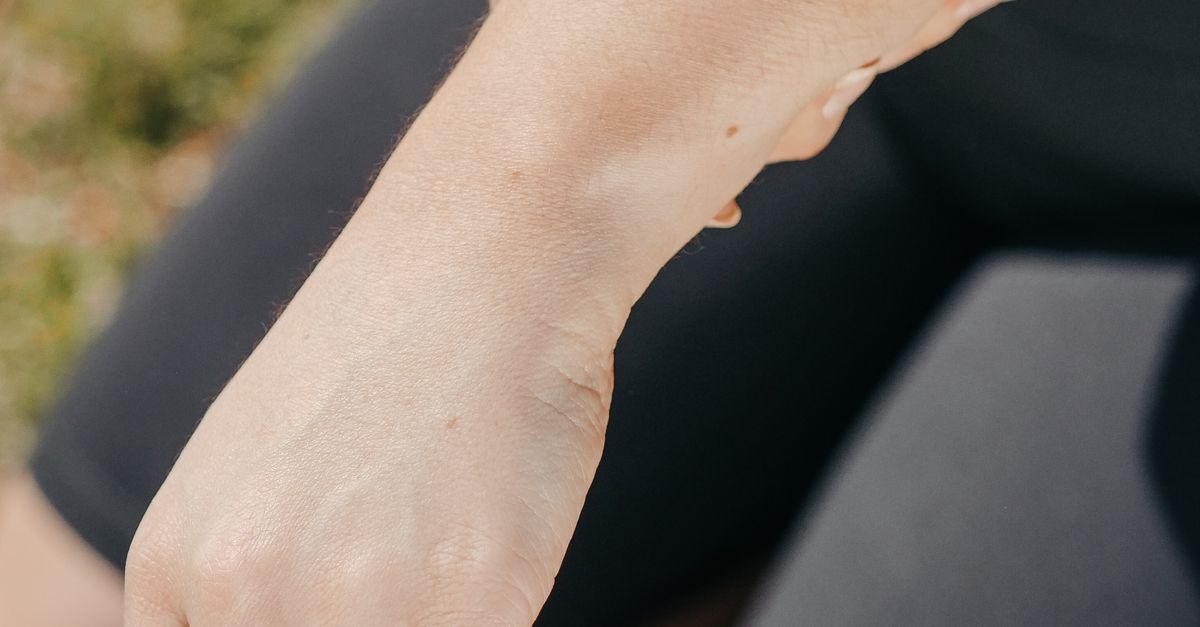
Brachioradialis pain is aching, tightness, or tenderness along the thumb side of the forearm, in the muscle that runs from just above the elbow down to the wrist. It usually develops from repetitive or forceful gripping with the thumb pointing up, such as hammering, carrying bags, or turning a screwdriver. Unlike tennis elbow, which centers on the bony bump at the outer elbow, this pain sits in the fleshy upper forearm and worsens when you bend the elbow against resistance. Rest, gentle stretching, and massage support recovery, while numbness or hand weakness needs a clinician's evaluation.
You spend a Saturday hanging shelves, hauling groceries up the stairs, or clearing out a garage, and by evening the top of your forearm aches every time you lift a coffee mug. That ache along the thumb side of the forearm is often brachioradialis pain. It shows up in carpenters, mechanics, gardeners, parents lifting car seats, and desk workers who spend the day on a keyboard and mouse.
The brachioradialis rarely gets attention until it hurts. It is also easy to confuse with tennis elbow, which affects a neighboring structure and calls for slightly different handling. Knowing which one you have helps you choose the right stretches and change the right activities. It also helps you recognize when symptoms point to a nerve problem rather than a tired muscle.
This guide covers the muscle's anatomy, the activities that strain it, how it differs from tennis elbow, stretches and massage you can use at home, and the warning signs that need professional care.
Brachioradialis Anatomy: Where the Muscle Sits
The brachioradialis is the most superficial muscle on the thumb side of the forearm. To find it, make a fist with your thumb on top and bend your elbow against light resistance from your other hand. The muscle bulges just below the elbow crease on the outer side.
Origin, Path, and Attachment
The muscle starts on the lateral supracondylar ridge of the humerus, a few inches above the elbow on the outer edge of the upper arm. It runs down the forearm as a thick muscle belly, then narrows into a flat tendon through the lower half of the forearm. That tendon attaches to the radial styloid process, the bony knob you can feel on the thumb side of your wrist.
Because it attaches above the elbow and ends at the wrist without controlling the fingers, the brachioradialis works mainly on the elbow. Gripping still loads it heavily, because a firm grip is usually paired with bending or bracing the elbow.
What the Brachioradialis Does
The brachioradialis is an elbow flexor, and it does its strongest work when your forearm is in a neutral, thumb-up position. Picture holding a hammer or lifting a mug by the handle. Its main jobs include:
- Bending the elbow with the thumb pointing up, as in lifting a bucket or a full mug
- Stabilizing the elbow during fast, repeated movements such as hammering
- Helping rotate the forearm back to neutral from a palm-up or palm-down position, as when turning a screwdriver or wringing out a towel
Nerves Running Nearby
The radial nerve supplies the brachioradialis. One branch, the superficial radial nerve, travels beneath the muscle down the forearm and provides sensation to the back of the thumb and hand. Another branch passes through the radial tunnel near the elbow, close to the muscle's upper portion. This proximity matters because a tight muscle and an irritated nerve can produce overlapping symptoms.
What Causes Brachioradialis Pain?
Most cases come from overuse: repeated loading without enough recovery time, which leaves the muscle fatigued, tight, and strained at a microscopic level. Less often, a single heavy lift, a sudden jerk, or a direct blow to the forearm causes the injury.
Gripping and Hammering
A hammer grip places the forearm in exactly the position where the brachioradialis works hardest. Each swing requires the muscle to brace the elbow on impact, and dozens or hundreds of swings add up fast. Screwdrivers, wrenches, pruning shears, and garden trowels create similar repeated loading.
Carrying and Lifting
Carrying grocery bags, a briefcase, or a laundry basket with the elbow slightly bent keeps the muscle under steady tension. Lifting a toddler, hauling a car seat, or pulling a heavy door with a thumb-up grip all load it as well. The longer the carry, the more the muscle fatigues.
Typing and Mouse Use
Desk work strains the forearm differently. Holding the hand over a keyboard or mouse for hours requires a low-level contraction that never fully relaxes. Sustained contraction compresses small blood vessels inside the muscle and limits fresh blood flow, which contributes to tightness and aching by the end of the day.
Symptoms to Recognize
A brachioradialis strain usually announces itself with a cluster of signs that point to the muscle belly rather than the elbow joint:
- Aching or burning in the fleshy upper forearm on the thumb side
- Tenderness when you press the muscle belly a few inches below the elbow
- Pain when lifting with the thumb up, turning a doorknob, or using a screwdriver
- Stiffness after rest, particularly first thing in the morning
- An ache that spreads toward the wrist, the back of the hand, or the web between the thumb and index finger
Brachioradialis Pain vs. Tennis Elbow
The American Academy of Orthopaedic Surgeons describes tennis elbow, or lateral epicondylitis, as a painful condition involving the tendons that attach to the bony prominence on the outside of the elbow. The tendon most involved belongs to the extensor carpi radialis brevis, a wrist extensor that sits right next to the brachioradialis. Because the two structures are neighbors, the conditions are easy to mix up and can occur together.
Location and Tissue
The clearest difference is where the pain sits and what tissue is involved:
- Tennis elbow: Pain at or just below the bony bump on the outer elbow, centered on a tendon attachment
- Brachioradialis strain: Pain in the muscle belly on top of the forearm, further down and closer to the thumb side
Movements That Trigger Each
Tennis elbow tends to flare when you extend the wrist against resistance or lift an object palm-down, such as a full jug held from above. Brachioradialis strain tends to flare when you bend the elbow with the thumb pointing up. Gripping can hurt with either condition, so grip pain alone does not tell them apart.
A clinician can confirm which structure is involved with a hands-on exam. If your pain centers on the outer elbow, our tennis elbow massage techniques and recovery guide covers that condition in detail.
Stretches for Thumb-Side Forearm Pain
Gentle stretching helps restore length to a muscle that has been held in contraction. Aim for a mild, steady pull. Sharp pain, tingling, or numbness during a stretch means you should stop.
Gentle Stretches to Try
- Palm-down forearm stretch: Extend your arm in front of you with the elbow straight and palm facing down. Use your other hand to gently bend the wrist downward and curl the fingers toward the palm. Hold 20 to 30 seconds and repeat 2 to 3 times.
- Straight-arm rotation stretch: Let your arm hang at your side with the elbow fully straight. Turn the palm to face backward, then slightly outward, until you feel a stretch along the top of the forearm. Hold 20 to 30 seconds.
- Thumb-up wrist tilt: Hold your arm straight in front of you with the thumb pointing up. Gently tilt the hand downward toward the pinky side, using your other hand for light assistance. Hold 20 to 30 seconds.
The straight-arm rotation stretch targets the brachioradialis most directly; the other two mainly stretch the neighboring wrist muscles. A reasonable starting point is 2 to 3 rounds of these stretches spread across the day, especially after gripping tasks or long stretches at a keyboard.
Activity Changes That Reduce Load
Stretching works better when you also cut back on what caused the strain. Take short breaks during hammering or yard work, switch hands where possible, and use a cart instead of carrying bags by hand. At a desk, support your forearms on the desk surface or armrests so the muscle is not holding your hand in the air for hours.
Rebuilding Strength
Once pain settles, light strengthening helps the muscle handle everyday loads again. Thumb-up curls with a light can or dumbbell are a simple option. Progress slowly, and ask a physical therapist for a plan if pain returns. For more on working the whole arm, see our complete guide to arm massage techniques.
Where Massage Fits for a Strained Forearm
Massage moves muscle tissue mechanically, which increases local blood flow and helps loosen tightness built up from sustained contraction. For a superficial muscle like the brachioradialis, massage reaches the target tissue directly through the skin.
Vibration Massage and the Oscillation Difference
A conventional vibration massager relies on a motor shaking the unit, and that vibration can feel pleasant on the forearm. The MedMassager Body Massager uses oscillating technology to deliver deeper, more controlled vibration than a conventional massager. It oscillates in a circular motion, so the movement reaches past the skin into the muscle layers underneath.
The Body Massager is an FDA-registered Class I medical device with easy-to-hold, slip-resistant handles and a large, soft, cushioned contouring pad that forms to the curve of the forearm and upper arm. Variable speed lets you start gently and adjust intensity as tolerated. When forearm pain involves tendon irritation or tendonitis, deep oscillation moves surrounding muscle tissue, helping increase blood flow in areas that are stiff or overused. You can review the full MedMassager Body Massager collection, or browse the full lineup of MedMassager therapeutic massagers, where the Body Massager is the model for arm use.
A Seated Forearm Routine
A handheld body massager with a cushioned contouring pad works well on the forearm when you are seated with the arm supported. A straightforward routine looks like this:
- Sit at a table or in a chair with an armrest, and rest your forearm on the surface with the thumb side facing up.
- Hold the massager by its handles and place the cushioned pad on the muscle belly a few inches below the elbow.
- Start at the lowest setting for about 5 minutes, slowly moving the pad down toward the wrist and back up.
- Move the pad to the outer upper arm above the elbow for another few minutes, where the muscle originates.
- Repeat on the other arm if needed. Keep it to about 10 minutes per arm, once or twice a day, and increase intensity only if the area feels comfortable.
Skip any area that is swollen, bruised, or numb. If you have nerve symptoms, a recent injury, or a diagnosed condition, ask your own care team whether mechanical massage fits your plan.
When Numbness or Weakness Needs a Clinician
A strained muscle aches. It does not usually cause numbness, tingling, or loss of strength in the hand. Those symptoms suggest a nerve may be involved, and they deserve a professional evaluation.
Red Flags
- Numbness or tingling in the thumb, index finger, or back of the hand
- Weakness when straightening the fingers or lifting the wrist
- A wrist that droops and cannot be lifted, which needs prompt medical attention
- Swelling, bruising, or a popping sensation at the time of injury
- Pain after a fall or direct blow to the arm
- Pain that wakes you at night or does not improve after a couple of weeks of reduced activity
Nerve Conditions That Mimic Muscle Pain
Radial tunnel syndrome involves compression of a radial nerve branch near the elbow and can cause a deep forearm ache close to the brachioradialis. Wartenberg's syndrome affects the superficial radial nerve near the wrist and causes numbness or burning on the back of the thumb. Irritation of a nerve root in the neck can also send pain and numbness down the thumb side of the arm.
A primary care physician, sports medicine physician, orthopedic specialist, or hand therapist can sort out which structure is involved and recommend the right next steps.
Frequently Asked Questions
Where is the brachioradialis muscle located?
The brachioradialis runs along the thumb side of the forearm, from the outer edge of the upper arm just above the elbow down to the bony knob on the thumb side of the wrist. It is the most superficial muscle in that area. You can see it bulge when you bend your elbow with your thumb pointing up against resistance.
How do I know if it's tennis elbow or brachioradialis strain?
Tennis elbow pain centers on the bony bump on the outside of the elbow and flares when you lift with the palm down or extend the wrist against resistance. Brachioradialis strain sits in the fleshy muscle further down the forearm and flares when you bend the elbow with the thumb up. Because the two can overlap, a clinician's hands-on exam is the reliable way to tell them apart.
How long does a brachioradialis strain take to heal?
Mild overuse strains typically settle over a few weeks when you reduce the activity that caused them and add gentle stretching. More significant strains with swelling or bruising can take longer. If pain is not improving after a couple of weeks, or if you notice numbness or weakness, see a clinician.
Can typing cause pain in the brachioradialis?
Typing and mouse use can strain the brachioradialis when the forearm is held unsupported for long periods. The muscle stays in a low-level contraction that limits blood flow and builds tightness over the day. Supporting your forearms on the desk or armrests and taking regular breaks reduces that load.
Should I use heat or ice for forearm muscle pain?
Ice is generally used for the first day or two after a flare-up, when the area feels warm or sore from recent strain. Heat is better suited to ongoing stiffness and tightness, since it helps relax muscle tissue. Apply either for about 15 to 20 minutes with a cloth barrier between the pack and your skin.
Does a massager help a strained brachioradialis?
A massager can help loosen tight forearm muscle and increase local blood flow during recovery. The MedMassager Body Massager oscillates in a circular motion, and its cushioned pad forms to the forearm so the movement reaches the muscle beneath the skin. Avoid massaging areas that are swollen, bruised, or numb, and ask your care team first if you have nerve symptoms.
The Bottom Line
Brachioradialis pain comes from a hardworking forearm muscle that carries much of the load in thumb-up gripping, hammering, carrying, and long hours at a keyboard. It differs from tennis elbow in location and in the movements that trigger it, and it is usually managed with reduced load, gentle stretching, and massage.
Numbness, tingling, or weakness in the hand signal a possible nerve issue, so treat those as a reason to see a clinician. For at-home muscle care alongside whatever your doctor has recommended, the Body Massager's circular oscillating action moves forearm muscle tissue, which supports blood flow during use. You can explore Body Massagers for forearm and upper arm use.
This content is for informational purposes only and is not intended as medical advice, diagnosis, or treatment. Always consult a qualified healthcare professional before starting any new treatment or therapy. MedMassager products are FDA-registered Class I medical devices.


