
A person with a pacemaker can often use a mechanical body massager, but only after their cardiologist or device clinic confirms it is appropriate for their specific implant. The massager should never be placed on or near the implant site on the chest, and the shoulder and upper back on the implant side should be avoided unless your care team approves them. Electrical stimulation devices such as TENS and EMS units are a separate category and should not be used without explicit cardiologist approval. A mechanical massager moves muscle tissue and does not send electrical current into the body.
If you have a pacemaker and a stiff lower back, you've probably wondered whether using a body massager with a pacemaker is safe. The hesitation is reasonable. Your device keeps your heart on rhythm, and anything with a motor running near your chest deserves a second look before you switch it on.
The good news is that the risk depends heavily on what kind of massager you use and where you put it. A handheld mechanical massager on your thigh is a very different situation from an electrical stimulation pad on your shoulder. This guide is written for people living with a pacemaker or an implantable cardioverter-defibrillator (ICD), and for the family members who help them. It covers how implanted cardiac devices respond to nearby equipment, how mechanical massagers differ from TENS and EMS units, what to ask your cardiologist, and a cautious step-by-step routine for using a handheld massager once you have clearance.
How a Pacemaker Reacts to a Body Massager
Before deciding where a massager can go, it helps to understand what your implant is sensitive to. Most of the concern falls into three areas: magnetic and electrical interference, motion sensing, and physical pressure on the implant site.
What a Pacemaker and an ICD Actually Do
The National Heart, Lung, and Blood Institute describes a pacemaker as a small device placed under the skin of the chest that uses electrical pulses to help control the heartbeat. It is usually implanted just below the collarbone, with thin wires called leads running through a vein into the heart.
An ICD sits in a similar location and also monitors heart rhythm. Unlike a standard pacemaker, it can deliver a shock to correct a dangerous fast rhythm. Both devices constantly listen to the heart's electrical signals, which is why outside interference matters.
Magnets, Motors, and Electrical Interference
Every powered massager, oscillating models included, relies on an electric motor, and electric motors contain magnets. A strong magnet held directly over a pacemaker can switch it into a fixed-rate test mode. A magnet held over an ICD can temporarily suspend its ability to deliver a shock.
Magnetic fields weaken quickly with distance, which is why device clinics typically give patients a minimum distance to keep phones, headphones, and small electronics away from the implant. The practical takeaway is simple: distance from the chest does most of the safety work.
Motion Sensors and Rate Response
Many modern pacemakers include a rate-response feature that speeds up pacing when you are physically active. Some of these use a motion sensor inside the device. Strong mechanical motion transmitted to the chest, including the oscillating motion of a therapeutic massager, can sometimes be read as activity and nudge the pacing rate higher than your body needs.
This is another reason to keep any massager well away from the upper chest and the shoulder on the implant side. The farther the motion is from the device, the less of it reaches the sensor.
The Implant Site Itself
Even without any electronics involved, direct pressure on the pocket where the device sits is a problem. Pressing or rubbing over the site can irritate the skin and the tissue around the device. In the weeks after implantation, it can also stress a healing incision or the newly placed leads. In short, the areas to protect are:
- The implant site on the upper chest, usually just below the collarbone
- The shoulder and armpit on the implant side
- The upper back directly behind the device, unless your cardiologist clears it
- The side of the neck closest to the implant
Mechanical Massagers vs. EMS and TENS Units
The word "massager" covers devices that work in completely different ways. For someone with an implanted cardiac device, this distinction matters more than brand, price, or intensity.
Electrical Stimulation Devices
TENS (transcutaneous electrical nerve stimulation) and EMS (electrical muscle stimulation) units send electrical current through pads stuck to the skin. That current is exactly the kind of signal a pacemaker or ICD is designed to detect. The device can misread it as heart activity, which may lead to inappropriate pacing changes or, with an ICD, an unnecessary shock.
Because of this, people with implanted cardiac devices should not use TENS or EMS units unless their cardiologist has specifically approved it. For a fuller breakdown of the two technologies, see our guide on how a TENS unit compares to a mechanical massager.
Mechanical Massagers
A mechanical massager physically moves muscle tissue. No current passes through your skin, so the main considerations are the motor's magnetic field and the motion itself, both of which drop off sharply with distance. Here is how the categories compare:
- TENS and EMS units: Send electrical current into the body. Require explicit cardiologist approval.
- Mechanical handheld massagers: Move muscle tissue with motorized motion. Generally discussed with a cardiologist, then kept away from the implant area.
- Massagers with built-in magnets marketed as "magnetic therapy": Place magnets directly against the body. Worth avoiding near the chest entirely.
Where Oscillation Fits
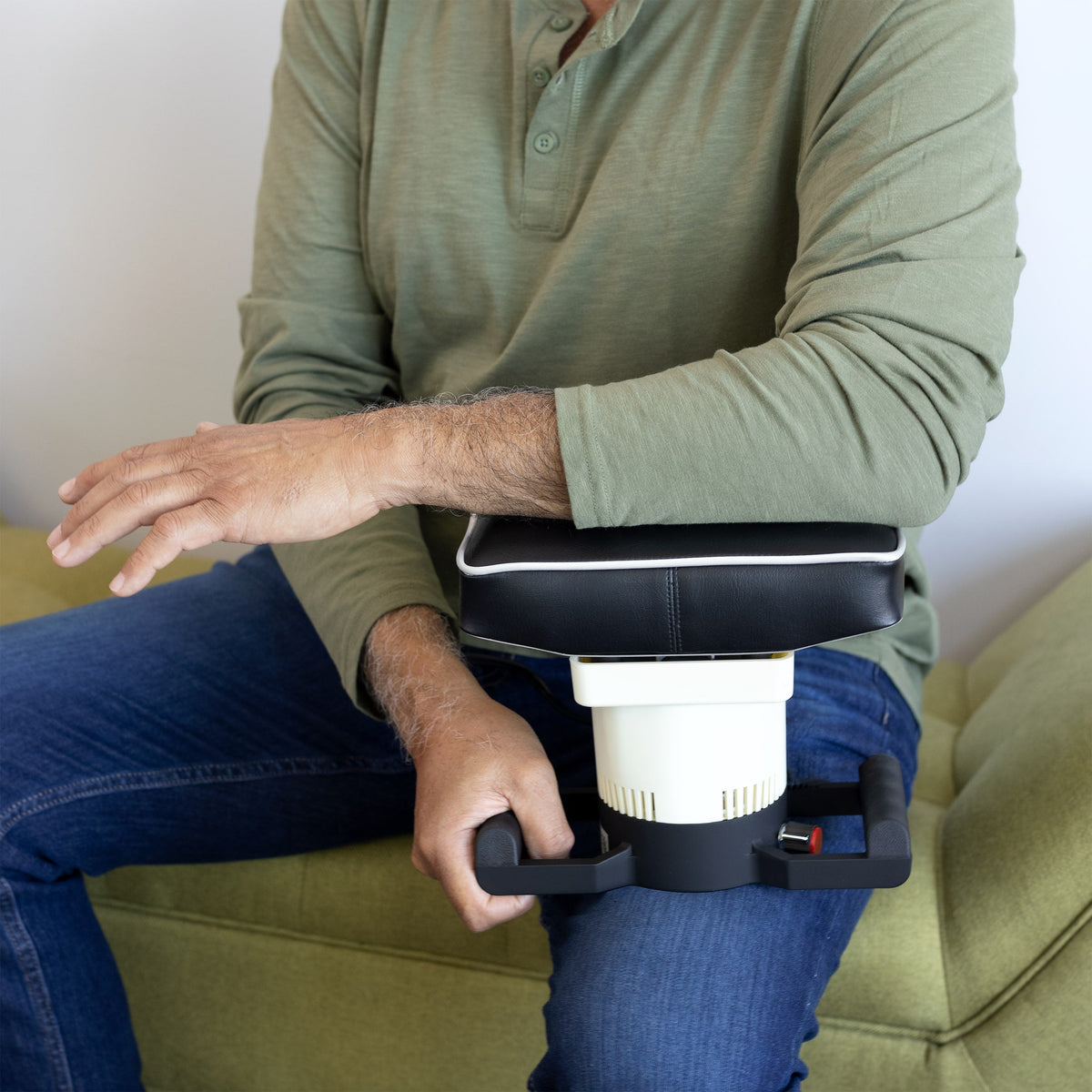
Many people search for a vibration massager, but MedMassager uses oscillating technology to deliver deeper, more controlled vibration than conventional massagers. The Body Massager oscillates in a circular motion through a large, soft, cushioned contouring pad that forms to the body, and it is applied directly to areas like the lower back, thighs, calves, and arms. It is a purely mechanical device with no electrical stimulation pads.
For general back pain, oscillation penetrates deep muscle layers, increasing local blood flow in muscles affected by prolonged sitting. That said, being FDA-registered as a Class I medical device does not mean a massager has been tested with your specific implant. If you are comparing options, our handheld therapeutic body massagers are mechanical, but the same placement rules in this guide still apply.
Questions to Ask Your Cardiologist First
Your cardiologist or device clinic knows your implant model, your settings, and your heart history. A short conversation turns general guidance into advice that fits you.
What to Bring Up at Your Appointment
Bring the massager's name, or a photo of it, to your next visit or device check. These questions cover the details that matter most:
- Is it safe for me to use a motorized handheld massager, and are there any areas I should avoid?
- What distance should I keep motorized devices from my implant?
- Does my device use a rate-response motion sensor that strong movement could affect?
- Is my incision fully healed, and am I past any activity or arm restrictions?
- If I have an ICD, are there extra precautions I should follow?
Signs to Stop and Call Your Care Team
Even with clearance, pay attention to how you feel during and after each session. Dizziness, lightheadedness, or feeling faint are the clearest signals to turn the massager off. Palpitations, a racing heartbeat, or a pulse that feels unusually slow also warrant a call to your cardiologist, as do shortness of breath, chest discomfort, or fatigue that comes on suddenly.
Watch the implant site itself, too. Redness, swelling, warmth, or drainage around the pocket point to a local problem rather than a rhythm issue, and your care team should hear about them promptly. If you have an ICD and receive a shock, follow the plan your device team gave you. Call emergency services for chest pain, fainting, or more than one shock.
Using a Body Massager With a Pacemaker Safely
Once your cardiologist has given the go-ahead, a cautious routine keeps the device far from your implant and lets you see how your body responds before you build up. Start conservatively, then adjust only if everything feels normal.
- Confirm your clearance. Make sure your incision is healed and any post-implant restrictions have ended.
- Start below the waist. Begin with the thighs, hamstrings, or calves, which are the farthest areas from your chest. For thigh and hamstring tightness, deep oscillation increases local blood flow in large muscle groups, supporting recovery during rest.
- Use the lowest intensity. Set the variable speed to its lowest level for your first few sessions.
- Keep the first session short. Five to ten minutes is enough to see how you feel.
- Move to the lower back next. Sit or lie down and apply the cushioned pad to the lower back. If you rest the massager between your back and a chair, keep it at waist level rather than between the shoulder blades.
- Keep your hands below the chest. Hold the slip-resistant handles so the unit stays low, and avoid draping it over the shoulder on the implant side.
- Never use it on the chest. This applies even on the side opposite your implant, since the leads run across the upper chest.
- Check in with yourself afterward. Note how you feel for the next hour, and stop if any warning signs appear.
If your sessions go well, you can gradually extend them to 15 to 20 minutes or raise the intensity one step at a time. When you're ready to choose a unit, look for one designed to apply its pad directly to the legs and lower back, like the MedMassager Body Massager with a cushioned contouring pad.
Special Cases: New Implants, ICDs, and Feet
The general rules above cover most situations. A few circumstances call for extra care, or, in the case of foot devices, a different way of thinking about distance.
The First Weeks After Implantation
The period right after surgery is when leads are most likely to shift and the incision is most vulnerable. Your device team will give you specific instructions, and they take priority over anything you read online. Common guidance during this window includes:
- Avoiding pressure or rubbing on the incision
- Following any limits on raising the arm on the implant side
- Keeping the incision clean and dry as instructed
- Waiting until your first device check before adding new routines
Hold off on any massager until your care team confirms you're healed.
If You Have an ICD
An ICD follows the same placement rules as a pacemaker, with one added concern. Because magnets can temporarily suspend shock therapy, keeping any motorized device away from the chest is especially important. Ask your electrophysiologist whether your model has any additional precautions.
Why Foot Massagers Are a Different Case
A foot massager works on the feet while you sit with them resting on the platform, which puts the motor about as far from a chest implant as a device can be. Your upper body stays clear of the unit for the entire session. We cover this in detail in our article on using a foot massager with a pacemaker.
The MedMassager Foot Massager oscillates in a circular motion under the feet. Repeated foot motion activates the calf muscles, pushing blood upward instead of letting it pool in the feet. For people who want massage without bringing a motor anywhere near the torso, seated therapeutic foot massagers are worth discussing with your cardiologist.
Frequently Asked Questions
Can you use a massager if you have a pacemaker?
Many people with a pacemaker can use a mechanical massager once their cardiologist confirms it is appropriate for their device. The massager should stay away from the implant site, the shoulder on the implant side, and the upper chest. Electrical stimulation devices like TENS and EMS units are a separate category that requires explicit approval.
Can I use a TENS unit with a pacemaker?
You should not use a TENS unit with a pacemaker unless your cardiologist has specifically approved it. TENS units send electrical current through the skin, and a pacemaker can misread that current as heart activity. With an ICD, this kind of interference could also trigger an unnecessary shock.
How far should a massager be kept from a pacemaker?
The safe distance depends on your specific device, so ask your cardiologist or device clinic for their recommendation. As a general practice, keep any motorized massager off the chest entirely and away from the shoulder on the implant side. Areas like the legs and lower back put far more distance between the motor and your implant.
Can vibration affect a pacemaker?
Strong mechanical vibration near the chest, including the oscillating motion of a therapeutic massager, can sometimes be picked up by a pacemaker's rate-response motion sensor. This may cause the device to pace faster than needed for a short time. Keeping massagers away from the upper chest and implant-side shoulder reduces how much motion reaches the device.
Is it safe to get a massage after pacemaker surgery?
You should wait until your incision has healed and your device team has lifted any activity restrictions. During the first weeks, pressure near the implant site can disturb the incision or the newly placed leads. When you do get a massage, tell the therapist about your device so they avoid the chest and implant-side shoulder.
Can I use a massage chair with a pacemaker?
Ask your cardiologist before using a massage chair, because many chairs work the upper back and shoulders, which sit close to the implant. If you get clearance, choose settings that focus on the lower back and legs. Stop the session if you feel dizzy, short of breath, or notice palpitations.
The Bottom Line
Using a body massager with a pacemaker comes down to three rules: get your cardiologist's confirmation first, keep any device away from the implant site and the shoulder on that side, and skip TENS and EMS units unless you have explicit approval. Mechanical massagers don't send current into the body, which makes them a different category from electrical stimulation, but distance from the chest still does most of the safety work.
Start with your legs and lower back, keep sessions short at first, and watch for any warning signs. On those areas, the circular oscillating action creates continuous, repetitive movement in the muscle under the pad, which supports local circulation during use while keeping the motor far from your implant. When you and your care team are ready, you can browse the full range of MedMassager therapeutic massagers and bring the details to your next appointment.
This content is for informational purposes only and is not intended as medical advice, diagnosis, or treatment. Always consult a qualified healthcare professional before starting any new treatment or therapy. MedMassager products are FDA-registered Class I medical devices.


