
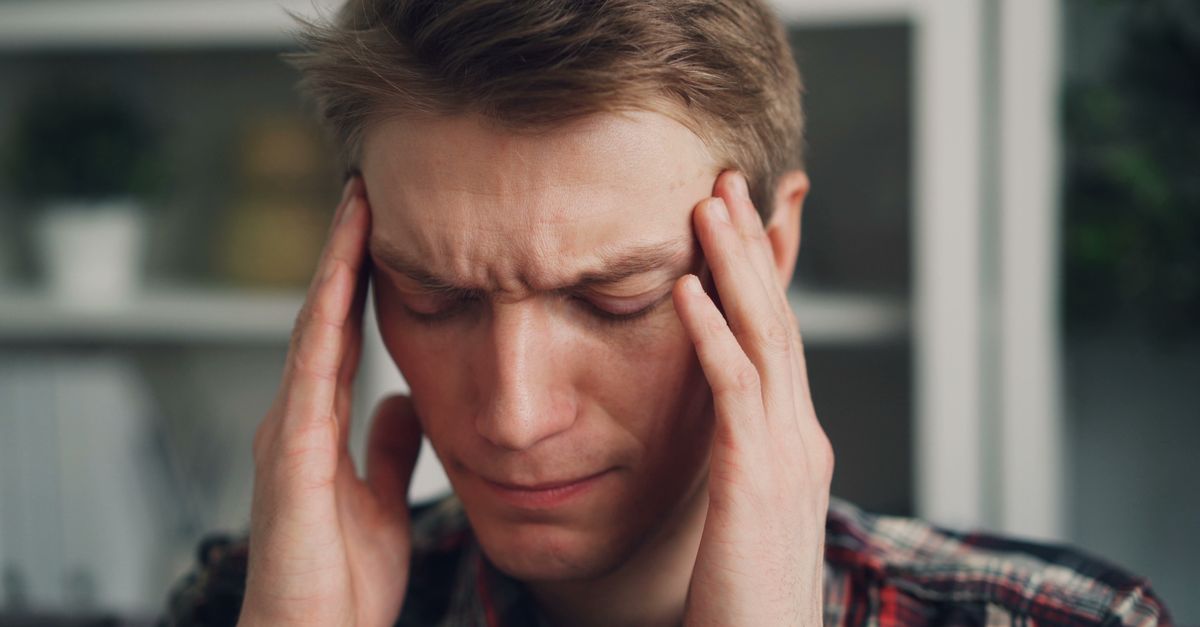
The best massager for tension headaches targets the neck and trapezius muscles rather than the head itself, since tension headache pain typically originates from tight muscles at the base of the skull and upper back. A massager built for this purpose uses dual-direction rotating massage nodes combined with built-in heat to loosen those muscles and support blood flow through the neck. The MedMassager Neck Massager is designed around this exact mechanism for neck and trapezius tension. Look for a device built to work the neck and shoulder muscles directly rather than one that only vibrates against the scalp.
If tension headaches have become a recurring part of your week, you're probably already looking into the best massager for tension headaches to use alongside whatever your doctor has recommended. That pain rarely stays in your head. It radiates from the base of the skull, moves down through the neck, and settles into the shoulders until turning your head feels like work.
Searching for a solution usually turns up two very different categories: devices built for scalp pressure and devices built for the neck and upper back, where tension headache pain actually originates. This guide is for anyone who has tried a heating pad, an over-the-counter pain reliever, or a handheld massage ball with limited results and wants to understand what separates a good option from one that just feels good for ten minutes. It covers what causes tension headaches, how neck massage mechanically helps, what to compare between devices, and how to build a routine around one.
Why Tension Headaches Start in the Neck
Mayo Clinic describes tension headache as the most common type of headache, typically producing a dull, aching sensation and a feeling of tightness or pressure across the forehead or the sides and back of the head. Unlike migraines, tension headaches usually aren't accompanied by nausea or visual disturbances. The pain, however, rarely originates in the head itself.
The Trapezius and Occipital Connection
The trapezius is a large, kite-shaped muscle spanning the neck, shoulders, and upper back. When it tightens from stress or poor posture, it pulls on the muscles at the base of the skull. This tension can affect the nerves running through that area, contributing to the tight, band-like pain that characterizes a tension headache. Anatomically, the neck is deeply intertwined with head pain even though the discomfort presents higher up.
Posture, Screen Time, and Stress
Hours spent hunched over a phone or computer shortens the muscles at the front of the neck while overstretching the ones in the back. This imbalance, sometimes called forward head posture, places continuous low-grade strain on the cervical spine and trapezius. Stress compounds the problem, since many people unconsciously clench their jaw and shoulders when anxious or focused. Over time, this pattern creates the kind of chronic muscle tightness that shows up as recurring tension headaches.
- Prolonged desk work or screen time without breaks
- Poor sleep posture or an unsupportive pillow
- Emotional stress and unconscious jaw or shoulder clenching
- Previous neck injury or whiplash
- Dehydration and skipped meals
Tension Headache vs Other Headache Types
Not every headache responds the same way to neck-focused massage. Migraines involve a different neurological process and often come with sensitivity to light, sound, or nausea. Cluster headaches produce severe, one-sided pain that follows a distinct pattern unrelated to muscle tension. Knowing which type you're dealing with matters, because a massager for tension headache relief is not designed to address vascular or neurological headache types.
How a Neck Massager Eases Tension Headaches
Once tension headache pain is traced to tight neck and shoulder muscles, the logic behind a targeted massager becomes straightforward. The goal is not to press on the head. It is to physically loosen the muscles feeding tension upward, and a neck massager does that in three connected ways:
- Rotating nodes knead the muscles at the base of the neck
- Built-in heat warms tissue and supports blood flow
- Direct contact with the trapezius reaches the muscle group most involved
Dual-Direction Nodes and Muscle Relaxation
The Neck Massager's dual-direction rotating nodes work into the muscles at the base of the neck rather than pressing on a single point. As they rotate, they loosen tissue that contributes to headache pain. This differs from a static pressure-point device, since rotating nodes mimic the kneading motion of a hand working a knot out of tight tissue.
Built-In Heat and Blood Flow
Heat is built directly into the massage function rather than delivered separately with a hot towel. Rotating massage nodes combined with built-in heat warm and loosen tight muscles, supporting blood flow through the neck. Warmth alone won't undo chronic tightness, but paired with mechanical movement, it helps muscle tissue respond faster to the kneading action.
Targeting the Trapezius Specifically
Because the trapezius is often the primary muscle group involved in tension headache pain, a massager needs to reach it directly rather than just the base of the skull. Massage nodes mimic hand kneading on the trapezius muscle, helping loosen tissue that tightens from poor posture or extended screen time. This is one reason a device built specifically for the neck and shoulders differs from a general handheld massager marketed for the whole body.
What to Look For in the Best Massager
Not all devices marketed as head or neck massagers are built the same way. Some rely on simple vibration against the scalp, while others focus on the deeper muscle groups in the neck and upper back. When comparing devices marketed as the best massager for tension headaches, a few features separate one likely to help from one that mostly feels novel for a few minutes.
Dual-Direction Nodes Over Static Pressure
Look for massage nodes that rotate in more than one direction rather than simple vibration against a fixed point. Nodes that mimic a kneading motion work through several layers of neck and trapezius tissue instead of just the surface. This matters because tension headache pain is rooted in muscle tightness, not skin-level sensation.
Built-In Heat as a Standard Feature
Heat should be built into the device rather than something you add separately. A combined heat-and-massage device lets you address both the temperature and mechanical side of muscle tightness in a single session. The MedMassager Neck Massager is engineered as an FDA-registered Class I medical device built around this dual-direction node and heat combination. Its rotating nodes knead into the trapezius while the heat warms the tissue, supporting blood flow through the neck during use.
Ease of Use and Consistency
A neck massager for tension headache relief should be simple enough to use regularly, because consistency matters more than any single session. Straightforward controls and a comfortable session length make daily use realistic.
- Dual-direction rotating massage nodes rather than surface-level vibration
- Built-in heat combined with the massage function
- Comfortable session length for regular use
- Simple, straightforward controls
If you're still weighing whether massage is worth trying at all, our breakdown of whether neck massage helps headaches covers that question in more depth. This guide assumes you've made that decision and are now comparing specific devices for tension headache relief.
Daily Routine for Tension Headache Relief
Consistency tends to matter more than intensity when using a neck massager for tension headache relief. A short daily habit, built around the times of day muscle tightness tends to peak, works better than an occasional long session. During each session, the rotating nodes knead the trapezius while the built-in heat warms the tissue, supporting blood flow through the neck.
- Sit in a supportive chair with your shoulders relaxed and back straight.
- Position the Neck Massager so the nodes rest against the upper trapezius at the base of your neck.
- Allow the built-in heat and rotating nodes to work for a short session, typically 10 to 15 minutes.
- Notice how your neck and shoulders feel afterward, and adjust positioning if one side feels tighter than the other.
- Pair sessions with basic neck stretches, posture breaks, and hydration throughout the day.
Many people build this into a midday or evening habit, especially on days involving long stretches at a desk. The routine works alongside other habits, not instead of them.
Who Benefits Most From Neck Massage Therapy
Tension headache patterns vary from person to person, but a few groups tend to notice the clearest connection between neck tightness and headache frequency.
Desk Workers and Screen-Heavy Jobs
People who spend most of the day at a computer or looking down at a phone are especially prone to the forward head posture that feeds neck and trapezius tension. For this group, a short massage routine layered on top of posture changes tends to address the mechanical root of the problem rather than just masking the pain afterward.
When Tension Headaches Signal Something Else
Occasionally a headache pattern points to something beyond muscle tightness, and that's worth recognizing before relying on a massage routine alone.
- A headache that comes on suddenly and severely, unlike your usual pattern
- Headache accompanied by fever, stiff neck, confusion, or vision changes
- Headache following a head or neck injury
- Headaches that steadily worsen over days or weeks
Any of these warrant a conversation with a healthcare provider rather than a massage routine. A neck massager is built for muscular tension, not for diagnosing or ruling out more serious causes of head pain.
Frequently Asked Questions
What is the best massager for tension headaches?
The best massager for tension headaches is one built to target the neck and trapezius muscles rather than the scalp, since that's typically where the underlying tightness starts. Devices with dual-direction rotating massage nodes and built-in heat work through muscle tissue more thoroughly than surface-level vibration alone. The MedMassager Neck Massager is built around this combination specifically for neck and shoulder tension.
Can a neck massager help with tension headaches?
A neck massager can help with tension headache pain by physically loosening the neck and trapezius muscles that contribute to it. Rotating massage nodes combined with built-in heat warm and loosen tight muscles, supporting blood flow through the neck. It isn't a treatment or cure for headaches, but it addresses one of the physical contributors to the pain.
How often should you use a neck massager for headache relief?
Many people find a short daily session, especially after long stretches at a desk, fits naturally into a routine. There's no single frequency that works for everyone, so it helps to start with one session a day and adjust based on how your neck and shoulders respond. Consistency over time tends to matter more than any single long session.
What's the difference between a tension headache and a migraine?
A tension headache typically produces a dull, band-like pressure across the head without nausea or visual symptoms, while a migraine often involves throbbing pain, sensitivity to light or sound, and sometimes visual disturbances. Tension headaches are usually linked to muscle tightness in the neck and shoulders. Migraines involve a different neurological process and aren't primarily addressed by neck-focused massage.
Does heat help with tension headaches?
Heat helps relax tight muscles, which can ease some of the tension feeding a headache. When combined with mechanical massage, heat allows tissue to loosen more readily than heat alone. This is why devices that pair built-in heat with rotating massage nodes tend to loosen tissue more readily than a heating pad by itself.
Are handheld head massagers effective for tension headaches?
Handheld massagers that focus on scalp pressure alone often miss the neck and trapezius muscles where tension headache pain typically originates. They can feel relaxing in the moment but may not address the underlying muscle tightness. A device built for the neck and upper back tends to target the source more directly.
Is it safe to use a neck massager every day?
For most people without underlying neck conditions, short daily sessions are generally well tolerated. Anyone with a recent neck injury, a diagnosed cervical spine condition, or unusual symptoms should check with a healthcare provider before starting a daily routine. Adjusting positioning and session length based on comfort is a reasonable approach for everyday use.
Bottom Line: Choosing the Best Neck Massager
Tension headache pain almost always traces back to tight muscles in the neck and trapezius, not the head itself. That's why the best massager for tension headaches is built to work through that muscle group directly, using dual-direction rotating nodes and built-in heat rather than surface-level vibration. The nodes knead into tight trapezius tissue while the heat warms the muscle and supports blood flow through the neck. MedMassager has spent more than 15 years designing therapeutic massagers around targeted mechanisms like this one.
If you're ready to move from research to routine, the Neck Massager is built specifically for neck and trapezius tension, giving you a straightforward way to work heat and massage into a daily habit.
This content is for informational purposes only and is not intended as medical advice, diagnosis, or treatment. Always consult a qualified healthcare professional before starting any new treatment or therapy. MedMassager products are FDA-registered Class I medical devices.


