
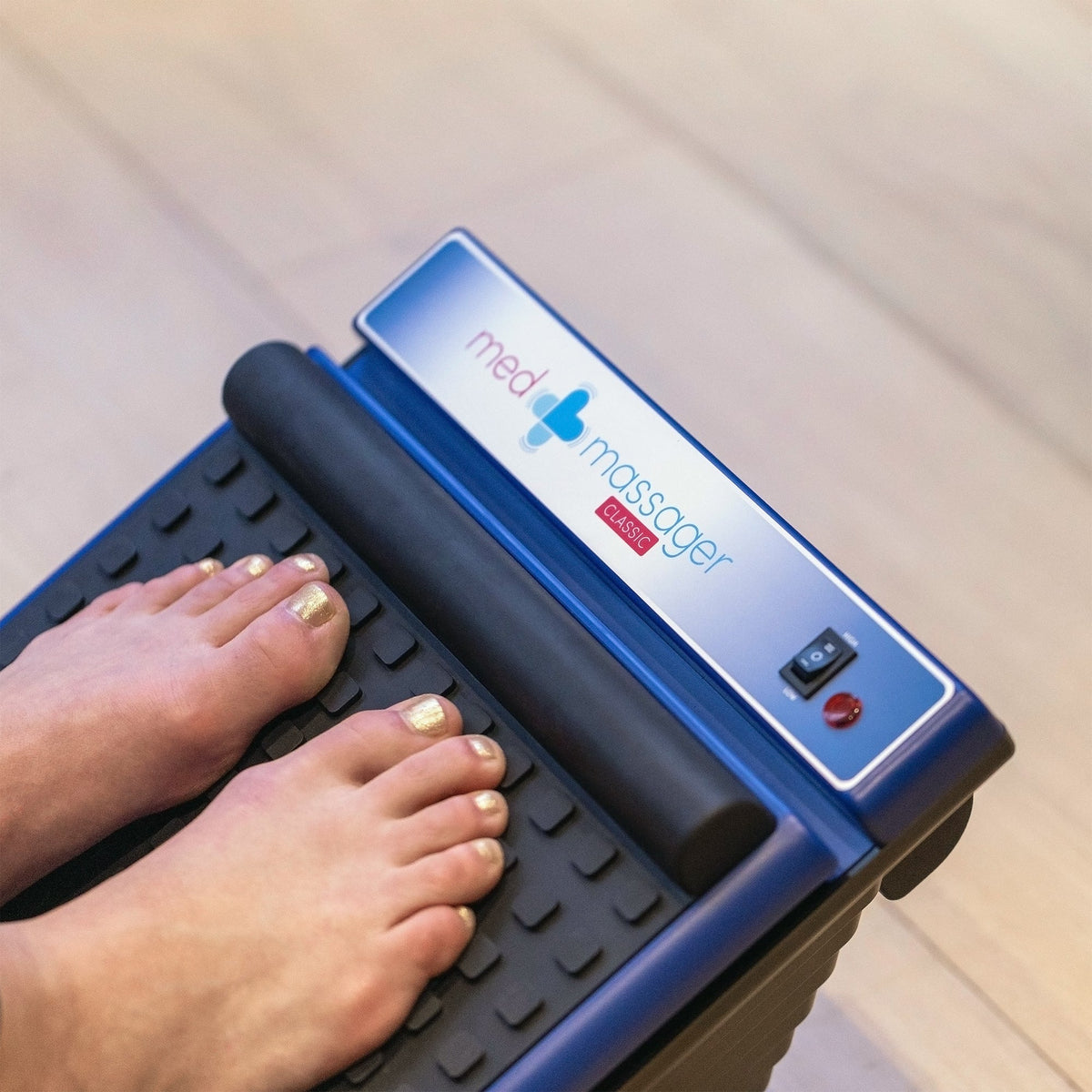
The best leg massager for neuropathy is one you can use seated, without reaching or gripping, and at a controlled intensity, because reduced sensation in the legs and feet makes it harder to judge pressure. Compression leg wraps squeeze the legs with inflatable sleeves. Handheld massagers depend on you to reach your legs and apply pressure. Seated oscillating foot platforms move the feet so the calf muscles contract and push blood upward, which makes them a practical option for supporting lower-leg circulation, but anyone with reduced sensation should check with a physician before using any leg massager.
If your legs feel heavy by evening and your feet feel numb or prickly no matter how you sit, you have probably searched for the best leg massager for neuropathy at least once. The results tend to be a confusing mix of inflatable compression boots, handheld units, and foot machines, and most product pages were written for sore muscles, not for legs that can't fully feel what's happening to them.
That difference matters. Choosing a leg massager for neuropathy is a different decision from choosing one for post-workout tightness, because reduced sensation changes what is safe, what is practical, and what is worth paying for. This guide is for people living with peripheral neuropathy, whether it comes from diabetes, chemotherapy, or another cause, and for family members shopping on their behalf. Below, you'll find how neuropathy affects the legs, how the calf muscle pump moves blood, a side-by-side comparison of the three main device types, and a seated routine to discuss with your doctor.
How Neuropathy Affects Your Legs
Before comparing devices, it helps to understand what neuropathy changes in the lower body. Those changes explain why some massager designs fit this situation better than others.
What Peripheral Neuropathy Does
Mayo Clinic describes peripheral neuropathy as damage to the nerves outside the brain and spinal cord, which often causes weakness, numbness, and pain, usually in the hands and feet. In the legs, symptoms typically begin in the toes and soles and can gradually extend toward the ankles and calves. Diabetes is one of the most common causes, though neuropathy can also follow chemotherapy, vitamin deficiencies, heavy alcohol use, autoimmune conditions, and injuries.
Common symptoms in the feet and legs include:
- Numbness or a reduced ability to feel touch, temperature, or pain
- Tingling or a pins-and-needles sensation
- Burning or sharp pain that is often worse at night
- Weakness in the muscles of the feet and ankles
- Balance problems, especially in low light
Why Movement and Circulation Matter
Many people with neuropathy end up moving less. Foot pain, unsteady balance, and fatigue all make walking feel like more effort than it is worth. The result is long stretches of sitting, and when the calf muscles stay still, blood moves more slowly through the lower legs.
For people whose neuropathy is linked to diabetes, this adds to an existing concern, since diabetes can also affect blood vessels in the legs and feet. Keeping the lower legs moving during the day is a reasonable goal you can discuss with your doctor, and it is the goal most leg massagers for neuropathy are built around.
Why Reduced Sensation Changes the Decision
If you cannot fully feel your feet or calves, you cannot reliably tell when pressure is too strong, heat is too hot, or a strap is rubbing skin raw. That is the central reason a neuropathy leg massager needs different buying criteria than one for ordinary muscle soreness. Any device that depends on you sensing when it is "enough" carries more risk when sensation is reduced, so a physician check comes before any purchase.
How the Calf Muscle Pump Moves Blood
The most useful concept for evaluating a massager for neuropathy in the legs is the calf muscle pump. It explains why a device doesn't have to wrap around your leg to support lower-leg circulation.
The Calf Muscle Pump Explained
Your calf muscles are often called the body's "second heart." When the calf muscles contract, they squeeze the deep veins of the lower leg and push blood upward toward the heart, while one-way valves inside the veins keep it from sliding back down. When the calves stay relaxed for hours, that pumping action slows, and blood tends to settle in the feet and ankles.
Everyday actions that engage the calf pump include:
- Walking, even short laps around the house
- Seated ankle pumps (pointing and flexing the feet)
- Seated heel raises
- Repeated, rhythmic foot motion
Why Leg Circulation Can Start at the Feet
A seated oscillating foot platform takes advantage of this anatomy. You sit in a chair, rest your feet on the platform, and the unit oscillates in a circular motion. For people living with neuropathy, continuous movement helps keep blood flowing through the feet when natural movement is limited.
The effect doesn't stop at the ankles. Repeated foot motion activates the calf muscles, pushing blood upward instead of letting it pool in the feet. Blood pushed upward from the calves continues circulating through the upper leg while you rest. That is why a seated foot platform is worth considering if you are shopping for a leg device, since therapeutic foot massagers that work through the calf pump.
Vibration vs. Oscillation
Many products sold as vibration leg massagers rely on a motor shaking the unit, which mostly creates surface buzzing. MedMassager uses oscillating technology to deliver deeper, more controlled vibration than conventional massagers. The circular oscillating action moves the whole foot rhythmically, which is what engages the calf muscles rather than just stimulating the skin.
Best Leg Massager for Neuropathy: Options Compared
Most products marketed for neuropathy fall into three categories. Each works differently, and each asks something different of the person using it. If swelling rather than neuropathy is your main concern, see this separate guide to leg massager options for swelling.
Compression Leg Wraps
Compression leg massagers use inflatable sleeves that wrap around the feet, calves, and sometimes thighs, then fill with air and release in cycles. Once they are strapped on, they run on their own while you sit or recline.
The considerations for neuropathy are fit and feedback. You have to put the sleeves on and adjust them correctly, which can be difficult with limited hand strength or flexibility. You also can't see your skin while the sleeves are on, and reduced sensation makes it harder to notice if pressure feels wrong. People with certain heart or vascular conditions, or a suspected blood clot, are typically told to avoid compression devices unless a doctor directs otherwise.
Handheld Massagers
Handheld massagers put you in control of placement, which works well for the calves and thighs if you can reach them comfortably. The MedMassager Body Massager is a handheld unit with slip-resistant handles and a large, soft, cushioned contouring pad that forms to the body. You can use it seated or lying down, applied directly to the calves, thighs, or hamstrings. The circular oscillating action of the pad moves the large muscle groups of the leg, which supports local blood flow while you rest.
The trade-off is effort and judgment. Reaching the lower legs means bending forward, holding the unit in place, and deciding how firmly to press, which is harder when sensation is reduced. For thigh and calf muscle tightness, a handheld Body Massager for calves and thighs can complement a seated foot platform rather than replace it.
Seated Oscillating Foot Platforms
A seated foot platform engages the lower leg through the calf pump instead of applying pressure to the leg directly. For neuropathy, this design has several practical advantages:
- You stay seated the entire time, which avoids balance concerns
- You simply rest your feet on the platform, with no straps, bending, or grip required
- An open flat platform lets you see your feet throughout the session
- Adjustable intensity lets you start low and increase gradually
On the MedMassager Foot Massager, the platform oscillates in a circular motion, so repeated foot motion activates the calf muscles and moves blood upward through the leg.
Side-by-Side Comparison
| Device Type | How It Works | Effort Required | Key Neuropathy Consideration |
|---|---|---|---|
| Compression leg wraps | Inflatable sleeves squeeze and release the leg | Strapping on and adjusting sleeves | Skin is covered and pressure is hard to judge with reduced sensation |
| Handheld massagers | You apply the unit to target muscles | Reaching, holding, and pressing | Placement and pressure depend on your own feedback |
| Seated oscillating foot platform | Foot motion activates the calf muscle pump | Sit and rest feet on the platform | Seated, no straps or reaching, and feet stay visible |
Choosing a Leg Massager for Neuropathy
Whichever category you lean toward, the same criteria separate a good fit from a poor one. Use these as a checklist before you buy.
Features Worth Prioritizing
- Seated use, so balance is never a factor
- Operation that doesn't depend on grip strength or reaching
- Adjustable intensity with a genuinely gentle lowest setting
- An open design that lets you inspect your skin before, during, and after
- A circulation-focused mechanism rather than surface buzzing
- FDA-registered Class I medical device status, which signals the product is registered as a medical device rather than sold as a gadget
Enough movement matters too, because a unit that barely stirs the feet may not engage the calves. The MedMassager Foot Massager pairs its circular oscillating motion with adjustable intensity, so you can start gently and increase until the feet are moving enough to work the calf muscles. For a closer look at foot-specific options, see this guide to the best foot massager for neuropathy.
Claims and Features to Question
Be cautious with high heat settings if your skin has reduced sensation, since a burn can develop without you noticing. Enclosed designs that hide your feet make skin checks harder. Treat any product that promises to repair nerves, reverse neuropathy, or replace medical care with skepticism, because no massager can make those claims honestly.
A Seated Daily Routine for Neuropathy
Once your doctor has cleared you, a consistent routine matters more than long sessions. With a seated MedMassager Foot Massager, continuous movement helps keep blood flowing through the feet when natural movement is limited. The circular oscillating action moves the whole foot rhythmically, which engages the calf muscles and supports circulation during use. The routine below keeps that movement controlled.
- Inspect both feet before you start, using a mirror for the soles. Look for cuts, blisters, redness, or swelling.
- Sit in a stable chair with a backrest, knees bent at roughly a right angle, and rest your bare or socked feet flat on the platform.
- Start on the lowest intensity setting for about 10 minutes.
- Over the following week, increase to 10 to 15 minutes and raise intensity gradually only if it stays comfortable.
- Use it once or twice a day during times you would otherwise sit still, such as after meals or while watching TV.
- Check your feet again afterward and stop if you notice new redness, marks, or discomfort.
When to Check With Your Doctor First
A physician check is the right first step for anyone with reduced sensation in the legs or feet. Your doctor or podiatrist knows your circulation, skin health, and medications, and can tell you which device type fits your situation.
Talk to a healthcare professional before using any leg massager, and seek care promptly, if you have:
- Open sores, ulcers, or wounds on the feet or legs that are slow to heal
- Sudden swelling, warmth, redness, or pain in one calf, which can signal a blood clot
- A history of blood clots or recent leg surgery
- Diagnosed peripheral artery disease or a heart condition
- Skin color changes in the feet, such as pale, bluish, or darkened areas
If you have diabetes, daily foot checks remain essential whether or not you use a massager. A massager is something to use alongside whatever your doctor has recommended, not a substitute for it.
Frequently Asked Questions
Does a leg massager help with neuropathy?
No leg massager treats neuropathy or repairs damaged nerves. What a well-chosen massager can do is support circulation in the lower legs when you are less active. With a seated oscillating foot platform, continuous movement helps keep blood flowing through the feet when natural movement is limited, and the calf muscles help push that blood upward.
Are compression leg massagers safe for neuropathy?
Compression leg massagers can be appropriate for some people, but safety depends on your health history. Reduced sensation makes it harder to tell if the sleeves are too tight or rubbing your skin. People with a suspected blood clot or certain heart and vascular conditions are typically advised to avoid compression unless a doctor approves it.
Is a foot massager or a leg massager better for neuropathy?
For many people with neuropathy, a seated oscillating foot massager is the more practical choice because you simply rest your feet on it and the feet stay visible. Repeated foot motion activates the calf muscles, pushing blood upward instead of letting it pool in the feet, so it supports the lower leg without wrapping or pressing on it. A handheld massager can still be useful for calf and thigh muscle tightness if you can reach those areas comfortably.
How long should you use a massager for neuropathy in your legs?
Start with about 10 minutes at the lowest setting and work up to 10 to 15 minutes, once or twice a day. Short, consistent sessions are easier to monitor than long ones. Always follow any session guidance your doctor gives you.
Can massage make neuropathy worse?
Massage that is too forceful or too hot can injure skin you can't fully feel, causing bruising, blisters, or burns that go unnoticed. That risk is higher with numbness in the feet and lower legs. Gentle intensity, no high heat on numb skin, and skin checks before and after each session lower that risk.
What exercises help circulation in legs with neuropathy?
Seated ankle pumps, where you point and flex your feet, are a simple way to engage the calf muscles. Seated heel raises and toe taps also work the lower legs without balance demands. Short, frequent walks are helpful if your doctor says they are safe for you.
The Bottom Line
The best leg massager for neuropathy is one that works without relying on sensation you may not have: seated, simple to use without reaching or gripping, adjustable, and open enough to keep an eye on your skin. Compression wraps and handheld massagers each have a place, but a seated oscillating foot platform engages the calf muscle pump to move blood upward through the leg with minimal effort.
Talk with your physician first, then browse professional-grade foot massagers built for seated use or explore the full MedMassager lineup of FDA-registered therapeutic massagers.
This content is for informational purposes only and is not intended as medical advice, diagnosis, or treatment. Always consult a qualified healthcare professional before starting any new treatment or therapy. MedMassager products are FDA-registered Class I medical devices.


