
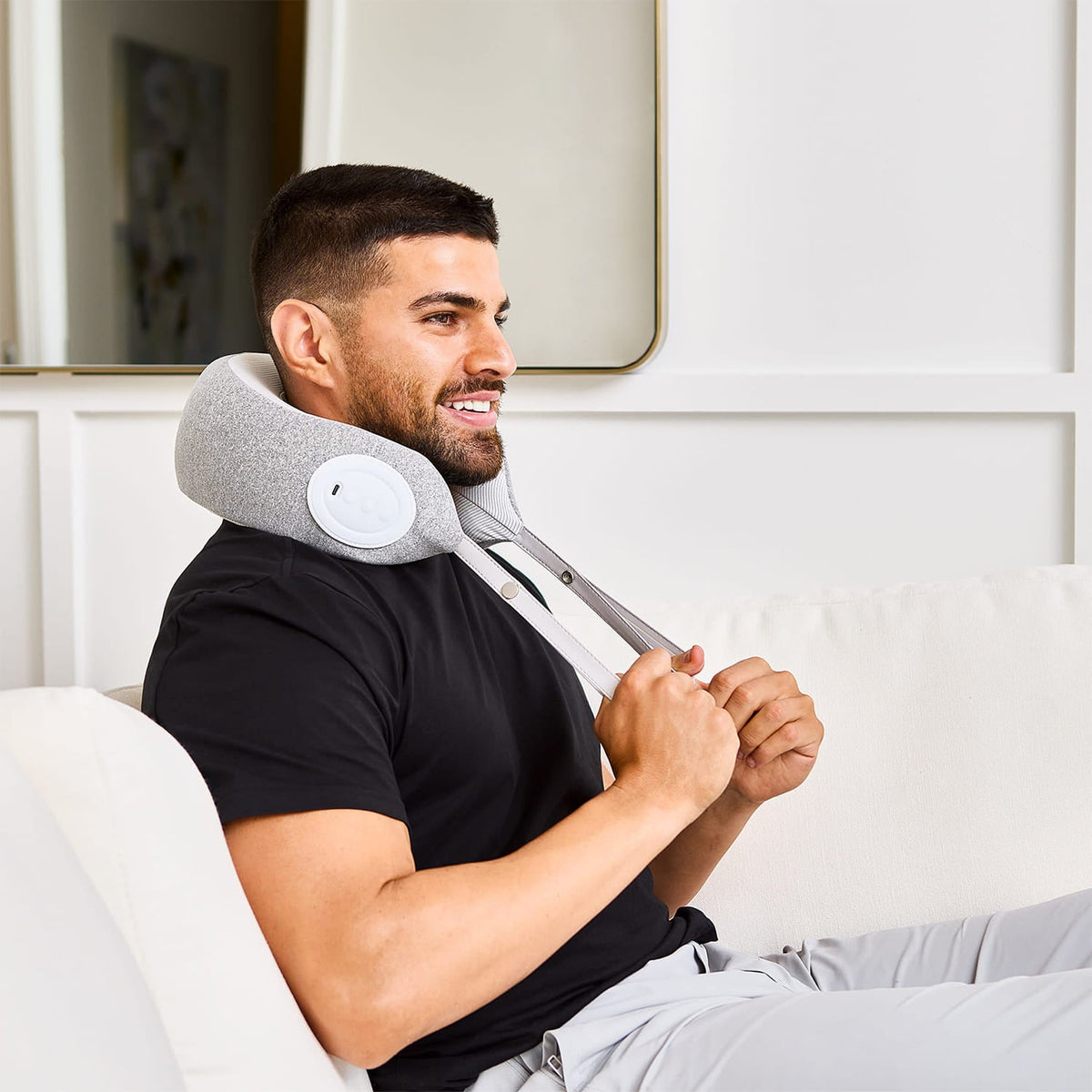
The best heated shoulder massager combines targeted mechanical massage with built-in heat, so warmth loosens the muscle while the massage works into the tight tissue. For tension in the neck and upper shoulders, a device with rotating massage nodes and integrated heat, such as the MedMassager Neck Massager, targets the trapezius directly. Choose a style that reaches the area where you carry tension. Keep heated sessions short, especially if you have reduced skin sensation.
By late afternoon, your shoulders have crept up toward your ears, and rolling them back only helps for a minute. If you've started shopping for the best heated shoulder massager, you already suspect that pressure alone isn't enough and that warmth might help the muscles let go. That instinct is sound, but heated massagers vary widely in how they deliver heat, where they reach, and how safely they can be used.
This guide is for desk workers, caregivers, people who carry stress in their upper body, and anyone who has tried a heating pad and found it fell short. It focuses specifically on heated options. If you want a broader comparison of massager types with and without heat, see our general guide to neck and shoulder massager types.
Why Shoulder Muscles Tighten and Stay Tight
Most of the shoulder tightness people describe isn't in the shoulder joint at all. It sits in the muscles that run from the base of the skull across the top of the shoulders and down between the shoulder blades.
The Trapezius Takes the Load
The trapezius is a large, kite-shaped muscle that covers the back of the neck, the tops of the shoulders, and the upper back. Its upper fibers help hold up your head and shoulder girdle all day. Beneath it, the levator scapulae connects the neck to the shoulder blade and often feels like a tight cord running down the side of the neck.
When these muscles work continuously without a break, they stay partially contracted. Over time, that low-level contraction feels like stiffness, knots, or a dull ache that spreads into the neck.
Posture, Screens, and Stress
Several everyday habits keep the upper trapezius working harder than it should:
- Leaning the head forward toward a monitor, laptop, or phone
- Working with a keyboard or mouse set too high or too far away
- Carrying a heavy bag on one shoulder
- Bracing the shoulders during stress or concentration
- Sleeping on a pillow that leaves the neck bent
- Repetitive overhead or lifting work, including caregiving tasks
Why Tight Muscles Stay Tight
A muscle that stays contracted compresses the small blood vessels running through it. Less blood flow means the tissue feels stiff and slow to relax, which encourages you to hold it even more rigidly. Breaking that cycle usually takes something that both warms the tissue and moves it, which is exactly where a heated massager comes in.
What Heat Adds to a Shoulder Massager
Massage and heat each address tight muscle in a different way. Combining them in one device is the main reason people choose a heated model over a standard one.
How Heat Changes Tight Tissue
Warmth widens local blood vessels, which brings more blood flow to the surface muscles. Warm muscle tissue also tends to feel more pliable and less guarded. That is why a warm shower often makes a stiff neck easier to turn.
Heat on its own, however, is passive. A heating pad warms the area, but it doesn't physically move the tissue or work into the specific spots that feel knotted.
Why Heat and Massage Work Better Together
Mechanical massage compresses and releases muscle tissue, stimulating it and encouraging blood to move through it. When heat is applied at the same time, the muscle is already loosening as the massage works on it. In practice, the combination means:
- Pressure tends to feel more comfortable on warmed tissue
- The massage can work into tight spots without feeling as aggressive
- Both blood flow effects happen in the same short session
- You get warmth and movement from one device instead of two
How the MedMassager Neck Massager Applies Both
The MedMassager Neck Massager with built-in heat uses dual-direction rotating massage nodes paired with integrated warmth. It is an FDA-registered Class I medical device designed for the neck and upper shoulders. The nodes mimic hand kneading on the trapezius, working into tissue that tightens from poor posture or long hours at a screen, while the heat warms the same muscle so it loosens as the nodes move through it.
That pairing supports blood flow through the neck and across the tops of the shoulders, where tightness from prolonged sitting or stress tends to settle. Use it alongside whatever your doctor or physical therapist has recommended, not in place of it.
Heated Shoulder Massager Styles Compared
"Heated shoulder massager" covers several very different products. The right one depends on where your tension sits and whether you want massage, heat, or both.
Heated Neck and Shoulder Wraps With Nodes
These U-shaped devices drape over the neck and shoulders, with massage nodes housed inside a fabric cover. Many include a heat function. They work well for the upper trapezius and the back of the neck, though the fabric layer can soften how directly the nodes reach the muscle.
Heat-Only Wraps and Pads
Electric heating pads and microwavable shoulder wraps deliver warmth with no massage. They're simple and useful for general stiffness. However, they don't move the tissue, so knots often remain once the warmth fades.
Dedicated Heated Neck Massagers
Devices built specifically for the neck, like the MedMassager Neck Massager, pair rotating massage nodes with built-in heat aimed at the base of the neck and the top of the shoulders. This style suits people whose tension concentrates where the neck meets the shoulders, which is where much desk-related tightness settles.
Handheld and Pad-Style Body Massagers
If your tightness extends down between the shoulder blades or into the upper back, a larger handheld unit covers more ground. MedMassager's handheld body massagers with a cushioned contouring pad oscillate in a circular motion and can be applied to the shoulders and back, including by resting the pad between your back and a chair. For neck and shoulder strain, that circular oscillating movement stimulates muscle tissue, helping circulate blood through areas that commonly tighten.
A quick way to match style to need:
- Tension at the base of the neck and top of the shoulders: a dedicated heated neck massager
- General stiffness with no specific knots: a heat-only wrap may be enough
- Tightness spreading across the upper back and shoulder blades: a handheld body massager, possibly paired with a heated neck device
How to Choose the Best Heated Shoulder Massager
Once you know which style fits, compare individual devices on how they actually perform on tight muscle, not on marketing language.
Features That Matter Most
- Targeted massage action: Look for nodes or a pad that physically moves the muscle, not just a warm surface.
- Heat that complements the massage: Warmth should reach the same area the massage is working on.
- Heat controls and shutoff: Check the manual for how heat is controlled and whether sessions end automatically.
- Fit for your target area: A device built for the neck won't reach the lower shoulder blades, and a large pad may be awkward on the side of the neck.
- Medical device registration: Class I registration means the device is registered with the FDA under general controls, which separates it from general consumer gadgets.
- Clear use instructions: Session guidance and safety warnings should be easy to find and follow.
Where MedMassager's Neck Massager Fits
If your tension sits at the base of the skull, along the sides of the neck, and across the tops of the shoulders, MedMassager's dual-direction heated Neck Massager is built for that zone. The rotating nodes work the trapezius while the heat warms the same tissue. For tension headaches, the dual-direction nodes loosen the muscles at the base of the neck, helping ease tension that contributes to headache pain.
What Heat Can't Fix
A heated massager addresses muscle tightness. It does not correct a monitor that sits too low or a pillow that bends your neck. You'll get more lasting benefit when you pair massage with changes to the habits that created the tension.
Heat Safety: Session Length and Skin Checks
Heat is helpful, but it's also the part of a heated massager most likely to cause problems when misused. A few habits keep sessions safe.
Keep Sessions Short
Limit each heated session to around 15 minutes, and always follow the time guidance in your device's manual. Longer sessions don't add much benefit and increase the chance of skin irritation. If you want another round, give your skin time to return to its normal temperature first.
Check Your Skin
Look at the treated area after each session. Mild pinkness that fades quickly is normal. Redness that lingers, blotchy patches, blistering, or skin that stays hot to the touch are signs to stop and let the area recover.
Reduced Sensation Changes the Rules
If you can't feel heat accurately, you can't tell when it's too much. Mayo Clinic describes peripheral neuropathy as damage to the nerves outside the brain and spinal cord, which can cause numbness. People with diabetes, neuropathy, past nerve injuries, or medications that dull sensation should talk with a doctor before using any heated device.
When Not to Use Heat
- On a fresh injury with swelling, where heat can increase inflammation
- Over broken, irritated, or sunburned skin
- While falling asleep or when you can't monitor the session
- Over an area that feels numb
- If you are pregnant or have an implanted medical device, until you've checked with your doctor
Shoulder pain that comes with chest pressure, shortness of breath, or pain spreading into the jaw or arm needs emergency care, not massage. Numbness, tingling, or weakness running down the arm should also be evaluated by a doctor.
A Daily Heated Neck Massager Routine
Short, consistent sessions tend to work better than occasional long ones. This routine fits into a lunch break or the end of a workday.
- Sit upright and supported. Use a chair with a back so your shoulders can relax rather than brace.
- Position the nodes. Place the massage nodes against the muscle at the base of your neck or along the top of one shoulder.
- Start with a short warm-up. Let the heat and nodes work for a few minutes before shifting position.
- Move across the trapezius. Work from the base of the skull out toward the shoulder, spending a minute or two on each tight spot.
- Switch sides. Give both shoulders similar time, even if one feels worse.
- Stop at around 15 minutes. Then check your skin before moving on.
- Finish with gentle movement. Slow shoulder rolls and chin tucks help the loosened muscles move through their range.
The routine works because the heat warms the muscle before the rotating nodes knead it, so the tissue gives more readily and blood moves through it more easily. Once or twice daily is a reasonable rhythm for most people. If you're building a broader routine for your back, legs, or feet, browse the full range of MedMassager therapeutic massagers.
Frequently Asked Questions
Is heat good for tight shoulder muscles?
Heat is generally helpful for tight, stiff shoulder muscles that aren't freshly injured. Warmth widens local blood vessels and helps muscle tissue feel more pliable. Avoid heat on new injuries with swelling, where it can increase inflammation.
How long should you use a heated shoulder massager?
Around 15 minutes per session is a sensible limit for most people, and you should always follow the guidance in your device's manual. Longer sessions raise the risk of skin irritation without adding much benefit. Check your skin afterward and let it cool before another session.
Should you use heat or ice for shoulder pain?
Heat usually suits ongoing stiffness and muscle tension, while cold is typically used for fresh injuries with swelling. If your pain started suddenly after a strain or fall, cold is generally the safer first choice. Persistent or worsening pain should be checked by a doctor.
Can a heated massager burn your skin?
Yes, prolonged heat can irritate or burn skin, especially if you fall asleep during a session or have reduced sensation. Keeping sessions short and checking your skin afterward lowers that risk. Never use a heated device over numb, broken, or sunburned skin.
Can you use a heated massager if you have diabetes or neuropathy?
Talk with your doctor first, because reduced sensation makes it hard to tell when heat is too intense. Many people with diabetes or neuropathy have areas of numbness they may not be fully aware of. Your doctor can advise whether heat is appropriate and what precautions to take.
Does a heated neck massager help with tension headaches?
A heated neck massager can help with the muscle tightness that contributes to tension headaches. With the MedMassager Neck Massager, dual-direction massage nodes loosen the muscles at the base of the neck, helping ease tension that contributes to headache pain. Frequent, severe, or sudden headaches should be evaluated by a doctor.
What is the best heated massager for neck and upper shoulder tension?
For tension concentrated where the neck meets the shoulders, a dedicated heated neck massager with rotating nodes targets the area most directly. The MedMassager Neck Massager pairs dual-direction massage nodes with built-in heat for the trapezius and base of the neck. If your tightness extends lower into the upper back, a larger handheld massager covers more area.
The Bottom Line
The best heated shoulder massager is one that pairs real massage action with heat, reaches the specific muscles where you carry tension, and is used in short, monitored sessions. Heat loosens tissue, massage works into it, and the combination does more than either one alone.
If your tightness lives at the base of the neck and across the tops of the shoulders, explore the heated MedMassager Neck Massager for neck and upper shoulder tension, an FDA-registered Class I medical device built for exactly that area.
This content is for informational purposes only and is not intended as medical advice, diagnosis, or treatment. Always consult a qualified healthcare professional before starting any new treatment or therapy. MedMassager products are FDA-registered Class I medical devices.


