
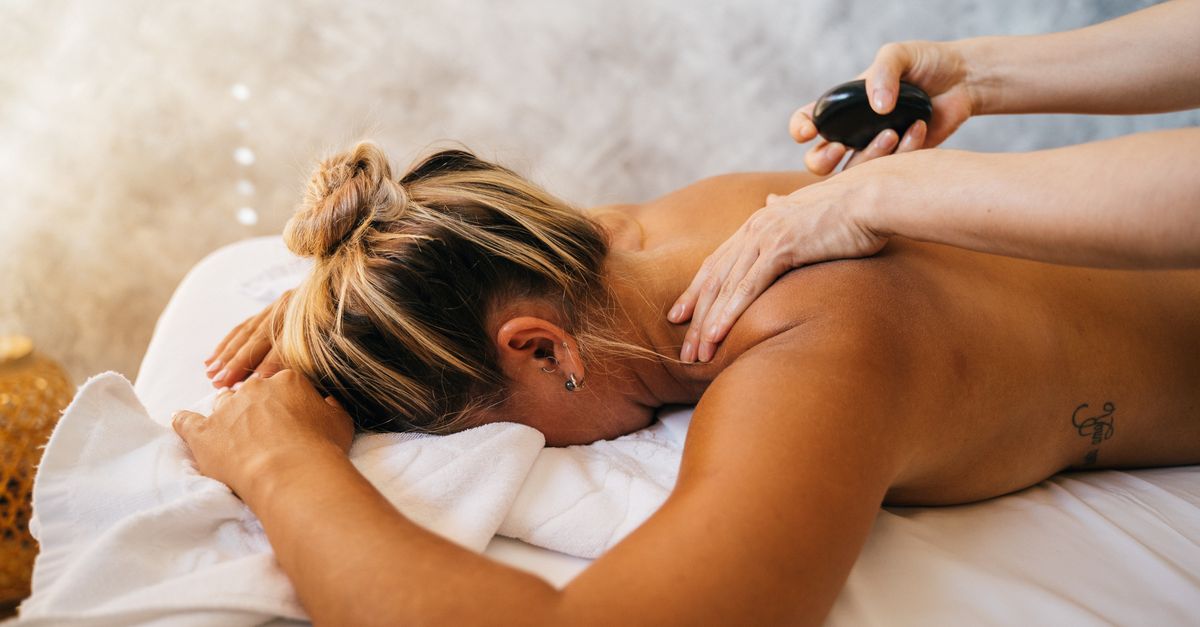
To give a back massage at home, have the recipient sit upright in a sturdy chair or lie face-down on a firm bed with a pillow under their hips for support. Work along the paraspinal muscles on either side of the spine rather than pressing directly on the vertebrae. Use your thumbs and palms to apply steady, graduated pressure from the shoulders downward, spending about 20 to 30 minutes total for a full back sequence. Avoid massaging directly over the spine, any area of acute injury, or unexplained pain — and consult a physician before massaging anyone with a recent back injury, osteoporosis, or an undiagnosed condition.
You don't need a treatment table, a clinical setting, or years of training to give someone a genuinely effective back massage at home. What you do need is the right setup, a clear sense of where to apply pressure and where to stay away, and enough technique to work with the body rather than against it. Whether you're helping a partner unwind after a long week or supporting a family member dealing with chronic muscle tension, learning how to give a back massage at home is one of the most practical skills a caregiver can have.
This guide covers positioning options that work without a massage table, a pressure sequence you can follow from the shoulders down, and where a handheld therapeutic massager can step in when your hands start to fatigue.
Why Back Muscle Tension Builds
Before you put your hands on someone's back, it helps to understand what you're working with. The muscles that run alongside the spine — not the spine itself — are where tension accumulates. Knowing the anatomy makes you a more effective and safer giver.
The Paraspinal Muscles: Where Tension Lives
The paraspinal muscles are a group of deep and superficial muscles that run vertically along both sides of the vertebral column. They include the erector spinae group — the iliocostalis, longissimus, and spinalis — which work continuously to hold the body upright during sitting, standing, and movement. Because these muscles are almost always active, they are among the first to accumulate chronic tension.
Prolonged sitting, poor desk posture, and repetitive bending load these muscles unevenly. Over time, localized areas of sustained contraction — commonly called muscle knots or trigger points — develop in the tissue. These feel like dense, rope-like bands under the skin and often refer discomfort to nearby areas of the back or shoulders.
The Trapezius and Rhomboids Above
In the upper back, the trapezius and rhomboid muscles are frequent problem areas. The upper trapezius runs from the base of the skull across the top of the shoulder, while the rhomboids connect the shoulder blades to the thoracic spine. Both muscles tighten significantly with forward-head posture and extended screen time.
When someone says their neck and shoulders are killing them, they are almost always describing trapezius and rhomboid tension — tissue that responds well to manual massage when pressure is applied correctly.
The Mid and Lower Back
The thoracic paraspinals (mid-back) and lumbar paraspinals (lower back) carry the brunt of postural load throughout the day. The lumbar region handles compressive forces during sitting and bending. Tension here tends to feel more diffuse than upper back tension — a generalized aching rather than sharp, localized knots. Slow, sustained pressure along these muscle bellies is typically more effective than fast strokes.
Setting Up Correctly
The most common reason a home back massage falls flat isn't poor technique — it's poor positioning. If the recipient isn't comfortable and properly supported, their muscles won't relax no matter how much pressure you apply. The giver's position matters just as much. Poor body mechanics will fatigue your hands and thumbs within minutes.
Option 1: Seated in a Chair
A sturdy, upright chair is the most accessible setup for most households. Have the recipient sit reversed on the chair — straddling the seat and facing the back — with their arms resting on the chair back and their chin tucked slightly forward. This position naturally opens the upper back and gives you clear access to the trapezius, rhomboids, and upper thoracic paraspinals.
Place a folded towel or small pillow on the chair back so they can rest their forehead comfortably if needed. Stand directly behind the chair with your knees slightly bent to protect your lower back. Avoid locking out your legs or hunching over — maintain a neutral spine throughout.
Option 2: Lying Face-Down on a Bed
For a full back sequence that includes the mid and lower back, lying face-down on a firm mattress is the better option. Place a pillow under the recipient's hips to reduce lumbar extension, and a small rolled towel under the ankles for comfort. The head can rest face-down on a stacked pillow or turned gently to one side.
Stand or kneel beside the bed at a height that allows downward pressure without straining. If the bed is low, kneeling on a cushion is preferable to hunching through the session. The most common giver mistake here is leaning in from too far away — stay close to the work area so your body weight, not just your arm strength, drives the pressure.
Draping and Warmth
Covering areas you are not actively working on keeps the recipient warm, which directly affects muscle relaxation. A thin sheet or towel draped over the lower body works well. If the room is cool, a few minutes with a heating pad on the upper back before you begin can make the tissue more pliable and the massage more effective.
Pressure, Strokes, and Sequence
A structured sequence prevents you from jumping randomly around the back and ensures every region gets adequate attention. The approach below moves from the shoulders downward and takes 20 to 30 minutes for a full back session — an appropriate duration for relaxation massage without risking tissue fatigue or soreness afterward.
Pressure Calibration Before You Begin
Ask your recipient to rate their preferred pressure on a scale of 1 to 10 before you start, and check in again after the first two minutes. Most people want a pressure of 5 to 7 — enough to feel the muscle being worked, not so much that they brace against it. Bracing is a clear sign you've exceeded the comfort threshold, and the muscle will not release under that load.
Begin every new area with lighter effleurage strokes — long, gliding passes — to warm the tissue. Transition to deeper work only after the surface layer has softened. This genuinely improves the effectiveness of deeper pressure by preparing the fascial layers above.
Working the Paraspinal Muscles (Not the Spine)
The most important technical rule of giving a back massage: your thumbs, knuckles, and palms belong on the muscle tissue flanking the spine, not on the vertebrae themselves. The paraspinal groove runs roughly a thumb's width off the center line on each side. This is your primary working channel from the base of the neck to the sacrum.
- Use your thumbs for slow, circular friction strokes along the paraspinal groove, moving in 1- to 2-inch segments
- Use the heel of your palm for broader, sustained compression over the mid and lower back
- Use your fingertips for lighter work over the rhomboids between the shoulder blades
- Avoid pressing or dragging across the spinous processes — the bony bumps along the center of the back
A Simple Sequence from Shoulders Down
Follow this order for a complete back massage. Each stage transitions naturally into the next.
- Upper trapezius (3–5 minutes): Begin with both hands on the tops of the shoulders. Apply broad, kneading compression — lift and squeeze the trapezius muscle from both sides simultaneously. Work from the base of the neck outward toward the shoulder joint.
- Rhomboids and upper thoracic paraspinals (4–5 minutes): Move to the area between the shoulder blades. Use your thumbs to work small circles along the medial border of each scapula and into the paraspinal groove at the T1–T6 level.
- Mid-back thoracic paraspinals (4–5 minutes): Continue downward along the paraspinal groove from T6 to T12. Use slower, deeper thumb pressure here. The mid-back often holds diffuse tension that responds to sustained holds rather than fast strokes.
- Lumbar paraspinals (5–6 minutes): Work the lower back paraspinals from L1 down to the iliac crest. The heel of the hand works well here for broad, sustained pressure. Avoid pressing inward toward the kidneys in the flank region.
- Closing effleurage (2–3 minutes): Finish with long, light gliding strokes from the shoulders all the way down to the sacrum to help the nervous system register the session's end and promote overall relaxation.
Where a Handheld Body Massager Helps
Giving a thorough back massage by hand — especially a 25-minute session — is genuinely taxing on the giver's thumbs, wrists, and forearms. Thumb fatigue is the most common reason home massages end prematurely or lose effectiveness partway through. A handheld therapeutic massager addresses this directly, letting you maintain consistent pressure across the full session without burning out your hands.
What Oscillation Adds That Hands Alone Can't
Conventional hand massage delivers pressure and friction but can't replicate deep, rhythmic compression with consistency over time. Oscillating technology — like that used in the MedMassager Body Massager — generates controlled mechanical vibration that penetrates into deeper muscle layers with steady rhythm, increasing local blood flow in muscles affected by prolonged sitting. This is the same mechanism used in professional physical therapy clinics, now accessible for home use.
Hand massage is excellent for kneading, surface-level friction, and nuanced pressure calibration. A handheld body massager is better suited for sustained, deep compression along the paraspinal groove — the kind of work that fatigues thumbs fastest.
How to Integrate It Into Your Sequence
The most effective approach combines both. Use your hands for the opening effleurage and upper trapezius work, where nuanced squeeze-and-release technique is most valuable. Transition to a handheld therapeutic body massager for the thoracic and lumbar paraspinal work, where sustained deep pressure over a longer stretch of muscle benefits most from mechanical consistency.
Hold the massager at a slight angle and guide it slowly along the paraspinal groove — about 1 inch per 2 to 3 seconds. Let the oscillation do the work rather than pressing hard. The goal is consistent contact and controlled depth, not force.
Speed Settings and Pressure
The MedMassager Body Massager offers variable speed settings that allow the giver to calibrate intensity to the recipient's comfort level — lower speeds for surface tension and lighter sensitivity, higher speeds for deeper paraspinal work on individuals who prefer more intensity. Always start at a lower setting and increase gradually based on feedback. This adjustability is one of the key practical advantages over fixed-speed devices.
Areas and Situations to Avoid
Knowing where not to work is as important as knowing the technique. A well-intentioned massage applied to the wrong area can cause real harm. These boundaries apply whether you're working by hand or with a device.
Anatomical Areas to Avoid
- Directly over the spine: Never apply direct downward pressure on the vertebrae themselves. The spinous and transverse processes are not muscle tissue — compressing them directly can cause pain or injury.
- The kidney region: The flanks just below the lower ribs, on either side of the spine, overlie the kidneys. Avoid deep pressure in this area, particularly with a mechanical device.
- Bony prominences: The tips of the shoulder blades, the sacrum, and the posterior iliac crest are all areas where deep pressure on bone rather than adjacent muscle tissue causes discomfort without therapeutic benefit.
- The back of the neck at the base of the skull: This area contains sensitive structures and is best left to trained practitioners.
Medical and Situational Contraindications
There are situations where giving a back massage — even a gentle one — is not appropriate without physician clearance:
- Recent back injury, fracture, or sprain (within the past 4–6 weeks)
- Diagnosed or suspected osteoporosis, which reduces bone density and increases fracture risk under pressure
- Unexplained back pain that has not been evaluated by a healthcare provider — pain without a known cause can indicate conditions where massage is contraindicated
- Active skin conditions, open wounds, bruising, or rashes over the treatment area
- Known disc herniation or spinal stenosis — massage may be appropriate, but technique and pressure require medical guidance first
- Fever, systemic illness, or recent surgery
When in doubt, recommend that the recipient speak with their physician before receiving massage. This is particularly important for older adults and anyone with an existing spinal condition.
Frequently Asked Questions
How long should a back massage at home last?
A full back massage at home typically lasts 20 to 30 minutes when covering the shoulders, mid-back, and lower back in sequence. Shorter sessions of 10 to 15 minutes are appropriate when focusing on a single region, such as the upper trapezius or lower lumbar area. Sessions beyond 40 minutes without training can over-stimulate the tissue and lead to soreness the following day.
Is it safe to massage directly on the spine?
No — direct downward pressure on the vertebrae themselves is not safe and should be avoided. Effective back massage targets the paraspinal muscles running alongside the spine, not the spinal column itself. Working off-center, in the paraspinal groove approximately one thumb's width from the midline, is the correct approach for both safety and effectiveness.
What is the best position for giving a back massage without a table?
Two positions work well without a treatment table. For upper back focus, have the recipient straddle a sturdy chair backward, resting their forearms on the chair back — this opens the upper back and gives the giver clear access to the shoulders and upper thoracic area. For a full back massage, lying face-down on a firm mattress with a pillow under the hips provides the most complete access and is more comfortable for longer sessions.
How much pressure should I use when massaging someone's back?
Ask the recipient to rate their preferred pressure on a scale of 1 to 10 before you begin, and aim for the 5 to 7 range as a starting point. The right pressure feels like firm, intentional contact without causing the recipient to tense or brace. If they pull away or their muscles visibly tighten, reduce pressure immediately — bracing prevents the muscle from releasing.
Can I use a handheld massager instead of my hands?
Yes, a handheld therapeutic massager can be used effectively alongside manual technique for back massage at home. It is particularly useful for sustained work along the thoracic and lumbar paraspinals, where thumb fatigue is common. Guide the device slowly along the paraspinal groove on either side of the spine and let the oscillation do the work rather than applying additional manual force.
When should I not give someone a back massage?
Avoid giving a back massage when the recipient has a recent back injury, unexplained or undiagnosed pain, active skin conditions or open wounds over the treatment area, fever, or known osteoporosis without physician guidance. Unexplained back pain in particular should be evaluated by a healthcare professional before any massage is attempted, as pain without a clear cause can indicate conditions where massage is not appropriate.
How do I avoid hurting my hands and thumbs when giving a back massage?
Keep your thumb joints stacked and supported rather than extended at an angle, and use your body weight to generate pressure rather than forcing it through your finger and thumb muscles alone. Alternating between different strokes — palms, fists, and forearms — distributes the workload and delays fatigue. For longer sessions or more frequent massage, a handheld body massager takes over the sustained deep work that most stresses the thumbs.
The Bottom Line
Learning how to give a back massage at home comes down to three things: a stable setup that works without a treatment table, a clear understanding of where to work (the paraspinal muscles, not the spine), and a simple sequence you can follow consistently. Position your recipient well, calibrate pressure before you start, and move through the shoulders to the lower back with intention.
Your hands are the best tool for nuanced upper back work. For the longer, deeper paraspinal work through the mid and lower back, an oscillating body massager can maintain the kind of steady mechanical vibration that fatigues thumbs within minutes — extending the quality of the session without wearing out the giver.
Know where to stop. Any area of recent injury, unexplained pain, or suspected medical condition warrants a conversation with a physician before massage — at home or anywhere else. Applied with care and proper technique, a back massage is one of the most meaningful things a partner or caregiver can offer. Explore the full line of MedMassager Body Massagers to find the right tool for your home routine.
This content is for informational purposes only and is not intended as medical advice, diagnosis, or treatment. Always consult a qualified healthcare professional before starting any new treatment or therapy. MedMassager products are FDA-registered Class I medical devices.


