
Que vous soyez un randonneur passionné le week-end ou toujours debout au travail, vous n'êtes pas seul si vous avez ressenti cette douleur profonde qui peut s'installer dans vos pieds après être resté debout toute la journée.
Il est vrai qu'une douleur occasionnelle au pied peut être tolérable, mais que faire lorsque votre mode de vie vous oblige à rester debout tout le temps ? Si votre méthode principale jusqu'à présent a été de vous reposer ou d'attendre que ça passe, la bonne nouvelle est que quelques remèdes simples pourraient vous aider à trouver un soulagement plus profond.
Ci-dessous, nous aborderons les causes courantes des douleurs aux pieds dues à la station debout prolongée, ainsi que quelques outils et conseils pour les contrecarrer.
Pourquoi mes pieds me font-ils mal après être resté debout toute la journée ?
En tant que structures qui soutiennent votre corps, il peut sembler évident pourquoi vos pieds vous font mal après être resté debout toute la journée. Cependant, certains facteurs spécifiques peuvent vous aider à mieux comprendre pourquoi cela se produit et pourquoi certains remèdes peuvent aider. Les causes les plus courantes comprennent :
Muscles des pieds fatigués
La première et la plus courante des raisons de la douleur aux pieds après être resté debout toute la journée est la simple fatigue musculaire. Rester debout pendant de courtes périodes peut ne pas sembler éprouvant, mais c'est une forme d'effort pour les petits muscles qui vous soutiennent – et ces muscles peuvent être stressés lorsqu'ils sont sollicités pendant de longues périodes.
Comme la "brûlure" que vous pourriez ressentir pendant un entraînement, la fatigue musculaire (et les courbatures associées) peut s'installer pour plusieurs raisons essentielles :
- Les muscles consomment de l'énergie au niveau cellulaire, ce qui entraîne la formation de déchets métaboliques dans les tissus.
- La station debout peut limiter une bonne circulation sanguine dans la partie inférieure de votre corps, ce qui signifie moins d'oxygène et de nutriments pour vos pieds.
- En position debout, de nombreux muscles du pied se contractent constamment, ce qui entraîne finalement des micro-déchirures et une inflammation pouvant provoquer une douleur sourde et profonde.
Chaussures non-soutenantes
Le mauvais type de chaussures peut causer des douleurs à lui seul, mais il peut aussi aggraver la douleur naturelle qui survient en restant debout toute la journée. Des chaussures trop petites – ou des chaussures avec une pointe de forme étrange – sont parmi les pires coupables, en particulier en ce qui concerne les talons et les chaussures plates pour femmes. Cela dit, tout type de chaussure qui ne convient pas à la forme naturelle de votre pied peut ajouter de la tension et de l'inconfort.
À long terme, les mauvaises chaussures peuvent augmenter votre risque de blessure et contribuer à des problèmes plus graves tels que les oignons, les épines calcanéennes ou la fasciite plantaire.
Terrain accidenté ou irrégulier
Au-delà de la station debout prolongée (qui est déjà difficile pour vos pieds), devoir naviguer sur un terrain accidenté, rocheux ou inégal peut également fatiguer vos pieds.
Lorsque vous marchez sur une surface inégale, les structures de vos pieds et de vos chevilles doivent travailler plus dur pour stabiliser votre corps. Pendant de nombreuses heures, cela peut entraîner une inflammation et des douleurs dans vos muscles, tendons et ligaments, tout en augmentant votre risque d'entorses et d'autres blessures.
Affections liées aux articulations
Même des pieds sains peuvent être sujets à des douleurs après une journée entière passée debout, mais les affections liées aux articulations peuvent rendre les choses encore plus douloureuses. Certains problèmes qui peuvent rendre vos pieds plus vulnérables à la douleur après un effort prolongé comprennent :
- L'arthrose ou d'autres affections liées à l'âge affectant les dizaines d'articulations de vos pieds et chevilles
- La polyarthrite rhumatoïde, la goutte, ou d'autres formes de douleurs articulaires inflammatoires
- Les blessures sportives, les entorses, ou l'arthrite post-traumatique (qui peut apparaître des mois ou des années après une blessure au pied ou à la cheville)
Autres facteurs augmentant la douleur aux pieds
Outre l'arthrite, d'autres conditions et facteurs liés au mode de vie peuvent également augmenter votre risque de douleur au pied. Certains sont plus faciles à gérer ou disparaîtront avec le temps, tandis que d'autres peuvent nécessiter un traitement plus ciblé et les conseils de votre équipe soignante. Les éléments qui ont tendance à être plus contrôlables comprennent :
- Un poids plus élevé. Un poids supplémentaire peut exercer une tension excessive sur les structures qui vous maintiennent debout toute la journée. Lorsque cela est possible, maintenir un poids plus sain peut être un bon moyen de protéger vos pieds et vos chevilles.
- Surutilisation due à des loisirs ou des sports à fort impact. Vos muscles, tendons et ligaments du pied absorbent des quantités importantes de chocs lorsque vous courez et sautez. Cela dit, si vos pieds vous font mal dernièrement, il pourrait être utile de faire une pause de quelques jours dans les activités à fort impact.
- Trop de sédentarité, suivie d'une station debout prolongée. À l'opposé, un manque d'exercice peut entraîner une faiblesse des muscles autour de vos mollets, chevilles et pieds. Au fil du temps, cela peut altérer votre alignement et votre mécanique corporelle, entraînant encore plus de tension en position debout.
Conditions de santé
Outre les facteurs liés au mode de vie, certaines affections et états physiologiques peuvent nécessiter des traitements plus spécifiques pour aider à soulager la douleur au pied. La grossesse en est un exemple qui peut affecter les pieds, souvent en raison d'un mélange de changements hormonaux, de prise de poids et de modifications des schémas de marche qui se résolvent généralement après la grossesse. D'autres affections qui méritent d'être discutées avec votre médecin peuvent inclure :
- Des différences génétiques ou anatomiques affectant les pieds, comme les pieds plats ou les troubles du tissu conjonctif
- Blessures, foulures, entorses ou traumatismes
- Oignons ou autres excroissances osseuses
Ces affections sont des causes courantes de douleurs aux pieds, mais elles ne sont pas les seules. Cela dit, assurez-vous de consulter un médecin ou un podologue si vous avez une douleur au pied sévère ou inexpliquée qui ne s'est pas améliorée avec le repos et les soins personnels.
Types courants de douleurs aux pieds dues à la station debout prolongée
La douleur induite par la station debout peut donner l'impression de cibler l'ensemble de votre pied de l'intérieur. Mais parfois, la douleur peut être plus localisée à des zones ou articulations spécifiques. Voici quelques types courants et spécifiques de douleurs aux pieds qui peuvent survenir après une journée entière passée debout, ainsi que les symptômes qu'elles peuvent provoquer :
Métatarsalgie (douleur à la plante du pied)
La métatarsalgie désigne la douleur et l'inflammation de la plante du pied, au niveau des têtes des longs os métatarsiens. Comme d'autres formes de douleurs aux pieds, elle peut résulter d'une tension chronique et de mauvaises chaussures, mais elle est également fréquente chez les personnes qui pratiquent des activités à fort impact, comme le sprint ou les sports de raquette.
Ce type de douleur au pied a tendance à être aigu plutôt que sourd ou lancinant, et il peut s'accompagner d'autres symptômes tels que des brûlures, des picotements ou des engourdissements.
Fasciite plantaire
La fasciite plantaire est une affection courante impliquant la grande bande de tissu fibreuse dans la voûte plantaire de votre pied. Cette bande est appelée fascia plantaire, et elle agit comme une structure de soutien et un amortisseur lorsque vous sautez, marchez et courez. Elle devient souvent enflammée lorsqu'elle est surutilisée, entraînant une douleur à la voûte plantaire qui peut s'étendre au talon.
Tout le monde peut développer une fasciite plantaire, mais selon Harvard Health Publishing, ce sont les personnes physiquement actives et âgées de 25 à 65 ans qui en souffrent le plus souvent. Elle est également légèrement plus fréquente chez les femmes. Vous pourriez être plus sujet à la fasciite plantaire si vous :
- Êtes un coureur, surtout si vous courez de longues distances ou courez souvent tout au long de la semaine
- Portez fréquemment des chaussures habillées, notamment des talons hauts ou d'autres chaussures ajustées
- Avez un travail qui implique de longues heures debout (coiffure, soins infirmiers, travail de machinerie ou de mécanique, autres formes de travail physique)
Douleur à la cheville
Bien que les chevilles ne fassent pas techniquement partie de vos pieds, elles supportent votre poids corporel presque autant que vos pieds – et si rester debout pendant des heures pèse lourdement sur vos pieds, il y a de fortes chances que cela affecte également vos chevilles.
La douleur à la cheville peut se manifester par une douleur généralisée autour de l'articulation, mais elle peut également apparaître dans des zones plus spécifiques, comme le tendon d'Achille. La bonne nouvelle est que de nombreux remèdes qui apaisent la douleur au pied peuvent également aider à soulager l'inconfort de la cheville.
Comment soulager les douleurs aux pieds après être resté debout toute la journée
Que vous souffriez de douleurs à la voûte plantaire, au talon ou d'une douleur générale après être resté debout pendant des heures, voici quelques remèdes utiles pour soulager les douleurs aux pieds à essayer :
Essayez la glace pour soulager l'inflammation
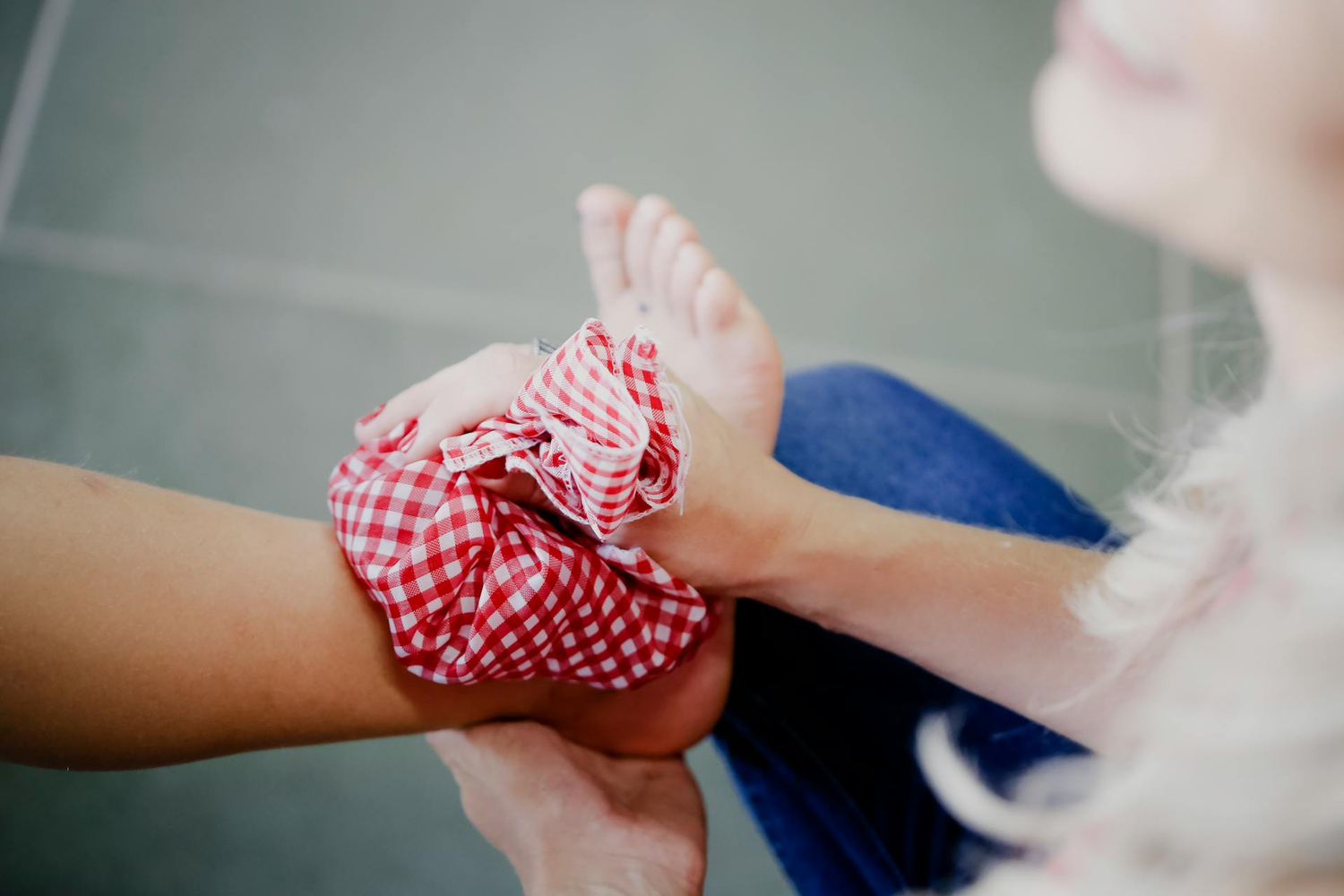
Si vos pieds sont particulièrement sensibles ou enflammés, appliquer de la glace quelques minutes à la fois peut être un remède simple mais puissant. La thérapie par le froid est particulièrement utile en cas de douleur aiguë ou vive, car elle peut temporairement réduire l'enflure tout en engourdissant la zone. Pour glacer vos pieds après être resté debout toute la journée :
- Prenez une poche de gel glacée (ou un sac de légumes surgelés si vous n'en avez pas sous la main).
- Asseyez-vous confortablement sur votre canapé ou au lit, et surélevez vos pieds sur une pile d'oreillers.
- Enveloppez votre poche de glace avec un linge fin ou une serviette, et placez-la sur la zone la plus douloureuse.
- Gardez-la jusqu'à 20 minutes, en vérifiant périodiquement que la glace n'irrite pas votre peau.
La glace peut être utile en soi, mais vous pouvez également l'utiliser dans le cadre de la méthode de récupération RICE (repos, glace, compression, élévation) pour les blessures aiguës ou d'autres poussées de douleur au pied.
Bain de pieds chaud
Inversement, si vous souffrez d'une douleur sourde et lancinante aux pieds après une longue journée, un bain de pieds chaud peut souvent aider.
L'eau chaude favorise une bonne circulation sanguine, tout en stimulant la relaxation et en réduisant la tension musculaire pour apaiser la douleur. En raison de la façon dont la chaleur agit, elle est la plus utile pour soulager les courbatures chroniques, détendre les tensions et calmer les spasmes ou les crampes des pieds. Pour l'essayer :
- Ajoutez de l'eau chaude à votre baignoire ou à votre baignoire de bain de pieds (si vous en utilisez une).
- En option, vous pouvez ajouter environ une demi-tasse de sel d'Epsom pour un soulagement supplémentaire.
- Placez vos pieds dans la baignoire et trempez-les pendant 30 minutes maximum.
Intégrez le massage à votre routine de soins à domicile

Rester debout toute la journée peut réduire la circulation, surmener vos muscles et solliciter les nombreuses articulations de vos pieds – autant de choses que le massage peut aider à résoudre.
Quelques minutes de travail doux peuvent stimuler la circulation sanguine et relâcher les tensions autour de vos chevilles, talons et orteils. En même temps, cela peut temporairement soulager la douleur, la recherche montrant que certaines techniques de massage peuvent même aider à réduire la douleur de la fasciite plantaire. Le massage des pieds dans son ensemble peut également aider à soulager les douleurs à la cheville et certaines formes de douleur au talon.
Alors, comment intégrer le massage à votre routine de soins des pieds ? Voici trois façons simples de commencer :
Massage des pieds manuel simple
Les meilleures options de massage sont souvent les plus simples, c'est pourquoi apprendre à se masser les pieds (sans équipement) peut être un excellent point de départ. Voici les étapes :
- Asseyez-vous sur une chaise ou un canapé confortable.
- Croisez un pied sur le genou opposé. (En option, appliquez une goutte d'huile ou de lotion sur le pied pour réduire le frottement.)
- Enveloppez le pied des deux mains. Avec une légère pression, pétrissez de haut en bas le long du pied pour échauffer le tissu. Répétez pendant une minute.
- Ensuite, placez les deux pouces sur la voûte plantaire, juste au-dessus de votre talon.
- En utilisant une pression modérée, faites glisser vos pouces vers l'extérieur en mouvements alternés, en remontant jusqu'à la plante du pied. Répétez pendant 2-3 minutes.
- En option, si vous rencontrez des zones particulièrement tendues, vous pouvez utiliser un pouce pour les masser en petits mouvements circulaires.
- Terminez le massage par quelques étirements des orteils. Saisissez chaque orteil et tirez-le légèrement vers l'avant, l'arrière et de côté pour relâcher les tensions et favoriser la circulation sanguine.
Masseur de pieds à domicile
L'automassage est pratique et utile à connaître, d'autant plus qu'il permet de prendre soin de ses pieds chaque fois qu'ils en ont besoin. Mais si vous êtes toujours debout et que vous êtes prêt à investir davantage dans leur soin, un masseur de haute qualité peut vous aider.
Le MedMassager Foot Massager est un outil éligible aux HSA/FSA conçu avec une technologie oscillante pour imiter l'expérience d'un véritable massage des pieds à la maison. Il est également équipé de plusieurs réglages de vitesse et d'une barre de voûte plantaire pour un soulagement plus ciblé. Voici comment l'utiliser :
- Asseyez-vous sur une chaise ou un canapé, et placez le masseur sur le sol devant vous.
- Placez vos pieds sur la surface de massage et réglez-le à la vitesse la plus basse.
- Laissez vos pieds s'habituer aux mouvements de massage pendant une minute.
- Ensuite, augmentez la vitesse à l'intensité souhaitée et détendez-vous simplement pendant le massage des pieds pendant un total de 10 à 15 minutes.
En option, vous pouvez également utiliser le masseur pour travailler sur les mollets et les chevilles fatigués. Il suffit de le retourner de manière à ce que la surface de massage soit inclinée vers vous, et de poser vos jambes dessus pour une séance supplémentaire de 5 à 10 minutes.
Utiliser une balle de massage
Bien que ce ne soit pas intensif ou compliqué, masser vos pieds avec une balle de massage est un autre excellent moyen de trouver un soulagement après être resté debout toute la journée.
C'est aussi simple que cela en a l'air : placez une balle de massage (ou de tennis) sur le sol et posez votre pied dessus. Faites rouler doucement la balle le long de la plante de votre pied, en augmentant lentement la pression tant que cela vous semble confortable. Répétez pendant deux à trois minutes par séance.
Conseils de prévention des douleurs aux pieds
Lorsque vous restez debout pendant de longues périodes, il est presque garanti que vos pieds le ressentiront un peu. Cela dit, il existe quelques mesures simples que vous pouvez prendre pour aider à atténuer l'intensité des douleurs aux pieds dues à la station debout toute la journée — et potentiellement les prévenir à l'avenir :
- Étirez souvent vos pieds, chevilles et orteils pour stimuler la circulation sanguine et améliorer la mobilité. Des options simples comme les étirements des mollets et les tractions des orteils ne prennent que quelques minutes et peuvent aider vos pieds à passer une meilleure journée.
- Renforcez les muscles du bas du corps. Pratiqués régulièrement, les exercices pour les jambes et les pieds, tels que les élévations des mollets debout, les écartements des orteils et les mouvements ciblés sur les chevilles, peuvent développer les muscles de soutien, rendant ainsi vos pieds plus résistants.
- Choisissez les bonnes chaussures. Recherchez des chaussures avec beaucoup d'espace pour les orteils, ainsi qu'un soutien du talon et de la voûte plantaire pour aider à réduire les chocs lors de la pose du pied.
En résumé
Les douleurs aux pieds dues à la station debout prolongée sont incroyablement courantes, surtout si vous avez un travail ou un passe-temps qui vous oblige à rester debout pendant des heures.
Naturellement, il peut être utile de laisser d'abord vos pieds se reposer quelques heures (ou jours), selon l'intensité de la douleur. Au fur et à mesure qu'ils guérissent, des remèdes comme les poches de glace, les bains de pieds chauds et la massothérapie peuvent apaiser vos muscles et favoriser la récupération. Et pour une prévention à long terme, des conseils comme s'étirer régulièrement, maintenir un poids sain et porter des chaussures de soutien peuvent faire toute la différence.
Prêt à faire du massage réparateur des pieds une partie de votre routine quotidienne ? Procurez-vous dès aujourd'hui le MedMassager Foot Massager Classic, ou apprenez-en davantage sur la façon de l'utiliser pour les pieds fatigués et douloureux ici.


