
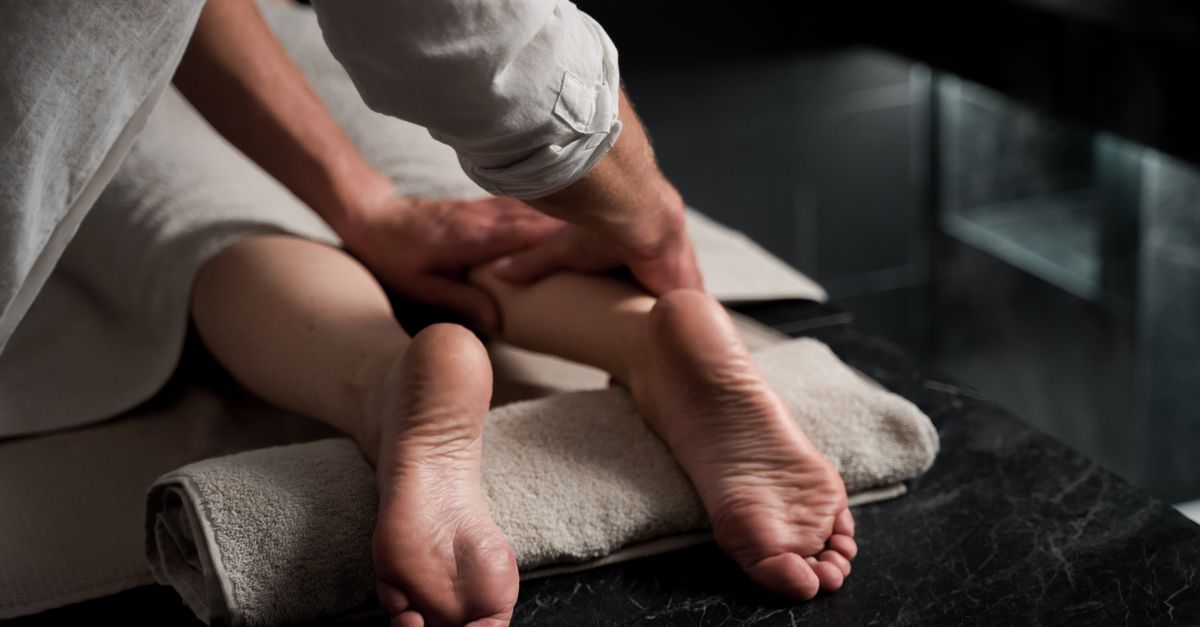
Le meilleur masseur de pieds pour la circulation utilise une plateforme oscillante circulaire qui entre en contact avec toute la plante du pied plutôt que des points de pression isolés. Une couverture complète de la plante du pied active les muscles du mollet et du pied comme la marche, ce qui aide à faire remonter le sang vers le cœur. La fréquence des séances est tout aussi importante que l'appareil de massage lui-même : une utilisation quotidienne ou quasi quotidienne de courte durée permet d'établir un schéma de mouvement plus régulier qu'une seule séance occasionnelle. La gamme de masseurs de pieds MedMassager applique ce mouvement oscillant circulaire sur toute la plateforme et est conçue comme un dispositif médical de classe I enregistré auprès de la FDA pour un usage quotidien à domicile.
Si vos pieds s'engourdissent en milieu d'après-midi ou si vos orteils sont froids quelle que soit la saison, vous avez probablement déjà cherché le meilleur masseur de pieds pour la circulation et trouvé des dizaines d'options qui prétendent toutes faire la même chose. Tous les masseurs de pieds ne fonctionnent pas de la même manière. La différence entre un appareil qui vibre sur votre peau et un appareil qui fait réellement circuler le sang dans vos jambes réside dans une poignée de caractéristiques de conception spécifiques.
Ce guide s'adresse à toute personne comparant les masseurs de pieds pour le soutien de la circulation, y compris les personnes atteintes de diabète, de neuropathie, ou celles qui passent des heures debout ou assises chaque jour. Il couvre ce qui stimule réellement la circulation dans un masseur de pieds, ce qui distingue un modèle bien conçu d'un gadget, et quelle option MedMassager convient à quel cas d'utilisation.
Ce qui ralentit la circulation dans les pieds
Le retour du sang des pieds vers le cœur dépend en partie des muscles du mollet qui agissent comme une pompe, comprimant les veines profondes à chaque pas. Lorsque cette pompe est inactive, le sang et les liquides s'accumulent dans le bas des jambes et les pieds. Le résultat se manifeste par un gonflement, une sensation de froid, des picotements ou une sensation de lourdeur en fin de journée.
Plusieurs situations quotidiennes interrompent la pompe :
- Rester assis à un bureau pendant des heures avec peu de mouvement des jambes
- Rester debout sur un sol dur pendant tout un quart de travail
- Des conditions telles que le diabète ou la neuropathie périphérique qui affectent la circulation sanguine et la sensation
- Mobilité réduite, périodes de convalescence ou longues périodes d'alitement
Nous avons abordé plus en détail si les masseurs de pieds améliorent réellement la circulation, ainsi qu'un examen plus approfondi de la façon dont un masseur de pieds peut aider en cas de mauvaise circulation spécifiquement. Ce guide adopte un angle plus étroit : une fois que vous avez décidé qu'un masseur de pieds vaut la peine d'être essayé, qu'est-ce qui rend un modèle plus efficace qu'un autre pour le soutien de la circulation.
Comment l'oscillation améliore la circulation sanguine dans les pieds
La plupart des masseurs commercialisés pour la circulation reposent sur de simples vibrations, un moteur qui agite un repose-pied sans beaucoup de pression, de motif ou de couverture. MedMassager utilise une technologie oscillante pour délivrer des vibrations plus profondes et plus contrôlées que les masseurs conventionnels, se déplaçant selon une action oscillante circulaire sur toute la plante du pied plutôt que de vibrer sur une bande étroite de peau.
Oscillation vs. Vibration de base
La distinction est importante car le bénéfice pour la circulation dépend de l'engagement musculaire, et pas seulement de la sensation. Une action oscillante circulaire induit un mouvement dans le pied et le bas de la jambe, ce qui provoque la même réponse musculaire rythmique que la marche. Un repose-pied qui ne fait vibrer que la surface de la peau ne crée pas la même profondeur de mouvement. Les différences pratiques se résument à trois points :
- Profondeur : l'oscillation déplace le pied lui-même, tandis que la vibration superficielle stimule principalement la peau et les tissus peu profonds.
- Schéma : un cycle circulaire continu imite la marche ; de courtes rafales aléatoires ne le font pas.
- Couverture : une plateforme complète atteint la voûte plantaire, le talon et l'avant-pied simultanément.
Contact complet de la plante du pied et fréquence des séances
Un masseur de circulation efficace entre en contact avec la voûte plantaire, le talon et l'avant-pied simultanément au lieu de se concentrer sur un seul point. Comme le mouvement est continu plutôt que par courtes rafales, les muscles du mollet et du pied s'activent selon un schéma répétitif similaire à la marche naturelle.
La fréquence des séances amplifie cet effet. Une seule séance de 20 minutes apporte un soulagement temporaire, mais l'utilisation du masseur plusieurs fois par semaine établit un schéma de mouvement plus régulier pour les personnes qui restent assises ou debout pendant de longues périodes. La collection de masseurs de pieds MedMassager est conçue autour de cette conception oscillante à plateforme complète plutôt que d'un simple coussin vibrant.
Guide d'achat : Masseur de pieds pour la circulation
Toutes les annonces étiquetées « masseur de circulation » ne sont pas conçues de la même manière. Avant de comparer les prix, passez n'importe quel modèle au crible d'une courte liste de contrôle de ce qui affecte réellement le flux sanguin.
Caractéristiques clés à comparer
- Mouvement oscillatoire circulaire : Recherchez une plateforme qui se déplace selon un mouvement oscillatoire circulaire plutôt qu'un coussin vibrant plat, car cela favorise un engagement musculaire plus profond.
- Contact complet de la plante du pied : L'appareil doit atteindre la voûte plantaire et le talon, pas seulement la plante du pied.
- Niveaux d'intensité réglables : Une gamme de réglages vous permet de commencer en douceur, ce qui est particulièrement utile pour les pieds sensibles ou la neuropathie, puis d'augmenter l'intensité au fur et à mesure que vous le tolérez.
- Statut enregistré auprès de la FDA : Confirmez que l'appareil est un dispositif médical de classe I enregistré plutôt qu'un gadget de bien-être grand public.
- Durabilité pour une utilisation répétée : Un masseur conçu pour des séances quotidiennes est plus durable qu'un masseur conçu pour une utilisation occasionnelle et fantaisiste.
Fonctionnalités qui n'ont pas d'impact significatif
Les coussins chauffants uniquement, la connectivité via application et les ajouts esthétiques ne modifient pas la quantité de mouvement sanguin réellement générée par un masseur. Ces fonctionnalités peuvent être agréables, mais elles ne devraient pas être le facteur décisif si le soutien de la circulation est votre objectif principal. Un bain de pieds vibrant de base avec un réglage de chaleur ne résout pas le même problème qu'une plateforme oscillante sur toute la plante du pied.
Meilleur masseur de pieds pour la circulation : Notre choix
Pour le soutien de la circulation spécifiquement, recherchez un modèle basé sur un mouvement oscillant circulaire sur toute la plateforme plutôt que sur une vibration superficielle. La gamme de masseurs de pieds MedMassager offre une puissance de qualité professionnelle via une plateforme oscillante conçue pour contacter toute la plante du pied simultanément. C'est un dispositif médical de classe I enregistré auprès de la FDA, avec des réglages d'intensité ajustables qui vous permettent de progresser graduellement si vous l'utilisez pour la première fois.
Où il convient le mieux :
- Travailleurs de bureau qui restent assis pendant de longues périodes
- Personnes qui travaillent debout pendant de longues heures sur des sols durs
- Toute personne ayant les pieds froids, des picotements ou une sensation de lourdeur le soir
Pour comparer directement les tailles et les gammes d'intensité, parcourez la gamme complète de masseurs thérapeutiques de MedMassager, ainsi que les modèles dédiés aux pieds.
Routine quotidienne pour soutenir la circulation
La régularité est plus importante que l'intensité pour la circulation. Une routine quotidienne courte tend à produire des résultats plus notables qu'une seule longue séance occasionnelle.
- Commencez par 10 minutes à faible intensité pour évaluer la réaction de vos pieds, surtout si vous débutez avec le massage oscillant.
- Utilisez le masseur une fois le matin avant de rester debout ou assis pendant de longues périodes, et à nouveau le soir après une journée active.
- Prolongez progressivement les séances à 15-20 minutes si cela est toléré, en ajustant l'intensité plutôt que la durée au début.
- Visez une utilisation presque tous les jours de la semaine plutôt que de le réserver aux poussées occasionnelles.
- Associez les séances à de courtes pauses actives, comme se lever et marcher quelques minutes toutes les heures, pour renforcer la pompe musculaire du mollet entre les utilisations.
Considérations particulières pour le diabète et la neuropathie
Certains groupes doivent être plus attentifs à la manière d'intégrer un masseur de pieds dans leur routine, en particulier lorsque la sensation dans les pieds est déjà réduite. Quelques précautions s'appliquent à tous les cas :
- Commencez par le réglage d'intensité le plus bas et n'augmentez que si cela est toléré.
- Maintenez les premières séances courtes, puis prolongez progressivement.
- Vérifiez la peau après chaque séance pour détecter toute rougeur ou irritation.
- Consultez d'abord un médecin en cas de plaies ouvertes, d'infection active ou d'engourdissement important.
Diabète
Les personnes atteintes de diabète souffrent souvent d'une circulation réduite dans le bas des jambes, ce qui fait partie de la maladie. Le mouvement répété du pied active les muscles du mollet, faisant remonter le sang au lieu de le laisser stagner dans les pieds, ce qui est la raison mécanique pour laquelle le massage oscillant est souvent utilisé dans le cadre d'une routine quotidienne plus large. Un masseur de pieds soutient cette routine ; il ne traite pas le diabète ni ses complications.
Neuropathie périphérique
Pour les personnes atteintes de neuropathie, la réduction de la sensation peut rendre plus difficile de remarquer quand l'intensité est réglée trop fort. Un mouvement continu aide à maintenir la circulation sanguine dans les pieds lorsque le mouvement naturel est limité, ce qui est important pour toute personne qui passe de longues périodes assise. Il est plus sûr de progresser lentement sur plusieurs séances que de commencer par un réglage d'intensité moyenne.
Personnes âgées et mobilité réduite
Les seniors qui passent plus de temps assis, que ce soit en raison de limitations de mobilité ou d'une réduction de l'activité, constatent souvent le plus grand bénéfice pratique d'une routine de massage de pieds oscillante constante. Des séances plus courtes et plus fréquentes sont généralement mieux tolérées que des séances plus longues. Un masseur avec un réglage d'intensité faible et des commandes simples est généralement le choix le plus facile pour ce groupe.
Foire aux questions
Quel est le meilleur masseur de pieds pour la circulation ?
Le meilleur masseur de pieds pour la circulation est celui qui est conçu autour d'un mouvement oscillant circulaire sur toute la plateforme plutôt que d'un simple coussin vibrant, car il sollicite les muscles du mollet et du pied comme le fait la marche. Recherchez une intensité réglable, un contact complet de la plante du pied et l'enregistrement en tant que dispositif médical de classe I. Les modèles conçus pour une utilisation quotidienne répétée ont tendance à mieux résister que ceux conçus pour une relaxation occasionnelle.
Les masseurs de pieds oscillants sont-ils plus efficaces que les vibrants ?
Les masseurs oscillants déplacent l'ensemble du pied selon un mouvement circulaire, ce qui sollicite les muscles du mollet et du pied plus directement qu'un coussin vibrant plat. Les vibrations de base stimulent principalement la surface de la peau sans la même profondeur d'engagement musculaire. Pour la circulation spécifiquement, le mouvement mécanique créé par l'oscillation joue un rôle plus important que la seule vibration superficielle.
À quelle fréquence dois-je utiliser un masseur de pieds pour la circulation ?
La plupart des gens obtiennent de meilleurs résultats en utilisant un masseur de pieds la plupart des jours de la semaine plutôt qu'occasionnellement. Des séances de 10 à 20 minutes, une ou deux fois par jour, constituent un bon point de départ. La régularité sur le long terme a tendance à être plus importante qu'une seule longue séance.
Un masseur de pieds peut-il aider avec les problèmes de circulation diabétiques ?
Un masseur de pieds peut soutenir la circulation sanguine chez les personnes atteintes de diabète en activant les muscles du mollet, ce qui fait remonter le sang au lieu de le laisser stagner dans les pieds. Il ne s'agit pas d'un traitement pour le diabète ou ses complications et doit être utilisé en complément, et non en remplacement, des soins médicaux. Toute personne diabétique doit consulter un médecin avant de commencer une nouvelle routine de massage des pieds, surtout en cas de plaies ou de zones d'engourdissement.
Un masseur de pieds est-il sûr en cas de neuropathie ?
Les masseurs de pieds sont généralement bien tolérés par les personnes atteintes de neuropathie lorsqu'ils sont utilisés à faible intensité. Étant donné que la réduction de la sensation peut rendre plus difficile de détecter une pression excessive, vérifier la peau après chaque séance est une précaution raisonnable. Toute personne présentant des lésions nerveuses importantes ou des plaies ouvertes sur les pieds doit consulter un professionnel de la santé avant de commencer.
Combien de temps doit durer une séance de massage des pieds ?
Une séance de 10 à 20 minutes est généralement suffisante pour solliciter les muscles du mollet et du pied sans excès. Les débutants devraient commencer par environ 10 minutes à faible intensité et augmenter progressivement. Plus long n'est pas nécessairement mieux ; la régularité sur plusieurs séances par semaine a tendance à être plus importante que la durée d'une seule séance.
Quelles sont les caractéristiques à rechercher dans un masseur de pieds ?
Privilégiez un mouvement oscillant circulaire, un contact complet de la plante du pied et des réglages d'intensité réglables plutôt que des extras esthétiques comme la connectivité via application. Confirmez que l'appareil est un dispositif médical de classe I enregistré plutôt qu'un gadget grand public. Des fonctionnalités comme la chaleur peuvent être un ajout agréable mais ne devraient pas remplacer une véritable conception oscillante sur toute la plateforme.
En résumé
Le meilleur masseur de pieds pour la circulation n'est pas nécessairement celui qui offre le plus de réglages ou le prix le plus bas. C'est celui qui est conçu autour d'une plateforme oscillante circulaire couvrant toute la plante du pied, qui sollicite les muscles du mollet et du pied comme le fait le mouvement naturel, utilisé de manière constante plutôt qu'occasionnelle. La gamme de masseurs de pieds MedMassager applique cette conception oscillante sur toute la plante du pied et est construite comme un dispositif médical de classe I enregistré pour un usage quotidien à domicile.
Si vous êtes prêt à comparer les modèles, commencez par la collection de masseurs de pieds thérapeutiques de MedMassager pour trouver la gamme d'intensité et la taille qui conviennent à votre routine.
Ce contenu est fourni à titre informatif uniquement et ne constitue pas un avis médical, un diagnostic ou un traitement. Consultez toujours un professionnel de la santé qualifié avant de commencer tout nouveau traitement ou thérapie. Les produits MedMassager sont des dispositifs médicaux de classe I enregistrés auprès de la FDA.


