
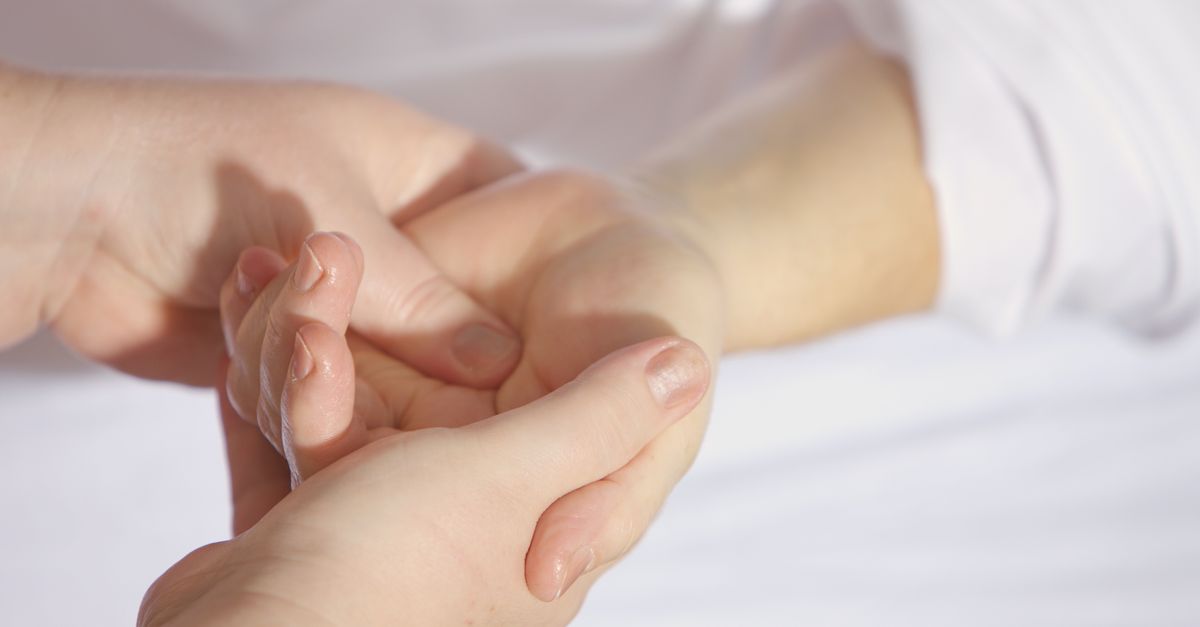
Trigger finger relief typically involves a combination of rest, activity modification, gentle range-of-motion exercises, and massage of the surrounding hand and forearm muscles to reduce tension around the affected tendon sheath. These self-care strategies address the muscle tightness and stiffness that accompany trigger finger, but they do not release the fibrous nodule responsible for the locking or catching sensation. Persistent trigger finger — especially when a finger locks in a bent position and cannot straighten freely — requires evaluation by a hand specialist, who may recommend splinting, corticosteroid injection, or a minor outpatient procedure. Early professional intervention produces the best long-term outcomes.
You reach for your coffee cup in the morning and your finger won't straighten. It catches, clicks, then releases with a painful snap — or it simply stays locked. If that experience sounds familiar, you may be dealing with trigger finger, a condition that ranges from a minor annoyance to a real obstacle in daily life. Trigger finger has specific causes, a recognizable pattern, and a clear path toward relief that is more targeted than general hand stiffness advice. This post covers what's actually happening inside the finger, which self-care strategies genuinely help manage surrounding tension, and when you need to see a hand specialist to address the root problem.
What Causes Trigger Finger
Trigger finger, known medically as stenosing tenosynovitis, is a mechanical problem inside a very tight space. Understanding it makes the difference between pursuing relief strategies that work and wasting effort on those that don't.
The Anatomy Behind the Catch
Each finger is controlled by flexor tendons that run from the forearm through a series of fibrous rings called pulleys, which keep the tendons close to the bone as they move. The A1 pulley — located at the base of the finger near the palm — is where stenosing tenosynovitis most commonly develops. When that pulley becomes thickened and narrowed, the tendon sheath swells or a nodule forms on the tendon itself, making it difficult for the tendon to glide smoothly through the pulley.
The result is the hallmark catching or locking sensation. When you flex the finger, the nodule is pulled through the narrowed pulley with effort. On extension, it may catch, require a forceful snap to release, or lock entirely in a bent position. In severe cases, the finger becomes fixed and requires passive assistance to straighten.
Who Develops Trigger Finger and Why
Repetitive gripping and grasping are the most common contributing factors — occupations and activities that place sustained load on the A1 pulley over time. Farmworkers, mechanics, musicians, and anyone who spends hours gripping tools or handles are at elevated risk.
Certain medical conditions significantly increase susceptibility. According to the American Academy of Orthopaedic Surgeons, people with diabetes are at substantially higher risk of developing trigger finger than the general population, and they may develop it in multiple fingers simultaneously. Rheumatoid arthritis, hypothyroidism, and gout are also associated with higher rates of stenosing tenosynovitis. Trigger finger occurring alongside one of these conditions often responds differently to conservative care and warrants earlier specialist involvement.
Morning Stiffness: A Recognizable Pattern
One of trigger finger's most consistent features is that symptoms are worst in the morning. During sleep, the hand stays relatively still, fluid shifts in the tendon sheath, and the nodule settles against the narrowed pulley. The first movements of the day — reaching for a phone, straightening the hand, gripping — can produce the most pronounced catching or locking.
Many people find that symptoms loosen somewhat as the hand warms up through normal morning activity. This pattern is distinctly different from osteoarthritis stiffness, which tends to worsen with sustained use rather than improve, and from Dupuytren's contracture, which involves the palmar fascia rather than the tendon pulley. Recognizing this morning-dominant pattern helps confirm you're dealing with trigger finger specifically — not a different hand condition requiring a different approach.
What Trigger Finger Relief Can and Cannot Do
Self-care strategies for trigger finger work on the surrounding environment — muscle tension in the hand and forearm, circulation in the tissue near the sheath, and overall mechanical load on the pulley. They do not dissolve the nodule, thin the pulley, or eliminate the structural narrowing that creates the problem. That distinction matters for setting realistic expectations.
Honest Limits of Self-Care
Massage, stretching, and activity modification can meaningfully reduce the frequency and intensity of catching — particularly in early or mild cases — by decreasing the overall tension load the flexor tendon system carries. Less tension in the forearm flexors means less force pulling the nodule through the pulley with each grip. This is a real, practical benefit. It is not, however, a cure.
If your finger is locking fully and cannot be straightened without assistance, self-care is not sufficient management. That degree of locking indicates the structural narrowing has progressed to a point where the tendon cannot reliably pass through the pulley. A hand surgeon or orthopedic specialist can address this directly — and the interventions available are highly effective.
When to See a Hand Specialist
The following situations call for professional evaluation rather than continued self-management:
- The finger locks in a bent position and cannot be straightened without manually forcing it
- Symptoms are present in multiple fingers simultaneously
- You have diabetes, rheumatoid arthritis, or another associated condition
- Symptoms have persisted for more than four to six weeks despite rest and activity modification
- Pain is sharp, severe, or accompanied by swelling in the palm
- The finger has straightened but now remains fixed in extension
Physicians have a clear and effective toolkit for trigger finger: nighttime extension splinting to rest the pulley, corticosteroid injections to reduce sheath inflammation, and a minimally invasive outpatient procedure — percutaneous release or surgical release — that resolves the structural problem directly. For many people, a single corticosteroid injection resolves the problem for months or permanently. Early referral avoids letting the condition progress to fixed locking.
Activity Modification and Protecting the Pulley
Reducing mechanical load on the A1 pulley gives inflamed tissue a chance to calm down. This doesn't mean complete rest — it means being strategic about how you grip and what you grip.
Grip Modifications
The A1 pulley is most stressed during power grip — the full-hand squeeze used for tools, bars, jars, and handles. Modifying how often and how forcefully you grip is one of the most direct interventions available:
- Use padded or larger-diameter grips on tools and equipment to reduce finger flexion depth
- Avoid prolonged sustained gripping (holding power tools, gripping a steering wheel without breaks)
- Distribute grip across more fingers rather than loading the affected digit
- Use assistive tools — jar openers, ergonomic handles — to reduce peak grip force
- Take regular breaks from repetitive grasping tasks during the workday
Nighttime Splinting
A simple extension splint worn while sleeping keeps the affected finger in a neutral or slightly extended position. This prevents the overnight stillness that allows the nodule to wedge into the narrowed pulley — the primary driver of that painful morning snap. Many hand specialists recommend splinting as a first step even before injection.
Over-the-counter finger extension splints are widely available, though a hand therapist can fit a custom splint for more precise positioning. The goal is not rigidity — it is keeping the tendon in a position where it doesn't have to force its way through the pulley on the first movement of the morning.
Gentle Range-of-Motion and Self-Care Techniques
Range-of-motion work for trigger finger focuses on maintaining tendon glide and reducing the stiffness that accumulates around an irritated sheath — without forcing a locked finger or creating sharp pain. Gentle is the operative word.
Tendon Gliding Exercises
Tendon gliding exercises are used by hand therapists specifically to maintain the flexor tendon's ability to move through the pulley without excessive force. They move the finger through a sequence of positions that progressively shift the tendon's position within the sheath. A standard sequence includes:
- Straight position: All fingers fully extended, held for 5 seconds
- Hook fist: Bend only the middle and end joints of the fingers, keeping the large knuckles straight
- Full fist: Gently close all fingers into a loose fist — do not force the grip
- Tabletop position: Bend the large knuckles to 90 degrees while keeping fingers straight
- Straight fist: Bend the large and middle knuckles, keeping finger ends straight
Each position is held briefly and the sequence is performed slowly, never forcing through a catch or snap. If a position produces a locking sensation, stop at the preceding position and work within a pain-free range. Five to ten repetitions, two to three times daily, is a reasonable starting point — a hand therapist can refine this based on your specific pattern.
Warm-Up Routine for Morning Stiffness
Because symptoms peak in the morning, a brief warm-up before the day's first demanding movements can make a meaningful difference. Soaking the hand in warm (not hot) water for five to ten minutes before attempting finger exercises allows the tendon sheath to warm and tissue to soften slightly. Follow the soak with the tendon gliding sequence above. This reduces the force required to initiate that first movement and decreases the chance of a forceful, painful snap first thing in the morning.
Hand and Forearm Massage for Surrounding Tension
Massage for trigger finger is not about working directly on the pulley or the nodule. Pressing hard on the A1 pulley — located at the base of the affected finger in the palm — is unlikely to help and may aggravate inflamed tissue. Effective massage targets the surrounding muscles that contribute to overall flexor tension: the intrinsic muscles of the hand and the forearm flexor group that drives finger movement.
Forearm Flexor Release
The muscles that flex your fingers originate not in your hand but in your forearm. When these muscles carry chronic tension — as they commonly do in people who grip repeatedly throughout the day — they pull the flexor tendons under constant load even at rest. Releasing this tension reduces the baseline stress on the A1 pulley.
To address the forearm flexors, apply firm but comfortable pressure along the inner forearm (the side facing up when your palm faces the ceiling), working from just below the elbow toward the wrist. Circular pressure, slow longitudinal strokes, and sustained compression on tender spots all help. This is an area where a therapeutic body massager can be useful — applied along the forearm with appropriate pressure, it reaches the deeper layers of the flexor muscle belly more effectively than light fingertip pressure alone.
Intrinsic Hand Muscle Massage
The thenar eminence (the fleshy pad at the base of the thumb), the hypothenar eminence (the pad along the little-finger side of the palm), and the interosseous muscles between the metacarpal bones all accumulate tension in people who grip frequently. These can be addressed with thumb pressure, knuckle pressure from the opposite hand, or small circular strokes across the palm.
Work through the palm methodically — not over the A1 pulley at the base of the affected finger, but through the broader hand musculature surrounding it. This type of self-massage is well within reach for most people and can be done for five to ten minutes after the morning warm-up routine.
Using a Massager on the Forearm
For people who grip tools or perform repetitive hand work professionally, forearm tension is often chronic and deeply layered. A professional-grade body massager designed for deep tissue work can reach the flexor digitorum superficialis and flexor digitorum profundus — the two primary finger flexors — more effectively than surface massage techniques. The oscillating vibration moves surrounding muscle tissue and helps increase blood flow in areas that are stiff or overused.
Apply to the inner forearm only, using moderate pressure and slow passes along the muscle belly. Avoid the wrist crease and bony prominences. Keep sessions to five to ten minutes, and stop if symptoms increase. This is a supportive strategy for tension management — not a replacement for physician evaluation if locking persists.
For people managing hand and wrist conditions who want to explore therapeutic massage options, the full MedMassager product range includes FDA-registered Class I medical devices designed for sustained therapeutic use.
Trigger Finger vs. Arthritis
Hand stiffness and joint pain are common reasons people search for general hand massage advice. Trigger finger and hand osteoarthritis can coexist, but they are mechanically different problems — and the self-care approach differs enough that the distinction is worth making.
Osteoarthritis of the hand affects the joint cartilage and surrounding structures, producing pain and stiffness at the joint level, often with visible bony enlargement at the finger knuckles (Heberden's nodes at the end joint, Bouchard's nodes at the middle joint). The stiffness from arthritis tends to worsen with sustained use and improve with rest — roughly the opposite of the morning-dominant pattern that trigger finger produces.
Trigger finger, by contrast, involves the tendon and its sheath — not the joint itself. The clicking, catching, or locking is the distinguishing feature. Massage and movement strategies for trigger finger specifically target the flexor tendon system and its surrounding musculature, whereas arthritis management focuses more on joint protection, load distribution, and inflammation control. If you're uncertain which condition you're dealing with, a hand specialist can differentiate quickly — and the right diagnosis leads to the right treatment.
Frequently Asked Questions
Can trigger finger go away on its own without treatment?
Mild trigger finger occasionally resolves with rest and activity modification alone, particularly if caught early before the nodule is well-established. Symptoms that persist beyond four to six weeks, involve locking rather than just catching, or occur alongside diabetes or inflammatory conditions are unlikely to resolve without some form of intervention. Seeing a hand specialist early — rather than waiting to see if it improves — generally produces better outcomes and may prevent progression to fixed locking.
What is the most effective treatment for trigger finger?
Corticosteroid injection into the tendon sheath is the most commonly successful non-surgical treatment, with high resolution rates — particularly when performed early in the condition's course. Surgical or percutaneous release of the A1 pulley is a minor outpatient procedure with very high success rates for cases that do not respond to injection. Splinting and activity modification are first-line conservative measures that help mild cases and complement other treatments.
Does massage help trigger finger?
Massage helps manage the surrounding muscle tension that contributes to mechanical load on the affected tendon, particularly in the forearm flexors and intrinsic hand muscles. It does not address the structural narrowing of the A1 pulley or dissolve the tendon nodule responsible for locking. Massage is most useful as a supportive strategy for mild cases or as an adjunct to physician-directed treatment — not as a standalone solution for moderate or severe trigger finger.
Why is trigger finger worse in the morning?
During sleep, the hand is relatively still and fluid accumulates in the tendon sheath, causing the nodule to settle against the narrowed A1 pulley. The reduced overnight movement also allows surrounding tissue to cool and stiffen slightly. The first finger movements of the morning require the nodule to pass through the tightest point in the pulley, producing the most pronounced catching or locking of the day. A brief warm-up — warm water soaking followed by gentle tendon gliding exercises — can reduce morning symptom severity.
Is trigger finger related to diabetes?
Yes. Diabetes is one of the strongest known risk factors for trigger finger, and people with diabetes are significantly more likely to develop the condition than the general population. They also more commonly develop trigger finger in multiple fingers simultaneously. The mechanism is thought to involve changes in collagen metabolism and connective tissue biology associated with diabetes. Trigger finger occurring in a person with diabetes warrants earlier specialist referral because conservative measures are less likely to be sufficient.
What exercises help with trigger finger stiffness?
Tendon gliding exercises are the most targeted approach for trigger finger stiffness. These move the finger through a sequence of positions — hook fist, full fist, tabletop, and straight fist — performed slowly and within a pain-free range to maintain smooth tendon movement through the pulley. General finger extension stretches and gentle passive straightening of the affected finger also help maintain range of motion. A hand therapist can prescribe a specific program based on the severity and pattern of your symptoms.
How long does it take for trigger finger to heal?
Timeline depends significantly on treatment chosen and severity. Mild cases managed with rest and splinting may improve over several weeks, while corticosteroid injection often produces noticeable improvement within one to two weeks and full benefit over four to six weeks. Surgical or percutaneous release typically allows return to normal hand use within a few weeks, with full recovery in four to six weeks. Without any treatment, trigger finger tends to progress rather than resolve — particularly in people with diabetes or inflammatory conditions.
The Bottom Line on Trigger Finger Relief
Trigger finger is a specific mechanical condition — stenosing tenosynovitis — and it responds best to strategies that match what's actually happening inside the finger. Rest, activity modification, morning warm-up routines, tendon gliding exercises, and massage of the forearm flexors and hand musculature are all legitimate tools for managing surrounding tension and reducing symptom severity in mild cases.
What self-care cannot do is resolve the structural narrowing at the A1 pulley or eliminate the nodule responsible for locking. For persistent catching, any degree of true locking, or trigger finger in the context of diabetes or inflammatory disease, a hand specialist offers interventions — injection, splinting, or a minor procedure — that are highly effective and often curative.
For the forearm and hand tension component of your management plan, the MedMassager Body Massager collection includes FDA-registered Class I therapeutic massagers built for sustained use on large and small muscle groups alike. For a broader overview of therapeutic massage options, the full MedMassager product range is a good place to start. Use these tools as part of a complete plan — and see your physician if the finger keeps locking.
This content is for informational purposes only and is not intended as medical advice, diagnosis, or treatment. Always consult a qualified healthcare professional before starting any new treatment or therapy. MedMassager products are FDA-registered Class I medical devices.


