
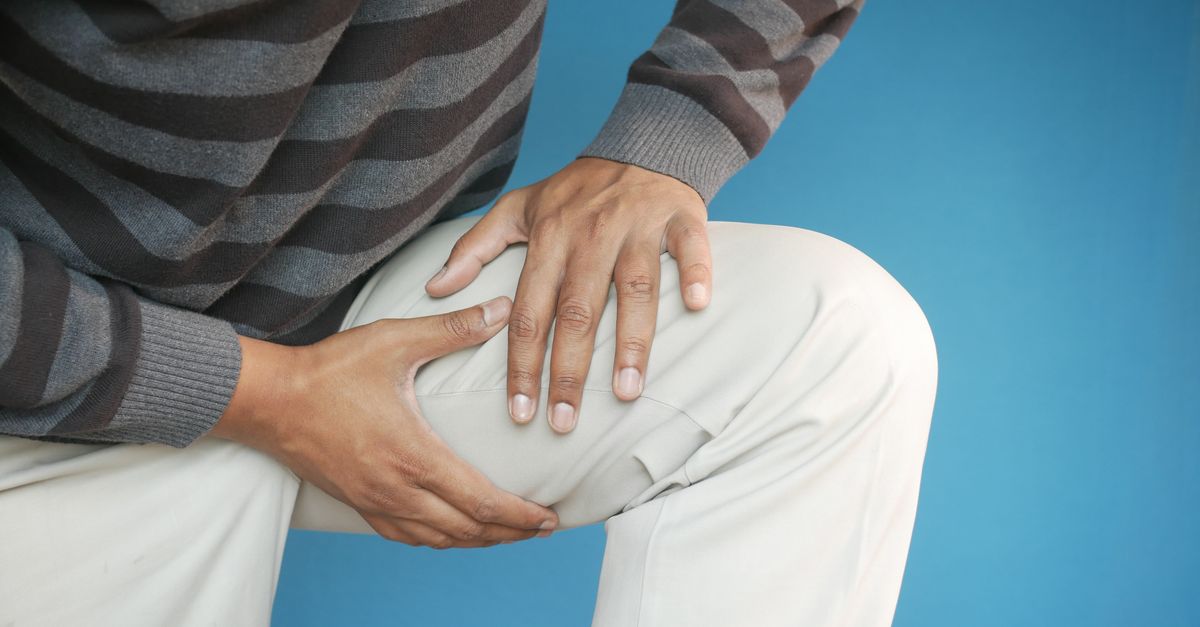
Pes anserine bursitis is inflammation of a small, fluid-filled sac on the inner side of the knee, located about two to three inches below the joint line where three thigh tendons attach to the shinbone. It causes localized tenderness that typically worsens when climbing stairs, rising from a chair, or lying on your side with the knees touching. The condition is usually managed with relative rest, ice, stretching of the hamstrings and inner thigh, and strengthening exercises. Firm pressure should never be applied directly to an inflamed bursa.
Pes anserine bursitis pain sits in an odd place. It isn't in the kneecap or behind the knee. It's on the inside of the shin, a couple of inches below the joint, and pressing that spot makes you wince.
If that sounds familiar, or the first few stairs of the day feel sharper than they should, this small bursa is one of the likeliest explanations. The condition is a frequent source of inner knee pain in people with knee osteoarthritis, runners who have recently added mileage or hills, people carrying extra body weight, and anyone with chronically tight hamstrings.
Because the bursa sits close to the meniscus and the medial collateral ligament, it is easy to mistake for a more serious internal knee injury. That confusion causes two problems: unnecessary worry, or ignoring a structural injury that needs imaging. This guide covers what causes the condition, how it differs from a meniscus tear, how rest, ice, and stretching fit together, where massage helps and where it should never go, and when to see a clinician.
What Causes Pes Anserine Bursitis?
Mayo Clinic describes bursae as small, fluid-filled sacs that cushion the bones, tendons, and muscles near joints. When one becomes irritated, it swells and becomes painful under load or pressure. The pes anserine bursa is one of several around the knee, and its location explains who tends to develop trouble there.
The Anatomy of the "Goose's Foot"
Pes anserinus is Latin for "goose's foot." The name comes from the webbed shape formed by three tendons as they merge and attach to the inner surface of the tibia, which is why the condition is sometimes called goosefoot bursitis. The three tendons belong to these muscles:
- Sartorius, the long, narrow muscle that crosses the front of the thigh diagonally
- Gracilis, a slender muscle running down the inner thigh
- Semitendinosus, one of the three hamstring muscles at the back of the thigh
The bursa lies beneath this tendon junction, between the tendons and the bone. Every time you bend and straighten your knee, those tendons glide over it. Repetitive friction, direct pressure, or extra tension pulling from tight muscles above can all irritate the sac.
Who Is Most at Risk
Several factors increase load or tension at the inner knee, and they often overlap. The main risk factors include:
- Knee osteoarthritis, especially on the inner (medial) side of the joint, which changes how force passes through the knee
- Excess body weight, which increases force on the inner knee with every step
- Tight hamstrings and inner thigh muscles, which increase tension at the tendon attachment
- Running, particularly after sudden jumps in distance or added hill work
- Knock-knee alignment or flat feet, which can angle the knee inward
- Diabetes
- A direct blow to the inner knee
A knee with medial arthritis, extra body weight, and stiff hamstrings has three separate pressures acting on the same small structure. Addressing only one of them tends to leave the problem simmering.
Typical Anserine Bursitis Symptoms
The pain is usually felt at one tender spot on the upper inner shin rather than spread across the whole knee. It typically worsens when you climb stairs, stand up from a chair, or get out of a car. It can disturb sleep when the knees press together while you lie on your side. Mild local swelling may appear over the area, but the knee joint itself usually does not fill with fluid.
Pes Anserine Bursitis vs. a Meniscus Tear
The medial meniscus is a C-shaped cartilage pad inside the inner knee joint. A tear there causes pain in a nearby region, so the two problems are easy to confuse. These differences help separate pes anserine pain from a meniscus problem:
- Location: bursitis pain sits below the joint line on the shin, while meniscus pain sits at the joint line itself, in the crease between the thighbone and shinbone.
- Onset: meniscus tears often follow a twisting or pivoting movement, or develop gradually with wear. Bursitis usually builds over days to weeks from overuse or tension.
- Mechanical symptoms: catching, locking, or the knee giving way point toward the meniscus. Bursitis does not lock the joint.
- Swelling: a meniscus tear can make the whole joint swell, while bursitis swelling stays local.
- Touch: bursitis is sharply tender to pressure at one spot below the joint.
The two can also coexist, particularly in arthritic knees. Only a clinician's exam, sometimes with ultrasound or MRI, can confirm what is going on. If your knee locks, gives way, or swelled quickly after a twist, get it examined before starting any home routine.
Rest, Ice, and Stretching for Inner Knee Pain
Conservative care is the first line of management for inner knee bursitis. The goal is to calm the irritated sac first, then reduce the tension and load that irritated it in the first place.
Relative Rest
Relative rest means cutting back on the activities that provoke the pain rather than stopping all movement. Swap hill walks and stair climbing for flat walking, stationary cycling with the seat raised, or swimming. Avoid deep squats and crossing your legs while the area is tender.
Ice, Applied Gently
Apply a cold pack wrapped in a thin towel for 15 to 20 minutes at a time, a few times a day, especially after activity. Rest the pack lightly on the area rather than pressing it in or strapping it tight. Never put ice directly against bare skin.
Pes Anserine Stretches for the Thigh
Tight muscles pull on the tendon junction, so stretching the muscles above it is one of the most useful long-term steps. Hold each stretch for about 30 seconds without bouncing, and repeat two to three times on each side, once or twice a day.
- Seated hamstring stretch: sit with the affected leg straight and the other bent, then hinge forward from the hips until you feel a stretch behind the thigh.
- Lying hamstring stretch with a towel: lie on your back, loop a towel around the foot, and raise the straight leg until you feel tension behind the thigh.
- Butterfly stretch: sit with the soles of your feet together and let the knees fall outward to stretch the inner thighs.
- Standing quadriceps stretch: hold a chair for balance and draw your heel toward your buttock.
Stop any stretch that sharpens pain at the inner knee. Mild pulling in the belly of the muscle is the goal. Pain at the bursa is not.
Sleep Position and Strength
If night pain wakes you, place a pillow between your knees when lying on your side so the inner knees don't press together. Once the acute pain settles, a physical therapist can add strengthening for the quadriceps and hip muscles. Stronger hips and thighs help the knee track more evenly under load.
Where Massage Fits and Where It Doesn't
Massage can be part of managing pes anserine pain, but only if it stays in the right place. The bursa itself is an inflamed structure sitting against bone. The muscles that feed into it are a different matter.
Never Press on the Inflamed Bursa
Firm pressure directly on an inflamed bursa can increase irritation and swelling. That rules out deep thumb work, foam rolling, or any massager pressed into the tender spot on the upper inner shin. Use this map instead:
- Target: the hamstrings at the back of the thigh, the quadriceps at the front, and the outer thigh
- Use care: the inner thigh, staying in its upper half
- Avoid: the inner knee and upper inner shin, where the bursa sits
Working the Hamstrings and Thighs
Because tight hamstrings and thigh muscles add tension at the tendon junction, keeping those muscle groups loose is the logical target. The MedMassager Body Massager for the hamstrings and thighs is a handheld unit with slip-resistant handles and a large, soft, cushioned pad that contours to the back and front of the thigh. The circular oscillating action creates continuous, repetitive movement in the hamstring and thigh muscles, which supports blood flow through those large muscle groups during use. All of that happens well above the knee, without any pressure on the bursa.
For hand-based techniques on the muscles around the joint, our guide on how to massage knee pain safely walks through the approach step by step.
Oscillation Versus Ordinary Vibration
Many massagers are sold as vibration massagers, and the term covers a wide range of devices. MedMassager uses oscillating technology to deliver deeper, more controlled vibration than conventional massagers. The Body Massager oscillates in a circular motion and has adjustable intensity, so you can keep the setting low when working near a sensitive knee. It is an FDA-registered Class I medical device.
If you are comparing options, this breakdown of the best massager for knee pain explains which designs suit which parts of the leg.
A Daily Thigh and Hamstring Routine
This routine uses the Body Massager on the muscles above the knee and keeps the device away from the bursa entirely. Check with your doctor or physical therapist before adding it, particularly if you have a chronic knee condition or a recent injury.
- Get comfortable. Sit on a sofa with the leg extended and supported, or lie down on a bed.
- Start low. Begin with about 10 minutes at the lowest setting, once or twice a day.
- Begin at the hamstrings. Rest the cushioned pad on the back of the thigh near the buttock and work toward the knee, stopping a hand's width above the joint.
- Move to the front and outer thigh. Spend a few minutes on the quadriceps and the outer thigh.
- Keep inner-thigh work high. Use the pad only in the upper half of the inner thigh, never down toward the inner knee.
- Stretch afterward. Follow the session with the hamstring and inner thigh stretches above while the muscles are warm.
- Ice if needed. Apply a wrapped cold pack lightly to the inner knee if it feels irritated.
The circular oscillating action keeps blood moving through the muscle tissue supporting the joint, which is why the routine targets the thigh rather than the knee itself. Reduce the intensity or stop if pain at the inner knee increases during or after a session. You can compare the Classic and Plus models in the MedMassager body massager collection. If you browse the full MedMassager catalog, the Body Massager is the model that applies oscillation to the thighs and hamstrings.
When to See a Clinician
Home care is reasonable for mild, localized inner knee pain with no injury behind it. Some signs, though, call for prompt attention. If the area becomes red and hot, or you develop a fever, the bursa may be infected. Pain, swelling, or warmth in the calf of the same leg, or being unable to put weight on the leg, also warrant same-day care.
Book an appointment with a doctor, sports medicine specialist, or physical therapist if any of the following apply:
- The pain has not improved after about two weeks of rest, ice, and stretching
- The knee locks, catches, or gives way
- The whole knee swelled quickly after a twist or fall
- You have diabetes or circulation problems and the pain is new or worsening
A clinician can confirm the diagnosis with an exam and, if needed, ultrasound or MRI to rule out a meniscus tear, stress fracture, or arthritis flare. Depending on what they find, they may suggest structured physical therapy, anti-inflammatory medication, or an injection. Ask your own care team whether massage of the surrounding muscles fits into your plan.
Frequently Asked Questions
How long does anserine bursitis take to heal?
Recovery time depends on how long the bursa has been irritated and whether the underlying causes, such as tight hamstrings or excess load, are addressed. Mild flare-ups can settle within a few weeks of rest, ice, and stretching. Long-standing cases, especially alongside knee arthritis, can take several months. If there is no improvement after a couple of weeks, have the knee examined.
Is it safe to massage pes anserine bursitis?
Avoid massaging directly over the inflamed bursa, because firm pressure on the swollen sac can increase irritation. Massaging the thigh muscles above the knee is different, since the pad never touches the bursa and the hamstring and inner thigh muscles feed the tendons that cover it. Keep all pressure well above the knee and away from the tender spot on the upper inner shin. Check with your clinician if you are unsure where that boundary is.
Why does my inner knee hurt below the joint?
Pain on the upper inner shin, a couple of inches below the knee joint, often comes from irritation of the pes anserine bursa or the tendons attached there. Other possible causes include a medial collateral ligament sprain, a meniscus tear, arthritis, or, less often, a stress fracture of the tibia. Pinpoint tenderness at one spot below the joint line points toward the bursa, while pain at the joint line itself points more toward the meniscus. A clinician's exam is the only way to know for sure.
Does walking make pes anserine pain worse?
Walking on flat ground is usually tolerable, but stairs, hills, and long distances tend to aggravate the inner knee because they increase bending under load. Shorter walks on level surfaces are a reasonable way to stay active during a flare. If walking produces sharp pain or a limp, cut back and let the area settle.
Should I use heat or ice for inner knee bursitis?
Ice is the better choice while the area is tender, swollen, or recently aggravated. Apply a wrapped cold pack for 15 to 20 minutes at a time, resting it lightly on the knee. Once the acute irritation has passed, gentle warmth on the thigh muscles before stretching can help them relax.
Can tight hamstrings cause inner knee pain?
Yes. The semitendinosus, one of the hamstring muscles, forms one of the three tendons of the pes anserinus. When the hamstrings are chronically tight, they increase tension at the attachment point on the inner shin, which can irritate the bursa beneath it. Regular hamstring stretching is a core part of managing the condition.
The Bottom Line
Pes anserine bursitis follows a distinct pattern: pinpoint tenderness on the upper inner shin, pain on stairs and when rising from a chair, and no locking of the joint. Rest, ice, and steady stretching of the hamstrings and inner thigh address both the bursa and the tension behind it. Red flags such as locking, rapid swelling, or fever call for a clinician.
If massage fits your plan, keep it on the muscles above the knee and off the bursa entirely. The circular oscillating action creates continuous, repetitive movement in the thigh and hamstring muscles, which supports circulation in those tissues during use. To work the hamstrings and thighs without pressing on the inner knee, explore the MedMassager Body Massager for thigh and hamstring muscles.
This content is for informational purposes only and is not intended as medical advice, diagnosis, or treatment. Always consult a qualified healthcare professional before starting any new treatment or therapy. MedMassager products are FDA-registered Class I medical devices.


