
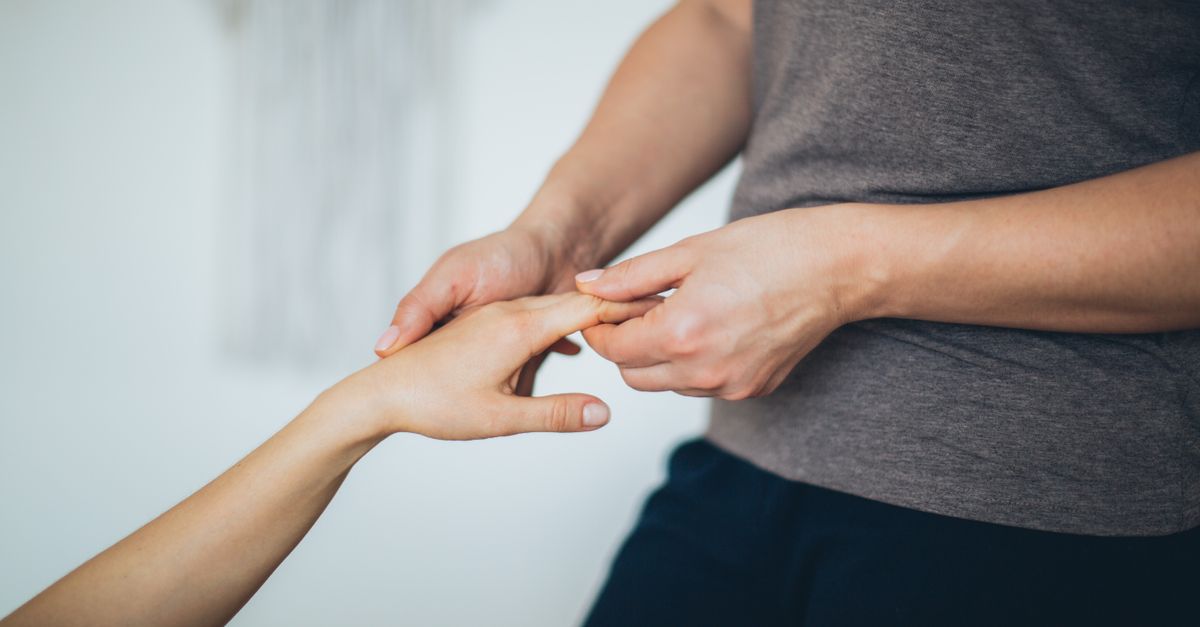
Neuropathy in the hands occurs when peripheral nerves supplying the fingers, palms, or wrists are damaged or compressed, producing symptoms such as tingling, numbness, burning, and weakness in grip. The most common causes include diabetes, vitamin B12 deficiency, chemotherapy side effects, and chronic nerve compression. Unlike carpal tunnel syndrome, which affects only the median nerve distribution, peripheral neuropathy in the hands typically produces symptoms across all fingers in a diffuse "glove" pattern. Management focuses on addressing the underlying cause, protecting nerve health, and supporting circulation through gentle movement and targeted massage therapy.
If your hands have been waking you up at night with burning or tingling — or if gripping a cup has become noticeably harder — you already understand how disruptive neuropathy in the hands can be. These aren't vague discomforts. They're signals from a nervous system under strain, and they tend to get worse before anyone investigates the cause.
Peripheral neuropathy affecting the hands is more common than most people realize. It shows up across a wide range of populations: people managing diabetes, older adults with nutritional deficiencies, cancer patients going through chemotherapy, and anyone with years of repetitive compression on sensitive nerves. The symptoms can look similar to carpal tunnel syndrome on the surface, but the underlying mechanism — and the right response — is meaningfully different.
This post covers what actually causes hand neuropathy, how to distinguish it from other nerve conditions, and what supportive care options (including gentle vibration massage for the hands and forearms) can do to help manage symptoms at home. Physician evaluation is essential, and we'll be clear about where that line falls.
What Causes Neuropathy in the Hands?
Peripheral neuropathy in the hands results from damage to the sensory and motor nerve fibers that travel from the spinal cord through the arms and into the fingers. Understanding the cause matters enormously — different origins require different medical interventions, and some causes are reversible while others are not.
Diabetes and Blood Sugar Damage
Diabetic peripheral neuropathy is one of the most common causes of hand symptoms. Chronically elevated blood glucose damages the small blood vessels that supply oxygen and nutrients to nerve fibers, leading to a gradual breakdown of nerve function. The feet are typically affected first, but as neuropathy progresses, the hands often become involved in what clinicians call a "stocking-glove" distribution.
According to the National Institute of Diabetes and Digestive and Kidney Diseases, a substantial proportion of people with diabetes will develop some form of peripheral neuropathy over time, making blood sugar management the most critical intervention for this group.
Vitamin B12 Deficiency
Vitamin B12 is essential for maintaining the myelin sheath — the protective coating that wraps nerve fibers and allows signals to conduct properly. When B12 levels fall too low, myelin degrades and nerve signals become unreliable, producing tingling, numbness, and sometimes a burning quality in the hands and feet. B12 deficiency is particularly common in older adults, people following plant-based diets, and those taking certain long-term medications such as metformin or proton pump inhibitors.
B12-related neuropathy caught early is often partly or fully reversible with supplementation. Late-stage nerve damage from prolonged deficiency is harder to reverse, which is why early detection matters.
Chemotherapy-Induced Peripheral Neuropathy
Certain chemotherapy agents — including platinum-based drugs, taxanes, and vinca alkaloids — are directly neurotoxic. They interfere with nerve fiber function in ways that produce tingling, numbness, and pain in the hands and feet, a condition known as chemotherapy-induced peripheral neuropathy (CIPN).
CIPN can be dose-limiting, meaning symptoms sometimes become severe enough that oncologists have to adjust treatment. Symptoms may improve after treatment ends, or they may persist long-term. Anyone experiencing hand neuropathy symptoms during or after chemotherapy should report them directly to their oncology team.
Chronic Compression and Other Causes
Prolonged nerve compression from repetitive work, poor ergonomics, or sustained pressure on the ulnar or radial nerves can produce localized neuropathy symptoms in specific parts of the hand. Alcohol use disorder, autoimmune conditions, thyroid dysfunction, and certain toxin exposures are also documented causes. In some cases, no specific cause is identified — these are classified as idiopathic peripheral neuropathy.
- Diabetes and prediabetes
- Vitamin B12 or other nutritional deficiencies
- Chemotherapy and certain other medications
- Chronic alcohol use
- Autoimmune disease (lupus, Sjögren's, rheumatoid arthritis)
- Hypothyroidism
- Repetitive nerve compression or occupational exposure
- Idiopathic (no identifiable cause)
Hand Neuropathy vs. Carpal Tunnel
Because both conditions involve hand tingling and numbness, peripheral neuropathy and carpal tunnel syndrome are frequently confused. The distinction matters clinically — they have different causes, different symptom patterns, and different treatment paths.
The Glove Distribution Pattern
Peripheral neuropathy affecting the hands typically produces symptoms that are diffuse and symmetrical, spreading across all fingers and often both hands simultaneously. Clinicians describe this as a "glove" distribution — the affected area corresponds to the shape of a glove rather than the path of any single nerve. Numbness tends to be more uniform across the hand, and both hands are usually involved at similar stages.
This bilateral, diffuse pattern is a reliable diagnostic signal. When all fingers on both hands tingle or feel numb, peripheral neuropathy becomes a much stronger suspect than a localized entrapment syndrome.
Carpal Tunnel's Median Nerve Pattern
Carpal tunnel syndrome results from compression of the median nerve as it passes through the wrist. This nerve supplies the thumb, index finger, middle finger, and the thumb-side half of the ring finger — a very specific territory. The pinky finger and the outer palm are typically spared, which is a distinguishing feature.
Carpal tunnel symptoms also tend to worsen with specific wrist positions (flexion during sleep, extended keyboard use) and often improve with wrist splinting. Peripheral neuropathy does not follow this positional pattern. A nerve conduction study and electromyography (EMG) performed by a neurologist can definitively differentiate the two conditions.
Why the Difference Matters for Treatment
Carpal tunnel syndrome often responds well to wrist splinting, ergonomic adjustments, corticosteroid injections, or surgical decompression. These interventions do little for systemic peripheral neuropathy, which requires addressing the underlying cause — blood sugar control, B12 supplementation, medication review, or disease management.
If you've been treating hand tingling as carpal tunnel without meaningful improvement, ask your physician whether peripheral neuropathy has been formally ruled out. A neurological evaluation with nerve conduction studies is the appropriate diagnostic step.
How Massage Helps with Hand Neuropathy
Massage cannot regenerate damaged nerve fibers — that needs to be said plainly. But it can address secondary effects of neuropathy that compound discomfort, particularly reduced circulation to the extremities and chronic muscle tension in the hands, wrists, and forearms that develops when people unconsciously guard against pain or grip difficulty.
Circulation and Nerve Health
Peripheral nerves depend on adequate blood supply through small vessels called vasa nervorum. When circulation to the extremities is poor — as it commonly is in diabetic neuropathy and other systemic causes — nerve tissue receives less oxygen and fewer nutrients, which can slow any natural recovery. Supporting blood flow to the hands and forearms through gentle movement and massage is a logical component of supportive care.
Research on massage and peripheral circulation consistently supports the idea that mechanical stimulation of soft tissue increases local blood flow. For people with hand neuropathy, even brief periods of improved circulation may help manage symptom burden, though this is supportive care rather than treatment of the underlying nerve damage.
Forearm Tension and the Grip-Pain Cycle
People living with hand neuropathy often develop secondary tension in the forearms, wrists, and intrinsic hand muscles. When hands feel unreliable or painful, people tend to grip harder, adopt compensatory postures, or avoid certain movements entirely. Over time, this creates a cycle of muscular tension that adds its own layer of discomfort on top of the neurological symptoms.
Gentle massage of the forearms — the flexor and extensor muscle groups that control finger and wrist movement — can help interrupt this tension cycle. It doesn't fix the nerve damage, but it can meaningfully reduce the muscular component of discomfort and help maintain range of motion.
Using the Body Massager for Forearm Work
The MedMassager Body Massager is an FDA-registered Class I medical device designed to deliver deep oscillating massage to large muscle groups. For people managing hand neuropathy, it's particularly useful for the forearm muscles — the flexor and extensor groups that run from the elbow to the wrist. The Body Massager uses oscillating motion to deliver controlled vibration that increases local blood movement in surrounding muscle tissue, which can help ease the secondary tension that aggravates hand symptoms.
Variable speed settings allow for a gentle, controlled approach appropriate for sensitive conditions. Start at lower speeds and work along the muscle belly rather than over bony prominences or inflamed areas. Always consult your physician before beginning massage therapy if you have an active medical condition affecting nerve or vascular health.
Direct Hand Massage Techniques
For the hands themselves, the Body Massager is too powerful — direct hand massage is better performed manually or with a small-surface tool. Gentle self-massage using the opposite thumb to work through the palm, the spaces between the metacarpal bones, and the base of each finger can help maintain tissue health and circulation. Keep pressure light to moderate. Avoid aggressive pressure over areas with reduced sensation, since diminished feedback from neuropathic nerves makes it easy to overdo it without realizing it.
A Daily Routine for Hand Neuropathy
Supportive home care for hand neuropathy works best as a consistent daily practice rather than an occasional intervention. The goal is to maintain circulation, manage secondary muscle tension, and protect the hands from the additional insults — cold, pressure, and repetitive strain — that tend to worsen symptoms.
Morning Routine
- Warm water soak: Begin with 3–5 minutes of warm (not hot) water on the hands. Warmth promotes vasodilation and can ease the stiffness and heightened sensitivity that neuropathic hands often experience first thing in the morning.
- Gentle range-of-motion exercises: Slowly open and close the fist, spread the fingers wide, and rotate the wrists. Perform 10–15 repetitions. This promotes circulation and maintains joint mobility without stressing sensitive tissue.
- Self-massage of palms and fingers: Use the opposite thumb to apply gentle circular pressure through the palm, web spaces, and base of each finger. One to two minutes per hand is sufficient.
Midday Forearm Care
- Forearm stretch: Extend the arm with palm up and gently pull the fingers back with the opposite hand. Hold for 20–30 seconds, then reverse with palm down. This stretches both the flexor and extensor compartments.
- Body Massager forearm session: Using the MedMassager Body Massager, apply oscillating massage to the forearm flexors and extensors at a low-to-moderate speed setting for 5–10 minutes per arm. Keep the massager moving along the muscle belly rather than holding it stationary.
- Rest position awareness: If you work at a desk, check your wrist and arm position. Avoid sustained wrist flexion or resting body weight on the elbows, which compresses the ulnar nerve.
Evening Wind-Down
- Warm compress: Apply a warm (not hot) compress or heated gloves to the hands for 10 minutes. Warmth supports blood flow and can reduce the burning quality that neuropathy often intensifies during evening rest.
- Gentle hand massage with oil or lotion: Apply a small amount of moisturizer — neuropathic skin often becomes dry due to autonomic nerve involvement — and work through the hands with slow, deliberate pressure. Focus on the most symptomatic areas without forcing pressure into acutely painful spots.
- Elevation if swelling is present: If the hands or forearms carry any swelling, a brief period of elevation above heart level before sleep can assist lymphatic drainage.
Precautions and When to See a Physician
Hand neuropathy is a symptom with a wide range of underlying causes — some of which require urgent medical evaluation. Supportive home care is appropriate as an adjunct to medical management, not a substitute for diagnosis and treatment.
Red Flags That Require Prompt Evaluation
- Rapidly progressing weakness in the hands or arms
- Symptoms that began after a fall, accident, or acute illness
- Difficulty with fine motor tasks worsening over weeks
- Neuropathy symptoms accompanied by balance problems or falls
- New hand symptoms in a person currently receiving chemotherapy
- Open wounds, infections, or skin breakdown on neuropathic hands
Massage Precautions for Neuropathic Hands
Reduced sensation is the central concern when applying any massage to neuropathic areas. The normal feedback that tells you "that's too much pressure" is impaired, which means it's easier to cause bruising, skin breakdown, or nerve irritation without feeling it in the moment. Keep pressure gentle, and observe the skin afterward for redness or irritation. Avoid massage over acutely inflamed joints, open skin, or areas with known vascular compromise.
People with diabetes should be especially careful, as diabetic neuropathy is often accompanied by reduced blood flow to small vessels and slower healing. Any massage program for a person managing diabetes should be discussed with their physician first.
Medical and Therapeutic Options
Your physician may recommend any combination of the following depending on your diagnosis:
- Treating the underlying cause (blood sugar control, B12 supplementation, medication adjustment)
- Medications for neuropathic pain (gabapentin, pregabalin, duloxetine, topical agents)
- Occupational therapy for hand function and adaptive equipment
- Physical therapy for strength, balance, and movement rehabilitation
- Nerve conduction studies and neurological workup
Home supportive care — including the circulation-focused use of professional-grade therapeutic massagers — can complement these interventions, but should be discussed with your care team before starting.
Frequently Asked Questions
How do I know if my hand tingling is neuropathy or carpal tunnel syndrome?
The key difference is the pattern of symptoms. Carpal tunnel syndrome affects only the median nerve distribution — the thumb, index finger, middle finger, and part of the ring finger — and typically spares the pinky. Peripheral neuropathy in the hands usually produces diffuse symptoms across all fingers in both hands simultaneously, often described as a "glove" distribution. A neurologist can perform nerve conduction studies and an EMG to definitively distinguish between the two conditions.
Can hand neuropathy be reversed or cured?
Whether hand neuropathy is reversible depends heavily on its cause and how long the damage has been present. Neuropathy caused by vitamin B12 deficiency is often partly or fully reversible with prompt supplementation, while diabetic neuropathy may stabilize or partially improve with tight blood sugar management but is rarely fully reversed. Chemotherapy-induced neuropathy sometimes resolves after treatment ends, but can persist long-term. Early diagnosis and addressing the root cause give the best chance of recovery.
Does massage help neuropathy in the hands?
Massage does not repair damaged nerve fibers, but it can support circulation to the hands and forearms and help relieve secondary muscle tension that compounds neuropathic discomfort. Gentle manual massage of the palms and fingers, combined with soft tissue work on the forearm muscles, can help maintain local blood flow and tissue health. Anyone with reduced hand sensation should use gentle pressure and discuss massage therapy with their physician before starting, particularly if diabetes or vascular disease is involved.
Why does hand neuropathy feel worse at night?
Neuropathic symptoms in the hands commonly intensify at night for several reasons. During the day, physical activity keeps blood circulating through the extremities and provides competing sensory input that partially masks nerve pain. At rest, circulation slows, there is less sensory competition, and the nervous system has fewer distractions — all of which make burning, tingling, and aching more noticeable. Lying still can also create mild compression on nerves at the wrist or elbow depending on sleep position, which adds to the symptom burden.
What vitamin deficiencies cause tingling in the hands?
Vitamin B12 deficiency is the most common nutritional cause of hand tingling and peripheral neuropathy. B12 is essential for maintaining the myelin sheath that insulates nerve fibers, and when levels fall too low, nerve signal conduction degrades. Deficiency in vitamin B6, vitamin E, and copper can also contribute to neuropathic symptoms, though these are less common than B12. A blood panel ordered by your physician can identify nutritional deficiencies and guide supplementation.
Is it safe to use a massager on hands with neuropathy?
Gentle massage of the hands is generally considered safe for many people managing neuropathy, but reduced sensation requires extra caution. Because neuropathic nerves provide diminished feedback, it is easy to apply more pressure than intended without feeling it in the moment. Use light to moderate pressure only, observe the skin after massage for signs of irritation, and avoid massaging directly over areas with open skin, active inflammation, or vascular compromise. Consult your physician before starting a massage routine if you have diabetes, are undergoing chemotherapy, or have another condition affecting nerve or vascular health in the hands.
What exercises help blood flow to neuropathic hands?
Gentle range-of-motion exercises are among the most effective ways to promote circulation in neuropathic hands. Slowly opening and closing the fist, spreading and contracting the fingers, and rotating the wrists through their full range — performed for 10–15 repetitions — help activate the muscles that pump blood through the small vessels of the hand. Forearm exercises such as gentle resistance wrist curls also support circulation by activating larger muscle groups that drive blood flow distally. Warm water soaks before exercise can reduce stiffness and make movement easier.
The Bottom Line on Hand Neuropathy
Neuropathy in the hands is a complex condition with multiple possible causes, and getting the right diagnosis is the most important first step. The diffuse, bilateral symptom pattern distinguishes it from carpal tunnel syndrome and other localized nerve entrapments — a distinction that changes both the medical workup and the appropriate treatment path.
Supportive home care — warm soaks, gentle hand exercises, manual massage, and forearm work with a therapeutic body massager — can help manage the secondary effects of neuropathy: reduced circulation, muscle tension, and the cumulative discomfort of living in hands that don't feel reliable. These are meaningful quality-of-life interventions, even if they don't address the underlying nerve damage directly.
Work with your physician to identify and treat the root cause, protect your hands from additional insults, and build a consistent daily routine that supports circulation and keeps secondary tension in check. If you're looking for tools built for people managing conditions like neuropathy, the MedMassager Body Massager and the broader range of MedMassager therapeutic devices are designed with exactly that use case in mind.
This content is for informational purposes only and is not intended as medical advice, diagnosis, or treatment. Always consult a qualified healthcare professional before starting any new treatment or therapy. MedMassager products are FDA-registered Class I medical devices.


