
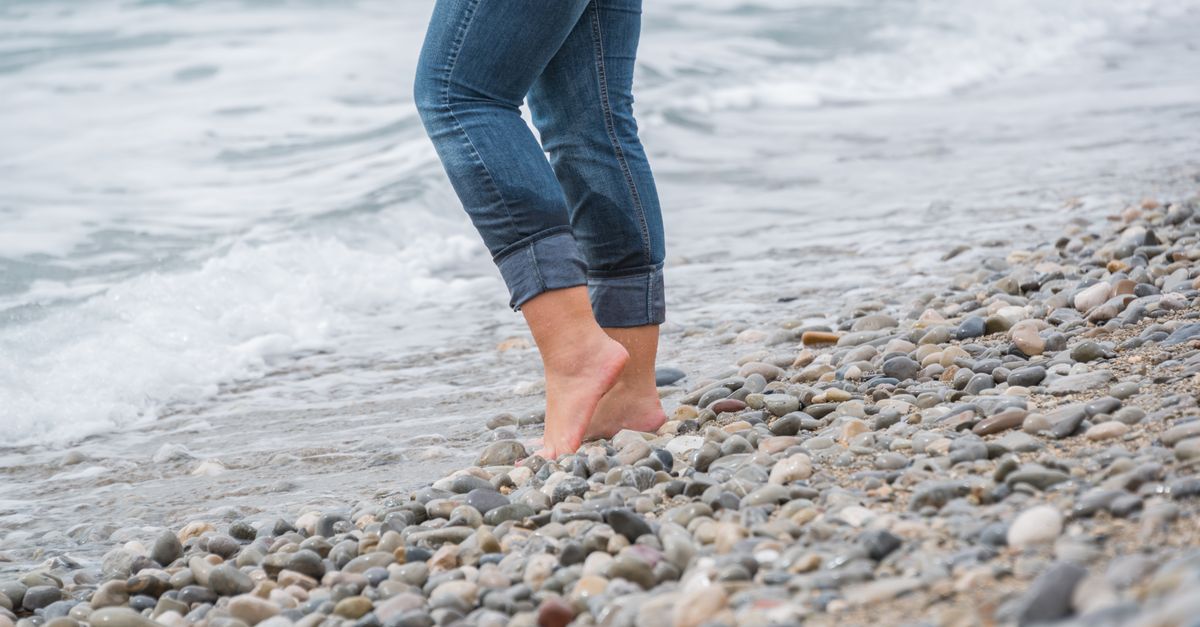
Legs feel heavy at the end of the day because venous return slows when you have been standing or sitting for extended periods, allowing blood and fluid to pool in the lower legs rather than circulating back to the heart efficiently. Gravity works against circulation throughout the day, and the calf muscles — which act as a natural pump pushing blood upward — become fatigued after hours of sustained effort or prolonged inactivity. In adults over 50, age-related changes in vein wall elasticity and valve function make this pooling more pronounced. Relieving the heaviness typically involves strategies that reactivate the calf pump, support venous return, and reduce mild fluid accumulation in the lower legs.
You know the feeling. It starts around mid-afternoon — a dull, tired weight that settles into your legs and doesn't lift no matter how many times you shift your weight. By evening, your legs don't just feel tired; they feel heavy, as if gravity has been working overtime. For adults over 50 who spend long hours on their feet at work, or conversely, sitting at a desk without much movement, heavy legs at the end of the day are one of the most common — and most dismissed — physical complaints.
This isn't just soreness. The sensation of heavy, aching legs in the evening points to something specific happening in your circulatory system, and understanding it is the first step toward doing something about it. This post covers why venous return slows as the day progresses, what that means for people who stand or sit for long stretches, and which evening strategies — including compression, elevation, and calf-pump activation — are most effective for real relief.
Why Legs Feel Heavy by Evening
The heaviness you feel isn't random. It follows a consistent pattern — better in the morning, worse as the day goes on — because your circulatory system is fighting an uphill battle. Literally.
The Venous Return Problem
Your heart pumps oxygenated blood out to your extremities through arteries, but the return journey — carrying deoxygenated blood back through veins — relies heavily on muscle contractions, particularly in the calf. This is called venous return, and it depends on what physiologists refer to as the skeletal muscle pump. When you walk, your calf muscles squeeze the veins running through them, pushing blood upward against gravity.
The problem is sustained posture. Whether you're standing still at a register or sitting at a desk for six to eight hours, the calf pump isn't contracting the way it does during normal walking. Blood and fluid gradually pool in the lower legs. By late afternoon and evening, that pooling is at its peak — and the result is the familiar sensation of legs that feel heavy, tight, or mildly swollen.
Age-Related Changes That Compound the Problem
For adults over 50, the issue is compounded by natural changes in the venous system. Vein walls lose some of their elasticity with age, and the one-way valves inside veins — which prevent blood from flowing backward — can weaken over time. When these valves don't close as efficiently, blood has a greater tendency to drift downward between muscle contractions, increasing the pooling effect.
This isn't the same as varicose veins or a diagnosable venous condition — it's a normal physiological shift that comes with age. But it does mean that the same amount of standing or sitting that caused mild fatigue at 35 produces noticeably heavier legs at 55 or 65.
Muscle Fatigue vs. Mild Fluid Accumulation
Two distinct things happen when legs feel heavy by evening, and they often occur together:
- Muscle fatigue: The calf and lower leg muscles are physically tired from sustained contraction (standing) or from holding a fixed position (sitting), which reduces local circulation and causes metabolic byproduct buildup.
- Mild dependent edema: Fluid from the bloodstream slowly seeps into surrounding tissue as hydrostatic pressure builds in the lower leg veins throughout the day — the gradual "puffiness" some people notice in their ankles by evening.
The distinction matters because the interventions for each are slightly different, though many strategies address both simultaneously. Movement and calf activation primarily target venous return and muscle fatigue. Elevation and compression are more focused on managing the fluid component.
How the Calf Pump Drives Evening Relief
The calf muscle is essentially your body's second heart for the lower extremities. That reframe changes how you think about evening recovery — the goal isn't passive rest, it's reactivating the pump that slowed down during the day.
Why Sitting Down Isn't Enough
The instinct after a long day is to sit or lie down, and elevation does help. But simply stopping movement doesn't immediately reverse venous pooling — it slows it. Blood that has pooled in the lower legs needs active assistance to move back toward the heart.
This is why people who put their feet up often still notice lingering heaviness in the legs themselves, even after the feet feel better: the calf muscles haven't been activated enough to flush the backlog. Research on venous insufficiency and calf muscle function consistently points to active calf engagement — walking, ankle pumping, or mechanical stimulation — as more effective at clearing lower-leg pooling than rest alone.
Mechanical Calf Activation With a Foot Massager
This is where oscillating foot massager technology becomes a practical evening tool. The MedMassager Foot Massager uses oscillating motion to engage the muscles of the foot and calf through repeated, rhythmic mechanical stimulation. When you place your feet on the massager platform, the oscillating movement activates the calf muscles and supports venous return from the lower legs.
This is particularly relevant for adults managing the late-day heaviness pattern. It delivers calf-pump activation without requiring you to stand or walk after an already fatiguing day. You sit in a chair, rest your feet on the platform, and let the oscillating motion do the work that tired leg muscles struggle to perform on their own.
Oscillation vs. Surface Vibration
Many foot massagers on the market rely on surface-level vibration — high-frequency buzzing that stimulates skin and superficial tissue without meaningfully engaging deeper muscle. MedMassager's oscillating platform works differently: it produces a controlled, sweeping oscillation that travels through the foot and into the calf, generating genuine muscle activation rather than surface sensation.
MedMassager uses oscillating technology to deliver deeper, more controlled vibration than conventional massagers — which is precisely what the venous system needs after extended hours of underactivity. The result is a level of calf engagement that more closely mimics what happens during walking, the natural mechanism behind why a therapeutic foot massager can feel dramatically more relieving than simply sitting still.
An Evening Routine for Heavy Legs
The most effective approach to late-day leg heaviness combines three strategies that work on complementary mechanisms. Done in sequence, they produce meaningfully better results than any single intervention alone.
Step 1: Elevate Before You Activate
Start by elevating your legs for 10 to 15 minutes before any active intervention. Lie down and prop your legs at least 6 to 12 inches above heart level — a stack of pillows works well. Elevation uses gravity in your favor, passively encouraging fluid to drain from the lower legs back toward central circulation. Think of it as reducing the backlog before you restart the pump.
If you've noticed mild ankle puffiness by evening, elevation specifically addresses that fluid component and primes the system before you add active calf stimulation.
Step 2: Activate the Calf Pump
After elevation, sit comfortably and use your foot massager for 15 to 20 minutes at a moderate intensity. The oscillating platform works through the plantar fascia and into the calf, reactivating the venous pump mechanism. Most people notice a perceptible easing of the heaviness within the first 5 to 10 minutes as circulation improves in the lower legs.
- Start at a lower speed setting and increase gradually as your legs relax
- Keep your feet flat on the platform — curling your toes reduces calf engagement
- Add slow, deliberate ankle circles if the heaviness is concentrated around the ankle joint
- 15 to 20 minutes is an effective session length; beyond 30 minutes offers diminishing returns for most people
Step 3: Support With Compression
Graduated compression socks are most effective when worn during the day rather than applied after heaviness has already set in. Light compression worn in the evening after massager use can help sustain circulation benefits while you're sedentary. If you've been prescribed compression garments by a physician, follow that guidance. For general late-day heaviness without a diagnosed venous condition, over-the-counter graduated compression socks (15–20 mmHg) are widely used and well-tolerated.
Compression worn throughout the day — particularly for people who stand for long shifts — is the single most evidence-supported non-pharmaceutical intervention for reducing end-of-day lower leg heaviness and mild edema.
When to See a Doctor About Heavy Legs
Late-day leg heaviness driven by venous return slowdown and muscle fatigue is common and generally benign. Certain accompanying symptoms, though, warrant medical evaluation rather than self-management.
Warning Signs That Need Medical Attention
Consult a physician if your leg heaviness is accompanied by any of the following:
- Pitting edema — swelling that leaves an indentation when pressed — particularly if it doesn't resolve overnight
- One-sided swelling, warmth, or redness in the calf (which can indicate deep vein thrombosis and requires urgent evaluation)
- Pain during walking that relieves with rest (claudication), which can signal arterial insufficiency
- Skin changes including discoloration, hardening, or open sores on the lower legs
- Persistent heaviness present in the morning, not just at day's end
- Shortness of breath accompanying leg swelling (potential cardiac involvement)
A primary care physician or vascular specialist can evaluate venous function through a simple Doppler ultrasound if any of the above are present. The leg heaviness discussed in this article refers specifically to the end-of-day pattern that resolves with rest and elevation — not persistent or acute swelling with the features above.
Who Benefits Most From an Evening Routine
The elevation-activation-compression approach works best for adults in their 50s, 60s, and beyond who fit this profile:
- Work jobs involving prolonged standing — retail, healthcare, trades, food service
- Have desk jobs with minimal movement throughout the day
- Experience consistent late-day heaviness that resolves overnight and returns the following day
- Notice mild, symmetrical ankle puffiness by evening that is gone by morning
For this group, the pattern is physiological and manageable — not a sign of underlying disease, but a signal that the venous system needs evening support. The MedMassager Foot Massager collection includes options sized and powered for this kind of regular therapeutic use, built for people managing the cumulative demands of long days on their feet or at a desk.
Frequently Asked Questions
Why do my legs feel heavy and tired at the end of every day?
Daily leg heaviness by evening is most commonly caused by venous return slowing throughout the day as blood pools in the lower legs under the influence of gravity. Prolonged standing or sitting reduces calf muscle contractions, which are necessary to push blood back toward the heart. This leads to a buildup of pressure in the lower leg veins and, in some cases, mild fluid accumulation in surrounding tissue.
Is it normal for legs to feel heavy after standing all day?
Yes, this is a very common experience, particularly for people whose jobs require prolonged standing with limited walking. The calf muscles act as a pump for venous blood return, and sustained standing without much movement reduces how effectively this pump works. Adults over 50 tend to experience it more noticeably due to age-related changes in vein wall elasticity and valve function.
How do I get rid of heavy legs after a long day?
The most effective approach combines elevation, active calf stimulation, and light compression. Elevating your legs for 10 to 15 minutes allows gravity to assist fluid drainage from the lower legs. Following that with active calf engagement — through walking, ankle pumping, or an oscillating foot massager — helps reactivate the venous pump and move pooled blood back into circulation. Wearing graduated compression socks during the day, before heaviness develops, also significantly reduces how severe evening symptoms become.
Does a foot massager help with heavy, tired legs?
An oscillating foot massager can help by activating the calf muscles through repeated mechanical stimulation, which supports venous blood return from the lower legs. This is particularly useful in the evening when walking isn't practical but the legs still need circulatory support. The physical mechanism — calf activation pushing blood upward — mimics what happens during walking and helps reduce the pooling that causes the heavy sensation.
What is the difference between heavy legs and swollen legs?
Heavy legs refer primarily to a sensation of fatigue, pressure, or weight in the lower limbs caused by venous return slowdown and muscle fatigue. Swollen legs involve visible, measurable fluid accumulation in the tissue, which may or may not accompany the heaviness. Mild end-of-day heaviness often involves some minimal fluid shift without obvious visible swelling, while more significant edema — particularly pitting edema or one-sided swelling — warrants medical evaluation.
Can compression socks prevent legs from feeling heavy at the end of the day?
Graduated compression socks are one of the most evidence-supported tools for reducing end-of-day lower leg heaviness, particularly when worn throughout the day rather than applied after heaviness has already developed. They work by applying graduated external pressure that counteracts the buildup of venous pressure in the lower leg, helping keep blood moving upward during prolonged standing or sitting. For people whose legs consistently feel heavy by evening, wearing compression socks from the start of the workday produces noticeably better results than putting them on at the end of it.
Should I be worried if my legs feel heavy every evening?
Consistent end-of-day leg heaviness that resolves overnight and correlates with prolonged standing or sitting is generally a physiological response to venous return slowdown, not a sign of serious disease. You should consult a physician if the heaviness is accompanied by one-sided swelling or redness, pitting edema that doesn't resolve overnight, skin changes, pain during walking, or swelling combined with shortness of breath. These patterns require medical evaluation to rule out deep vein thrombosis, venous insufficiency, or cardiac causes.
The Bottom Line on Heavy Legs
Legs that feel heavy at the end of the day are telling you something specific: venous return has slowed, the calf pump is fatigued, and your lower legs need active circulatory support — not just passive rest. For adults over 50 who spend long days standing or sitting, this is a predictable pattern driven by normal physiological changes in the venous system.
The good news is that it responds well to a consistent evening routine. Elevation, calf-pump activation, and compression work together to address both the fluid accumulation and the muscle fatigue components of the problem. An oscillating foot massager adds a practical, low-effort way to reactivate the calf pump after a long day when walking isn't appealing and passive rest isn't enough.
Explore the MedMassager Foot Massager collection — professional-grade therapeutic massagers built for people who need more than surface-level relief at the end of a long day. For broader recovery needs beyond the feet and calves, the MedMassager Body Massager offers the same oscillating technology for larger muscle groups.
This content is for informational purposes only and is not intended as medical advice, diagnosis, or treatment. Always consult a qualified healthcare professional before starting any new treatment or therapy. MedMassager products are FDA-registered Class I medical devices.


