
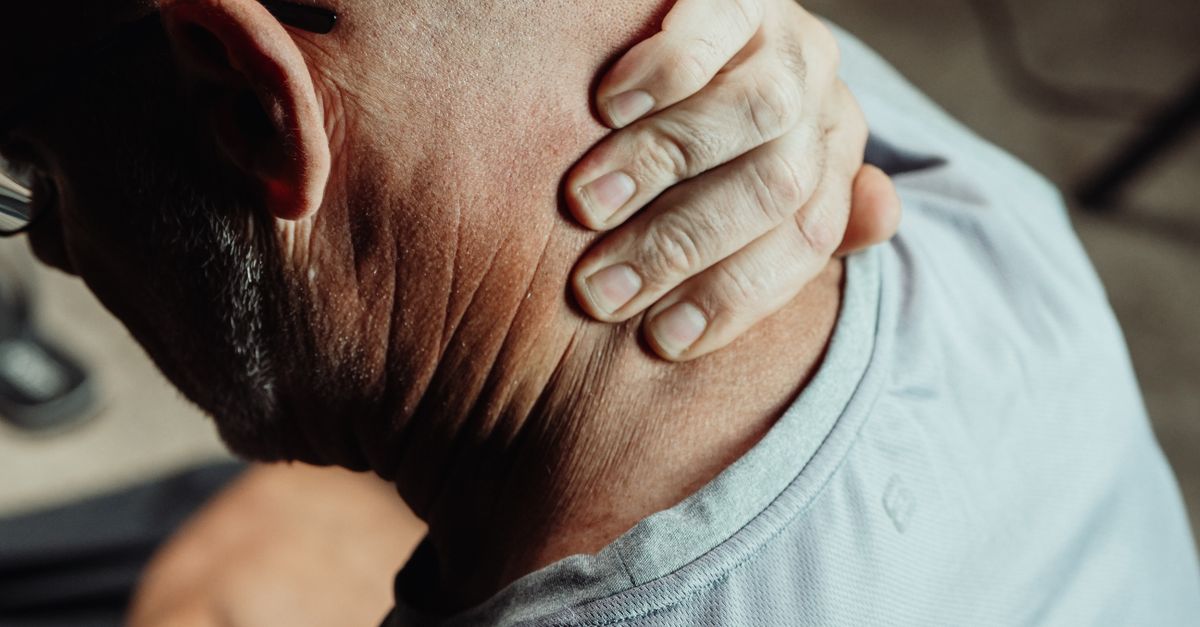
A headache at the back of the head is most often a tension-type headache or a cervicogenic headache, which is pain referred into the head from the joints and muscles of the upper neck. Tight muscles at the base of the skull, forward-head posture, and poor sleep often contribute to both types. These headaches usually improve with posture changes, better sleep habits, gentle neck movement, and massage of the neck muscles. A sudden severe headache, a headache with fever and a stiff neck, vision changes, weakness, or a headache after a head injury requires emergency medical care.
You finish a long day at a laptop, and a dull ache starts at the base of your skull. It climbs over your scalp or settles in behind your ears. A headache at the back of the head has a distinct feel, and its location is a useful clue about where it's coming from. In most cases, the source is the muscles and joints of your upper neck, not something happening deep inside your head.
This guide is for you if your headaches tend to start at the back of your head, travel up from your neck, or flare after hours of screen time, driving, or a bad night's sleep. It is also for you if you want to know which symptoms are routine and which need a doctor right away. Below, you'll find the main causes of back-of-head pain, where massage fits, the warning signs that call for emergency care, and practical self-care and posture changes you can start today.
Causes of Headache at Back of Head
The back of your head sits where the skull meets the cervical spine, and several structures overlap in that small area: muscles, joints, and nerves. When one of them is irritated or overworked, the pain often shows up as an occipital headache, meaning pain centered on the back of the skull. Four overlapping sources account for most of it.
Tension-Type Headaches
Mayo Clinic describes a tension headache as a diffuse, mild to moderate pain that is often described as feeling like a tight band around the head. Tension-type headaches are the most common kind of headache. The pressure frequently concentrates at the back of the head and the upper neck, and it usually affects both sides at once.
A tension headache at the back of the head tends to feel steady and pressing rather than throbbing. It typically doesn't cause nausea or vomiting, and routine activity like walking up stairs doesn't make it worse. The muscles of your neck, shoulders, and scalp may feel tender to the touch during an episode.
Cervicogenic Headaches From the Neck
A cervicogenic headache is a neck-related headache. The pain starts in the upper cervical spine and is referred into the head because nerves from the top of the neck share pathways with nerves that carry sensation from the head. Your brain registers the pain in the head even though the problem originates in the neck. Typical features include:
- Pain that usually stays on one side and doesn't switch sides
- An ache that starts in the neck and spreads to the back of the head, sometimes reaching the forehead or the area behind the eye
- Pain that worsens with certain neck movements or after holding one position for a long time
- Reduced range of motion when you turn or tilt your head
If this pattern sounds familiar, our guide to massage for cervicogenic headaches covers this headache type in more detail.
Tight Muscles at the Base of the Skull
Just beneath the skull sit the suboccipital muscles, four small pairs of muscles that connect the base of the skull to the top two vertebrae. They make the fine adjustments that keep your eyes level as you read, look at screens, or drive. Hours of holding one head position keep them contracted, and tight suboccipitals can produce pain at the base of the skull that wraps toward the temples or behind the eyes.
Larger muscles add to the load. The upper trapezius, splenius capitis, and semispinalis capitis all attach near the back of the head. The greater occipital nerve also passes through this region, so tension here can contribute to back-of-head and neck pain. For a closer look at these small muscles, read our article on suboccipital muscle tension.
Posture, Poor Sleep, and Daily Triggers
As your head drifts forward of your shoulders, the muscles at the back of your neck have to work harder to hold it up. Short or broken sleep lowers your tolerance for that strain, and a pillow that is too high or too flat can hold your neck bent all night. Other contributors include:
- Looking down at a phone or tablet for long stretches
- A monitor set too low, too high, or off to one side
- Jaw clenching or teeth grinding, especially during sleep
- Emotional stress that keeps your shoulders raised
- Dehydration, skipped meals, or changes in caffeine intake
Where Massage Fits for Back-of-Head Headaches
Massage does not address every cause of head pain. For headaches driven by tight neck and upper back muscles, however, the tissue at the base of the skull is a practical and accessible target. It helps to be clear about what massage can and can't do.
Why Muscle Tension Matters
A muscle that stays contracted for hours becomes stiff and tender, and blood moves through it less freely. Sensitive spots in tight muscle can refer pain to nearby areas, which is one reason a knot in the upper trapezius can show up as an ache at the back of the head. Rhythmic pressure and warmth help tight tissue loosen, and loose tissue places less pull on the structures where the skull meets the neck.
How the Neck Massager Works
The MedMassager Neck Massager with built-in heat is designed for the back of the neck and the upper shoulders. For tension headaches, its dual-direction massage nodes loosen the muscles at the base of the neck, helping ease tension that contributes to headache pain. Rotating massage nodes combined with built-in heat warm and loosen tight muscles, supporting blood flow through the neck.
The nodes also reach the upper trapezius, where they mimic hand kneading on the trapezius muscle, helping loosen tissue that tightens from poor posture or extended screen time. The Neck Massager is an FDA-registered Class I medical device. It does not use oscillation. It relies on rotating nodes and heat, a mechanism built specifically for the shape and muscles of the neck.
What Massage Won't Do
Massage is a complement to medical care. It is not a replacement for it. Keep these limits in mind:
- It won't correct a structural problem in the cervical spine, such as a disc or joint issue.
- It won't help headaches caused by infection, bleeding, high blood pressure, or other medical conditions.
- It doesn't replace an evaluation if your headaches are new, changing, or getting worse.
- It works alongside whatever your doctor has recommended, including medication, not instead of it.
When a Back-of-Head Headache Needs Emergency Care
Muscle-related headaches are uncomfortable but not dangerous. A small number of headaches signal a serious problem, and the location at the back of the head does not rule that out. Learn these warning signs before you need them.
Get Emergency Care Right Away For
- A sudden, severe headache that reaches full intensity within seconds to a minute
- A headache with fever and a stiff neck
- Vision changes, such as double vision, blurred vision, or loss of vision
- Weakness, numbness, facial drooping, trouble speaking, or confusion
- Any headache after a head injury, fall, or blow to the head
- A headache with a seizure or fainting
Call emergency services or go to the nearest emergency department if any of these apply. Do not try massage, heat, or stretching first.
Book a Doctor's Appointment If
Schedule a visit with your doctor if your headaches are new and you are over 50, if the pattern has changed, or if they are becoming more frequent or more intense. You should also get checked if headaches wake you from sleep, if they worsen when you cough or strain, or if you rely on pain relievers several days a week. Frequent use of over-the-counter pain medication can itself lead to rebound headaches.
Other Causes a Doctor May Consider
Occipital neuralgia causes sharp, shooting, or electric pain from irritated occipital nerves, often with a tender scalp. Migraine can also be felt at the back of the head, usually with throbbing pain, light sensitivity, or nausea. Because treatment differs for each, a proper diagnosis matters before you settle into a self-care routine.
Self-Care for Headache at Back of Head
Once serious causes are ruled out, small daily changes can reduce how often muscle-related headaches show up. Focus on how you sit, how you sleep, and how you care for your neck muscles.
Adjust Your Desk and Screen Setup
- Set the top of your monitor at or slightly below eye level.
- Center the screen directly in front of you so you aren't turning your head all day.
- Raise your phone toward eye level instead of dropping your chin to look at it.
- Keep your feet flat and your lower back supported so your head stays stacked over your shoulders.
- Stand up and move every 30 to 60 minutes.
Gentle Neck Movement
Chin tucks counter forward-head posture. Sit tall, then gently glide your chin straight back as if making a double chin, hold for about five seconds, and relax. Repeat 8 to 10 times a few times a day.
Slow shoulder rolls and gentle side bends, ear toward shoulder, also help loosen the upper trapezius. Move within a comfortable range. If any movement sharpens your headache or sends pain or tingling down an arm, stop and ask your doctor or physical therapist before continuing.
Set Up Your Sleep for Your Neck
Choose a pillow height that keeps your neck in line with your spine. If you sleep on your back, a thinner pillow usually fits. Side sleeping calls for enough height to fill the space between your ear and the mattress. Avoid sleeping on your stomach, which keeps your neck rotated for hours.
Aim for a consistent bedtime and wake time, including weekends. If you wake with jaw soreness, ask your dentist whether you may be grinding your teeth at night.
A Starting Neck Massage Routine
For tension in the neck and upper shoulders, the Neck Massager's dual-direction nodes loosen the muscles at the base of the neck while built-in heat warms the tissue. A reasonable starting point:
- Sit upright in a supportive chair with your shoulders relaxed.
- Position the Neck Massager's rotating nodes across the back of your neck, just below the base of your skull. Keep it off the front of your neck and throat.
- Start with about 10 minutes, once or twice a day, with light pressure.
- For a second pass, shift the nodes outward to the upper trapezius, where your neck meets your shoulders.
- Finish with a few slow chin tucks and a glass of water.
- Write down when your headaches occur and how they respond, so you can share the pattern with your doctor.
Stop if the warmth feels too intense or the pressure increases your pain. Skip the heat on skin with reduced sensation, and ask your care team before massaging an area with a recent neck injury or surgery.
Frequently Asked Questions
Why does the back of my head hurt when I wake up?
Morning pain at the back of the head often comes from your sleep position, a pillow that holds your neck bent, or jaw clenching overnight. Poor or short sleep can also make your neck muscles more sensitive. If you also snore loudly or wake up unrefreshed, ask your doctor about sleep apnea, which can cause morning headaches.
Can a neck massager help a headache at the back of the head?
A neck massager can help when the headache is linked to tight muscles in the neck and upper shoulders. The MedMassager Neck Massager uses dual-direction massage nodes that loosen the muscles at the base of the neck, helping ease tension that contributes to headache pain, and its built-in heat warms tight tissue. It is meant to complement medical care, not to address headaches with other causes.
What is the difference between a tension headache and a cervicogenic headache?
A tension headache is a pressing, band-like pain that usually affects both sides of the head. A cervicogenic headache starts in the upper neck, usually stays on one side, and gets worse with certain neck movements or sustained postures. A doctor or physical therapist can examine your neck to tell the two apart.
How long does a tension headache at the back of the head last?
A tension headache can last anywhere from about 30 minutes to several days. Episodes that come and go occasionally are called episodic tension headaches. If you have headaches on more days than not, see your doctor, because chronic headaches benefit from a structured plan.
Does stress cause headaches at the base of the skull?
Stress can contribute by keeping your neck and shoulder muscles contracted for long periods. That sustained tension often shows up as pain at the base of the skull and across the upper neck. Regular breaks, slow breathing, and gentle neck movement can reduce how long that tension lasts.
Is a headache at the back of the head serious?
Headaches in this location usually come from muscle tension or the neck and are not dangerous. However, a headache that comes on suddenly and severely, or one that arrives with other new symptoms, needs urgent medical evaluation. When in doubt, get checked rather than waiting it out.
The Bottom Line
A headache at the back of the head usually traces to tension-type headaches, neck-related cervicogenic headaches, or tight muscles at the base of the skull, often made worse by posture and poor sleep. Posture changes, better sleep habits, gentle neck movement, and regular massage of the neck muscles address the most likely sources. Any sudden severe headache, headache with fever and a stiff neck, vision changes, weakness, or headache after a head injury needs emergency care.
If tight neck muscles are part of your pattern, the MedMassager Neck Massager's rotating nodes and built-in heat warm and loosen the muscles at the base of the neck, supporting blood flow through the tissue that feeds this kind of headache. See how the MedMassager Neck Massager with dual-direction nodes and heat fits into your routine, or explore all MedMassager therapeutic massagers.
This content is for informational purposes only and is not intended as medical advice, diagnosis, or treatment. Always consult a qualified healthcare professional before starting any new treatment or therapy. MedMassager products are FDA-registered Class I medical devices.


